
Does Salt Water Help Foot Pain Relief?
Yes, soaking your feet in warm salt water is a popular method for foot pain relief. It can help ease discomfort by reducing inflammation and relaxing tight muscles. The magnesium and potassium in salt water improve circulation and soothe soreness.
Additionally, the warmth supports nerve and muscle comfort, making the soak even more beneficial. Salt water also helps fight bacterial and fungal infections, which protects your feet from common issues. Taking precautions with water temperature and soak time ensures the soak is safe and effective.
Keep exploring to discover how salt water foot soaks can boost overall foot health and comfort. This simple remedy may offer you much-needed relief and promote healthier feet over time.
How Salt Water Foot Soaks Ease Foot Pain: Mechanisms and Benefits
Although foot pain can be stubborn, soaking your feet in salt water can quickly ease discomfort by reducing inflammation and swelling through its natural osmotic effects. When you soak your feet, the salt water draws out excess fluid from inflamed tissues, easing pressure and pain.
The magnesium sulfate in salt water plays a vital role by relaxing tense muscles and soothing soreness. This combination helps you find relief faster. Additionally, soaking increases blood circulation in your feet, which promotes healing and reduces pain.
Regular salt water soaks can also soften your skin and alleviate muscle stiffness, making your feet feel more comfortable overall. By using this simple remedy, you’re harnessing the natural power of salt water to combat foot pain and inflammation effectively.
Which Minerals in Salt Water Reduce Foot Inflammation?
You’ll find that magnesium in salt water helps calm inflammation and relax your foot muscles.
Potassium plays a key role in balancing fluids, which reduces swelling and prevents fluid buildup.
Together, these minerals work to ease your foot inflammation effectively.
Magnesium’s Anti-Inflammatory Role
When you soak your feet in salt water, magnesium sulfate—the key mineral in Epsom salt—works to reduce inflammation by calming irritated tissues. Magnesium’s anti-inflammatory effects help decrease swelling and pain by inhibiting pro-inflammatory cytokines, which are responsible for tissue inflammation.
This action makes magnesium sulfate an effective mineral for soothing foot discomfort caused by arthritis or injuries. Here’s how magnesium compares to other minerals found in salt water:
| Mineral | Anti-Inflammatory Effect | Role in Foot Pain Relief |
|---|---|---|
| Magnesium Sulfate | High | Reduces swelling and inflammation |
| Potassium | Moderate | Supports cellular functions |
| Sulfate | Low | Enhances mineral absorption |
Magnesium’s anti-inflammatory properties make it essential for foot pain relief through salt water soaks.
Potassium’s Fluid Regulation
Magnesium plays a powerful role in reducing inflammation, but it’s not the only mineral in salt water that helps ease foot pain. Potassium is vital for fluid regulation, helping you manage swelling and inflammation in your feet.
By maintaining proper fluid balance, potassium counters sodium’s effects, preventing excess fluid retention that often causes discomfort.
When you soak your feet in salt water, potassium supports electrolyte balance, which is essential for healthy nerve and muscle function. This mineral also promotes proper cellular function, reducing muscle soreness and pain.
Additionally, potassium facilitates the removal of excess fluids from inflamed tissues, further decreasing swelling.
Can Salt Water Foot Baths Improve Circulation and Nerves?
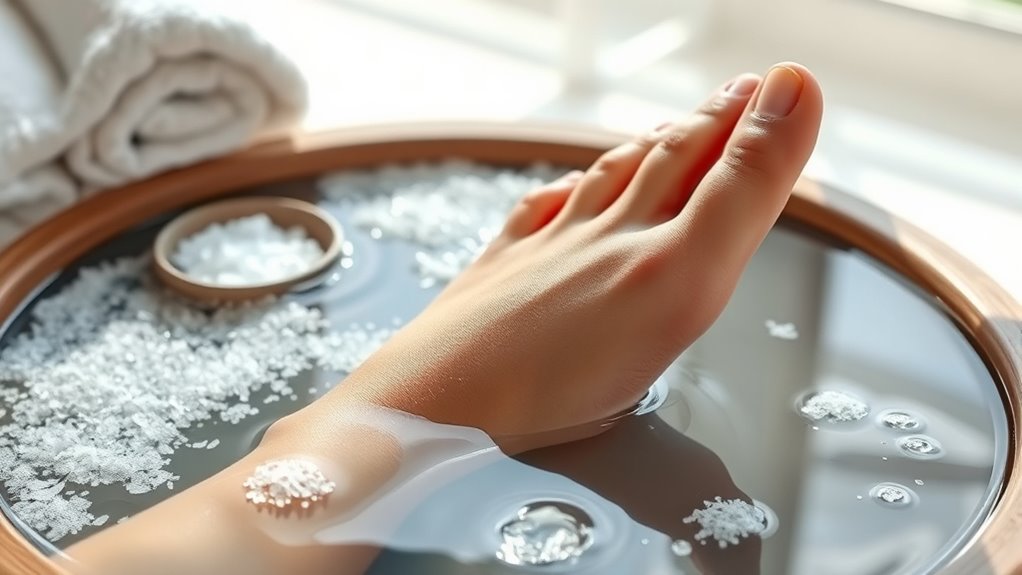
Although many remedies claim to ease foot discomfort, salt water foot baths actually improve circulation and support nerve health. When you soak your feet, the salt water dilates blood vessels, boosting circulation and allowing more oxygen and nutrients to reach your nerves.
This increased blood flow helps repair and maintain nerve health, reducing symptoms like tingling and numbness.
The magnesium in salt water absorbs through your skin, further supporting nerve function. Plus, the warmth combined with these minerals promotes relaxation of your nerves and muscles, which can ease nerve pain.
How Salt Water Fights Common Foot Problems Like Athlete’s Foot
If you’re dealing with athlete’s foot, salt water offers a natural way to combat this common fungal infection. Its antimicrobial properties help eliminate bacteria and fungi on your skin’s surface, creating a less favorable environment for fungal growth. Salt water’s osmotic effect draws moisture out, reducing sweat that fuels athlete’s foot.
Plus, regular soaks exfoliate dead skin, preventing the thickened, cracked areas where fungi thrive.
Here’s how salt water fights athlete’s foot:
- Antimicrobial action kills fungal pathogens
- Osmotic drying reduces moisture and sweat
- Exfoliates dead skin to prevent fungal buildup
Using salt water foot soaks regularly can ease symptoms and help stop athlete’s foot from coming back, making it a simple, effective remedy you can try at home.
When to Use Salt Water Foot Soaks for Diabetic Foot Pain
When managing diabetic foot pain, you can use salt water foot soaks to help reduce inflammation and swelling that often cause discomfort. A warm salt water soak may also promote circulation, aiding the healing of minor injuries on your diabetic foot.
However, it’s important to use salt water soaks cautiously—avoid soaking if your skin is dry or damaged, as over-soaking can worsen the condition. Regular soaks might relieve symptoms like tingling and general discomfort associated with diabetic peripheral neuropathy. Before starting salt water soaks for foot pain relief, consult your healthcare provider, especially if you have wounds or infections. This ensures your soak supports healing safely without risking further complications.
Step-by-Step: Preparing and Timing Your Salt Water Soak
To get the most from your salt water foot soak, you’ll want to prepare it correctly and time it just right. Start by filling a basin with warm water, ideally between 92°F and 100°F, to soothe foot pain effectively.
Next, add ½ to ¾ cup of Epsom salt per gallon, stirring until fully dissolved. This allows magnesium and sulfate minerals to absorb ideally during your soak.
Keep these tips in mind for a perfect soak:
- Soak your feet for 20-30 minutes to maximize magnesium absorption
- Use a timer to avoid over-soaking, which can dry your skin
- After soaking, dry your feet thoroughly and apply moisturizer to lock in hydration
Following these steps will help you relieve foot pain safely and comfortably.
What Precautions to Take Before Trying Salt Water Foot Baths
Before you try a salt water foot bath, check your feet for any open wounds or skin issues that might get irritated.
Make sure the water temperature feels comfortable—not too hot or cold—to avoid discomfort.
If you have conditions like diabetes or nerve problems, talk to your healthcare provider first to stay safe.
Assess Foot Health
How can you guarantee salt water foot baths help rather than harm your feet? First, you need to assess your foot health carefully. Avoid soaking if you have open wounds, cuts, or skin infections, as salt water may worsen these conditions.
Make sure to use only Epsom salt labeled for human use to prevent skin irritation. If you have diabetes, poor circulation, or neuropathy, consult your healthcare provider before trying a soak to ensure it’s safe.
Remember, soaking longer than 20-30 minutes can lead to dry or cracked skin, which could increase pain instead of providing relief. Keep an eye out for redness, swelling, or pain during or after soaking and stop immediately if these occur.
- Check for wounds or infections before soaking
- Use only approved Epsom salt for pain relief
- Consult your doctor if circulation issues affect your foot health
Choose Proper Water Temperature
After ensuring your feet are healthy enough for a salt water soak, focus on selecting the right water temperature. Use warm water between 92°F and 100°F to relax muscles without causing burns or skin irritation. Always test water temperature with your hand or a thermometer before you soak.
Avoid soaking if your skin is cracked or has open wounds to prevent infection. Limit your salt water soak to 20-30 minutes to avoid skin dehydration.
| Water Temperature | Effect | Precaution |
|---|---|---|
| Below 92°F | Less effective muscle relaxation | May not provide relief |
| 92°F – 100°F | Ideal warm water range | Safe and soothing |
| Above 100°F | Risk of burns and irritation | Avoid to prevent skin irritation |
Consult Healthcare Professionals
Since salt water foot baths can affect sensitive skin and underlying conditions, you should always consult healthcare professionals before trying them, especially if you have diabetes, open wounds, or infections. Their guidance guarantees your safety and helps maximize foot pain relief without risking complications.
When preparing a salt water foot bath, use only USP-approved Epsom salt to avoid skin irritation. Also, monitor water temperature carefully to prevent burns.
Before starting, discuss these precautions with your healthcare provider:
- Confirm salt water foot bath is safe for your condition
- Get advice on proper Epsom salt usage and concentration
- Learn signs of infection or adverse reactions to watch for
Salt Water Soaks vs. Other Foot Pain Remedies: What Works Best?
Although many foot pain remedies exist, salt water soaks stand out for their unique combination of benefits. They offer foot pain relief by reducing inflammation and relaxing muscles through magnesium absorption.
Salt water soaks relieve foot pain by reducing inflammation and relaxing muscles through magnesium absorption.
Unlike creams or massages, salt water soaks provide a cost-effective, non-invasive approach backed by evidence showing inflammation reduction and circulation improvement.
Warm salt water baths also promote healing from within, making them especially effective for chronic or post-injury pain.
While other remedies like essential oils or cold packs can help, salt water soaks uniquely combine relaxation, detoxification, and improved blood flow simultaneously.
If you want a simple yet powerful method to ease foot pain, salt water soaks might just work best for you.

How Regular Salt Water Soaks Improve Foot Health and Comfort
When you soak your feet regularly in warm salt water, you help reduce swelling and inflammation by drawing out excess fluids through osmotic action. This simple routine can markedly improve your foot health and comfort, especially if you experience foot pain.
Salt water soaks soften dead skin and promote smoother tissue, while also relaxing muscles to alleviate soreness and stiffness. Plus, soaking helps boost circulation, enhancing overall foot vitality.
Here’s why you should consider regular salt water soaks:
- Reduce foot pain and inflammation naturally
- Improve circulation and muscle relaxation
- Prevent infections by eliminating bacteria and fungi
Incorporating salt water soaks into your self-care routine is a practical way to improve comfort and support healthy feet over time.
Frequently Asked Questions
Is Salt Water Good for Foot Pain?
Yes, salt water can help your foot pain by reducing inflammation and relaxing muscles. Soaking your feet regularly in warm salt water improves circulation and eases soreness, making it a simple, effective way to relieve discomfort.
How to Immediately Stop Foot Pain?
To immediately stop foot pain, soak your feet in warm salt water to reduce inflammation and relax muscles. Elevate your feet, apply ice if swollen, and gently stretch to relieve tension and improve circulation quickly.
How Long Should You Leave Your Foot in Salt Water?
You should soak your foot in warm salt water for about 15 to 20 minutes. Don’t exceed 30 minutes to avoid dryness or irritation.
After soaking, dry your feet and apply moisturizer to keep skin healthy.
What Does Putting Your Feet in Salt Water Do?
Soaking your feet in salt water feels like a magical ocean hug, reducing swelling, easing soreness, and killing germs. It boosts circulation, softens skin, and leaves your feet refreshed, ready to conquer any mile you walk.
Conclusion
When it comes to foot pain relief, salt water soaks can be a simple yet effective solution. They reduce inflammation, improve circulation, and fight common issues like athlete’s foot.
Remember, “an ounce of prevention is worth a pound of cure”—so taking time for regular soaks can keep your feet healthy and comfortable.
Just follow the right steps and precautions, and you’ll be stepping lighter in no time. For effective salt water foot pain relief, consistency and proper care are key.