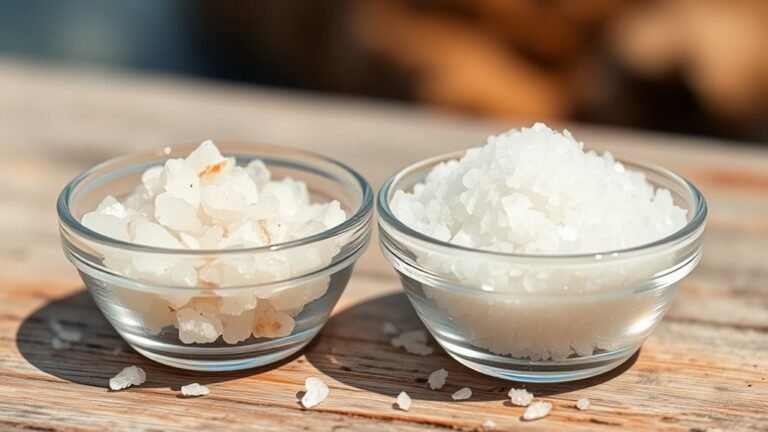

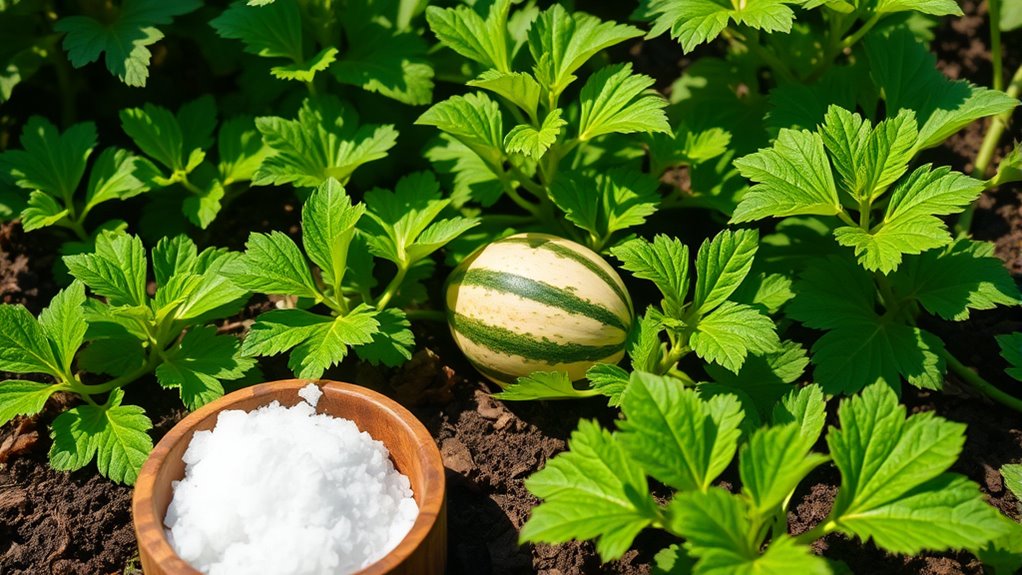
Is Epsom Salt Good for Watermelon Plants?
Yes, Epsom salt can be good for your watermelon plants by providing magnesium and sulfate essential for healthy growth. Magnesium boosts chlorophyll production, improving photosynthesis, which helps your melons become sweeter and larger. It also corrects magnesium deficiencies that cause yellowing leaves.
But be careful not to overuse it, as excess Epsom salt can harm your plants and soil. If you want to understand the best ways to use it and when to avoid it, keep exploring these tips.
What Is Epsom Salt and Why Use It on Watermelon Plants
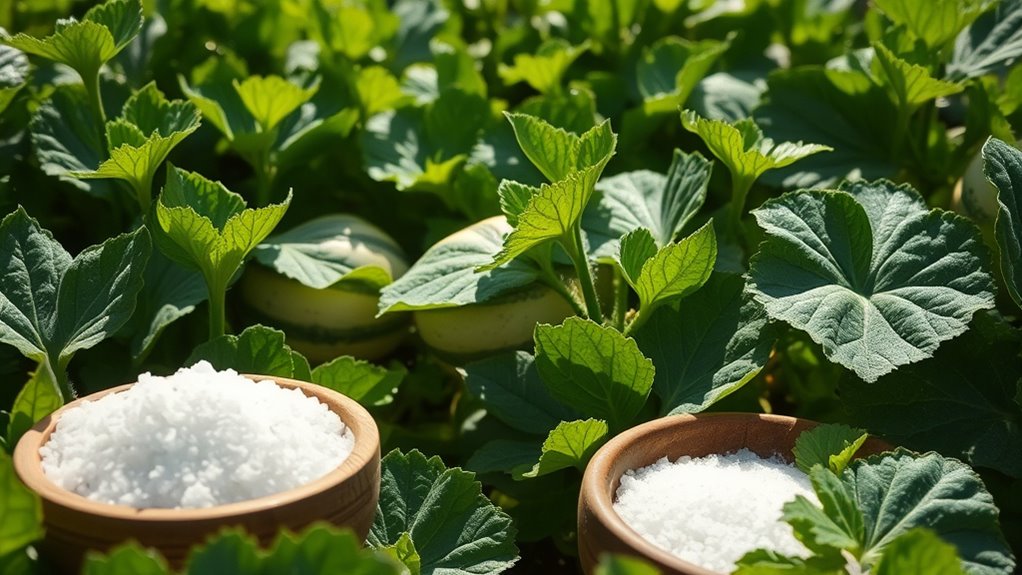
Although you mightn’t realize it, Epsom salt plays an essential role in growing healthy watermelon plants by supplying magnesium, a critical nutrient they need for chlorophyll production and photosynthesis.
Epsom salt is key for healthy watermelons, providing magnesium vital for chlorophyll and photosynthesis.
Epsom salt, chemically magnesium sulfate, helps prevent magnesium deficiency, which can cause yellowing between leaf veins and stunt growth.
When you apply Epsom salt to the soil, it improves magnesium availability, enhancing nutrient uptake even if soil pH isn’t ideal. This is significant because watermelon plants rely on magnesium to produce energy and synthesize sugars for sweeter fruit.
Using Epsom salt as a soil drench or foliar spray ensures your plants get this essential nutrient efficiently, supporting their overall health and development throughout the growing season.
How Magnesium From Epsom Salt Boosts Watermelon Growth
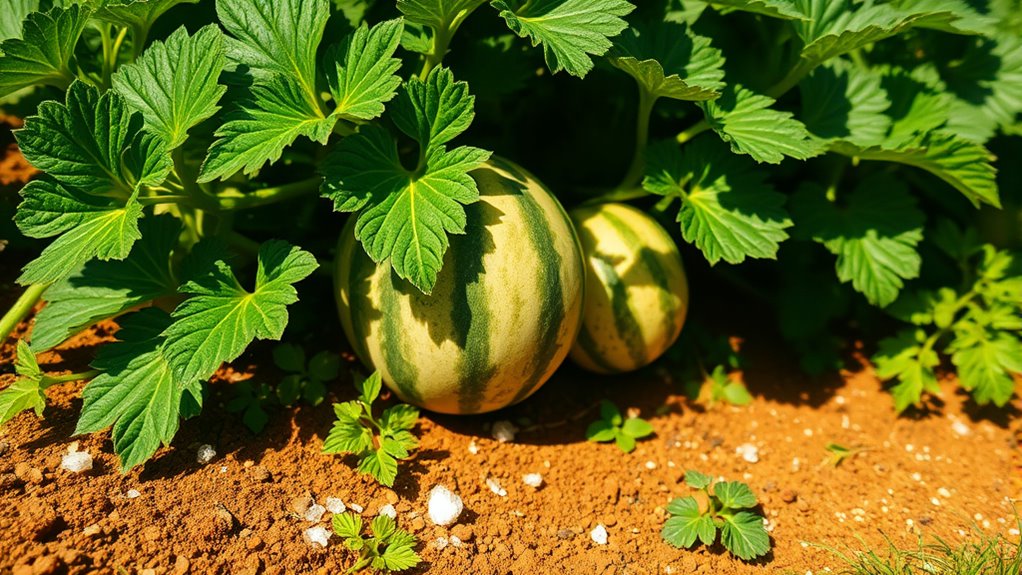
You’ll find that magnesium from Epsom salt plays a key role in photosynthesis by supporting chlorophyll production in your watermelon plants.
It also boosts nutrient uptake, helping your plants grow stronger and healthier.
Plus, using Epsom salt can correct magnesium deficiencies, preventing yellowing leaves and promoting vibrant growth.
Magnesium’s Role In Photosynthesis
Because magnesium forms the core of chlorophyll molecules, it plays a crucial role in photosynthesis for your watermelon plants. Without enough magnesium, chlorophyll production drops, limiting photosynthesis and energy creation.
Magnesium deficiency often shows as yellowing between leaf veins, signaling that your plants can’t photosynthesize effectively.
By applying Epsom salt, you supply the magnesium needed to boost chlorophyll synthesis. This enhances photosynthesis, increasing energy and sugar production that helps your watermelons grow larger and sweeter.
Using Epsom salt ensures your watermelon plants maintain optimal magnesium levels, supporting vigorous growth and healthy fruit development.
Enhancing Nutrient Uptake Efficiency
When you supply magnesium through Epsom salt, your watermelon plants absorb nutrients more efficiently, fueling stronger growth. Magnesium plays a key role in enhancing nutrient uptake by increasing cell membrane permeability, which helps your plants take in essential nutrients like nitrogen and phosphorus more effectively.
This improved nutrient uptake supports crucial processes such as photosynthesis and enzyme activation, boosting carbohydrate and protein synthesis necessary for healthy plant growth.
Applying Epsom salt replenishes magnesium in soils lacking this mineral, directly improving soil health and preventing growth issues.
With proper magnesium levels, your watermelon plants develop better fruit quality and vigor, ensuring a more robust harvest. Using Epsom salt is a simple way to maximize nutrient absorption and promote overall plant vitality.
Correcting Magnesium Deficiency Symptoms
If your watermelon plants show signs of interveinal yellowing or poor fruit development, they might be suffering from magnesium deficiency. Magnesium from Epsom salt plays a crucial role in chlorophyll production, which drives photosynthesis and healthy growth. Applying Epsom salt directly to soil or leaves offers a quick correction by supplying magnesium.
Symptoms typically appear within two weeks of deficiency and respond well to treatment. Keep soil pH balanced for better absorption.
| Symptom | Correction Method |
|---|---|
| Interveinal yellowing | Foliar spray with Epsom salt |
| Poor fruit development | Soil amendment with Epsom salt |
| Slow growth | Maintain soil pH 6.0-7.0 |
| Leaf curling | Regular magnesium monitoring |
| Pale leaves | Apply 1-2 tbsp/gallon water |
Use recommended dosages to safely restore watermelon plants’ magnesium levels.
Identifying Magnesium Deficiency in Watermelon Plants
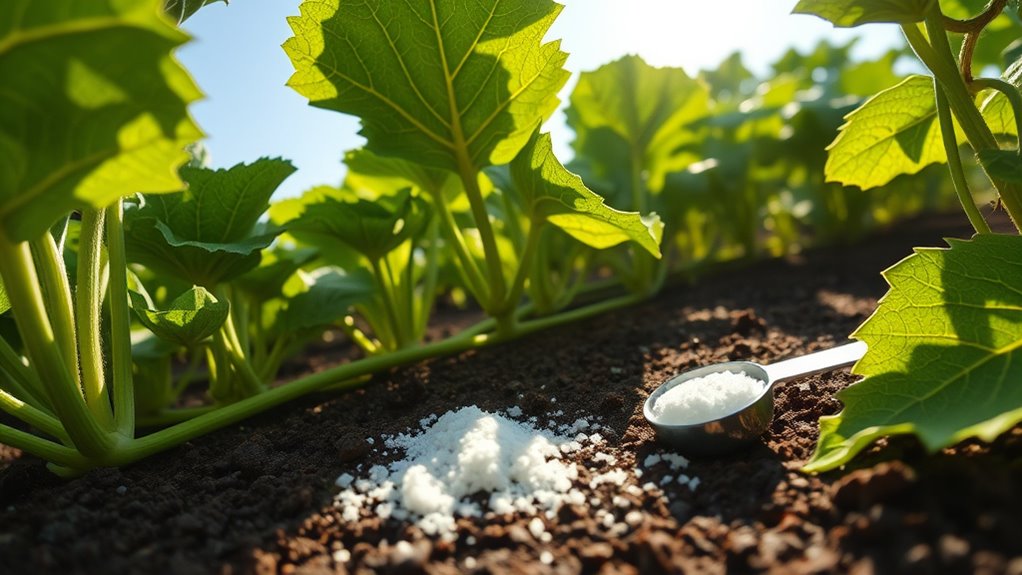
You’ll notice magnesium deficiency in your watermelon plants when yellowing appears between the leaf veins, often with curled or crispy edges. These symptoms usually show up within two weeks if magnesium is low.
You might also see smaller or lower-quality fruit.
To fix this, applying Epsom salts can quickly restore the magnesium your plants need.
Magnesium Deficiency Symptoms
Although magnesium deficiency can be tricky to spot at first, you’ll notice your watermelon leaves developing yellow patches between the green veins, known as interveinal chlorosis. This yellowing leaves pattern is a clear sign of magnesium deficiency, which impairs chlorophyll production.
Along with chlorosis, leaves may curl, turn crispy at the edges, or become pale overall. This problem often shows up within two weeks, especially if your soil pH is high or the soil contains excess calcium, which limits magnesium availability.
If you observe these symptoms on your watermelon plants, it indicates they aren’t getting enough magnesium for healthy growth. While Epsom salt is a popular remedy to address this, recognizing these symptoms early helps ensure your plants thrive before deficiency worsens.
Correcting Magnesium Shortage
Spotting yellow patches and curled leaves signals your watermelon plants need more magnesium to stay healthy. Magnesium deficiency can stunt growth and reduce fruit size. You can fix this by applying Epsom salts, which supply magnesium sulfate, essential for watermelons.
Prepare an Epsom salt solution by dissolving 1-2 tablespoons of Epsom salts in a gallon of water. Use it as a soil drench or foliar spray.
Also, keep an eye on soil pH to ensure magnesium uptake.
Here’s how to correct magnesium shortage effectively:
- Mix and apply Epsom salt solution regularly
- Monitor soil pH to prevent nutrient lockout
- Check plants for early deficiency signs
- Use foliar spray for quick magnesium absorption
This approach helps your watermelons thrive and avoid magnesium deficiency.
How to Apply Epsom Salt to Watermelons
When you apply Epsom salt to your watermelon plants, you provide essential magnesium that supports healthy growth and fruit development.
For soil application, dissolve 1-2 tablespoons of Epsom salt in a gallon of water and drench the soil around your watermelon every 4-6 weeks during active plant growth. Alternatively, add 1-2 tablespoons directly into each planting hole to supply magnesium at the roots.
You can also use a foliar spray by mixing 2 tablespoons of Epsom salt per gallon of water, spraying leaves once a month, especially during flowering.
Apply Epsom salt when vines start running or fruits reach 1-2 inches. Monitor soil pH between 6.0 and 7.0 and avoid over-application to prevent nutrient imbalance or waterlogging.
Does Epsom Salt Really Make Watermelons Sweeter?
How much sweeter can your watermelons get with Epsom salt? While Epsom salt isn’t a guaranteed sweetness booster, it does supply magnesium, essential for chlorophyll and photosynthesis, which can increase sugar production in watermelons.
If your soil pH causes magnesium deficiency, applying Epsom salt can improve plant health and fruit sweetness. Keep in mind, its effect mainly corrects deficiencies rather than dramatically enhancing flavor beyond that.
- Magnesium from Epsom salt aids nutrient uptake and overall plant health
- Corrects magnesium deficiency, which can dull watermelon sweetness
- Supports chlorophyll production, enhancing photosynthesis and sugar content
- Limited direct evidence shows Epsom salt alone dramatically boosts sweetness
Use Epsom salt wisely to help your watermelons reach their natural sweetness potential.
Using Epsom Salt With Key Nutrients for Watermelon Health
Although Epsom salt alone supplies essential magnesium and sulfate for watermelon plants, combining it with key nutrients like nitrogen and phosphorus guarantees healthier leaves and better fruit development.
Magnesium plays a vital role in photosynthesis by aiding chlorophyll production, which boosts overall plant health. Sulfate from Epsom salt enhances nutrient uptake, supporting enzyme and amino acid formation.
Magnesium boosts chlorophyll for photosynthesis, while sulfate improves nutrient uptake and supports vital plant enzymes.
When you address nutrient deficiencies by adding balanced fertilizers alongside Epsom salt, you improve soil pH and create ideal conditions for watermelon growth. This synergy helps correct magnesium deficiencies that cause chlorosis and weak fruit quality.
To maximize benefits, use Epsom salt as part of a nutrient-rich regimen rather than a sole treatment, ensuring your watermelon plants thrive with optimal nutrient absorption and vigorous development.
What Happens If You Overuse Epsom Salt on Watermelons?
If you apply too much Epsom salt to your watermelon plants, you risk causing magnesium buildup that disrupts nutrient balance and harms growth. Excess magnesium from Epsom salt can create a nutrient imbalance, blocking essential elements like calcium and potassium. This leads to plant stress and symptoms resembling magnesium deficiency, ironically.
Overuse may also cause leaf scorch, with browning edges signaling salt toxicity. Your soil health suffers, too, as accumulated salts reduce water absorption and damage roots, lowering yield and quality.
Watch out for these issues if you overapply Epsom salt:
- Nutrient imbalance causing poor watermelon growth
- Leaf scorch and browning from salt stress
- Reduced water uptake leading to root damage
- Long-term soil health decline affecting surrounding plants
Use Epsom salt carefully to avoid these problems.
How Soil Conditions Affect Epsom Salt’s Effectiveness
Because soil conditions greatly influence nutrient availability, you’ll find that Epsom salt’s benefits vary depending on your soil’s pH and composition. Ideal nutrient absorption occurs when soil pH is between 6.0 and 7.5; outside this range, especially in alkaline soils, magnesium uptake decreases.
If your soil is high in calcium or potassium, these elements can block magnesium absorption, limiting Epsom salt’s effectiveness.
Additionally, sandy soils or those low in organic matter struggle to retain magnesium and sulfur, so you may need soil amendments to improve soil structure and nutrient retention.
Epsom salt works best when your soil shows a clear magnesium deficiency—otherwise, adding it won’t boost plant health. Understanding your soil’s characteristics helps you apply Epsom salt more effectively for watermelon growth.

Essential Tips for Growing Healthy Watermelons Without Epsom Salt
While many gardeners consider Epsom salt a quick fix, you can grow healthy watermelons without it by focusing on proper soil nutrition, watering, and sunlight. Avoid relying on Epsom salt to correct magnesium deficiency blindly; instead, use soil testing to understand your soil’s needs.
Maintaining soil pH between 6.0 and 7.0 maximizes nutrient availability.
Incorporate organic matter like compost to naturally boost fertility and overall plant health. Here are essential tips for growing watermelons without Epsom salt:
- Test your soil regularly to identify nutrient imbalances before adding supplements
- Adjust soil pH to ensure ideal nutrient uptake
- Enrich soil with organic matter to support sustained plant nutrition
- Water consistently and provide adequate sunlight for vigorous growth
These practices promote strong watermelon development without unnecessary additives.
Frequently Asked Questions
What Plants Should You Not Put Epsom Salt On?
You shouldn’t put Epsom salt on plums, pines, azaleas, camellias, or any plants preferring acidic soil.
Avoid it if they don’t show magnesium deficiency, as overuse can cause nutrient imbalances and root damage.
What Is the Best Fertilizer for Watermelon Plants?
You want juicy watermelons bursting with sweetness, so choose a fertilizer rich in potassium and phosphorus, like a 3-4-6 N-P-K blend or organic compost.
Don’t overdo nitrogen—it’ll steal fruit’s spotlight.
What to Put on Watermelon Plants to Make Them Sweeter?
To make your watermelon plants sweeter, apply a foliar spray or soil drench of Epsom salt dissolved in water during flowering.
Regular magnesium boosts chlorophyll, nutrient uptake, and fruit flavor, enhancing sweetness effectively.
What Will Help My Watermelon Plants Grow?
Think of your watermelon plants as artists needing vibrant colors; you’ll help them grow by feeding balanced fertilizer, watering consistently, enriching soil with compost, and keeping pH steady.
This harmony lets their fruits ripen with sweetness and strength.
Conclusion
You might’ve heard that Epsom salt makes watermelons sweeter, but the real benefit lies in its magnesium content, which supports healthy growth and vibrant leaves.
While it won’t magically boost sweetness alone, using Epsom salt correctly can improve your plant’s overall health when combined with balanced nutrients and good soil care.
So, don’t rely on it as a miracle fix—think of it as a helpful supplement in your watermelon-growing toolkit. Epsom salt is good for watermelon plants when used appropriately to enhance their growth and vitality.