

How to Protect Your Hair From Salt Water Pools for Good
To protect your hair from salt water pools, start by wetting your hair with fresh water before swimming. This helps reduce salt absorption and prevents damage. Applying leave-in conditioner or nourishing oils can create a protective barrier.
Wearing a silicone swim cap or a protective hairstyle like braids further shields your hair from harmful salt water effects. After swimming, rinse your hair immediately with fresh water to wash away salt residues. Use a gentle shampoo followed by a deep conditioning treatment to restore moisture and maintain hair health.
Regular trims and limiting heat styling also contribute to keeping your hair strong and vibrant. By following these habits consistently, you can ensure your hair stays healthy and protected from salt water pool damage long term.
Why Salt Water Pools Can Damage Your Hair
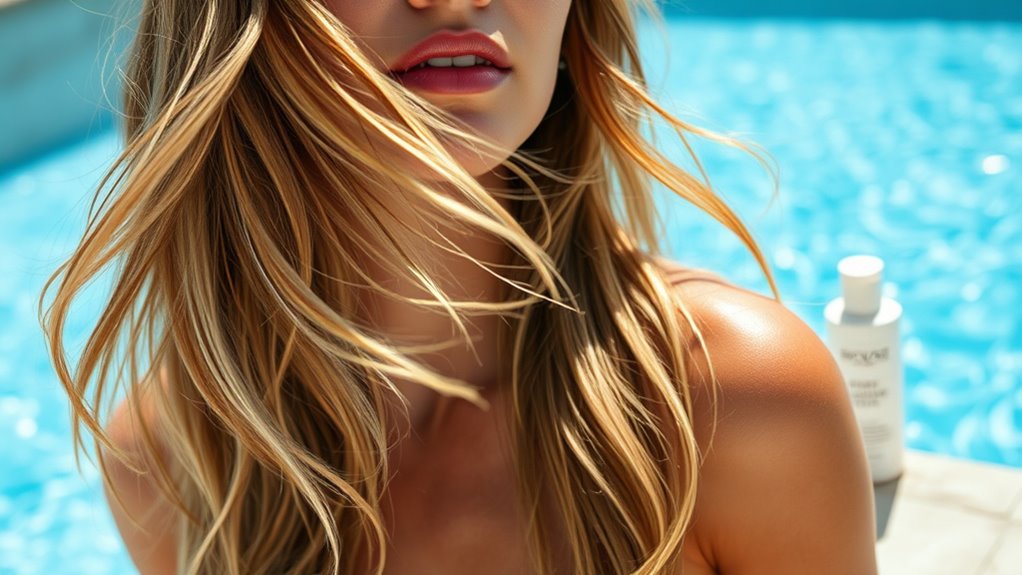
Although salt water pools offer a gentler alternative to traditional chlorine pools, they can still harm your hair. Salt water causes your hair cuticle to swell, increasing porosity and making it vulnerable to damage.
Salt water pools are gentler than chlorine but still increase hair porosity, making it vulnerable to damage.
When you spend a lot of time in salt water, it strips away your hair’s natural oils, leaving it dry, brittle, and prone to split ends.
If you have bleached or blonde hair, salt water can accelerate color fading and cause brassiness. It also weakens your hair strands, making them more likely to break or tangle.
Plus, continuous contact with salt water may irritate your scalp, causing itchiness and inflammation.
Understanding these effects helps you take steps to protect your hair from salt water damage.
How to Prep Your Hair Before Swimming in Salt Water

Before you plunge into a salt water pool, take a few simple steps to shield your hair from damage. Proper hair care before swimming helps protect hair from the harsh effects of salt and water exposure.
Start by thoroughly wetting your hair with fresh water; this reduces salt absorption.
Next, apply a leave-in conditioner or deep treatment to lock in moisture and protect the hair cuticle.
Finally, consider wearing a silicone swim cap for an extra barrier against saltwater.
- Hydrate your hair with a nourishing mask hours before swimming.
- Avoid washing or coloring hair right before exposure.
- Use protective gear like swim caps to minimize direct contact with salt.
These steps will keep your hair strong and shielded from salt water damage.
Why Wetting Hair Before Swimming Protects Against Salt Water Damage
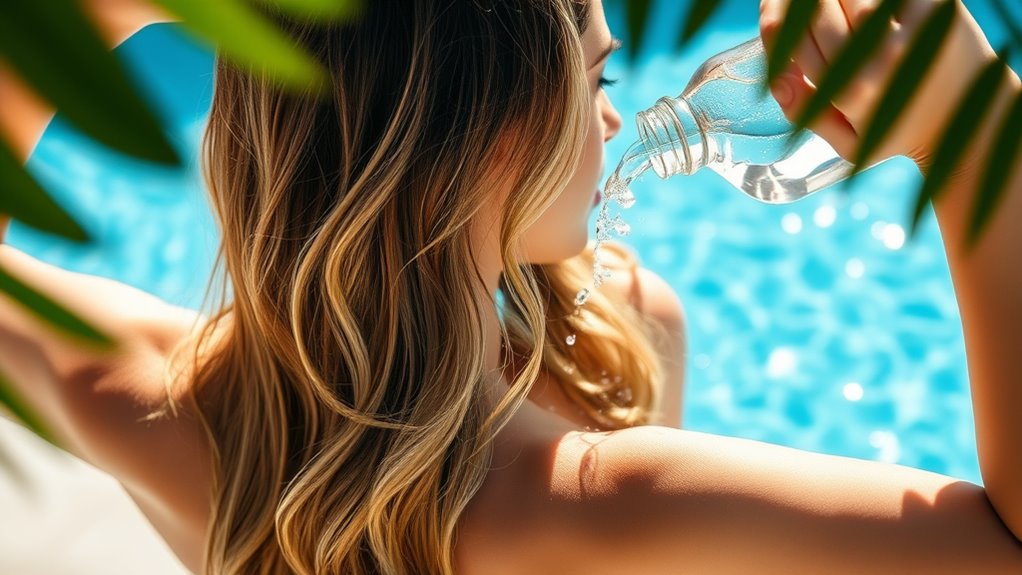
One of the most effective ways to protect your hair from salt water damage is by wetting it thoroughly with fresh water before you swim. When your hair is wet, it absorbs less salt and chlorine because damp hair is less porous, reducing dryness and brittleness. Rinsing your hair beforehand creates a barrier that helps maintain moisture balance, prevents cuticle swelling, and keeps hair smooth and shiny.
This simple step also minimizes tangling and breakage. By wetting your hair, you effectively protect hair from chlorine and saltwater exposure.
| Action | Benefit | Effect on Hair |
|---|---|---|
| Wet hair | Reduces salt absorption | Less dryness |
| Rinse your hair | Maintains moisture balance | Preserves shine |
| Pre-wet hair | Creates protective barrier | Prevents cuticle swelling |
| Damp hair | Less porous | Limits chlorine damage |
| Wet before swim | Minimizes tangling | Reduces breakage |
Choosing Protective Products Before Swimming
To keep your hair healthy when swimming in salt water, you should apply protective products that form a barrier against damage. Using a leave-in conditioner or deep conditioning treatment before you swim locks in moisture and reduces salt water absorption.
Products with UV filters shield your hair from harmful sun exposure while in the water. Here are key protective products to regard:
- Leave-in conditioners and deep conditioning treatments to maintain hydration
- Hair care products containing UV filters and antioxidants for environmental protection
- Nutrient-rich oils like jojoba or coconut oil to prevent dryness and strengthen strands
Wearing Swimming Caps and Protective Hairstyles
Although salt water can be harsh on your hair, wearing a silicone swimming cap creates a strong barrier that keeps the salt from directly contacting your strands, reducing dryness and damage.
Pairing this with protective hairstyles like braids or buns further minimizes hair damage by limiting exposure and tangling. These styles, secured tightly under your swimming cap, reduce friction and help retain moisture, keeping your hair healthier.
| Protective Method | Benefit |
|---|---|
| Silicone Swimming Cap | Prevents salt water contact |
| Braids or Buns | Minimizes tangling and breakage |
| Soft-lined Swim Cap | Adds moisture retention and reduces scalp irritation |
Using both a swimming cap and protective hairstyles ensures maximum hair protection and moisture retention while you swim.
How to Rinse and Cleanse Hair Right After Swimming in Salt Water
Because salt water can quickly dry out your hair, you should rinse it immediately with fresh, cool water after swimming to wash away salt and prevent buildup. Don’t wait, as saltwater penetrates hair shafts and causes dryness and damage over time.
To properly cleanse and care for your hair after saltwater exposure:
- Rinse thoroughly with fresh water to remove surface salt.
- Use a gentle clarifying shampoo to dissolve mineral residues without stripping natural oils.
- Gently detangle your hair with a wide-tooth comb to avoid breakage and maintain smoothness.
This routine helps preserve moisture and keeps your hair healthy.
Deep Conditioning and Nourishing Treatments After Salt Water Swimming
Rinsing and cleansing your hair right after salt water swimming helps remove salt and minerals, but it doesn’t fully restore moisture or repair damage. To truly combat hair damage from salt water, incorporate deep conditioning and nourishing treatments into your post-swim routine.
These treatments replenish lost nutrients, strengthen hair fibers, and reduce brittleness and frizz.
| Treatment Type | Benefits |
|---|---|
| Coconut or Jojoba Oil | Restores moisture and repairs damage |
| Weekly Nourishing Masks | Replenish nutrients, strengthen hair |
| Leave-in Conditioners | Create protective barrier against damage |
| Hydrating Treatments | Improve elasticity, maintain softness |
| Deep Conditioning | Reduce split ends and frizz |
Protecting Hair From Sun and Heat Outside the Pool
To protect your hair from sun and heat damage outside the pool, start by wearing a wide-brimmed hat or scarf to block UV rays.
Don’t forget to apply a UV-protectant spray with antioxidants before heading outdoors.
Also, try to limit your time in direct sunlight during peak hours to keep your hair healthy and hydrated.
UV Protection Strategies
While enjoying time outdoors, you’ll want to protect your hair from harmful UV rays and heat that can cause dryness and color fading.
To effectively protect your hair, consider these UV protection strategies:
- Apply a UV protective spray with SPF before heading outside to shield your hair from damaging UV rays.
- Use a leave-in conditioner enriched with vitamin E to lock in moisture and neutralize free radicals caused by sun exposure.
- Wear wide-brimmed hats or scarves to physically block direct UV contact and minimize heat impact.
These simple steps help protect your hair from environmental stressors, keeping it healthy and vibrant.
Heat Damage Prevention
Although spending time outdoors can be invigorating, your hair faces significant heat damage from sun exposure if you’re not careful. To keep your hair protected, wear a wide-brimmed hat or UV-protective scarf, which can block up to 97% of harmful rays. Before heading out, apply a heat protectant spray to create a barrier against thermal stress.
Avoid direct sun exposure during peak hours, and use leave-in conditioners with antioxidants to shield hair from oxidative damage.
After swimming in chlorine-filled pools, rinse your hair with fresh water immediately to remove chemicals that worsen dryness. Regularly seek shade or cover your hair to preserve moisture and prevent dry hair.
These steps help maintain healthy, strong strands despite sun and pool exposure.
Simple Cuts and Styling Tips to Fix Saltwater-Damaged Hair
Since saltwater can leave your hair dry and brittle, getting regular trims every six to eight weeks is essential to remove split ends and encourage healthy growth.
To fix saltwater-damaged hair, you should also focus on restoring moisture and minimizing further harm. Incorporate a deep conditioning hair mask with nourishing oils like coconut and jojoba to replenish lost hydration.
When styling, try these simple tips:
- Opt for protective styles like braids or buns to reduce salt water exposure and prevent breakage.
- Use heatless techniques, such as twisting damp hair into waves, to avoid further damage your hair.
- Choose short cuts or slicked-back styles to limit surface area exposed to saltwater, making maintenance easier. These cuts and styling habits help repair and protect your hair from ongoing saltwater damage.
Long-Term Habits to Keep Hair Healthy Around Salt Water Pools
If you want to keep your hair healthy around salt water pools, adopting long-term habits is key. Regularly trimming your hair every six to eight weeks helps remove split ends caused by salt water exposure.
Use nourishing, sulfate-free shampoos and deep conditioning masks weekly to restore moisture and strengthen your strands.
Limit heat styling and always apply heat protectant sprays to shield your hair from further damage.
Protective hairstyles like braids or buns minimize contact with salt water and reduce tangling, helping to protect your hair.
Additionally, maintain a balanced diet rich in biotin, omega-3 fatty acids, and vitamins D and B12 to support overall hair health.
These habits will nourish and protect your hair, keeping it resilient against salt water damage.
Frequently Asked Questions
How to Protect Hair in a Salt Water Pool?
You should wet your hair before swimming, apply leave-in conditioner or oil, wear a swim cap, rinse thoroughly with fresh water afterward, and use a clarifying shampoo regularly to keep your hair healthy and protected from salt water damage.
Wetting your hair beforehand helps reduce the amount of salt water your hair absorbs. Applying leave-in conditioner or oil creates a protective barrier against the salt.
Wearing a swim cap provides an extra layer of defense. After swimming, rinse your hair thoroughly with fresh water to remove salt residues.
Using a clarifying shampoo regularly helps eliminate any buildup and maintains hair health.
How to Protect Hair From Salt Water Damage?
Imagine your hair as delicate silk strands kissed by salty waves. You’ll protect it by rinsing fresh water, applying nourishing oils, wearing a swim cap, and using UV-filtering leave-in conditioners to keep your locks healthy and vibrant.
What Are the Negatives of a Salt Water Pool?
You’ll face dry, brittle hair as salt weakens cuticles and causes frizz. It can strip color, irritate your scalp, and make hair tangled and prone to breakage.
Plus, scalp dryness and itchiness may increase.
Does Swimming in Salt Water Damage Your Hair?
Yes, swimming in salt water can damage your hair by drying it out, making it brittle, and causing color fading.
You’ll want to rinse and moisturize your hair afterward to keep it healthy and strong.
Conclusion
Protecting your hair from salt water pools doesn’t have to feel like an uphill battle. By prepping your hair, using the right products, and giving it some extra love after swimming, you’ll keep your locks shining like a pearl in the ocean.
Remember, wearing caps and nourishing treatments are your hair’s best friends against salt damage. Stick to these simple habits, and your hair will stay healthy and beautiful, no matter how often you plunge into salt water pools.
With consistent care and the right approach, protecting your hair from salt water pools for good is completely achievable.