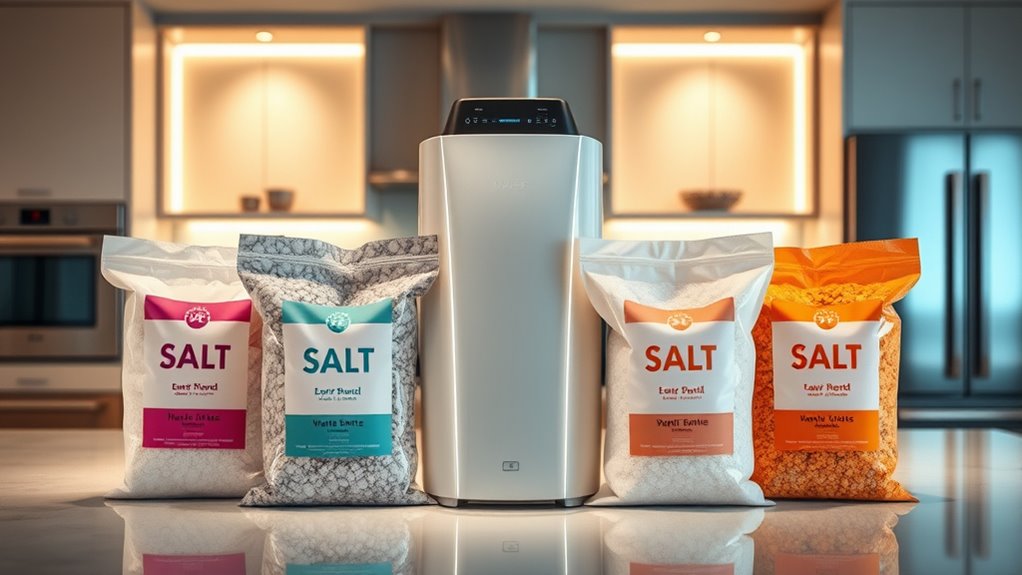
7 Best Salts for Water Softeners in 2026
You’ll want high-purity evaporated salt pellets (99.99%) for your water softener—they dissolve quickly, prevent buildup, and keep your system running smoothly. Choosing the best salts for water softeners is essential to maintain efficiency and prolong system life. Rock salt is the cheapest option but brings impurities that cause clogs, while solar salt is cleaner but might leave residue.
Potassium chloride offers a sodium-free alternative but can cake easily. Using the right salt and keeping it topped up prevents clogs and extends your softener’s lifespan. Keep exploring to find the top salt options and maintenance tips.
Why Water Softener Salt Quality Matters
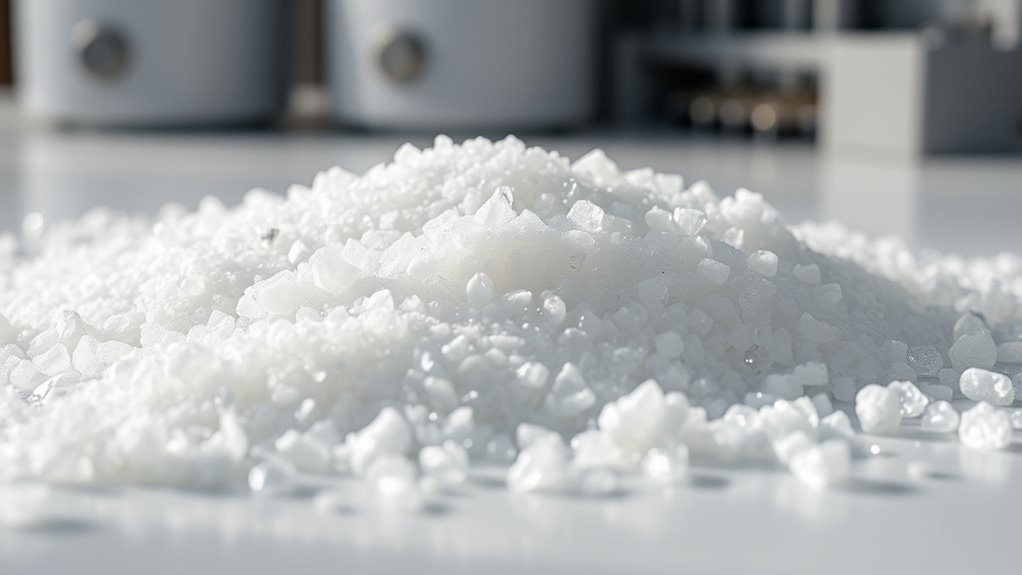
Because the quality of salt directly affects your water softener’s performance, choosing high-purity evaporated salt is essential. When you opt for water softener salt with 99.99% purity, you minimize residue buildup and prevent clogging that lower-grade salts often cause.
Salt quality isn’t just about purity; it also influences maintenance frequency and system longevity. Impurities found in cheaper salts can lead to mud residue, salt bridges, and mushing, all of which disrupt consistent softening.
If your well water contains iron or manganese, high-purity evaporated salt with rust-fighting additives becomes even more important to stop mineral buildup.
Types of Water Softener Salt: Rock, Solar, and Evaporated
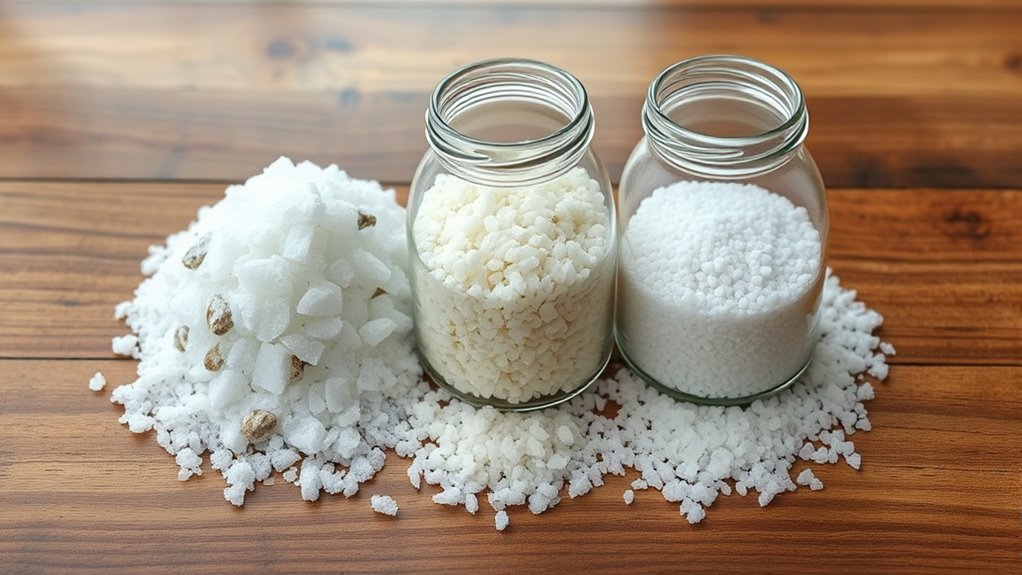
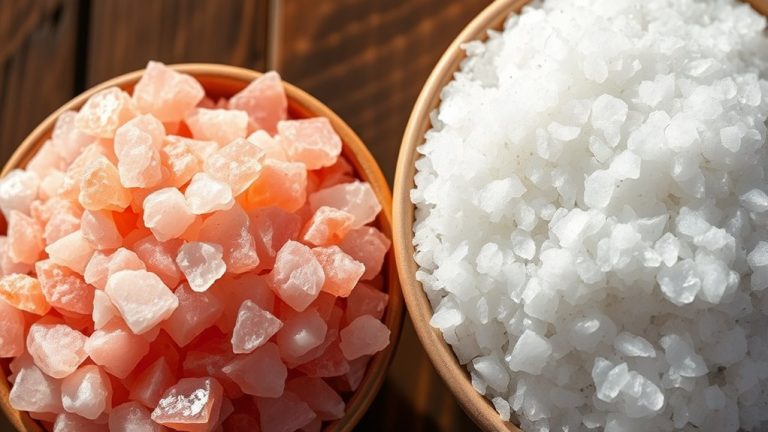
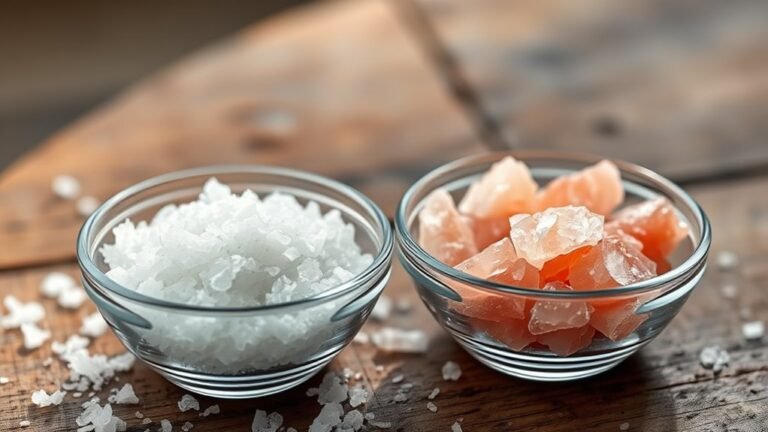
Three main types of water softener salt—rock, solar, and evaporated—offer different levels of purity and performance.
Rock salt is the most economical choice but contains impurities that can cause clogs and leave a muddy residue in your system.
Solar salt is cleaner than rock salt and dissolves more easily, yet it may still carry dirt particles that reduce efficiency.
If you want the best results with minimal maintenance, evaporated salt pellets are your top option.
These pellets boast 99.99% purity, ensuring high performance and protecting your water softener from damage.
When selecting water softener salt, consider your water conditions and system needs to find the right balance between cost and quality.
Top 3 High-Purity Evaporated Salts
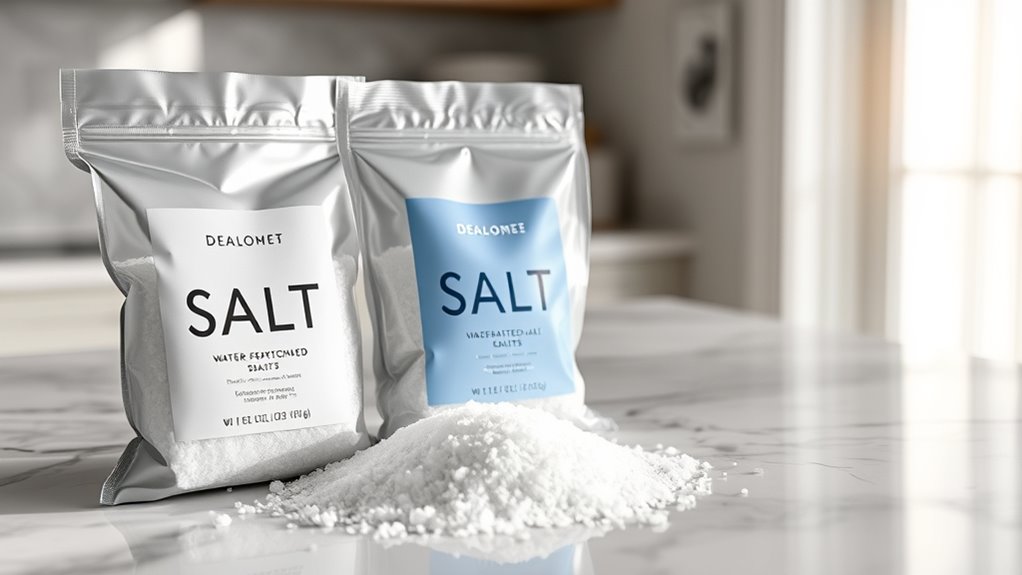
When you choose high-purity evaporated salts, you’re opting for around 99.99% purity, which outperforms other salt types in water softeners. This level of purity means faster dissolving, fewer salt bridges, and less sediment buildup in your system.
Let’s look at the top three options that deliver these performance benefits and keep your softener running smoothly.
Purity Levels Comparison
Although many salts claim to soften water effectively, choosing high-purity evaporated salts with 99.99% purity makes a noticeable difference in performance. These top-tier evaporated salts boast exceptional purity levels, minimizing mineral content and impurities that can clog your system.
Compared to rock or solar salts, their near-perfect purity guarantees faster, more even dissolution, preventing common issues like bridging and mushing in the brine tank.
If you rely on well water with higher iron and mineral content, selecting these salts protects your softener from damage and buildup.
By reducing residue, they help extend your system’s lifespan and cut down on maintenance.
When comparing purity levels, the top three high-purity evaporated salts stand out by delivering consistent, reliable water softening results you can trust.
Performance Benefits
Choosing high-purity evaporated salts doesn’t just improve your system’s cleanliness—it directly boosts performance. With 99.99% purity, these salts dissolve quickly, preventing salt bridging and ensuring consistent water softening.
You’ll notice less residue and sediment, which means fewer brine tank cleanings and smoother operation. This enhances system efficiency and extends your softener’s lifespan.
Using top-quality evaporated salt pellets guarantees better water quality and reliable regeneration cycles. Here’s a quick look at their benefits:
| Benefit | Impact on Water Softening |
|---|---|
| High Salt Purity | Reduces residue and clogging |
| Rapid Dissolution | Prevents salt bridging |
| Minimal Sediment | Lowers maintenance frequency |
| Improved System Efficiency | Prolongs softener lifespan |
| Enhanced Water Quality | Consistent softening performance |
Potassium Chloride: A Sodium-Free Water Softener Salt
If you need to cut down on sodium intake, potassium chloride offers a sodium-free alternative for your water softener. This salt alternative is about 80% as effective as traditional sodium-based salts in water softening, meaning it still delivers solid performance during regeneration cycles.
However, potassium chloride tends to cake and bridge more easily, especially in humid environments, so you’ll need to monitor your brine tank carefully.
It’s generally pricier than regular evaporated salt, so expect slightly higher operational costs. Despite that, potassium chloride is a smart choice if you have sodium restrictions or want an eco-friendly option.
Choosing potassium chloride lets you soften your water effectively while avoiding added sodium, making it a top salt alternative for health-conscious households.
Comparing Solar Salt to Other Water Softener Salts
When choosing salt for your water softener, you’ll notice solar salt has slightly lower purity than evaporated salt, which can affect performance. It’s more affordable but may lead to more frequent maintenance due to impurities causing residue and staining. Understanding these trade-offs helps you balance cost and upkeep for the best system efficiency.
Solar Salt Purity Levels
Since solar salt usually boasts a purity level around 99% or higher, it stands close to evaporated salt in quality but often undergoes less refining.
When you choose solar salt for water softening, you’re typically getting a product with sufficient purity levels for most residential needs.
However, some batches may contain impurities or dirt that can affect your softener’s performance and cause sediment buildup over time.
Lower purity solar salt might also leave brown or rust-colored stains in your brine tank due to residual minerals.
To keep your system running smoothly and minimize maintenance, it’s best to opt for high-purity solar salt with at least 99.9% purity.
This guarantees ideal water softening without the drawbacks of lower-grade options.
Performance Compared To Evaporated
Although solar salt offers solid water softening capabilities, it doesn’t quite match evaporated salt’s performance due to its slightly lower purity and tendency to contain impurities.
Solar salt typically has around 99.6% purity, while evaporated salt reaches 99.99%, directly impacting water softening efficiency.
You’ll notice solar salt dissolves more slowly and is prone to bridging or mushing in the brine tank, which can hinder performance.
Additionally, impurities in solar salt may leave brown or rusty residue, requiring more frequent cleaning.
While solar salt is an eco-friendly choice, its water softening performance often falls short of evaporated salt’s consistent and low-maintenance operation.
If you prioritize peak performance, evaporated salt usually outperforms solar salt in both effectiveness and reliability.
Maintenance Implications And Costs
Because solar salt contains more impurities than other types, you’ll need to clean your brine tank more often to prevent sediment buildup and residue. This increases maintenance frequency to every 6-12 months, compared to less frequent cleaning with evaporated salt.
The sediment buildup from solar salt can also accelerate wear on softener components, raising repair costs. While solar salt is cheaper upfront, these added maintenance needs can make it more expensive over time.
| Salt Type | Cleaning Frequency | Impact on Components |
|---|---|---|
| Solar Salt | 6-12 months | Higher wear, clogging |
| Evaporated Salt | 12-24 months | Minimal wear |
| Rock Salt | 8-12 months | Moderate wear |
Choosing salt affects your system’s upkeep and long-term costs.
Preventing Salt Bridging, Mushing, and Residue Build-Up
When you use high-purity evaporated salt pellets and keep your brine tank between a quarter and half full, you considerably reduce the chances of salt bridging and mushing. These issues can seriously impact your water softener’s performance if ignored.
To prevent salt bridging, residue build-up, and maintain efficient water softener maintenance, follow these tips:
Prevent salt bridging and residue build-up by following essential water softener maintenance tips.
- Clean the brine tank every 6-12 months to remove sediment and hard residue.
- Use salt with rust-fighting additives to minimize mineral deposits.
- Distribute salt evenly when refilling to avoid clumping.
- Monitor salt levels regularly to prevent mushing caused by excessive crystal clumping.

Maintaining Salt Efficiency to Extend Softener Lifespan
To keep your water softener working efficiently and extend its lifespan, you need to maintain the right salt levels and quality consistently. Aim to keep the salt level between 1/4 and 1/2 full in the brine tank to prevent salt bridges and ensure steady regeneration.
Monitor salt levels monthly and refill promptly to avoid any downtime that could harm your softening performance.
Regularly clean the brine tank every 6-12 months to remove sediment buildup, especially if you use well water.
Choose high-purity evaporated salt pellets with 99.99% purity to reduce residue and clogs in your water softening system.
If iron is present, use salt with rust-fighting additives to prevent mineral buildup, protecting your system and maintaining *ideal* softening performance for years to come.
Frequently Asked Questions
What Is the Best Salt for a Water Softener 2025?
You want to use evaporated salt pellets with 99.99% purity in 2025 because they minimize residue and clogs. They improve efficiency, reduce maintenance, and last longer—especially if your water has high iron, choose rust-fighting additives.
What Are the Best Water Softeners in 2025?
You deserve the absolute best, so go for SpringWell SS, SoftPro Elite, or DROP Smart Water Softener. They crush hardness over 97%, boast smart features, and last forever.
Your water will thank you every day!
What Brand of Water Softener Salt Is Best?
You’ll want to go with Morton, Diamond Crystal, or Cargill salt for your water softener. They’re known for high purity and reliability, reducing residue and maintenance while protecting your system for consistent, efficient softening.
Do Newer Water Softeners Use Less Salt?
Yes, newer water softeners use less salt because they regenerate only when needed and have improved control valves.
You’ll save salt thanks to programmable settings and high-efficiency models that cut salt use by up to 50%.
Conclusion
Choosing the right water softener salt can make all the difference in keeping your system running smoothly and your water feeling silky soft. Whether you go for high-purity evaporated salt or a sodium-free option like potassium chloride, quality matters.
Don’t let salt bridging or residue build-up throw a wrench in your plans—maintain your softener like a well-oiled machine.
With the right salt, you’re not just softening water, you’re softening life’s daily grind. Selecting the best salts for water softeners ensures optimal performance and longevity for your system.