What Is the Difference Between Rock Salt and Ice Melt?
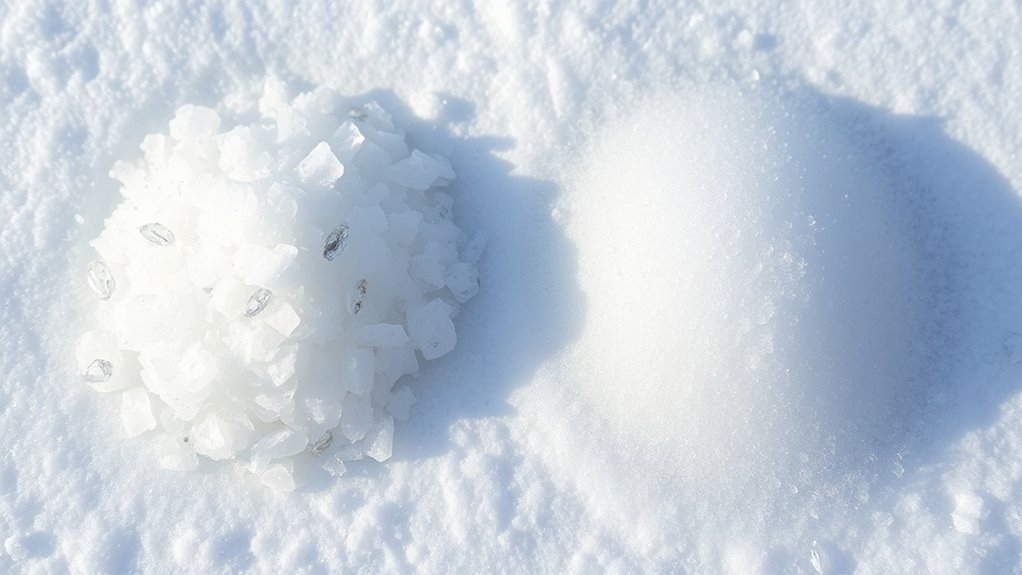
You’ll find that rock salt is simply natural sodium chloride, effective above 15°F but less so in colder temps, while ice melt combines sodium, calcium, and magnesium chlorides to work down to -25°F. This makes ice melt more efficient at melting ice faster and safer for surfaces and plants.
Ice melt tends to be pricier but gentler on the environment and less corrosive. If you want to understand their impact on pets, plants, and cost differences, there’s more to explore.
Rock Salt: Composition and How It Works
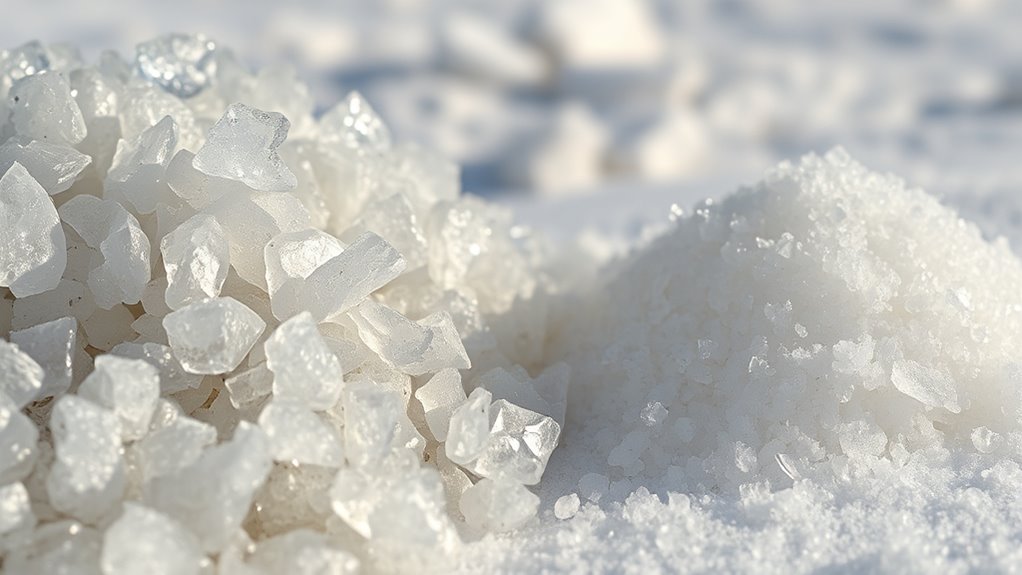
Although you might know rock salt simply as table salt, it’s actually a natural mineral called sodium chloride or halite, made up of large crystalline particles used for melting ice.
Rock salt, or halite, is a natural mineral composed of large crystals commonly used to melt ice.
When you spread these crystalline pellets on ice, they dissolve and lower water’s freezing point by forming a brine solution. This brine prevents ice from refreezing, making surfaces safer.
However, rock salt’s effectiveness drops below about 5°F (-15°C), limiting its use in extremely cold conditions.
Since it’s an unpurified mineral, rock salt contains impurities that can cause corrosion on concrete, metal, and even harm plants over time.
Despite these drawbacks, its affordability makes it a popular choice for melting ice, as long as you’re mindful of the potential surface and environmental damage from prolonged use.
Ice Melt: Ingredients and Benefits
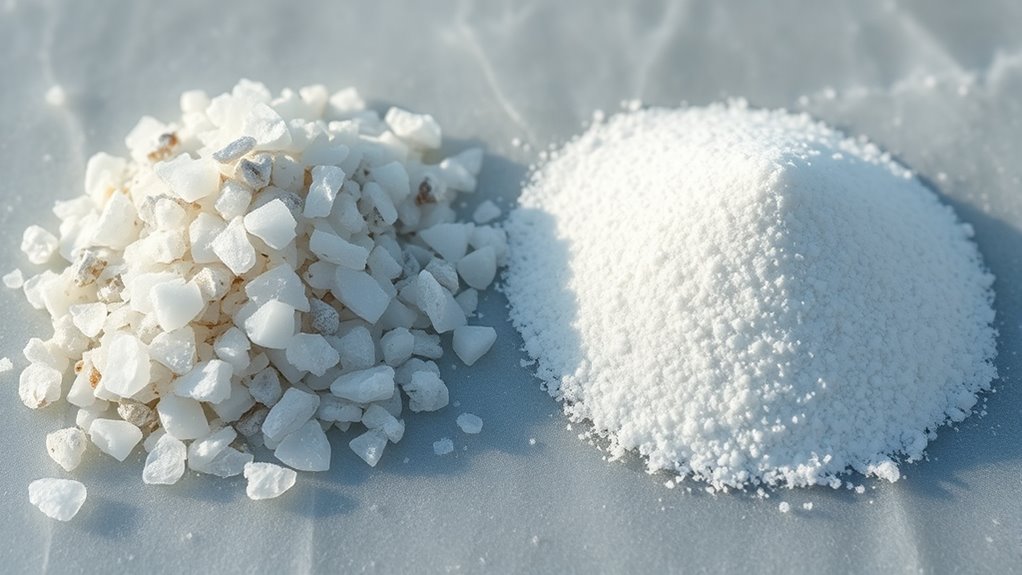
While rock salt works well in moderate cold, you’ll find ice melt products offer a broader range of ingredients designed to tackle lower temperatures more effectively. These products often combine sodium chloride, calcium chloride, and magnesium chloride to enhance ice removal.
Calcium chloride stands out by lowering the melting point to as low as -25°F, making it effective in extreme cold.
Magnesium chloride also helps by working efficiently at lower temperatures.
Many ice melt products include visible indicators like blue crystals to ensure proper application, and pre-wetted or liquid forms act faster and cover surfaces better than dry ones.
With their advanced chloride blends, these ice melt options provide reliable performance and safer, more efficient ice removal even in harsh winter conditions.
Rock Salt vs Ice Melt: Which Should You Use?
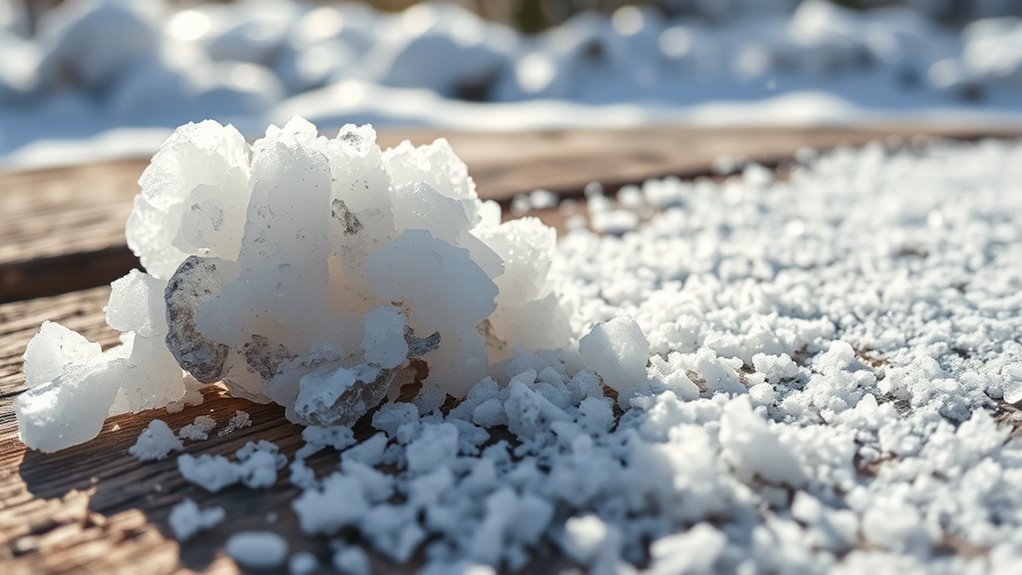
When deciding between rock salt and ice melt, consider the temperature range you’re dealing with—rock salt works well above 15°F, while ice melt handles much colder conditions down to -25°F.
You’ll also want to think about safety for your surfaces and pets, since rock salt can be harsher on concrete and vegetation.
Balancing these factors with your budget will help you pick the right option for your winter needs.
Temperature Range Differences
If you expect temperatures to drop below 5°F, rock salt won’t be your best option because it loses effectiveness in extreme cold. Its melting point limits its efficiency, making it less reliable at lower temperatures.
In contrast, many ice melt products contain calcium chloride or magnesium chloride, which lower the freezing point and perform well in colder temperatures, even down to -25°F. These compounds activate faster and maintain higher efficiency in severe winter conditions.
Choosing between rock salt and ice melt largely depends on the temperature range you anticipate. For moderate cold, rock salt works fine, but for freezing or subfreezing temperatures, ice melt products with calcium or magnesium chloride offer superior melting power and reliability.
This ensures safer, ice-free surfaces despite harsh weather.
Environmental And Safety Considerations
Choosing the right product for melting ice isn’t just about temperature effectiveness; you also need to contemplate environmental and safety impacts. Rock salt is highly corrosive and can cause soil degradation by contaminating soil and nearby water sources, harming plants and aquatic life.
In contrast, ice melt products with calcium or magnesium chlorides tend to be more environmentally friendly and less corrosive. Some ice melts are even formulated to be pet-safe, reducing risks to animals while minimizing environmental impact.
However, these options usually cost more than rock salt.
To protect ecosystems and ensure safety for humans and pets, apply any ice melt sparingly and follow usage guidelines carefully. Doing so helps reduce contamination, protects aquatic life, and limits long-term damage to your surroundings.
Melting Performance: Comparing Rock Salt and Ice Melt
When you compare rock salt and ice melt, you’ll notice they perform differently depending on the temperature.
Rock salt works best above 5°F, while ice melt can handle much colder conditions down to -25°F. You’ll also see ice melt acts faster and leaves less residue, making it more efficient for tough winter conditions.
Temperature Range Effectiveness
Although rock salt works well down to about 5°F, it loses effectiveness in colder temperatures, making it less reliable for extreme winter conditions. Its melting efficiency drops as the temperature nears and falls below the freezing point, struggling to prevent ice formation under 15°F.
If you face extreme cold, ice melt products containing calcium chloride or magnesium are more effective. These ingredients extend melting performance to temperatures as low as -25°F, ensuring ice melts faster and more reliably.
Choosing the right product depends on your local temperature range; calcium chloride blends outperform rock salt in severe cold by maintaining efficiency and continuous melting action.
Understanding these temperature range differences helps you select the best ice melt for your winter needs.
Melting Speed Comparison
Beyond just temperature range, how quickly an ice melt works can make a big difference in keeping surfaces safe. Rock salt starts melting ice effectively around 5°F but works slower compared to specialized ice melt products.
Ice melt blends containing calcium chloride or magnesium chloride boast superior melting speed, especially at lower temperatures. Calcium chloride generates heat through an exothermic reaction, accelerating melting performance and clearing ice faster. Magnesium chloride also activates quickly, allowing ice melt to work efficiently down to -25°F, well below rock salt’s range.
While rock salt works well in moderate cold, ice melt’s chemical properties lower the freezing point more rapidly, providing faster results. So, if you need quick melting, especially in harsh cold, ice melt with calcium or magnesium chloride is the better choice.
Longevity And Residue
Since rock salt tends to last longer on surfaces, you might expect it to be the better choice for prolonged ice melting. However, its melting performance drops quickly above 15°F, shortening its effective lifespan.
Plus, rock salt leaves a white residue that can be quite visible and cause staining or corrosion.
On the other hand, ice melt products often:
- Melt ice faster with additives
- Leave less visible residue
- Reduce re-freezing risks
- Extend effective lifespan by preventing residue buildup
When choosing between the two, consider that rock salt’s residue may harm surfaces over time, while ice melt generally offers cleaner results with longer-lasting melting performance and less residue to worry about.
Safety for Pets, Plants, and Surfaces
When you use rock salt or ice melt, you need to protect your pets, plants, and surfaces from potential harm. Rock salt can irritate and even burn your pet’s paws, so washing them after exposure is vital for pet safety.
Some ice melt ingredients are pet-safe, like calcium magnesium acetate, though they tend to be pricier. Both rock salt and ice melt can cause corrosive damage to concrete, metal, and vehicles if salt runoff isn’t controlled.
They also threaten plant safety by damaging roots and foliage when applied excessively or directly on vegetation. To minimize risks, apply these products sparingly and carefully.
Choosing environmentally friendly, pet-safe ice melts and practicing surface protection helps keep your property and pets safe throughout winter.

Cost and Environmental Impact Compared
Although rock salt tends to be more affordable, costing around $4.50 to $9.50 per 50 pounds, you might find ice melt products priced between $6 and $12 per 50 pounds.
When weighing cost against environmental impact, consider these points:
- Rock salt’s low cost makes it tempting for large areas, but its corrosive nature can cause significant soil damage.
- Traditional rock salt harms plants and water sources, increasing long-term environmental risks.
- Ice melt formulations often include calcium or magnesium chloride, making them more eco-friendly and less corrosive.
- Though pricier, eco-friendly ice melts help protect ecosystems, reducing soil damage and pollution.
Choosing ice melt might cost more upfront, but its thoughtful formulation minimizes environmental impact, making it a smarter choice for eco-conscious users.
Applying Rock Salt and Ice Melt Safely
To apply rock salt and ice melt safely, you should always wear gloves to protect your skin from irritation caused by the chemicals.
Before applying, shovel snow and ice to reduce the amount needed, preventing excess use and potential damage to surfaces.
Always follow the manufacturer’s instructions for proper application rates to guarantee safety and effectiveness.
Keep pet paws and children’s skin away from freshly treated areas to avoid skin irritation or ingestion.
After exposure, rinse or wipe pet paws and footwear to remove residual salt and minimize damage.
By wearing gloves and adhering to these guidelines, you guarantee the proper use of de-icers while protecting yourself, your pets, and your property from harm.
Safety starts with careful application and mindful handling.
Frequently Asked Questions
Which Salt Is Best for a Driveway?
You’ll want ice melt for your driveway since it works well in low temperatures and damages concrete less.
Rock salt’s cheaper but can harm surfaces, so ice melt’s safer and more effective, especially in harsh winters.
What Can I Use if I Don’t Have Ice Melt?
Don’t just wait for ice melt—grab sand or kitty litter for traction instead. You can also mix baking soda with salt for mild melting power, or pour hot water and shovel quickly to prevent refreezing.
When Not to Use Rock Salt?
Don’t use rock salt below 5°F since it won’t melt ice effectively. Avoid applying it on concrete, asphalt, plants, or metal surfaces to prevent damage and corrosion.
Use safer alternatives in sensitive areas instead.
Can Rock Salt Be Used for Snow?
You can use rock salt for snow—it’s like a tiny superhero fighting ice! Just remember, it works best above 5°F, so don’t expect magic below that.
Apply it carefully to protect your surfaces and plants.
Conclusion
When winter’s icy grip tightens, choosing between rock salt and ice melt is like picking the right tool for a frosty battle. Rock salt throws a strong punch but can be harsh on your plants and paws, while ice melt offers a gentler, more precise strike.
Knowing their strengths helps you dance safely on winter’s slippery stage. So, arm yourself wisely, and let your steps stay sure and steady through the cold.
Understanding the difference between rock salt and ice melt ensures you select the best option for your needs. This knowledge keeps your surfaces safe and protects your environment during winter’s chill.