How to Choose the Right Kind of Shock for Your Salt Water Pool
To choose the right shock for your saltwater pool, it’s important to select the appropriate type of pool shock. Opt for non-chlorine or stabilized chlorine shocks like sodium dichlor to avoid damaging the salt cell and upsetting pool chemistry.
Avoid calcium hypochlorite since it raises calcium levels and can cause scaling. Always match the shock to your pool’s surface and chemistry, dose carefully, and shock during evening hours.
Keep an eye on chlorine and pH levels afterward to protect your system. Understanding these basics will help you maintain sparkling, balanced water safely.
How Saltwater Pool Systems Influence Shock Treatment Choices
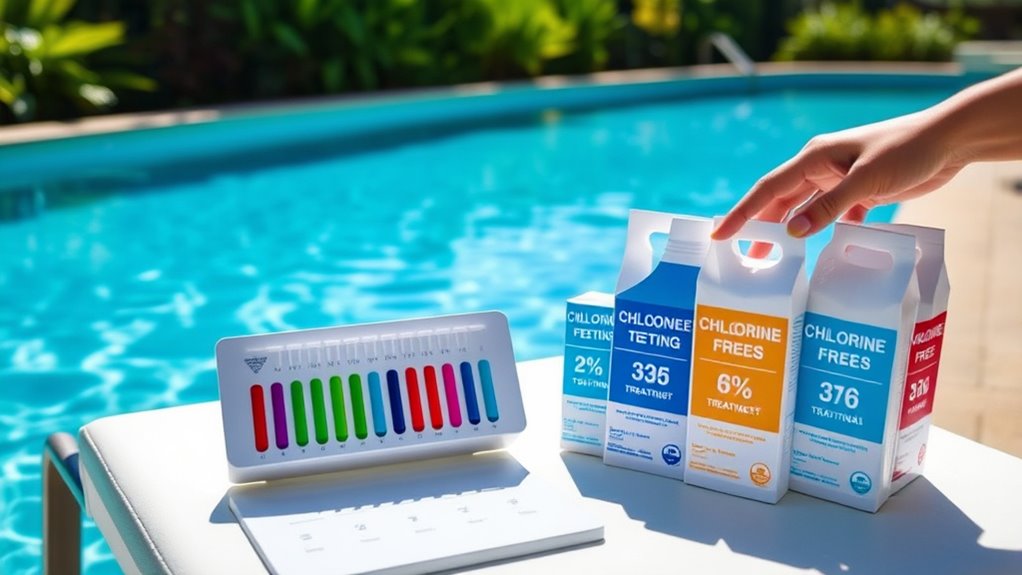
Because saltwater pool systems generate chlorine steadily through electrolysis, you’ll need to choose shock treatments that complement this process. Since saltwater pools maintain chlorine levels around 1-3 ppm, your shock treatment’s main role is oxidizing contaminants instead of boosting chlorine.
Using high-chlorine shocks like calcium hypochlorite can harm your salt cell and shorten its lifespan, so avoid them. Instead, opt for non-chlorine or stabilized chlorine shocks that won’t interfere with the salt system or cause cyanuric acid buildup.
Regularly applying these gentler shocks helps keep your water clear and reduces stress on the salt cell, especially after heavy rain or frequent pool use.
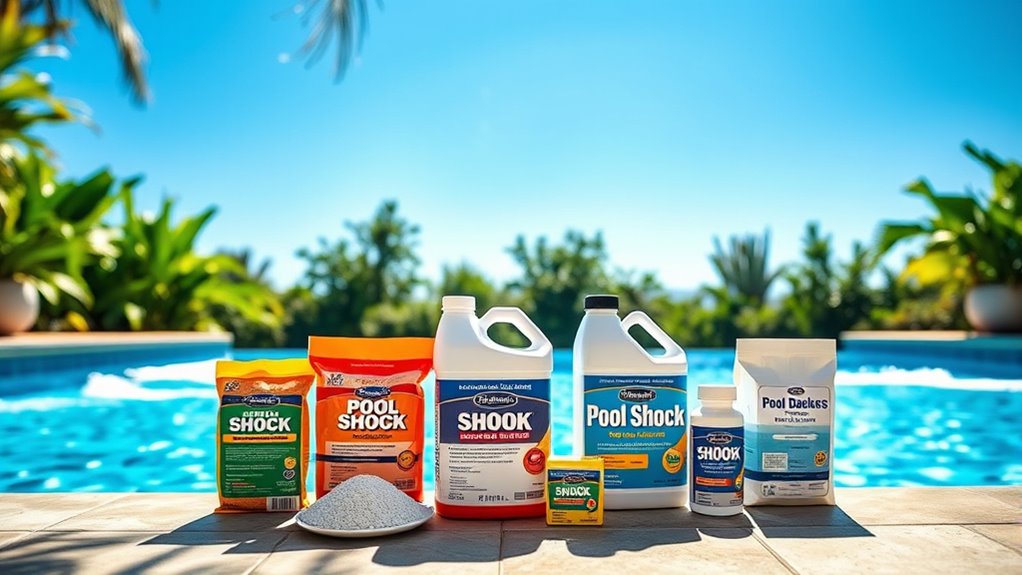
Comparing Shock Types for Saltwater Pools: Dichlor, Non-Chlorine, and Calcium Hypochlorite
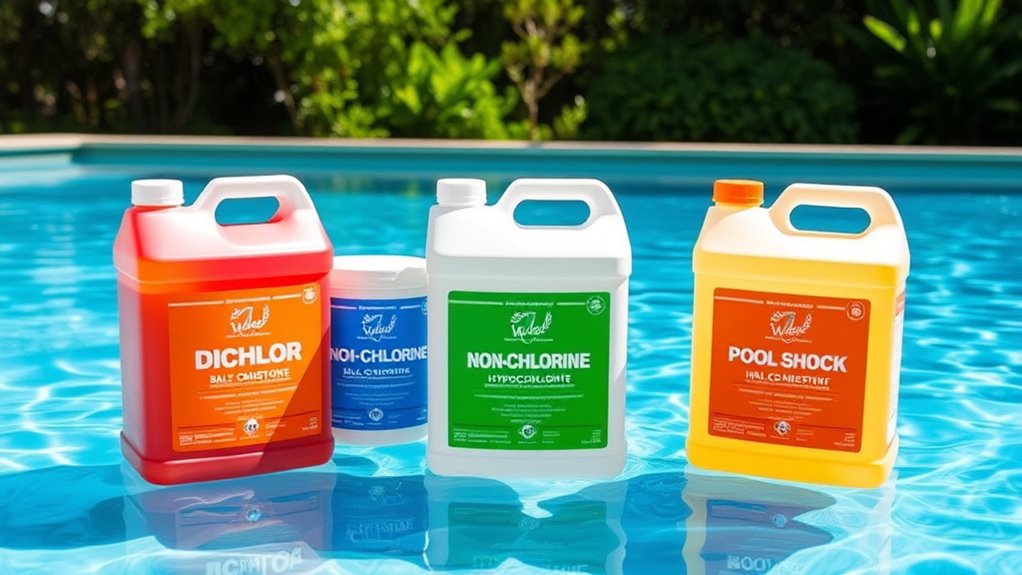
When choosing shock for your saltwater pool, you’ll want to weigh the benefits of dichlor, non-chlorine, and calcium hypochlorite options.
Each type interacts differently with your pool’s chemistry, especially regarding stabilizers and calcium levels.
Understanding these differences helps you pick the shock that keeps your water balanced and clear.
Shock Types Overview
Although you have several options for shocking your saltwater pool, choosing the right type depends on your pool’s specific needs and equipment.
Chlorine shock like dichlor contains stabilized chlorine and cyanuric acid, making it great for outdoor pools but can raise CYA levels over time.
For quick algae treatment, calcium hypochlorite acts fast but may increase calcium hardness and pH, which can stress saltwater systems.
Non-chlorine shock, such as potassium monopersulfate, won’t add chlorine but effectively oxidizes organic contaminants, helping maintain clarity between chlorination cycles.
Selecting the right shock type guarantees you balance sanitation without harming your equipment.
Keep your pool water balanced and clear by understanding how each shock impacts your saltwater pool’s chemistry and performance.
Salt Pool Compatibility
Understanding how different shock types interact with your saltwater pool can help you maintain balanced water chemistry and protect your equipment. When choosing pool shock, consider saltwater compatibility carefully.
Dichlor shock contains cyanuric acid, which stabilizes chlorine but can raise CYA levels over time, potentially disrupting your pool’s chemistry.
Calcium hypochlorite lacks stabilizer and may cause scaling or cloudiness, making it less ideal for saltwater pools.
Non-chlorine shock (potassium monopersulfate) doesn’t add chlorine or cyanuric acid, making it a safe option for oxidation without altering chlorine or CYA levels.
Both dichlor and non-chlorine shocks work well if you follow instructions, but use calcium hypochlorite cautiously due to its mineral content.
Regularly testing cyanuric acid and calcium hardness keeps your saltwater pool balanced and healthy.
Matching Shock Types to Pool Surfaces and Water Chemistry
Since your pool’s surface and water chemistry directly affect how shocks perform, choosing the right type is essential to maintain both cleanliness and durability.
Pool shock needs to suit your pool surfaces and water chemistry to avoid damage or imbalances. For example, calcium hypochlorite can harm saltwater pools by causing mineral buildup, while sodium dichlor works well with saltwater and vinyl or fiberglass surfaces.
Non-chlorine oxidizers are ideal if you have sensitive skin or indoor pools, as they don’t impact water chemistry.
| Shock Type | Best For |
|---|---|
| Sodium Dichlor | Saltwater, vinyl, fiberglass |
| Calcium Hypochlorite | Regular chlorine pools |
| Non-Chlorine Oxidizer | Sensitive skin, indoor pools |
Always check your pool’s surface and chemical levels before choosing a pool shock.
Calculating the Correct Shock Dose for Your Saltwater Pool
To calculate the correct shock dose, start by measuring your pool’s volume in gallons.
Then, use shock dosage guidelines based on the type of shock and your target chlorine increase, usually between 6-10 ppm.
This guarantees you add just the right amount to keep your saltwater pool balanced and effective.
Pool Volume Calculation
When you want to shock your saltwater pool effectively, you need to know its exact water volume first. To calculate water volume, multiply your pool’s length by width, then by the average depth, and finally by 7.5 to get gallons.
This pool volume number is essential because shock treatments usually specify dosing per 10,000 gallons.
For example, if the label says 1 pound per 10,000 gallons, and your pool holds 20,000 gallons, you’ll need 2 pounds for proper disinfecting.
Calculating your pool volume accurately helps you avoid under- or over-shocking, which can damage your equipment or water quality.
Always confirm your volume before adding chemicals, then use a reliable test kit to check chlorine levels after your shock treatment.
Shock Dosage Guidelines
Although calculating your pool’s volume is essential, knowing how to apply the correct shock dose guarantees you treat your saltwater pool effectively.
First, calculate your pool water’s volume in gallons and follow the product’s shock dosage instructions, usually given per 10,000 gallons.
For instance, 1 pound of calcium hypochlorite raises chlorine levels by about 6.8 ppm in 10,000 gallons.
Always test your current free chlorine before shocking; if it’s above 3 ppm, wait until it falls between 1 and 3 ppm for the best results.
Increase the shock dosage for algae blooms or heavy contamination by doubling or tripling the amount.
After shocking, run your filtration system for at least 8 hours and retest chlorine levels to ensure they’re safely between 1 and 3 ppm before swimming.
Best Times and Conditions for Shocking Your Saltwater Pool
Since your saltwater pool faces challenges like debris buildup and fluctuating chlorine levels, you should shock it regularly—typically every 1 to 2 months or whenever water clarity suffers.
The best times for shocking are after heavy rainstorms, seasonal openings, or before closing for winter, as these events impact water quality.
Also, boost the sanitizer when the water is cloudy, has a strong chlorine smell, or shows algae signs.
To maximize effectiveness, perform shocking during evening or nighttime hours; sunlight can break down chlorine quickly.
Keep an eye on free chlorine and pH levels—shock if chlorine drops below 1 ppm or pH falls outside the 7.2-7.6 range. Following these conditions ensures your pool stays clear, safe, and properly sanitized.
How to Safely Use Shock in Saltwater Pools
When using shock in your saltwater pool, always wear protective gear like gloves and goggles to keep yourself safe.
Make sure to apply shock properly by dissolving it completely and adding it during the evening for best results.
After shocking, wait at least 8 hours and confirm chlorine levels are safe before jumping back in.
Protective Gear Essentials
Handling pool shock demands proper protective gear to keep you safe from harsh chemicals. When performing shock treatment on your saltwater pool, prioritizing chemical safety is vital. You’ll want to protect your skin, eyes, and respiratory system by always wearing the right gear.
Here’s what you need:
- Waterproof gloves, goggles, and a mask to prevent irritation and burns
- A plastic or designated chemical container to dissolve shock safely
- A well-ventilated area, preferably outdoors, to add shock slowly and avoid inhaling fumes
- Avoid mixing different shock types to prevent dangerous chemical reactions
After treatment, wash your hands and rinse any exposed skin. Keep kids and pets away until chemical levels are safe.
Using proper protective gear ensures your shock treatment goes smoothly and safely.
Proper Shock Application
Wearing the right protective gear sets the stage for a safe shock treatment, but applying the shock properly is just as important to keep your saltwater pool balanced and clean. Always add shock at night or when the pool isn’t in use to prevent sunlight from breaking down chlorine before it works.
Dissolve granular shock completely in a bucket of water before spreading it evenly around the pool. This ensures no localized high concentrations damage your pool or equipment.
After shocking, run your pool’s circulation for 8 to 10 hours to distribute the chemicals evenly.
Before swimming, test chlorine levels to confirm they’re between 1-3 ppm and wait at least 8 hours if using calcium hypochlorite or dichlor shock.
Following these steps ensures the proper application of shock and a safe swimming environment.
Post-Shock Swimming Guidelines
Although shocking your saltwater pool is essential for maintaining water quality, you should wait at least 24 hours before swimming to allow chlorine levels to drop to a safe range of 1-3 ppm. This ensures pool safety and prevents irritation.
Before you jump back in, always test free chlorine and pH levels to confirm proper water chemistry.
Avoid swimming immediately after adding shock treatments to let chemicals circulate evenly. Refrain from swimming if chlorine or combined chlorine levels exceed 3 ppm.
Follow the shock product’s specific instructions for wait times and safety precautions.
Signs Your Saltwater Pool Needs Extra Shock Treatment
When your saltwater pool shows signs like cloudy water, a strong chlorine smell, or slimy walls, it’s time to contemplate extra shock treatment. Low chlorine levels, especially below 1 ppm after heavy rain or high swimmer activity, clearly indicate your pool needs a boost.
You’ll also notice algae or a green tint in the water, which means the sanitation isn’t keeping up.
Poor water clarity and persistent foul odors further signal that chloramines are building up, requiring a shock to break them down. Extended periods of low or zero chlorine readings, such as after storms or pool opening, are also warning signs.
Paying attention to these indicators helps you maintain a clean, clear, and safe saltwater pool environment.

Maintaining Your Salt System After Shocking
After shocking your saltwater pool, you’ll want to closely monitor your salt system to keep it running smoothly and maintain water balance. Proper care guarantees your pool stays clean without damaging equipment.
Keep a close eye on your salt system after shocking to maintain balance and protect your equipment.
Focus on:
- Testing salt levels and chlorine levels to confirm the sanitizer and salt balance.
- Running your salt chlorinator continuously for at least 24 hours post-shock to stabilize chlorine production.
- Checking and cleaning the system’s cell for any buildup or scaling to prevent efficiency loss.
- Regularly monitoring pH balance and alkalinity since shocking can cause fluctuations affecting the salt system.
Wait until chlorine levels return to 1-3 ppm before swimming again to avoid stressing your system. Staying on top of these steps helps your saltwater pool stay healthy and enjoyable.
Why Avoid Calcium Hypochlorite in Saltwater Pools
Since maintaining a balanced chemical environment is essential for your saltwater pool, you should avoid using calcium hypochlorite as a shock treatment.
Calcium hypochlorite raises calcium hardness levels, which can cause scaling and cloudy water that disrupts your pool’s water balance.
This buildup doesn’t just affect water clarity—it can also accumulate on your salt cell, reducing its efficiency and shortening its lifespan.
Additionally, calcium hypochlorite tends to increase pH levels, forcing you to add more acid to restore proper water balance.
Mineral deposits from calcium hypochlorite may clog critical equipment, leading to costly maintenance issues.
Because saltwater pools require a delicate chemical balance to operate at its best, calcium hypochlorite isn’t the ideal choice for shocking your pool.
Using Non-Chlorine Shock Effectively in Saltwater Pools
Avoiding calcium hypochlorite in your saltwater pool means you’ll need an alternative that won’t disrupt water balance or damage equipment. Non-chlorine shock is an excellent choice for saltwater pools, as it oxidizes organic contaminants without raising chlorine or cyanuric acid levels, preserving water clarity.
To use non-chlorine shock effectively, keep these tips in mind:
- Apply it regularly to maintain clear, clean water and reduce chloramine buildup.
- Use it after heavy pool use for quick sanitation; you can swim again within 15 minutes.
- Choose non-chlorine shock for sensitive swimmers or when frequent treatments are needed without increasing chlorine.
- Follow product instructions carefully to avoid overdosing and maintain ideal water balance.
Using non-chlorine shock helps you keep your saltwater pool sparkling without the harsh side effects of chlorinated shocks.
Frequently Asked Questions
Which Shock to Use for a Salt Water Pool?
You should use stabilized shock like sodium dichlor for your saltwater pool, as it dissolves quickly and protects chlorine from sunlight.
Consider non-chlorine shock for maintenance, but always guarantee compatibility with your salt system to avoid damage.
What Type of Pool Shock Should I Use?
Think of shock like fuel for your saltwater pool’s engine—use stabilized sodium dichlor for regular tuning, and non-chlorine shock for quick cleanups.
Avoid calcium hypochlorite; it clogs your pool’s essential parts like grit in gears.
What Is the Difference Between Cal-Hypo Shock and Dichlor Shock?
Cal-Hypo shock has higher chlorine, raises pH, and isn’t great for salt pools.
Dichlor shock has stabilized chlorine, lowers pH, adds cyanuric acid, and works well with saltwater systems.
You’ll want Dichlor for salt pools.
What Ruins a Salt Water Pool?
You ruin a saltwater pool by using cal-hypo shock, over-shocking with chlorine, adding liquid chlorine improperly, using stabilized shock, or neglecting pH balance.
These cause scaling, damage salt cells, and reduce sanitizer effectiveness.
Conclusion
So, you want the perfect shock for your saltwater pool? Choosing the right kind of shock is essential to maintaining balanced chemistry and ensuring surface safety. Not all pool shocks are created equal, especially for saltwater systems.
Avoid using calcium hypochlorite, as it can cause damage to your pool equipment and impact water clarity. Instead, opt for pool shocks specifically designed for saltwater pools to keep your water clean and safe.
Timing and dosage are crucial when shocking your pool. Follow the manufacturer’s instructions carefully to avoid harming your pool or its components. In conclusion, selecting the right shock for your saltwater pool ensures effective sanitation and protects your investment.