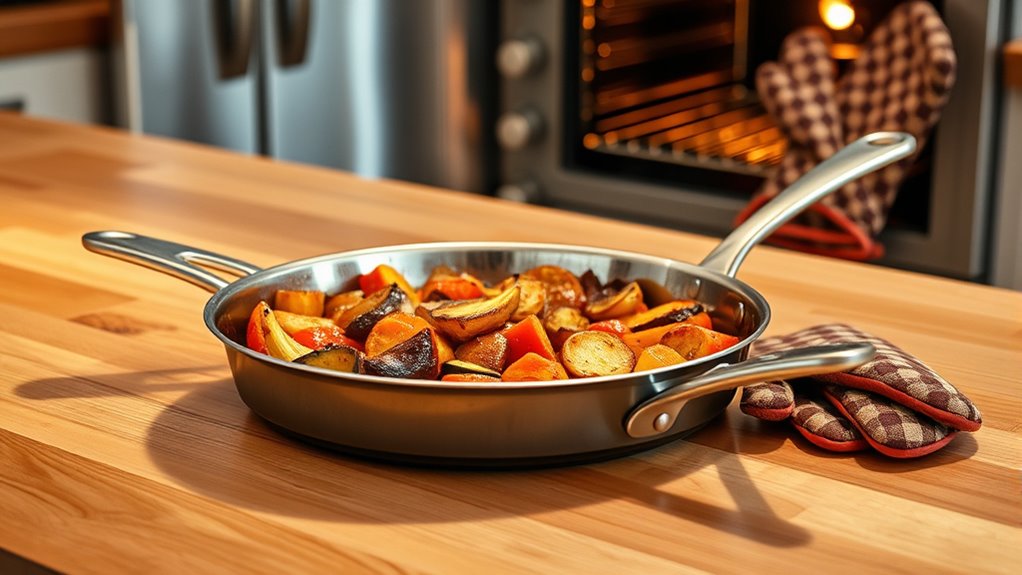
How to Safely Use Aluminum Pans in the Oven
You can safely use aluminum pans in the oven, as they’re designed to handle typical heat up to 500°F without warping or breaking. Using aluminum pans is a popular choice for baking and roasting due to their excellent heat conductivity and lightweight nature.
To prevent spills and warping, place your aluminum pan on a sturdy, rimmed baking sheet and avoid overfilling it. Lightly grease or line the pan to stop sticking, and always let it cool before cleaning by hand with mild detergent.
Proper care ensures your aluminum pans maintain their quality over time. Keep these tips in mind to guarantee even cooking and lasting pan quality—there’s more to discover about optimizing your baking experience.
Why Are Aluminum Pans Safe to Use in the Oven?
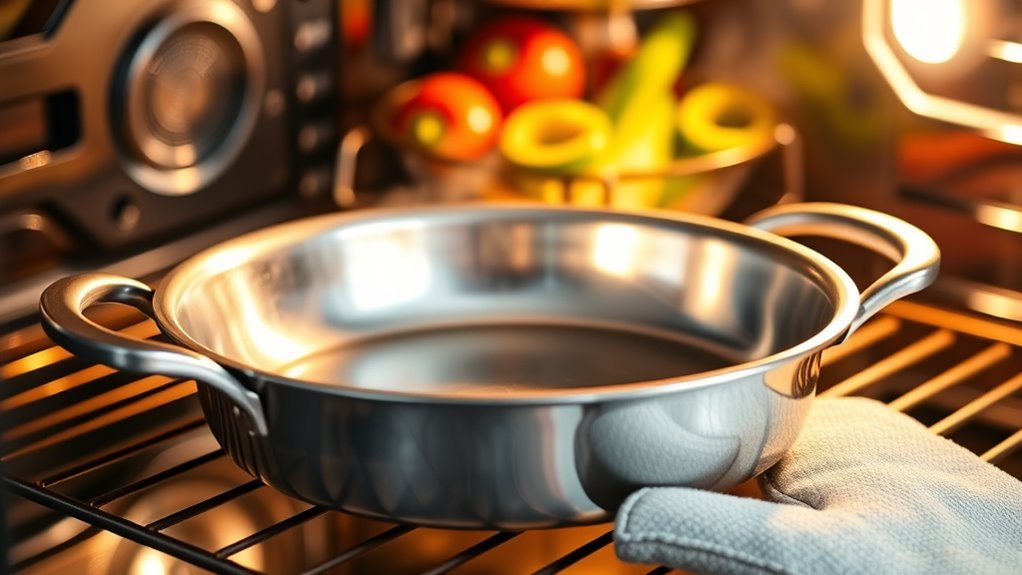
Although you might worry about using aluminum pans in the oven, they’re actually safe because they can withstand temperatures up to 500°F without melting or warping. Aluminum pans are designed to handle typical oven heat without cracking or breaking thanks to their lightweight and flexible structure.
You’ll appreciate how aluminum’s excellent thermal conductivity ensures your food cooks evenly by distributing heat consistently throughout the pan. Plus, aluminum is a non-reactive metal, so it won’t leach harmful substances into your meals when used properly.
Most aluminum pans you find are made from food-grade aluminum, approved by safety organizations specifically for oven use. This makes aluminum pans a reliable, safe choice for baking and roasting in your oven.
How to Prepare Aluminum Pans Before Baking
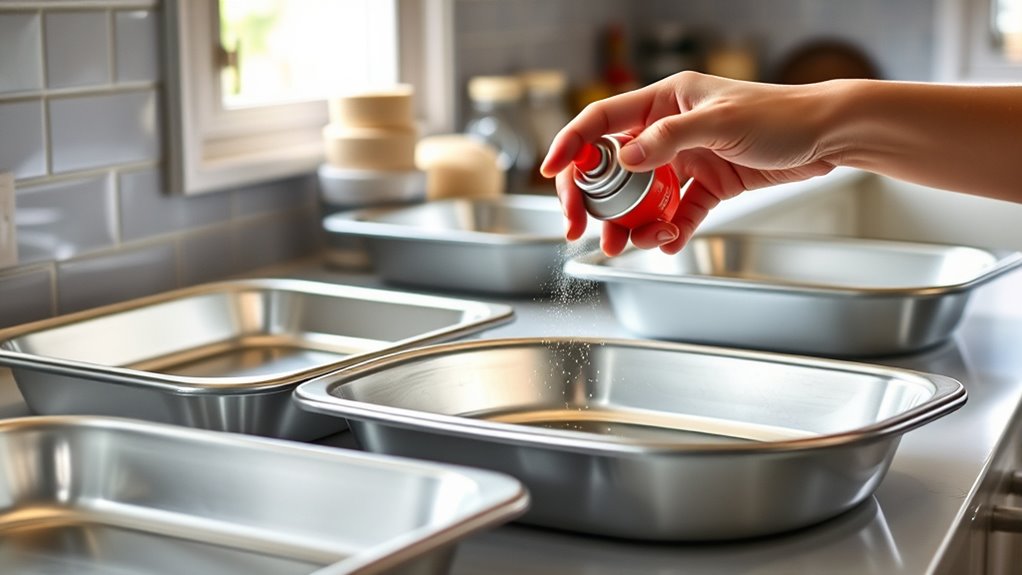
Before baking, make sure to support lightweight aluminum pans with a sturdy baking sheet to prevent warping or spills. Always check if your pan is oven-safe and preheat the oven accordingly to avoid sudden temperature changes.
These simple steps help guarantee your baked goods cook evenly and safely.
Pan Support Techniques
When you prepare aluminum pans for baking, placing them on a sturdy baking sheet helps prevent warping and provides essential support. This technique is especially important for lightweight or disposable pans filled with heavy ingredients. Avoid overfilling to reduce stress on the pan’s structure and minimize spills.
Always handle pans with oven mitts after baking to prevent burns and accidental bending.
| Tip | Reason |
|---|---|
| Use a sturdy baking sheet | Provides firm support |
| Avoid overfilling | Prevents spills and warping |
| Preheat oven | Minimizes sudden temperature shocks |
| Support lightweight pans | Prevents bending under weight |
| Use oven mitts | Protects hands and maintains pan shape |
Preheating And Preparation
Since aluminum pans heat quickly and unevenly, you should always preheat your oven fully before placing them inside to guarantee consistent baking. Before you start, make sure your aluminum pans are oven-safe and free of plastic handles to avoid damage.
To prepare your pans properly:
- Support lightweight disposable pans on a baking sheet to prevent warping or spills during preheating.
- Lightly grease the pans or line them with parchment paper to prevent sticking and simplify cleanup.
- Avoid overfilling the pans to ensure even cooking and prevent spills.
Following these steps helps you get the best results while protecting your aluminum pans and your oven during baking. Always preheat the oven first to keep everything cooking evenly.
How to Prevent Warping and Spills When Baking
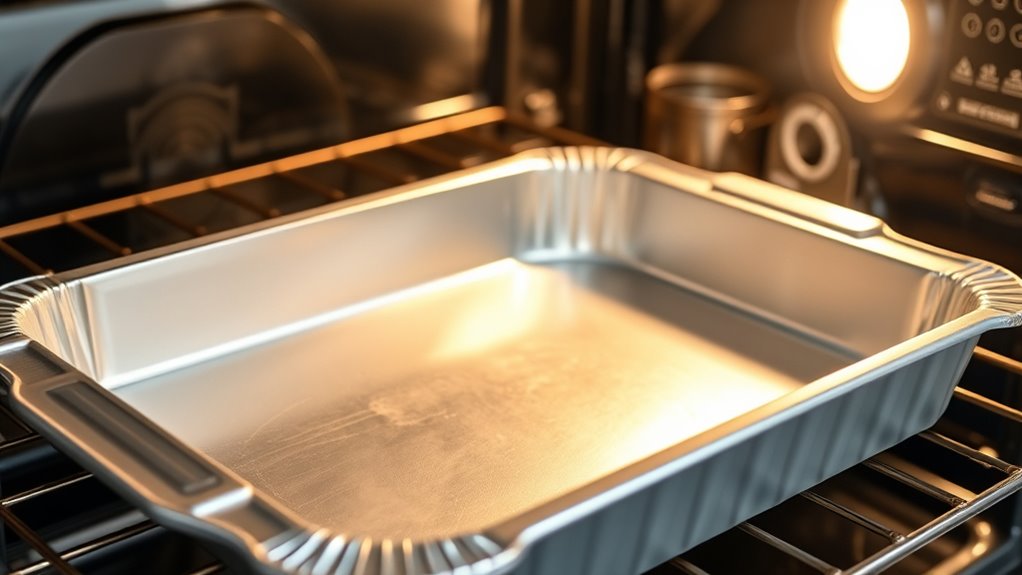
To keep your aluminum pans from warping, always place them on a sturdy baking sheet for support. Make sure to rotate the pans halfway through baking to promote even heat distribution.
These simple steps help prevent spills and guarantee your baked goods cook perfectly.
Support With Baking Sheets
Although aluminum pans are lightweight and convenient, they can easily warp or spill during baking without proper support. To prevent warping and spills, always place your aluminum pan on a sturdy baking sheet. Here’s how to guarantee optimal support:
- Use a rimmed baking sheet to catch any drips or spills, keeping your oven clean.
- For heavier or fuller pans, double up with two baking sheets to evenly distribute weight and avoid bending.
- Preheat the oven with the baking sheet in place to stabilize support before inserting the aluminum pan.
Make sure your pan fits well within the baking sheet without overhanging edges to maintain stability throughout baking. This simple step protects your pans and keeps your oven mess-free.
Rotate Pans Midway
When you rotate aluminum pans halfway through baking, you promote even heat distribution and reduce hot spots that cause warping. To do this effectively, gently turn the pan 180 degrees on the oven rack at the baking midpoint. Always use oven mitts to handle the hot pan safely and prevent burns or spills.
Although opening the oven door can cause heat loss, rotating quickly minimizes this effect while ensuring the pan receives even heat on all sides. This practice is especially important for lightweight or thin aluminum pans, which are more prone to warping under uneven heat.
When Not to Use Aluminum Pans in Your Oven
If you plan to broil or cook at extremely high temperatures, you shouldn’t use thin disposable aluminum pans since they can warp or even melt. To keep your cookware safe and effective, avoid these situations:
- Using thin aluminum pans under high direct heat or open flames, which can cause warping or damage.
- Placing aluminum pans with plastic or wooden handles in the oven unless labeled oven-safe, as these handles may melt or catch fire.
- Cooking at temperatures above 500°F, since aluminum pans can degrade or lose shape.
Also, steer clear of placing aluminum foil pans in direct contact with the oven’s heating element or floor to prevent safety hazards. Choosing the right type of aluminum pan and understanding its limits keeps your cooking safe and your pans lasting longer.
How to Handle and Clean Aluminum Pans After Oven Use
After using your aluminum pans in the oven, handling and cleaning them properly helps maintain their shape and appearance. First, let your oven-safe aluminum pans cool completely to avoid burns and prevent warping.
When it’s time for cleaning, wash them by hand using mild detergent and warm water. Avoid abrasive scrubbers, which can scratch and damage the surface. If you encounter stubborn stains or burnt-on food, soak the pans in warm, soapy water before gently scrubbing with a non-abrasive sponge.
Never put aluminum pans in the dishwasher, as harsh detergents and high heat may corrode or weaken the material. Finally, dry your pans thoroughly right after washing to prevent oxidation and keep them looking their best.
Proper care guarantees your aluminum pans last longer and perform well.
Tips for Getting the Best Oven Results With Aluminum Pans
Because aluminum pans are lightweight and conduct heat quickly, you’ll want to support them on a baking sheet to prevent warping or spills during cooking.
Support lightweight aluminum pans on a baking sheet to avoid warping and spills while cooking.
To get the best oven results with aluminum foil pans, keep these tips in mind:
- Preheat your oven fully before placing aluminum pans inside to ensure even heat distribution and avoid warping.
- Rotate the pans halfway through baking to promote consistent cooking and prevent hot spots.
- Use parchment paper or lightly grease the pans to prevent sticking and simplify cleanup.
Frequently Asked Questions
Is It Safe to Put Aluminum Pans in the Oven?
Yes, you can safely use aluminum pans in the oven if they’re food-grade and within temperature limits.
Just avoid broiling, support thin pans, and don’t use pans with non-oven-safe handles to prevent damage or accidents.
Does Parchment Paper Prevent Aluminum Leaching?
Parchment paper doesn’t completely prevent aluminum leaching, but it helps reduce it by minimizing direct contact.
You should still avoid cooking highly acidic foods long-term in aluminum pans, even with parchment paper as a barrier.
Does Aluminum Foil Release Toxins When Heated?
Think of aluminum foil as a reliable shield; it doesn’t release toxins when heated under normal cooking temperatures.
You won’t have to worry unless you cook acidic foods at extremely high heat for too long.
What Should Not Be Cooked in Aluminum Pans?
You shouldn’t cook highly acidic foods, like tomato sauce or citrus, in aluminum pans. Also, avoid broiling, direct flame, heavy dense foods, or temperatures above 500°F, as these can damage the pan or affect taste.
Conclusion
Using aluminum pans in your oven is as reliable as a trusty pocket watch—simple and effective. Just prep them right, avoid overheating, and handle with care to prevent warping or spills.
Remember when not to use them, and clean them gently afterward to keep them in top shape. Follow these tips, and you’ll get the best baking results every time, making your kitchen adventures smooth and successful.
By following these guidelines on how to safely use aluminum pans in the oven, you can ensure durability and excellent cooking performance with every bake.