
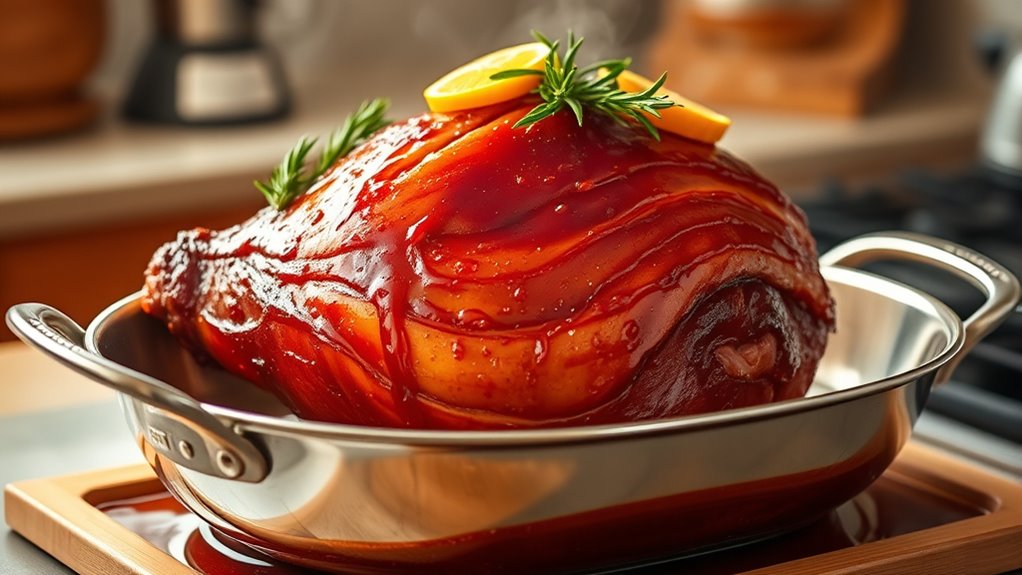
How You Cook Ham in a Roaster Pan
To cook ham in a roaster pan, start by choosing a fully cooked spiral ham and let it rest at room temperature. Pat it dry, score the surface, then wrap it tightly in foil for juiciness.
Placing the ham in a roaster pan helps ensure even cooking and moisture retention.
Place the ham on a rack inside the pan with some pineapple juice or broth underneath to keep it moist. Roast at 325°F, about 15-20 minutes per pound, until it reaches 140°F internally.
Glaze near the end for a caramelized finish. Keep following for more tips on perfect timing and serving.
Choosing the Right Ham and Roaster Pan
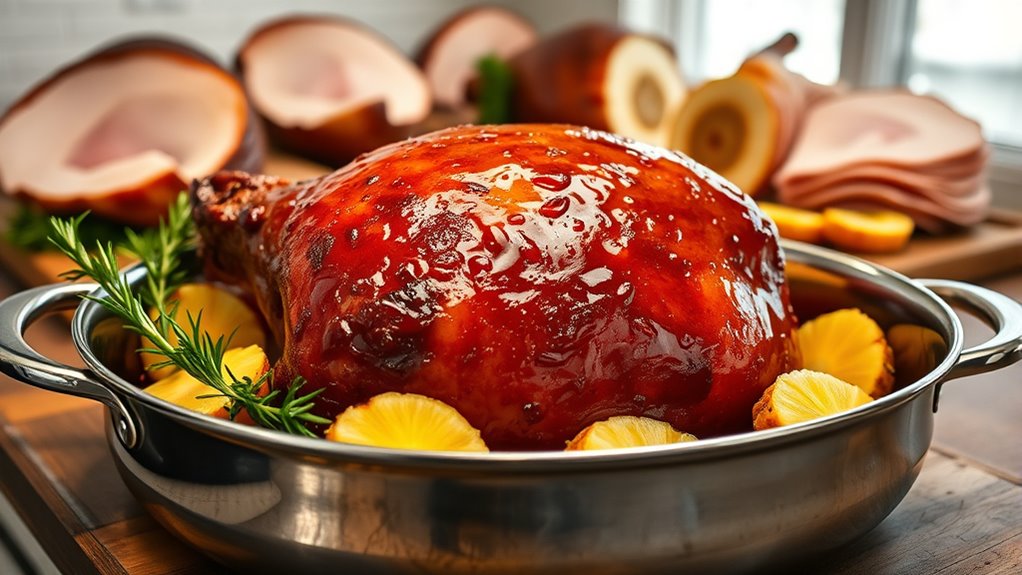
When you’re picking a ham for your roaster pan, go for a fully cooked spiral ham labeled for reheating, weighing around 8 to 10 pounds. You can choose between a bone-in ham or a boneless ham, depending on your preference, but make sure the ham size matches your serving needs.
Select a roaster pan large enough—around 22 quarts or similar roaster size—to fit the ham comfortably without crowding. To keep the ham moist, line the bottom of the roaster with pineapple juice or another liquid like broth or water.
Wrap the ham tightly in foil wrapping to seal in juices during reheating or glazing. Finally, use a meat thermometer to monitor the internal temperature and ensure perfect, safe results every time.
How to Prepare Your Ham Before Roasting
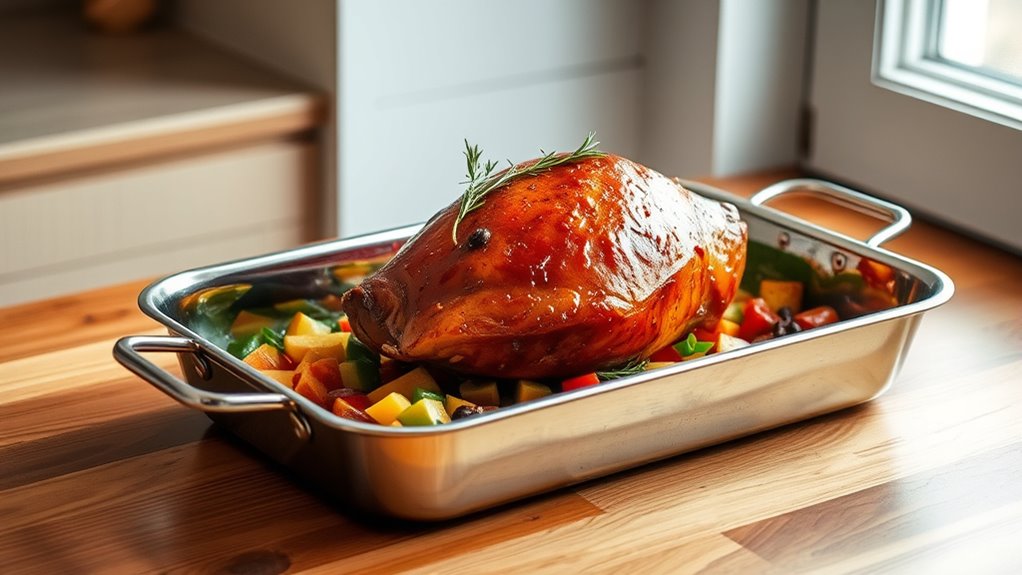
Before you start roasting, let your ham rest at room temperature for about 30 to 40 minutes to guarantee even cooking. Next, wrap it tightly in foil to lock in moisture and keep it juicy throughout the process.
Finally, prepare a pineapple juice glaze to add a sweet, tangy flavor that complements the ham perfectly.
Resting Ham Pre-Cooking
Since even heat distribution is vital to a perfectly cooked ham, you should let it rest at room temperature for 30 to 40 minutes before roasting. This resting time guarantees the ham cooks evenly throughout, improving juiciness and flavor.
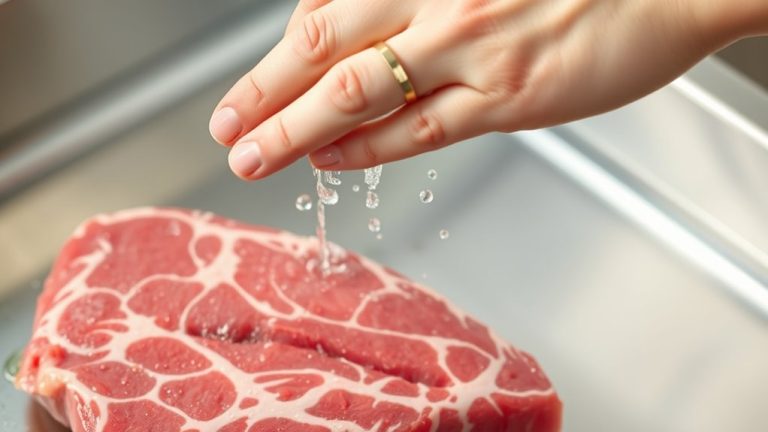
Before you rest ham, pat it dry with paper towels to remove excess moisture—this step helps with browning and glazing later on. Checking the internal temperature before cooking is essential; aim for at least 140°F to guarantee safety and ideal moisture retention.
While foil wrapping is necessary during cooking to lock in juices, avoid wrapping the ham during this pre-cooking resting phase. By properly resting your ham and preparing it this way, you set the foundation for a tender, flavorful roast with even heat distribution from start to finish.
Foil Wrapping Techniques
Although wrapping your ham in foil might seem simple, doing it correctly is vital to locking in moisture and enhancing flavor during roasting. Start by scoring the surface in a diamond pattern to allow glaze penetration and add decorative presentation.
Use aluminum foil large enough for a snug fit around the ham and pan. For bigger hams or higher heat, wrap with a double layer of foil to ensure a secure seal that prevents drying out.
| Benefit | Technique | Result |
|---|---|---|
| Seal in moisture | Tight foil wrapping | Juicy, tender ham |
| Prevent drying | Double layer foil | Secure seal, no leaks |
| Enhance flavor | Scored surface | Better glaze penetration |
This foil wrapping method preserves flavor and texture perfectly.
Pineapple Juice Preparation
How do you create a flavorful base for your ham glaze? Start by pureeing canned pineapple chunks with pineapple juice until smooth. This puree adds a vibrant flavor and natural sweetness to your glaze.
Mix it with brown sugar and spices to marinate your ham, enhancing taste and tenderness. When you roast, pour pineapple juice into the roaster pan to cover the bottom by at least 1/4 inch—this keeps your ham moist throughout cooking. If needed, top up with extra juice, broth, or water.
Chill the glaze until ready to baste, preserving its fresh flavor. Remember, proper pineapple juice preparation guarantees a juicy roast and a deliciously sweet glaze that makes every bite unforgettable.
- Sweetness that melts into every slice
- Moisture locking in tender juiciness
- A tangy glaze bursting with flavor
- Basting that transforms your ham into a masterpiece
How to Set Up Your Roaster Pan for Perfect Ham
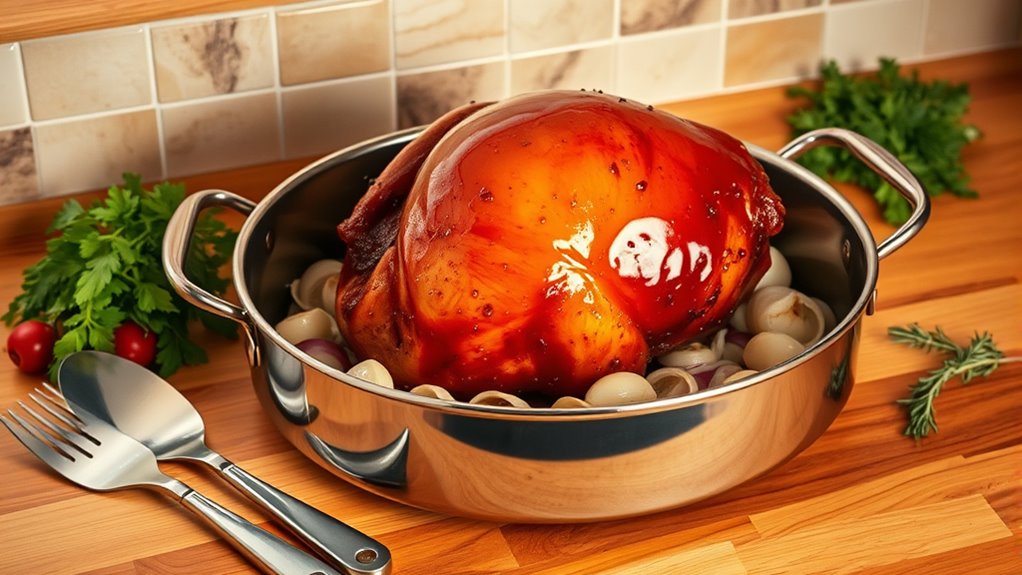
When setting up your roaster pan for ham, start by letting the ham rest at room temperature for 30 to 40 minutes to guarantee even cooking. Begin preparing ham by wrapping it tightly in foil, which assures moisture retention during roasting.
Place a rack inside the roaster pan to keep the ham elevated, promoting heat circulation and making basting easier. Pour at least 1/4 inch of liquid in bottom—such as pineapple juice or broth—to maintain moisture and enhance flavor.
As you roast, monitor the internal temperature with a digital meat thermometer, inserting it into the thickest part without touching the bone. This setup fosters even heating, prevents drying out, and helps you achieve a perfectly cooked, juicy ham every time.
How to Cook Ham in a Roaster Pan: Cooking Times and Temperatures
You’ll want to cook your fully cooked ham at 325°F, allowing about 15-20 minutes per pound to reach the perfect internal temperature of 140°F.
Make sure to cover the ham with foil to keep it moist throughout the cooking time.
If you plan to glaze it, apply the glaze during the last 20-30 minutes and crank the heat to 425°F for a delicious caramelized finish.
Optimal Cooking Temperatures
Although you can cook a fully cooked ham at various temperatures, maintaining the oven between 275°F and 325°F guarantees even heating and prevents drying out. This ideal oven temperature ensures your ham in roaster cooks thoroughly while retaining moisture. Use a meat thermometer to check the internal temperature, aiming for the temperature to reheat ham at 140°F for safe serving.
When you want that perfect glaze or caramelization, increase the oven temperature to 425°F briefly to achieve a delicious crust without overcooking.
- Feel the satisfaction of a perfectly heated ham, juicy and tender
- Enjoy the anticipation as the glaze caramelizes beautifully
- Trust your meat thermometer to guide you confidently
- Relish the warmth when the internal temperature reaches 140°F, signaling it’s ready to serve
Ham Cooking Time Guide
How long should you cook a fully cooked ham in a roaster pan to get the best results? Cook it at 275°F for about 15-20 minutes per pound, aiming for an internal temperature of 140°F. Use a meat thermometer in the thickest part, avoiding the bone, to ensure perfect juiciness.
If you reheat ham, follow the same temperature and time guidelines. Spiral cut hams with glaze may cook slightly faster, so monitor closely.
| Ham Weight | Cooking Time (min/lb) | Internal Temp (°F) |
|---|---|---|
| 5 lbs | 15–20 | 140 |
| 7 lbs | 15–20 | 140 |
| 10 lbs | 150–200 | 140 |
| Spiral Cut | Slightly less | 140 |
Preparing and Applying a Glaze for Roaster Ham
When preparing a glaze for your roaster ham, start by pureeing canned pineapple with its juice until smooth, then simmer it with brown sugar, cornstarch, butter, and spicy brown mustard until thickened.
Use a pastry brush to generously apply the glaze over the ham in your roaster oven during the final stages of cooking, typically when the ham reaches 120°F. This glazing process encourages caramelization, creating a glossy, flavorful finish.
Brush the glaze onto the ham at 120°F to achieve a glossy, caramelized finish bursting with flavor.
For an extra caramelized crust, increase the oven temperature to 425°F and bake uncovered for 15-20 minutes, brushing the glaze repeatedly to build layers of taste and shine.
- Imagine the sweet aroma of pineapple and brown sugar filling your kitchen
- Picture the ham’s surface glistening with a rich, caramelized finish
- Feel the satisfaction of perfectly applied glaze enhancing every bite
- Enjoy the visual appeal of a beautifully glazed ham on your table
Checking Doneness: Using a Meat Thermometer Correctly
To make certain your ham is perfectly cooked, insert the meat thermometer into its thickest part without touching the bone. Proper thermometer placement guarantees an accurate reading of the internal temperature, which is key for checking doneness.
When you cook your ham in the oven or roaster, use a digital or dial instant-read meat thermometer to monitor temperature frequently, especially as cooking time nears completion. The USDA recommends an internal temperature of 140°F for fully cooked ham and 145°F for fresh or partially cooked ham.
Regular temperature monitoring prevents overcooking and drying out. After removing the ham from the roaster, let it rest 15-20 minutes so the internal temperature stabilizes, completing your doneness check perfectly.
Serving Suggestions and Storing Leftover Roaster Ham
After ensuring your ham reaches the perfect internal temperature and allowing it to rest, you can focus on serving and storing the leftovers. You can serve ham slices cold or hot, adding them to sandwiches, salads, or casseroles for versatile meals.
When it’s time to store leftover ham, tightly wrap it in plastic or foil and refrigerate for up to 5 days. To keep leftovers longer, freeze sliced ham in portioned bags for up to 6 months. Always reheat leftovers to an internal temperature of 140°F to maintain safety and juiciness.
- Garnish ham slices with fresh herbs or fruit to brighten flavors
- Use leftover ham in comforting casseroles or fresh salads
- Store leftover roasted ham promptly to preserve taste
- Enjoy warm or cold slices anytime with easy reheating tips
Frequently Asked Questions
How Long to Cook a Ham in a Roaster Pan?
You’ll cook the ham about 15-20 minutes per pound at 325°F. For an 8-pound ham, expect 2 to 2.5 hours.
Use a meat thermometer to guarantee it reaches 140°F, then let it rest.
Do You Put Water in a Roaster When Cooking a Ham?
Yes, you should add about 1/4 inch of water or juice to the roaster. It prevents burning and keeps your ham moist, so you won’t end up with a dry, tough ham after cooking.
What Do You Put in the Bottom of a Roasting Pan for Ham?
You put about 1/4 to 1/2 inch of liquid, like water, broth, or pineapple juice, in the bottom of the roasting pan.
Adding vegetables or flavored liquids can boost taste and keep the ham moist while cooking.
Can I Use a Roasting Pan for Ham?
Absolutely, you can use a roasting pan for ham.
Conclusion
Cooking ham in a roaster pan is like painting a masterpiece—you start with the right tools, add your personal touch, and watch it come to life. Just like a famous chef once said, “The secret to great flavor is patience and care.”
By following these steps, you’ll create a juicy, flavorful ham that’s worth every minute. So, grab your roaster, and let your kitchen be your gallery!
Mastering how you cook ham in a roaster pan ensures a tender, delicious result every time. With the right technique and a good roaster pan, your ham will be the star of the meal.