How You Can Eat Patty Pan Squash Skin Safely
You can safely eat patty pan squash skin by washing it thoroughly under running water, scrubbing any dirt from crevices, and trimming off the stem and ends. Patty pan squash skin is edible and thin, so there’s no need to peel it.
It becomes tender when roasted, sautéed, or steamed. Cooking it properly brings out a mild flavor and adds fiber and nutrients to your meal.
If you want to discover the best preparation tips and learn when peeling might be necessary, keep exploring.
Can You Eat Patty Pan Squash Skin?
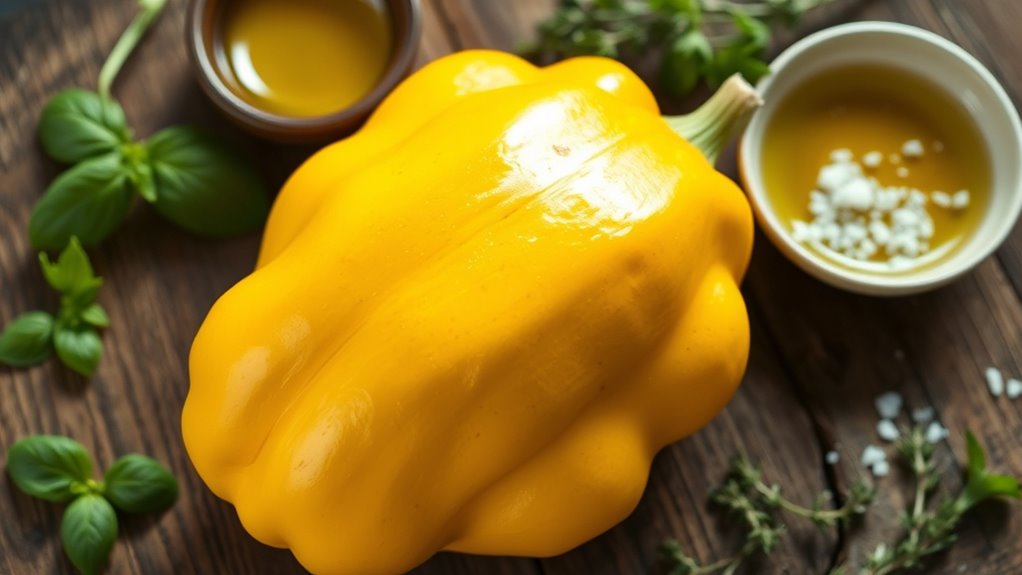
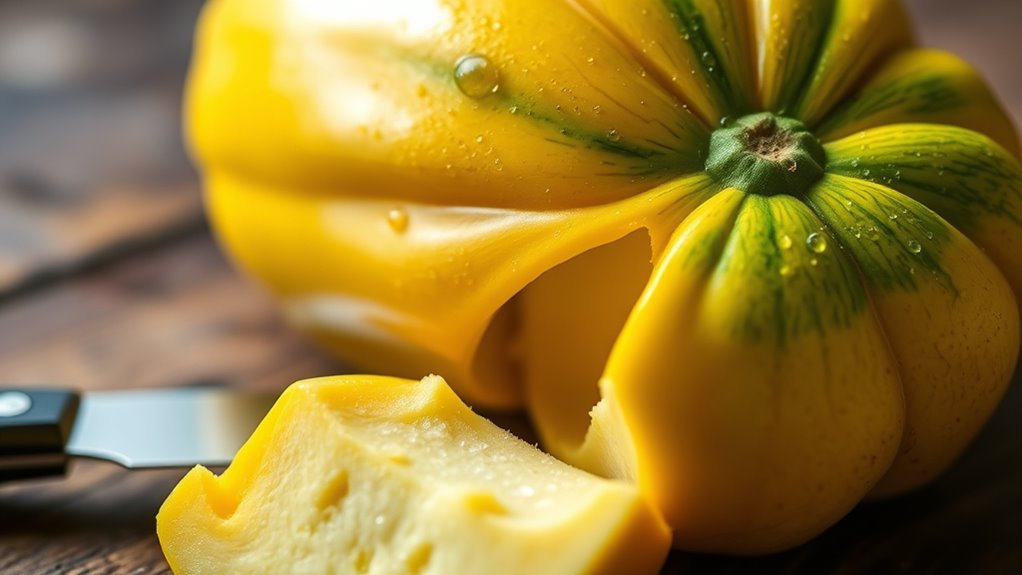
Wondering if you can eat patty pan squash skin? The answer is yes! Patty Pan Squash has a thin, tender, and edible skin that’s perfectly safe to eat when cooked right.
You don’t need to peel it before cooking since the skin adds a nice texture to your dishes. Just make sure to wash the squash thoroughly to remove any dirt before cooking. Whether you roast, sauté, or steam Patty Pan Squash, these methods soften the skin, making it enjoyable to eat.
Why You Should Eat Patty Pan Squash Skin
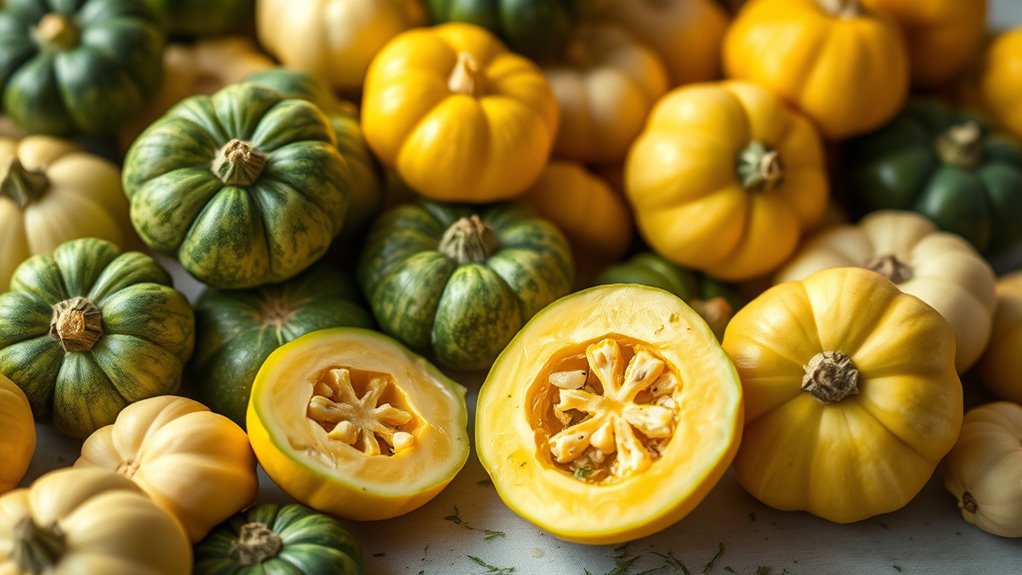
Because patty pan squash skin is thin and tender, you’ll find it adds a pleasant texture and subtle flavor to your dishes. When you cook squash by roasting, steaming, or sautéing, the skin softens, making it even more enjoyable to eat.
Leaving the skin on not only enhances the taste but also boosts the nutritional value of your meal. The skin contains extra fiber, vitamins, and antioxidants that you’d miss if you peeled it off. Since the skin is safe and edible, you don’t have to waste any part of the squash.
Embracing the skin makes your cooking simpler and healthier, giving you a delicious way to enjoy all the benefits this versatile vegetable offers.
How to Clean Patty Pan Squash
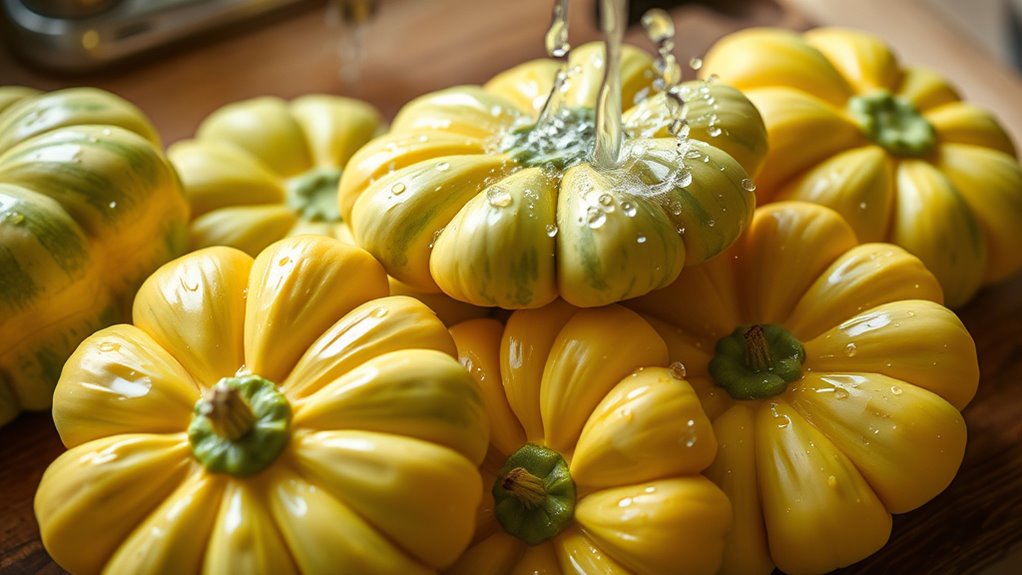
Before you start cooking, make sure to rinse your patty pan squash thoroughly under cool running water to remove any dirt or pesticides. Since patty pan is a type of summer squash, its skin can have crevices where dirt hides. Use a vegetable brush or scrubber to gently clean the surface, paying extra attention around the stem and ridges.
After cleaning, trim off the stem and bottom ends with a sharp knife. If you notice any blemishes or stubborn dirt, cut those spots away before cooking. Remember, the skin is edible and nutritious, so you don’t need to peel it unless your recipe says otherwise.
Proper cleaning guarantees you enjoy the squash’s skin safely and deliciously.
When Should You Peel Patty Pan Squash Skin?
Although patty pan squash skin is usually tender and edible, you might want to peel it when dealing with larger or older squash that develop tougher, less pleasant skin. Peeling improves texture and makes eating more enjoyable in certain dishes.
Consider peeling patty pan squash skin if the squash is large or mature with thick, chewy skin. You’re preparing stuffed or pureed recipes requiring smooth consistency. The skin looks blemished or tough, affecting the dish’s quality. You prefer a softer texture despite cooking methods like roasting or steaming.
In these cases, removing the skin helps enhance flavor and texture, ensuring your dish turns out just right. Otherwise, you can enjoy patty pan squash skin as is, especially from smaller, tender squash.
What Are the Best Ways to Cook Patty Pan Squash Skin?
You can roast patty pan squash to soften the skin and bring out its natural sweetness. Sautéing the skin along with the flesh helps create a tender texture that blends well in your dishes.
Steaming is a great way to keep the nutrients intact while making the skin easy to eat.
Roasting To Soften Skin
When roasting patty pan squash, heating it at 400°F for 20-25 minutes guarantees the skin softens effectively, especially if you cut it into smaller pieces to ensure even cooking. This method breaks down the tough squash skin, making it tender and enjoyable.
To get the best results, try these tips:
- Cut the squash into uniform pieces to promote even roasting and softening of the squash skin.
- Toss pieces with a little oil or butter to enhance heat transfer and pliability.
- Cover with foil during roasting to trap moisture and further soften the skin.
- For extra tenderness, roast longer at a lower temperature (350°F for 30-40 minutes).
Using these roasting techniques will help you enjoy patty pan squash skin without any toughness.
Sautéing For Tender Texture
If you want to enjoy patty pan squash skin with a tender texture, sautéing offers a quick and flavorful method. Start by slicing the squash thinly to help heat penetrate and soften the skin evenly. Heat a bit of olive oil or butter over medium-high heat, then add the slices.
Sautéing for 3 to 5 minutes is enough to achieve a tender skin that’s chewy yet pleasant to eat. To boost flavor and complement the skin’s texture, toss in aromatics like garlic or fresh herbs while cooking. This technique preserves the skin’s nutrients and texture without peeling, making your dish both nutritious and delicious.
With proper sautéing, you’ll enjoy patty pan squash skin that’s tender, tasty, and easy to digest.
Steaming To Retain Nutrients
Sautéing patty pan squash skin provides a quick way to soften it, but steaming takes nutrient retention a step further while still yielding tender results. When you steam patty pan squash, you preserve more nutrients like vitamin C and folate, making it a healthier choice.
Here’s how to get the best results:
- Steam for 10-15 minutes until the squash is fork-tender.
- Use a steamer basket over boiling water to apply gentle heat.
- Cover the squash to trap steam and cook evenly.
- Enjoy the softened skin without peeling to maximize nutrient intake.
Steaming gently breaks down tougher skin layers while keeping the edible texture intact, so you can enjoy all the nutrients packed in the patty pan squash skin safely and deliciously.
Easy Tips for Cooking Patty Pan Squash With Skin
Although patty pan squash’s skin is thin and tender, giving it a quick rinse before cooking guarantees any dirt is removed. To enjoy the edible skin fully, try roasting or sautéing the squash; these methods soften the skin and enhance its natural flavor.
When preparing stuffed or baked patty pan squash, cut it in half and cook until fork-tender—this ensures the skin becomes tender and easy to eat. Steaming also works well to retain nutrients while softening the skin.
Leaving the skin on not only adds texture but boosts fiber and nutritional value. By following these easy tips, you can confidently cook patty pan squash with edible skin, making your meals both wholesome and delicious.
Common Mistakes to Avoid When Cooking Patty Pan Squash Skin
When cooking patty pan squash skin, you’ll want to avoid common mistakes that can ruin its texture and flavor. Many people mistakenly peel the skin, but leaving the skin intact preserves nutrients and fiber found in summer squashes.
To enjoy the best results, watch out for these errors:
- Avoid overcooking, as excessive heat toughens the skin.
- Don’t use high temperatures for long without monitoring; it can make the skin rubbery.
- Refrain from cooking without enough moisture, which leads to a leathery texture.
- Always wash the squash thoroughly before cooking to remove dirt and debris.
Frequently Asked Questions
Can You Eat the Skin of a Pattypan Squash?
Yes, you can eat pattypan squash skin. When cooked, the skin softens and becomes tasty.
You don’t have to peel it, so enjoy the added nutrients and flavor it brings to your dishes.
Is It Safe to Eat Squash Skin?
Yes, you can safely eat squash skin if you wash it thoroughly and cook it properly. Cooking softens the skin, making it easier to digest, especially with tender varieties like patty pan squash.
Is Patty Pan Squash Good for You?
Think of patty pan squash as nature’s vibrant shield—it’s good for you, packed with vitamins A and C. You’ll boost your immune system, enjoy antioxidants, and get fiber that keeps your digestion running smoothly.
Can You Eat the Skin of Dumpling Squash?
Yes, you can eat dumpling squash skin if you cook it thoroughly. Roasting or baking softens the tough skin, making it safe and nutritious.
Just be sure to wash the squash well before cooking to remove dirt.
Conclusion
Now that you know patty pan squash skin is not only edible but nutritious, don’t shy away from it. Imagine Sarah, who started roasting whole patty pan squash with the skin on—she found the texture adds a delightful bite and saves time on peeling. Just give it a good scrub, and you’re set!
Embrace the skin for extra flavor and nutrients, making your meals easier and more delicious. Eating patty pan squash skin safely enhances your dish’s taste while boosting its health benefits. So next time, enjoy the full patty pan squash experience by including the skin in your cooking.