
How You Can Freeze Mac and Cheese Safely in an Aluminum Pan
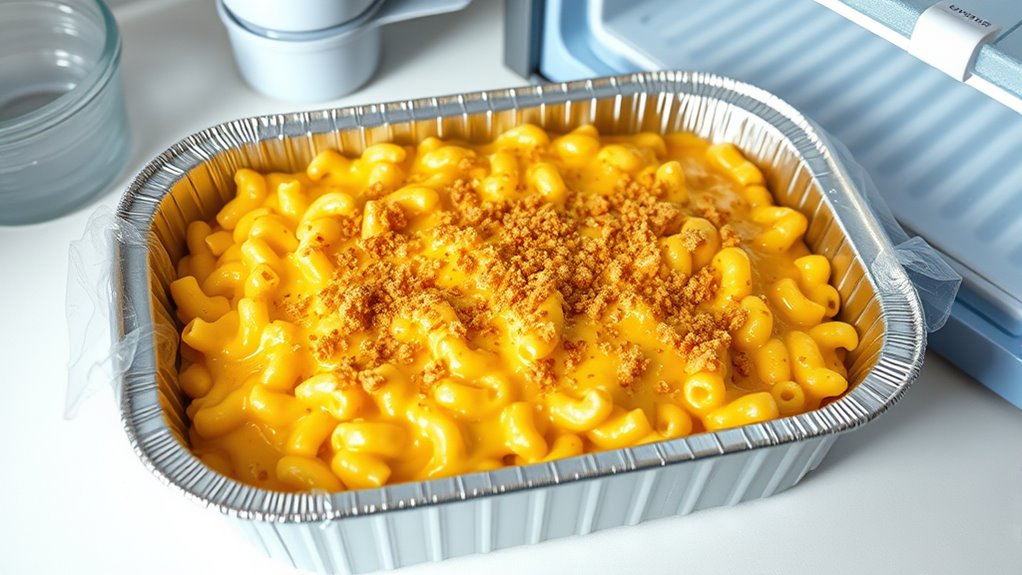
To freeze mac and cheese safely in an aluminum pan, start by letting it cool completely at room temperature for up to two hours. Cooling prevents condensation, which could lead to ice crystals and affect the texture.
Once cooled, spread the mac and cheese evenly in the pan to ensure uniform freezing.
Next, tightly wrap the pan with plastic wrap pressed directly onto the surface. This step helps lock in moisture and prevents freezer burn.
After that, cover the entire pan with heavy-duty aluminum foil for an extra protective barrier.
Be sure to label the wrapped pan with the date before placing it in the freezer. You can safely store it for up to three months.
When you’re ready to enjoy your mac and cheese, thaw it in the fridge overnight.
Reheat thoroughly in the oven for the best texture and flavor. Using these freezing and reheating techniques will keep your dish delicious and close to freshly made.
There’s more to know about perfect freezing and reheating methods to maintain the quality of your mac and cheese.
Benefits of Using Aluminum Pans for Freezing Mac and Cheese
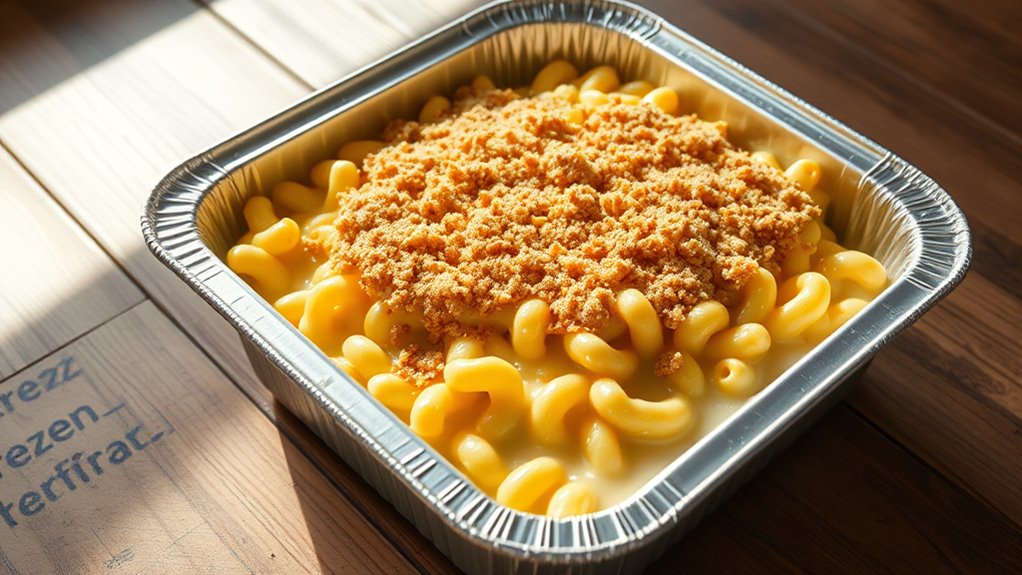
When you freeze mac and cheese in an aluminum pan, you’ll appreciate how lightweight and easy it is to handle, especially when moving it in and out of the freezer. Aluminum pans are ideal for freezing mac and cheese because they conduct heat efficiently, ensuring even reheating without hot spots.
Since these pans are disposable aluminum, you won’t have to worry about cleanup or storage after use. Their durability prevents cracking or damage at freezing temperatures, maintaining your dish’s integrity.
Plus, when you properly line or seal aluminum pans, they help prevent freezer burn and moisture loss, preserving the flavor and texture of your mac and cheese. Choosing aluminum pans makes freezing and reheating convenient and reliable every time.
Picking the Right Aluminum Pan Size for Your Mac and Cheese
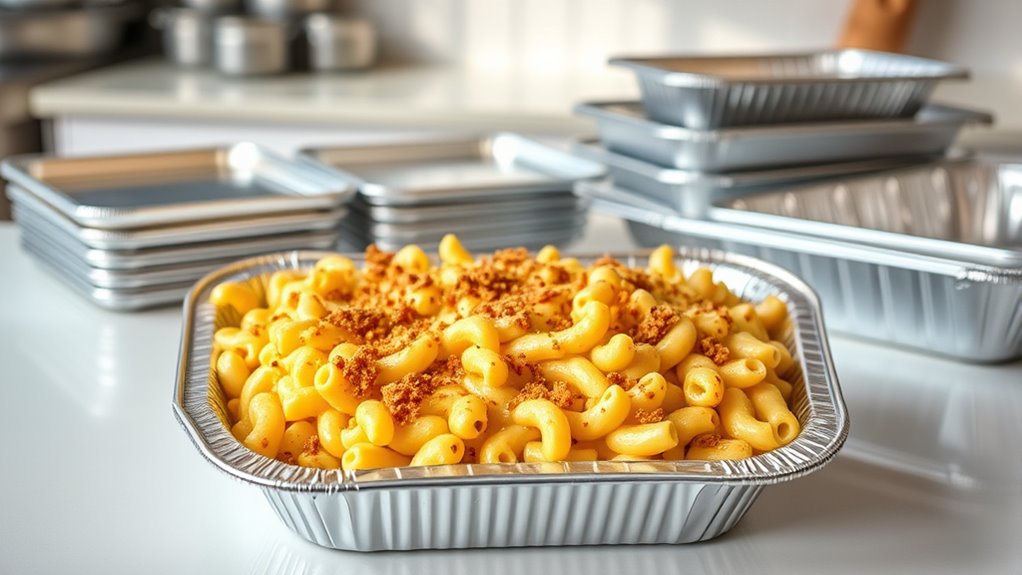
Although choosing the right aluminum pan size might seem simple, it plays a crucial role in preserving your mac and cheese during freezing and reheating. Picking the right aluminum pan size ensures effective portion control, prevents freezer burn, and optimizes freezer storage.
Here’s what to consider:
- Use a 9×13-inch pan for family-sized portions that fit most freezers.
- Opt for smaller pans, like 8×8 inches, for individual servings to reduce waste and ease reheating.
- Choose heavy-duty, thick-walled pans to maintain pan durability and avoid warping during freezing mac and cheese.
Matching your pan size to your portion needs minimizes excess air, helping your dish freeze evenly and taste fresh when reheated. Always ensure your freezer can accommodate the pan size you select for smooth freezer storage.
How to Cool Mac and Cheese Properly Before Freezing in an Aluminum Pan
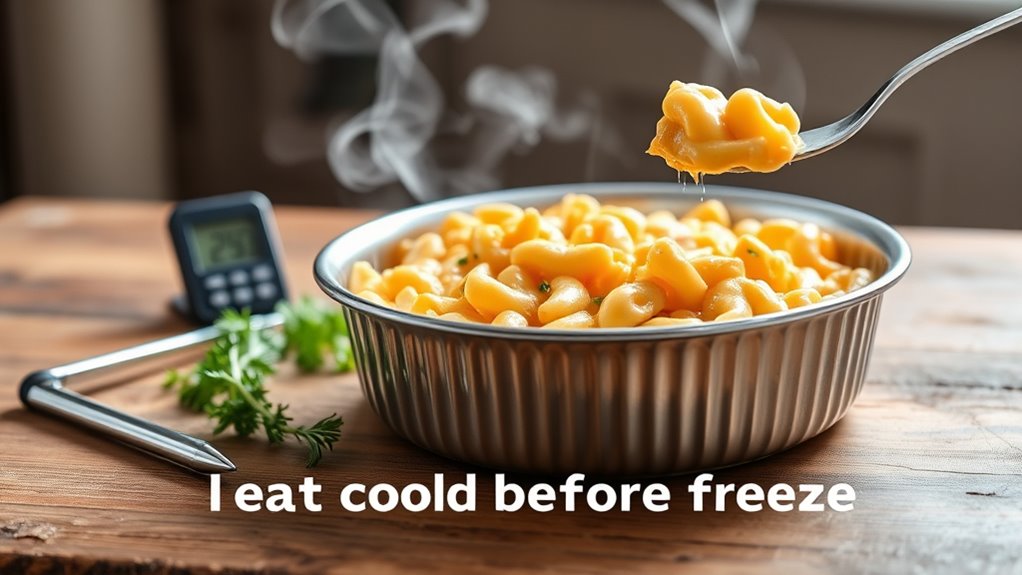
Since freezing mac and cheese too soon can trap heat and cause ice crystals, you need to let it cool completely before freezing. Spread the mac and cheese evenly in the aluminum pan for uniform cooling. Avoid covering it immediately to prevent condensation.
Let it cool at room temperature for no more than two hours, stirring occasionally or placing the pan in a shallow ice bath to speed cooling.
| Step | Action | Purpose |
|---|---|---|
| Spread evenly | Ensure even layer in pan | Uniform cooling |
| Cool uncovered | Leave uncovered at room temp | Prevent condensation |
| Cover when cooled | Use aluminum foil or plastic wrap | Seal before freezing |
Once cooled to room temperature, cover tightly with aluminum foil to lock in freshness before freezing.
How to Wrap Mac and Cheese to Prevent Freezer Burn
To keep your mac and cheese fresh in the freezer, you’ll want to use effective wrapping materials like plastic wrap and heavy-duty aluminum foil. Make sure to press the plastic wrap tightly against the surface to eliminate air pockets before adding foil for a strong seal.
For extra protection, slip the wrapped dish into a resealable freezer bag and label it with the freezing date.
Effective Wrapping Materials
When you want to keep your mac and cheese fresh in the freezer, wrapping it properly is key to preventing freezer burn. Start by using a double layer of plastic wrap pressed firmly onto the cooled mac and cheese, eliminating any air pockets.
Next, wrap the dish tightly with heavy-duty aluminum foil, making sure there are no tears or gaps. For extra airtight protection, place the wrapped pan inside a resealable freezer bag, squeezing out as much air as possible before sealing.
To summarize the best wrapping materials:
- Plastic wrap for direct contact and air elimination
- Heavy-duty aluminum foil for a secure, moisture-proof barrier
- Freezer bags to add an airtight seal and prevent moisture loss
This combination ensures your mac and cheese stays fresh and freezer-burn free.
Sealing Techniques For Freshness
Although freezing mac and cheese is convenient, you’ll want to seal it properly to keep it tasting fresh and prevent freezer burn. Start by pressing plastic wrap directly onto the cooled surface to eliminate air pockets. Then, wrap a tight layer of aluminum foil around the pan, sealing all edges.
This airtight double wrapping locks in moisture and flavor during freezing. For extra protection, place the wrapped pan inside a resealable plastic bag, squeezing out excess air before sealing. Don’t forget to label it with the freezing date to track freshness.
| Step | Material | Purpose |
|---|---|---|
| 1 | Plastic wrap | Prevent air pockets |
| 2 | Aluminum foil | Seal edges airtight |
| 3 | Resealable bag | Extra moisture barrier |
How Long Can You Safely Freeze Mac and Cheese in an Aluminum Pan?
Since mac and cheese maintains its best quality for about three months in the freezer, you’ll want to plan to eat it within that timeframe when stored in an aluminum pan. Freezing beyond three months can lead to freezer burn and a decline in texture and flavor.
To keep your mac and cheese tasting great, consider these tips:
- Wrap the aluminum pan tightly with plastic wrap and heavy-duty foil to prevent moisture loss.
- Cool the dish completely before freezing to avoid ice crystal formation.
- Monitor storage time closely to enjoy peak quality.
Labeling and Dating Your Frozen Mac and Cheese
To keep your frozen mac and cheese organized and easy to identify, always label the aluminum pan clearly with the date you froze it. Use a waterproof, permanent marker to write directly on the foil or a securely attached tape label. Include details like “Mac and Cheese,” the date, and whether it’s baked or unbaked.
This labeling and dating system helps you track storage time and maintain quality. Check labels regularly to avoid using frozen mac and cheese past its prime 2–3 month window.
| Item | Date Frozen | Status |
|---|---|---|
| Mac and Cheese | 04/15/2024 | Baked |
| Mac and Cheese | 04/20/2024 | Unbaked |
| Mac and Cheese | 05/01/2024 | Baked |
| Mac and Cheese | 05/10/2024 | Unbaked |
| Mac and Cheese | 05/15/2024 | Baked |
The Right Way to Thaw Frozen Mac and Cheese From an Aluminum Pan
When you’re ready to enjoy your frozen mac and cheese, thaw it in the refrigerator for 12 to 24 hours to guarantee it heats evenly and stays safe to eat. Thawing in an aluminum pan preserves the dish’s shape and makes reheating easier. Avoid thawing at room temperature, as it risks bacterial growth and compromises safety.
For faster thawing, you can use the microwave’s defrost setting but transfer the dish back to the aluminum pan for oven reheating.
Keep these tips in mind when you thaw your mac and cheese:
- Always thaw in the refrigerator for consistent temperature control.
- Remove any foil before reheating to prevent steaming.
- Ensure the internal temperature reaches 165°F (74°C) during reheating for safety.
How to Reheat Mac and Cheese Frozen in Aluminum Pans for Best Texture
To get the best texture when reheating your frozen mac and cheese, start by thawing it in the fridge overnight.
When you’re ready, preheat your oven to 375°F and cover the aluminum pan with foil to keep it moist. Don’t forget to stir halfway through and use a food thermometer to make certain it’s heated evenly and safely.

Optimal Thawing Methods
Although it requires some patience, thawing your frozen mac and cheese in the refrigerator for 12 to 24 hours guarantees even reheating and keeps the creamy texture intact.
When you’re ready to reheat, remove the aluminum pan from the freezer but keep it covered. Let it sit at room temperature for about 30 minutes before reheating to avoid temperature shocks that affect texture.
For ideal thawing and reheating, remember to:
- Always thaw in the refrigerator to maintain food safety.
- Keep the aluminum pan covered during thawing to prevent moisture loss.
- Confirm the internal temperature reaches 165°F (74°C) when reheating.
Following these steps ensures your mac and cheese stays delicious after you freeze and reheat it safely.
Oven Reheating Tips
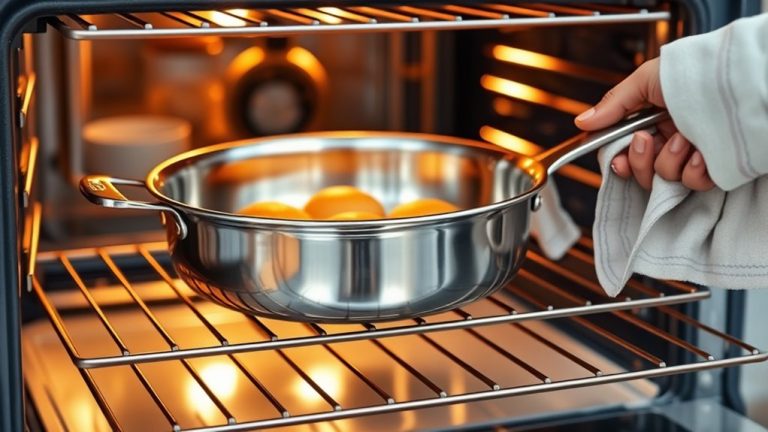
Since frozen mac and cheese can reheat unevenly, you’ll want to preheat your oven to 375°F (190°C) and start by removing the foil covering the dish.
Place the aluminum pan on a baking sheet to promote even heating and prevent spillage. Cover the dish again with foil and bake for 45-60 minutes, ensuring the internal temperature reaches 165°F (74°C) for safe consumption.
About 10-15 minutes before the end of your timing, remove the foil to let the top brown and develop a crispy crust.
Once reheated, let your mac and cheese rest for 5-10 minutes; this helps the sauce set and improves texture.
Following these oven reheating tips guarantees your mac and cheese tastes just as good as freshly made.
Common Freezing Mistakes and How to Avoid Them
If you freeze mac and cheese before it’s fully cooled, you’ll risk ice crystals forming and ruining the sauce’s smooth texture. To prevent common freezing mistakes, pay attention to these key points:
- Proper wrapping: Seal your aluminum pan tightly with plastic wrap and foil to prevent freezer burn and moisture loss.
- Cooling time: Always let your mac and cheese cool completely before freezing to maintain its creamy texture.
- Air exposure: Never leave the dish uncovered; air exposure causes dehydration and flavor loss.
Also, avoid overcooking the pasta initially to prevent mushiness later. Label your pan with the freezing date and consume within three months to enjoy the best flavor and texture.
Following these steps ensures your frozen mac and cheese stays delicious and fresh.
When to Use Aluminum Pans vs. Other Freezing Methods
When you want to freeze mac and cheese efficiently, aluminum pans offer several advantages over other methods. Aluminum pans conduct heat evenly, ensuring your dish freezes and thaws uniformly, which prevents soggy or icy spots. They’re lightweight and disposable, making them perfect for large batches or meal prepping.
To avoid freezer burn, always cover tightly with plastic wrap and foil, locking in moisture and freshness. Unlike plastic containers or bags, aluminum pans withstand temperature changes without cracking or shattering. You should choose aluminum pans when you need a reliable, convenient option that preserves texture and flavor.
For smaller portions or quick freezing, other freezing methods might work, but aluminum pans excel when you want consistent thawing and easy cleanup.
Frequently Asked Questions
Can You Freeze Mac and Cheese in an Aluminum Pan?
Yes, you can freeze mac and cheese in an aluminum pan. Just make sure it’s oven-safe.
Cool the dish completely, cover it tightly, label it, and store it properly. This will help keep it fresh and prevent freezer burn.
How to Freeze Meals in Aluminum Pans?
Want to freeze meals in aluminum pans? You just need to let the food cool, wrap it tightly with plastic wrap and foil, label it, then freeze.
When ready, thaw overnight in the fridge and reheat safely.
What Is the Best Container to Freeze Mac and Cheese In?
You should use heavy-duty, food-grade aluminum pans to freeze mac and cheese. They’re durable, freezer-safe, and prevent leaks.
Line with foil, wrap tightly with plastic and foil, then label for freshness and easy storage.
What’s the Best Way to Freeze Homemade Macaroni and Cheese?
Don’t freeze hot mac and cheese—you’ll end up with soggy pasta. Instead, cool it completely, cover tightly with foil and plastic wrap, label it, then freeze.
Thaw overnight and reheat for creamy, delicious results every time.
Conclusion
So, you’ve mastered freezing mac and cheese in aluminum pans—congratulations, you’re basically a kitchen wizard now. Just remember: don’t toss that cheesy masterpiece in the freezer still hot unless you want a science experiment.
Wrap it tighter than your secrets, thaw it like a pro, and reheat it without turning it into rubber. Follow these tips, and your mac and cheese will survive the freezer apocalypse.
Because even frozen, cheesy goodness deserves respect, knowing how you can freeze mac and cheese safely in an aluminum pan ensures your dish stays delicious and ready to enjoy anytime.