How Can You Safely Place Hot Pans on Granite Countertops?
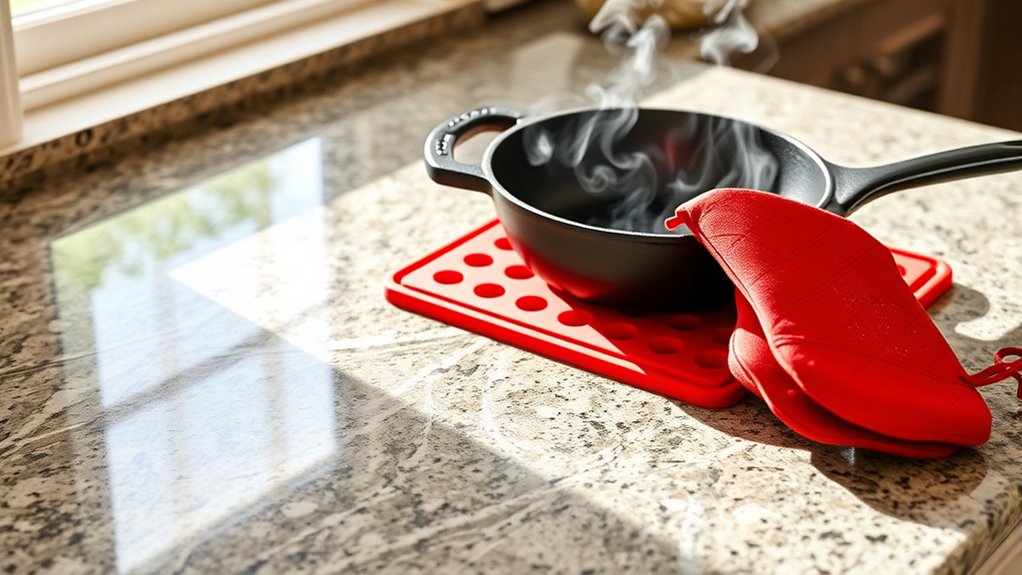
You can safely place hot pans on granite countertops by always using trivets or heat-resistant pads. These protect the surface from thermal shock and heat damage, which are common concerns with granite surfaces.
Avoid setting hot cookware directly on the granite to prevent cracks or discoloration caused by sudden temperature changes.
Regularly reseal your granite to maintain its durability and protect it from heat wear.
Inspect your countertop frequently for any signs of damage or wear.
If you want to keep your granite countertop looking great and lasting longer, understanding proper care and precautions is key.
Understanding Granite’s Heat Resistance Limits
Although granite is an incredibly heat-resistant igneous rock formed from cooled magma, you should still be careful when placing hot pans on your countertop. Granite’s heat resistance comes from its volcanic origin, allowing it to withstand temperatures up to around 1,650°F without melting.
However, exposing it to extreme heat repeatedly or for prolonged periods can cause damage or discoloration. One key risk is thermal shock—rapid temperature changes that can crack or weaken the stone. Even though granite won’t melt under typical kitchen heat, the surface or sealant might degrade over time if you don’t take precautions.
Understanding these limits will help you protect your countertop’s beauty and durability while enjoying its natural strength.
Is It Safe to Place Hot Pans Directly on Granite?
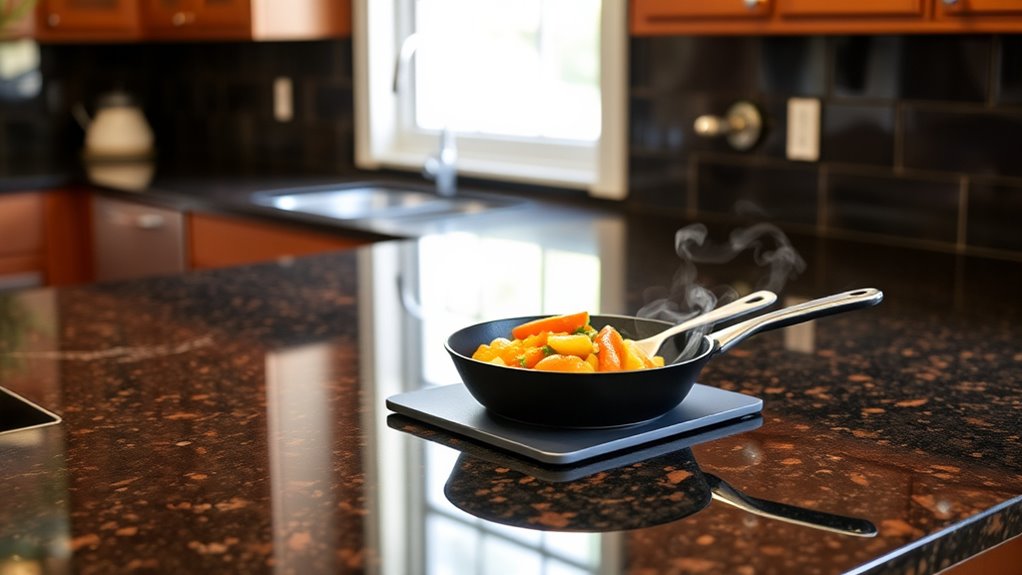
Granite’s impressive heat resistance might make you think it’s perfectly fine to place hot pans directly on your countertop. While granite countertops can usually handle brief contact with hot pans without immediate damage, it’s best not to rely on this alone. Prolonged or repeated exposure to heat may discolor the stone or weaken the sealant protecting it.
To keep your granite looking great, you should use trivets, hot pads, or cork mats as a buffer. Also, avoid placing extremely hot pans straight from the oven onto the surface. Regularly sealing your granite countertops enhances their heat resistance and durability.
What Is Thermal Shock and How It Can Crack Your Granite
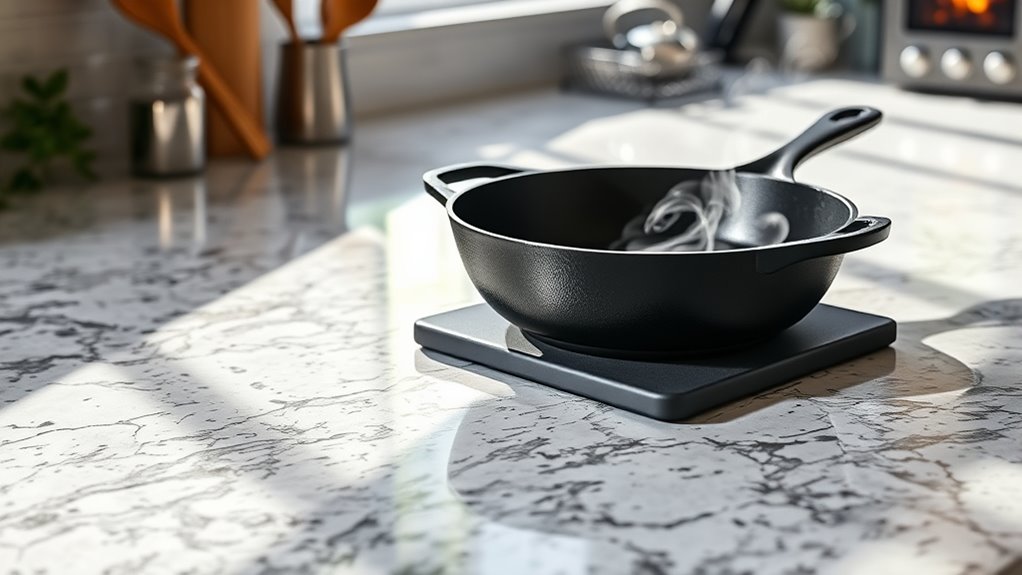
Thermal shock happens when your granite countertop experiences sudden temperature changes, causing it to expand or contract unevenly and crack.
Placing hot pans directly on granite or mixing hot and cold items can create this stress. To protect your countertop, always use trivets or pads to prevent these rapid temperature shifts.
Causes Of Thermal Shock
When you expose your granite countertop to sudden temperature changes, its internal structure can expand or contract unevenly, causing cracks. This process, known as thermal shock, happens because granite’s high thermal conductivity allows heat to transfer rapidly through the stone. When you place a hot pan directly on a cold surface or vice versa, the uneven heat transfer creates stress within the material.
For example, setting a scorching pan on granite that’s still cold from ice or frozen items can trigger thermal shock. Over time, these abrupt temperature shifts cause fissures to develop beneath the surface, compromising your countertop’s integrity. Understanding these causes helps you appreciate why managing heat transfer and temperature changes is vital to preserving your granite’s beauty and durability.
Preventing Granite Cracks
Although granite is a durable material, exposing it to sudden temperature changes can cause serious damage. When you place hot pans directly on cold granite, the rapid heat transfer causes thermal shock. This uneven expansion stresses the stone’s minerals, leading to cracks that may start as tiny fissures but grow over time.
To prevent these cracks, always use protective insulators like trivets or heat-resistant pads. They act as barriers, reducing temperature differences and protecting your countertop from thermal shock. By consistently using these insulators, you’ll safeguard your granite against damage caused by hot pans, preserving its beauty and strength for years to come.
Don’t risk costly repairs—make protective insulators a part of your kitchen routine.
Using Trivets to Protect Granite From Hot Pans
Since placing hot pans directly on your granite countertop can cause damage, using a trivet is a simple and effective way to protect the surface. Trivets are heat-resistant pads or stands that create a barrier between hot pans and granite countertops, preventing direct contact. This helps reduce the risk of discoloration, cracks, or sealant damage caused by high temperatures.
You’ll find trivets made from materials like cork, silicone, or metal, all excellent at insulating heat. Always pick a trivet large enough to support the entire bottom of your hot pan, and check that it’s in good condition before use. By placing hot pans on a trivet, you allow safe heat dissipation, protecting your granite from thermal shock and prolonged heat exposure.
How to Identify Heat Damage on Granite Countertops
You can spot heat damage on granite by looking for discoloration or dark spots where hot pans have sat. Pay close attention to surface cracks or fine hairline fractures that may appear from sudden temperature changes.
Also, check if the sealant looks dull or worn, as this can indicate heat has compromised its protection.
Signs Of Discoloration
When heat damages your granite countertop, you might notice darkened spots or uneven patches disrupting its natural beauty. This discoloration often results from chemical reactions between high temperatures and the sealant or minerals in the stone. You should look closely for areas where your granite’s natural pattern or color looks faded, dulled, or noticeably different from the surrounding surface.
Persistent stains or spots that don’t respond to regular cleaning could be signs of underlying heat damage. While discoloration is a key indicator, it can sometimes come with subtle surface pitting or fine cracks caused by thermal stress. Recognizing these signs early helps you address heat damage on granite countertops before it worsens, preserving your countertop’s appearance and durability.
Detecting Surface Cracks
Discoloration often signals heat damage, but it’s not the only sign to watch for on your granite countertops. During a thorough granite inspection, pay close attention to surface cracks, which often appear as thin, hairline fractures. These cracks may start near edges or seams and can widen with heat exposure.
Use good lighting or a magnifying glass to spot subtle cracks you might otherwise miss. Look for irregular, jagged patterns that form spider-web or branching shapes. Sometimes, surface cracks come with chipping or discoloration, indicating deeper heat damage.
Catching these signs early helps you address damage before it worsens, ensuring your granite remains both beautiful and functional. Regular granite inspection is key to maintaining your countertop’s integrity.
Sealant Damage Indicators
Although granite itself is heat-resistant, the sealant protecting its surface can suffer damage from high temperatures. You need to watch for clear sealant damage indicators to keep your countertop safe. Look for discoloration, peeling, or cracking, especially around edges.
Heat damage often causes a cloudy or streaked appearance, reducing clarity. Run your fingers gently; a rough or uneven texture signals sealant deterioration. If liquids start penetrating, staining or mineral deposits may appear underneath.
| Indicator | Appearance | Effect |
|---|---|---|
| Discoloration | Cloudy or streaked areas | Reduced clarity |
| Peeling/Cracking | Flaking edges | Sealant loss |
| Rough Texture | Uneven surface | Heat damage deterioration |
Regular checks and resealing prevent further damage and keep your granite looking pristine.
Why Sealants Matter for Protecting Granite From Heat
Because granite is naturally porous, applying a quality sealant is essential to protect your countertop from heat damage. Sealants create a protective barrier that reduces granite’s porosity, helping minimize heat absorption and preventing thermal damage. With proper sealing, your countertop maintains better heat resistance and avoids discoloration caused by hot pans.
Sealants also block moisture infiltration, which can worsen damage through heat-induced microcracks. To keep this protective barrier effective, you should reseal your granite regularly—usually once a year. Using high-quality, heat-resistant sealants enhances your granite’s durability, allowing it to withstand brief heat exposure without surface deterioration.
Cleaning and Maintaining Granite After Heat Exposure
After placing hot pans on your granite, clean the surface with a pH-balanced, non-abrasive cleaner to protect the sealant. Keep an eye out for any discoloration or cracks and address them quickly.
Don’t forget to re-seal your countertop regularly to maintain its heat resistance and overall durability.
Post-Heat Cleaning Tips
When you place a hot pan on your granite countertop, it’s important to wait a few minutes for the surface to cool before cleaning. This pause helps prevent streaking or damage during post-heat cleaning. Use a pH-balanced, non-abrasive cleaner designed for natural stone to maintain your granite surface and preserve the sealant protection.
Avoid harsh chemicals and acidic cleaners, as they can weaken the sealant and harm your countertop’s appearance. After heat exposure, regularly inspect your granite for discoloration or cracks and address any issues promptly.
Keeping up with these post-heat cleaning practices ensures your granite stays beautiful and durable, extending the life of both the stone and its protective sealant.
Sealant Maintenance Practices
To keep your granite countertop protected, you should regularly inspect and reseal it at least once a year. This maintenance helps preserve the heat-resistant sealant that shields your surface from damage caused by hot pans.
After heat exposure, clean your countertop with pH-balanced, non-abrasive cleaners designed for natural stone to avoid wearing down the sealant. If you notice any discoloration or residue, wipe it off immediately with a soft cloth to prevent long-term harm.
Applying a high-quality penetrating sealant can restore and reinforce your granite’s protective barrier. Should you spot cracks, discoloration, or signs that the sealant is compromised, consult a professional stone care specialist for re-sealing or repairs to maintain your countertop’s durability and appearance.
Granite vs. Other Countertops: Heat Resistance
Although many countertops struggle with heat, granite stands out because it can handle temperatures above 1,000°F without warping or melting. This makes granite highly heat resistant and ideal for placing hot pans directly on its surface for short periods.
Other materials like laminate or wood aren’t as forgiving and can easily warp or discolor.
| Countertop Type | Heat Resistance |
|---|---|
| Granite | Withstands 1,000°F+, no warping |
| Laminate | Low; warps or melts under heat |
| Wood | Low; burns, warps, or discolors |
Still, to protect your granite’s sealant and prevent thermal shock, it’s best to use trivets or hot pads with hot pans.
How to Safely Handle Large and Hot Cookware on Granite
Since large and hot cookware can easily damage your granite countertop, you should always use a trivet, hot pad, or cork mat to create a protective barrier. When handling hot pans, avoid dragging them across granite countertops to prevent scratches and thermal shock.
Wait a few minutes for cookware to cool slightly before setting it down, as sudden temperature changes can exceed granite’s heat tolerance and cause damage. Make sure your cookware’s handles are stable to prevent slips that might lead to accidents or heat damage. Regularly check your granite for discoloration or cracks, especially after placing large, hot items. By following these steps, you’ll protect your granite countertops and maintain their durability despite frequent use of hot pans.
When to Call a Professional for Granite Heat Damage Repair
If you spot cracks, chips, or discoloration on your granite after placing hot pans, you should call a professional for an assessment. Heat damage can weaken your countertop’s structure and appearance, so timely repair is essential. You’ll want expert help in these cases:
Notice cracks or discoloration on granite after heat exposure? Call a professional promptly for assessment and repair.
- Visible cracks extending beyond surface marks
- Burn marks or surface pitting caused by thermal shock
- Sealant failure or repeated heat damage affecting the granite’s integrity
- Any damage that compromises the countertop’s look or function
A professional can evaluate the extent of damage and recommend proper repair methods. Don’t wait—addressing heat damage promptly preserves your granite’s beauty and safety, preventing further costly repairs down the line.
Frequently Asked Questions
Can You Put Hot Pans Directly on Granite?
You can put hot pans directly on granite briefly since it tolerates high heat, but don’t leave them long.
Use trivets or pads to protect the surface and prevent damage or discoloration over time.
Can You Put Hot Pots on Top of Granite Countertops?
You can put hot pots on granite countertops, but don’t be fooled—granite’s toughness has limits. Use trivets or pads to shield your surface, preventing heat damage and keeping your countertop as stunning as a diamond’s sparkle.
What Temperature Will Damage Granite Countertops?
Granite can handle temperatures up to about 1,650°F, but you shouldn’t expose it to sudden heat changes or prolonged high heat.
Temperatures below that usually won’t damage it, but extreme, repeated heat might cause cracks or discoloration.
Can You Put a Crockpot on a Granite Countertop?
You absolutely can put a crockpot on your granite countertop, but don’t just plop it down like a bomb!
Use a trivet or thick cloth to protect your granite from heat damage and keep it looking flawless.
Conclusion
You want to treat your granite countertops like a delicate dance partner—handle hot pans with care to avoid cracks and damage. Always use trivets or heat pads to shield the surface from thermal shock, and keep an eye out for any heat damage signs.
With proper care and a little caution, your granite can stay stunning and durable for years. When in doubt, don’t hesitate to call a professional to keep your countertops looking their best.
Following these simple steps ensures you can safely place hot pans on granite countertops without worry. Protecting your granite countertops from heat damage will preserve their beauty and functionality over time.