How Long to Leave Hard Boiled Eggs in an Ice Bath for Perfect Peeling
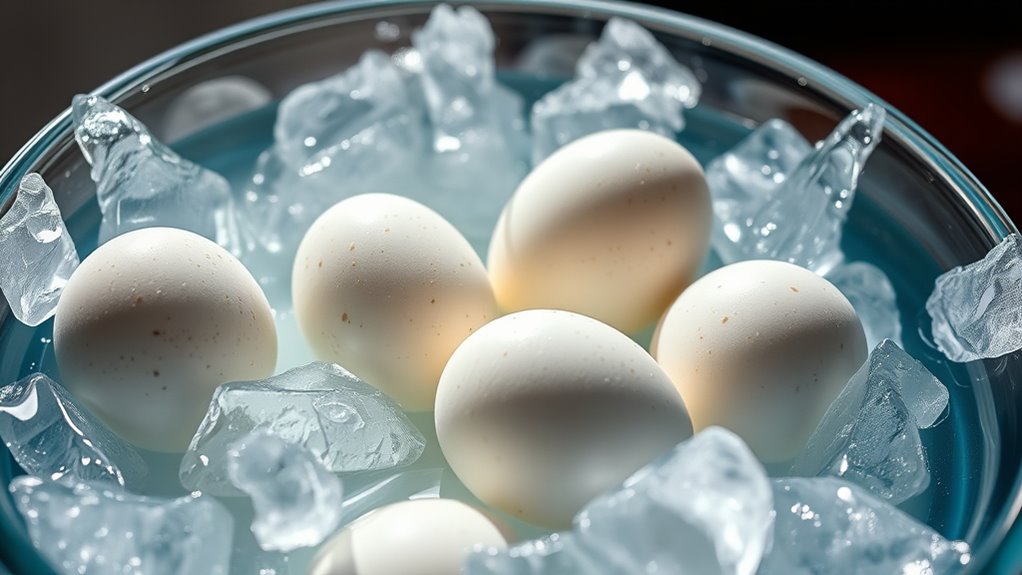
You should leave hard boiled eggs in an ice bath for at least 10 to 15 minutes to stop cooking instantly and make peeling easier. The cold water contracts the egg white, creating a gap between the shell and membrane that helps the shell come off smoothly.
Larger or fresher eggs might need closer to 15 minutes of chill time. Skipping this step often leads to tough, sticky shells.
Keep going to uncover tips on size, freshness, and perfect peeling tricks.
Why an Ice Bath Is Essential for Easy Egg Peeling
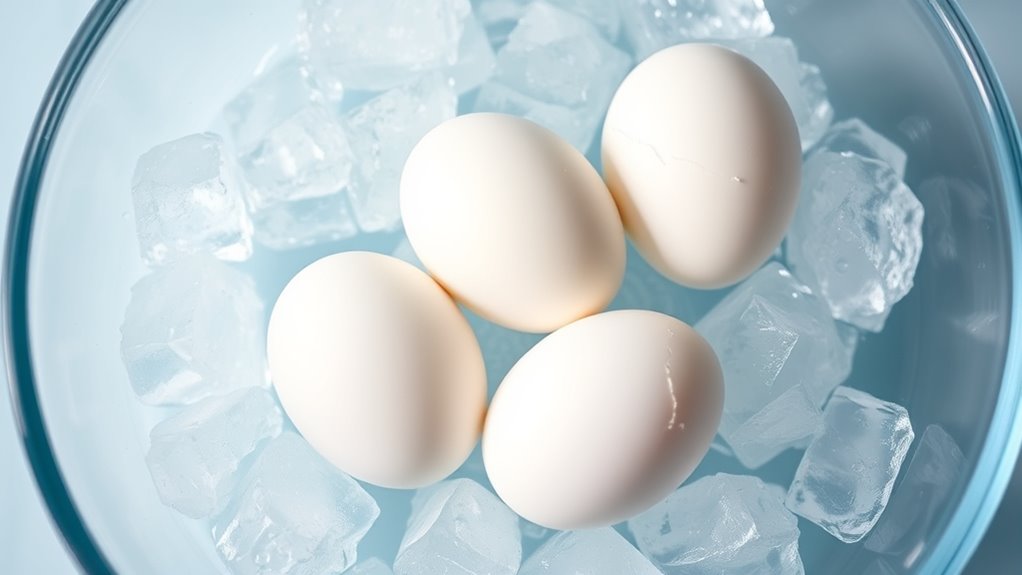
Although you might be enthusiastic to peel your hard boiled eggs right after cooking, plunging them into an ice bath is essential for easy peeling. The ice bath rapidly cools the eggs, causing the egg whites to contract and separate from the shell. This cooling process also halts cooking immediately, preventing that unappetizing greenish ring around the yolk.
When you cool eggs in ice water, the cold shock loosens the membrane beneath the shell, making peeling smoother and reducing the risk of gouging the whites. Without this vital step, peeling can become frustrating and messy.
How Long to Leave Hard Boiled Eggs in an Ice Bath
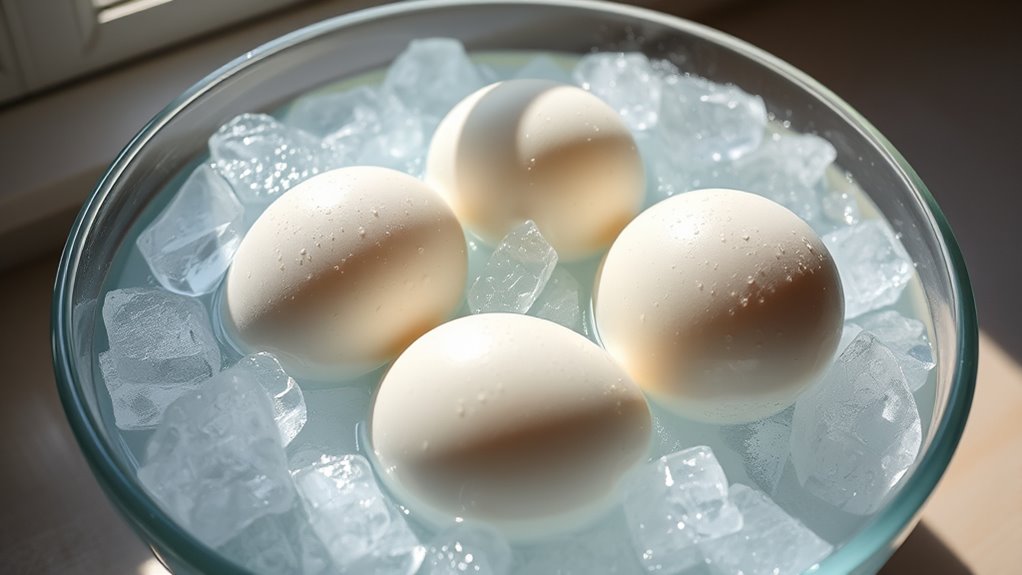
When you finish boiling your eggs, you should immediately transfer them to an ice bath to stop the cooking process and make peeling easier. Leaving your hard boiled eggs in the ice bath for at least 10 minutes is essential. This cooling period helps the eggs stop cooking and loosens the shells, making them easier to peel.
If you want even better results, extending the cooling time to 15 or 20 minutes allows the egg whites to contract slightly, which further simplifies shell removal. Don’t worry about leaving them longer—up to 30 minutes won’t harm the eggs and can improve peelability.
What Really Happens to Eggs in the Ice Bath
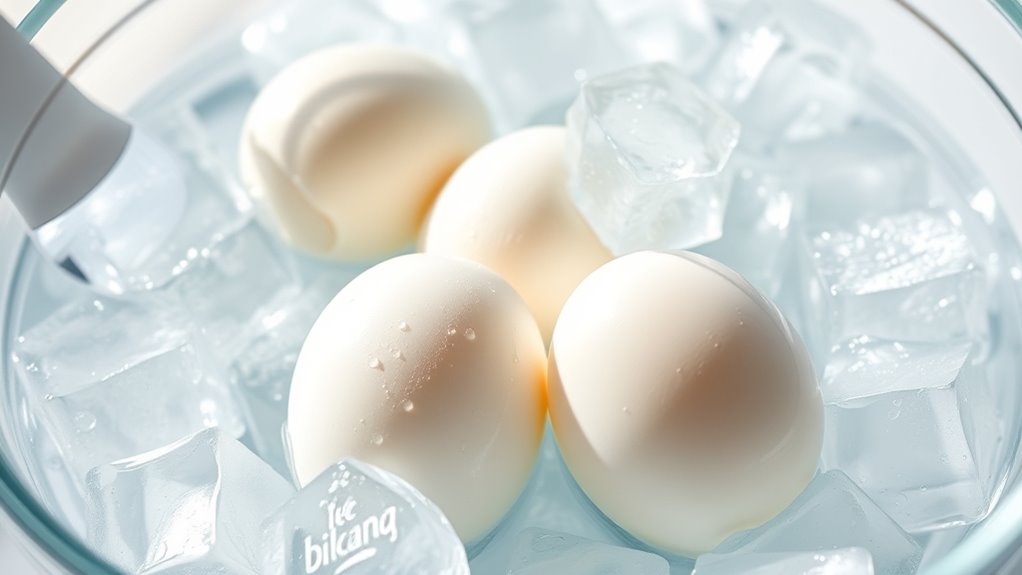
When you place eggs in an ice bath, the rapid cooling causes the shell to contract more than the inside, creating a small gap that makes peeling easier. This quick chill also firms up the membrane, helping it separate cleanly from the egg white.
Understanding these effects can help you master the perfect peel every time.
Egg Cooling Effects
Because you plunge hard boiled eggs into an ice bath, the rapid cooling causes the egg whites to contract slightly, creating a small gap between the shell and membrane. This cooling effect hardens the egg’s outer layers and shrinks the interior, making peeling easier without damaging the whites. The ice bath stops the cooking process quickly, so the eggs don’t overcook, which helps maintain their texture.
Spending at least 10 minutes in the ice ensures the eggs reach a uniform temperature, reducing pressure differences that can crack shells during peeling. These ice cooling effects also weaken the bond between the shell and membrane, so when you peel, the shell comes off smoothly. Proper cooling in ice is key to perfect peeling every time.
Shell Separation Science
Although the ice bath might seem like a simple step, it plays a crucial role in separating the eggshell from the membrane. When you plunge eggs into the ice bath, the rapid cooling causes the egg whites to contract slightly, pulling away from the shell. This contraction initiates shell separation by loosening the membrane’s grip.
The sudden temperature drop creates a thermal shock that breaks the bond between the shell and membrane, making peeling easier. Cooling also solidifies the proteins in the egg whites, preventing damage during shell removal. For effective shell separation, you need to leave eggs in the ice bath for at least 10 minutes.
This ensures full cooling, avoids greenish yolks, and guarantees a smooth peeling experience every time.
Egg Size and Ice Bath Cooling Time: Does It Matter?
You might wonder if egg size affects how long you should leave hard boiled eggs in an ice bath. It does play a role in peeling time and cooling duration. Larger eggs retain heat longer, so they typically need a slightly longer ice bath—around 15 minutes—to ensure the whites contract enough for easy peeling.
Smaller eggs, with thinner shells, usually peel well after just 10 minutes in the ice bath. This shorter cooling duration helps loosen the membrane without over-chilling the egg. However, the ideal ice bath time generally falls between 10 to 15 minutes regardless of egg size, as this range effectively contracts the egg contents and eases shell separation.
Adjusting your ice bath time based on egg size helps you achieve perfect peeling every time.
Egg Freshness and Its Effect on Peeling and Cooling
You’ll notice that older eggs peel more easily since their shells and membranes become a bit brittle over time. Fresh eggs can be trickier because their membranes stick tighter, so you might need to adjust your cooling time in the ice bath. Using eggs that are at least a week old can make peeling smoother and less frustrating.
Freshness Impact On Peeling
Because fresh eggs have a thicker membrane and a tighter shell, they’re harder to peel after boiling. When you use fresh eggs, the shell clings tightly to the white, making peeling frustrating.
In contrast, older eggs peel easily because the shell’s porosity increases over time, allowing the membrane to separate more readily.
To improve peeling success:
- Use eggs that are at least 5-7 days old rather than fresh eggs.
- Immediately transfer boiled eggs to an ice bath to help relax the membrane.
- Remember that while an ice bath aids peeling, its effectiveness depends on the egg’s freshness.
Cooling Time Adjustments
Although older eggs peel more easily, they generally require less time in the ice bath to cool properly, while fresh eggs need longer chilling to help loosen the membrane and improve peeling. When you adjust the cooling time based on egg freshness, you enhance peeling success.
Fresh eggs have a firmer shell and stronger membrane, so chilling them in an ice bath for at least 10-15 minutes is essential to contract the membrane away from the shell. On the other hand, older eggs, which naturally separate more from the shell, need shorter cooling times to avoid over-chilling.
Paying close attention to egg freshness helps you determine the ideal cooling time in the ice bath, ensuring your hard boiled eggs peel effortlessly every time.
Egg Age Benefits
Understanding how egg age impacts peeling and cooling can make a big difference in your hard boiling results. Older eggs tend to peel more easily because their shells have slightly larger pores, which weakens the bond between the shell and membrane. Fresh eggs, on the other hand, have a tighter shell and thicker membrane, making peeling tougher.
Using an ice bath right after boiling helps cool the eggs quickly, stopping the cooking process and aiding peeling, especially for older eggs.
Here’s what you should know about egg age benefits:
- Older eggs have a higher pH, helping the membrane separate from the shell during peeling.
- Letting eggs age a few days before boiling improves peeling without affecting taste.
- An ice bath further loosens shells for easier peeling.
Step-by-Step Ice Bath Process for Hard Boiled Eggs
Once your eggs have finished cooking, transfer them immediately to an ice bath filled with equal parts ice and water to quickly halt the cooking process. Make sure the eggs are fully submerged to promote even cooling, which helps the egg whites contract and separate from the shell.
Let the eggs sit in the ice bath for at least 10 minutes, but extending this to 15-20 minutes yields the best peeling results. Don’t peel the eggs right away; the extended chilling loosens the shell, making peeling much easier.
For a clean finish, peel your eggs under cold running water after the ice bath to wash away any tiny shell fragments. Following this step-by-step ice bath process guarantees your hard boiled eggs peel perfectly every time.
Can You Skip the Ice Bath? What Happens If You Don’t?
If you skip the ice bath, your hard boiled eggs will continue cooking from residual heat, leading to overcooked yolks with an unappetizing greenish ring and tougher whites that stick stubbornly to the shell. Without the ice bath, peeling becomes a challenge because the egg white clings to the membrane, increasing the risk of gouging. Plus, uneven cooling makes peeling unpredictable.
Skipping the ice bath leads to overcooked yolks and stubborn whites that make peeling tough and messy.
Here’s what happens if you don’t use an ice bath:
- Eggs keep cooking, causing overcooked, greenish yolks.
- Whites become rubbery and stick to shells, complicating peeling.
- Lack of rapid cooling prevents the white from contracting, so the membrane stays tight.
Using an ice bath is key for perfect peeling and avoiding overcooked eggs with greenish centers.
Common Ice Bath Mistakes That Make Peeling Harder
If you don’t cool your eggs in an ice bath long enough, peeling will get tricky because the shells stick.
Using warm water or crowding too many eggs in the bath can also stop them from cooling properly.
Let’s look at how these mistakes affect your peeling success.
Insufficient Cooling Time
When you don’t leave hard boiled eggs in an ice bath long enough, the egg whites don’t contract fully, making the shells stick and peel poorly. Insufficient cooling time is a common mistake that complicates peeling. If you soak eggs for less than 5 minutes, residual heat remains, causing the membrane to cling to the whites.
Rushing this step can lead to gouged or damaged eggs during peeling.
To avoid peeling frustration, remember:
- Soak eggs in an ice bath for at least 10 minutes
- Don’t remove eggs from hot water too early
- Avoid dipping eggs for just a minute or two
Proper cooling guarantees the shell separates smoothly, giving you perfectly peeled eggs every time.
Using Warm Water
Although it might seem convenient, using warm water in your ice bath prevents the eggs from cooling rapidly, which makes peeling much harder. Warm water slows down the cooling process, so the egg whites don’t contract enough to separate cleanly from the shell. This leads to the shell sticking stubbornly, making peeling frustrating.
An effective ice bath uses water close to freezing to shock the eggs, ensuring quick cooling and easy peeling. If you substitute warm water, you risk uneven cooling, which can cause greenish yolks and damage to the shell. To get perfect peeling every time, always stick to cold or ice-cold water in your ice bath.
Proper cooling is key to separating the membrane and shell smoothly.
Overcrowding Ice Bath
Because overcrowding the ice bath restricts water circulation, your eggs won’t cool evenly, making peeling much tougher. When too many eggs crowd the container, they can’t all get the rapid cooling needed to loosen the membrane from the shell. This uneven cooling causes some whites to contract differently, leading to stubborn peeling.
Plus, tightly packed eggs may rub against each other, causing shell damage that complicates peeling.
To avoid overcrowding in your ice bath, keep these tips in mind:
- Use a container large enough to hold eggs in a single layer
- Ensure eggs are fully submerged for consistent cooling
- Avoid stacking eggs, which traps heat and unevenly cools them
Proper spacing in the ice bath guarantees better peeling by promoting even cooling.
How to Store Hard Boiled Eggs After the Ice Bath
Once you’ve cooled your hard-boiled eggs in an ice bath for at least 10 minutes, you should store them properly to maintain freshness. Whether you peel them or not, place the eggs in an airtight container and keep it in the refrigerator. Unpeeled eggs last longer because their shells protect against moisture loss and odors.
Don’t forget to label the container with the cooking date to track freshness. Also, store eggs away from strong-smelling foods to avoid flavor absorption.
| Egg State | Storage Tip |
|---|---|
| Peeled | Use airtight container |
| Unpeeled | Keep shells intact |
| Storage Time | Up to 5 days in refrigerator |
| Labeling | Mark cooking date |
| Odor Protection | Avoid strong-smelling foods |
Quick Chill vs. Extended Ice Bath: What’s Best for Peeling?
When you want perfectly peeled hard-boiled eggs, the length of time you leave them in an ice bath makes a big difference. Quick chills of 5-8 minutes often lead to tougher peeling because the egg whites haven’t fully contracted from the shell.
An extended ice bath of 10-15 minutes promotes better peeling by allowing thorough cooling and shell separation. Going beyond 15 minutes doesn’t drastically improve peeling but helps avoid greenish yolks.
Consider these points:
- Quick chill: shorter cooling, harder peeling.
- Extended ice bath: ideal 10-15 minutes for easy peeling.
- Over 15 minutes: prevents overcooking, no major peeling benefit.
Frequently Asked Questions
How Long to Let Boiled Eggs Sit in an Ice Bath Before Peeling?
You should let your boiled eggs sit in an ice bath for at least 10 minutes before peeling.
For the easiest peeling, aim for 15 minutes to guarantee the shell separates cleanly from the egg white every time.
What Is the 5 5 5 Rule for Eggs?
The 5-5-5 rule means you boil your eggs for 5 minutes, then cool them in ice water for 5 minutes, and finally peel after another 5 minutes.
This gives you soft, perfectly cooked eggs every time.
How Long Should You Put Your Eggs in an Ice Bath?
You should leave your eggs in an ice bath for at least 10 minutes. In fact, 15 to 20 minutes makes peeling 50% easier by contracting the egg whites away from the shell.
Don’t rush it!
How Do Professional Chefs Peel Hard-Boiled Eggs?
You crack the eggs gently all over, then peel from the larger end where the air pocket is.
Roll them on a hard surface, then slide your fingertips or a spoon between shell and membrane for easy peeling.
Conclusion
You might think leaving your hard boiled eggs in an ice bath is just a quick chill, but here’s the twist: that cool pause not only stops cooking but makes peeling a breeze.
Coincidentally, the perfect 10-15 minutes in ice water is when science and convenience meet. So don’t skip it—your fingers will thank you when the shells slip right off.
Next time, give your eggs that icy timeout for flawless peeling every time! Remember, how long to leave hard boiled eggs in an ice bath is key to perfect peeling.