

How Many Eggs Does a Chicken Lay in a Year?
You can expect a healthy hen to lay between 250 and 300 eggs in her first year, especially if she’s around 18-20 weeks old when she starts laying. Understanding how many eggs a chicken lays in a year is crucial for managing your flock efficiently.
Production peaks early but drops by about 20% each year after that.
Factors like breed, lighting, nutrition, and seasonal changes affect egg output too. These elements play a significant role in the overall egg production of your chickens.
Understanding these can help you plan your flock size and egg budget effectively.
Keep exploring to fine-tune your egg-laying strategy and maximize your yield. With the right knowledge, you can ensure a steady supply of fresh eggs year-round.
How Many Eggs Does a Chicken Lay in a Year?
Although egg production varies by breed and environment, a typical high-producing hen can lay between 250 and 300 eggs per year during her peak. If you’re raising laying hens, you can expect most to produce about one egg per day under ideal conditions, totaling roughly 250 eggs annually.
However, factors like diet, light exposure, and overall environment play a big role in egg production, so it’s important to maintain favorable conditions. Keep in mind, egg production usually starts when hens are around 18 to 20 weeks old and stays strong for about two to three years.
After that, the number of eggs per year gradually decreases. Understanding these patterns helps you manage your flock effectively and maximize egg production throughout their laying cycle.
When Do Chickens Start and Stop Laying Eggs?
While the exact timing varies by breed and individual, chickens usually start laying eggs between 18 and 32 weeks of age. You’ll notice peak egg production during the first 2 to 3 years of a hen’s life. After this period, egg-laying gradually declines.
Most hens stop laying eggs entirely around 6 to 7 years old, though some may slow down earlier. Seasonal changes also affect when hens start or stop laying; shorter daylight hours in fall and winter can temporarily halt production. Additionally, hens naturally stop laying during their annual molt, usually in late summer or fall.
Understanding these patterns helps you manage your flock’s egg supply and plan for their changing needs as they age.
Which Chicken Breeds Lay the Most Eggs Each Year?
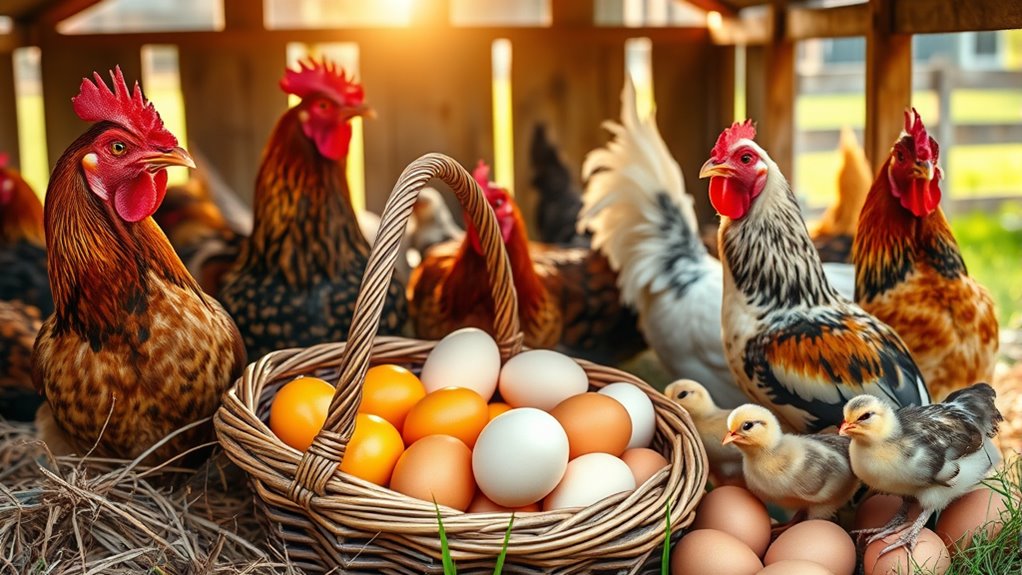
Several chicken breeds stand out for their impressive egg production, making them ideal if you want to maximize your flock’s annual yield. The Production Red and Rhode Island Red breeds can lay up to 300 eggs per year, topping the list as some of the highest egg producers.
White Leghorns also shine, consistently laying around 250 eggs per year with their prolific habits. Black Australorps offer reliable laying too, producing between 200 and 250 eggs annually.
Choosing breeds with strong genetics directly impacts how many eggs you’ll get per year. If you’re focused on egg production, selecting these breeds ensures you’ll have a steady supply of eggs, making your chicken-keeping efforts rewarding and efficient.
How Does Hen Age Affect Egg Laying?
As hens age, their egg production naturally declines, so understanding this pattern helps you manage your flock’s productivity. Hens usually reach peak egg production around 30 weeks old, laying up to 250-300 eggs in their first year.
After that, you’ll notice a gradual decrease in eggs each year—about 20% less annually. By the third year, egg production typically falls to just under 70% of what it was initially. Younger hens, starting at 18-22 weeks, produce more eggs compared to older ones.
Once hens reach 6-7 years, many slow down considerably or stop laying altogether. Keeping an eye on hen age allows you to anticipate changes in egg production and adjust your flock management accordingly to maintain steady egg supply.
What Environmental Factors Affect Egg Laying?
You’ll notice that light exposure plays a big role in how often hens lay eggs, with longer daylight boosting their cycles. The housing conditions and climate also impact their comfort and stress levels, which directly affects production.
Keeping these factors in check helps you maintain a steady supply of eggs throughout the year.
Light Exposure Effects
When hens get around 14 to 16 hours of light each day, their reproductive hormones kick into gear, boosting egg production. Light exposure directly influences how many eggs your chickens lay by regulating their natural cycles.
If your hens get less than 10 to 12 hours of light daily, egg production can drop markedly, especially during shorter winter days. To maintain steady egg laying, you can provide supplemental lighting that mimics natural daylight.
However, be careful with sudden changes in the hours of light or intensity; those can disrupt your hens’ laying patterns and cause a temporary decline in egg output. Consistent light exposure not only supports regular egg production but also helps prevent molting, keeping your flock productive throughout the year.
Housing And Climate
Although egg production depends heavily on light exposure, the environment where your chickens live plays an equally critical role. Proper housing and a suitable climate directly impact how many eggs your hens lay. You’ll want to maintain consistent, moderate temperatures around 70-75°F, since extreme heat or cold reduces egg production.
Make certain your coop has good ventilation to prevent respiratory problems and keep the air fresh. Protect your chickens from harsh weather like wind, rain, and snow to minimize stress, which supports regular laying. Proper insulation and shade help your hens stay comfortable during temperature changes.
Also, avoid excessive moisture by providing dry bedding and ensuring good drainage; damp conditions can lead to disease and lower egg production. With the right housing and climate, you’ll keep your hens healthy and productive.
How Do Nutrition and Health Affect Egg Production?
Because a hen’s nutrition and health directly impact her egg production, you need to provide high-quality feed rich in protein and calcium to maximize both the number and size of eggs. Proper nutrition ensures hens get essential vitamins and minerals, preventing poor eggshell quality and reduced laying.
You should also maintain your hens’ health by keeping their living space clean, ensuring good ventilation, and providing adequate lighting. Illness, parasites, or stress weaken their immune systems, causing a notable drop in egg production.
Regular veterinary care helps catch and prevent diseases that could impair egg-laying performance. By focusing on balanced nutrition and good health practices, you’ll support your hens in laying eggs consistently and efficiently throughout the year.
How Does Molting Influence Annual Egg Counts?
When hens molt, they pause egg-laying for several weeks as their bodies focus on regrowing feathers. This seasonal break means you’ll see a noticeable drop in egg production during that time.
Understanding this pause helps you predict how molting affects the total eggs a hen lays each year.
Molting Egg-Laying Pause
Since hens undergo molting once or twice a year, you’ll notice a significant pause in their egg production during this time. Molting causes hens to shed and regrow feathers, leading to a halt in egg laying that typically lasts 6 to 12 weeks.
This break can reduce egg production by up to 50% or more, directly impacting the annual egg count. After molting, hens slowly resume laying, often starting with smaller eggs that increase in size over time.
You can help minimize this pause’s effect on yearly egg output by ensuring proper nutrition and adequate lighting during molting. Being aware of the molting egg-laying pause helps you better understand fluctuations in your flock’s egg production throughout the year.
Seasonal Production Impact
A significant portion of a hen’s annual egg production is influenced by molting, which typically happens once a year in the fall. During molting, your hen stops laying eggs temporarily as she sheds old feathers and grows new ones, redirecting energy from egg production to feather regrowth. This seasonal production shift causes a pause lasting about 6 to 12 weeks, reducing the total egg count you can expect annually.
Depending on the breed, climate, and management, the timing and length of molting vary, but it generally leads to a 20-30% drop in yearly egg output. Understanding how molting impacts seasonal production helps you better anticipate fluctuations in your flock’s egg count throughout the year.
How Many Hens Do You Need for Your Egg Supply?
Determining how many hens you need for your egg supply depends largely on your household’s weekly egg consumption and the productivity of your flock. Since most hens lay between 200 and 300 eggs per year, you can estimate the number of hens based on your weekly egg demand.
Typically, 4 to 6 hens suffice for an average family, but adding extra hens helps cover seasonal drops and aging hens’ reduced output.
| Weekly Egg Demand | Number of Hens Needed | Notes |
|---|---|---|
| 6 eggs | 4 hens | High productivity hens |
| 9 eggs | 5 hens | Mid-range productivity |
| 12 eggs | 6 hens | Account for seasonal decline |
| 15+ eggs | 7+ hens | Larger families or backup hens |
How to Plan Your Egg Budget by Season and Hen Age
Although hens can lay between 200 and 300 eggs each year, your egg budget needs to reflect seasonal changes and the hens’ aging process. Egg production peaks around 30 weeks but declines as hens grow older, dropping to about 80% by their second year.
To plan effectively, estimate your weekly egg needs and multiply by 52, adjusting for seasonal variation and hen age. Younger hens produce more eggs, so you might need fewer initially, but as they age, expect reduced output and consider increasing flock size.
Seasonal variation, especially in winter, can lower egg production, but providing supplemental lighting helps maintain a steady supply. By factoring in hen age and seasonal shifts, you’ll create a reliable egg budget that meets your household’s needs year-round.
Frequently Asked Questions
What Is the 90/10 Rule for Chickens?
The 90/10 rule means you’ll get 90% of a hen’s eggs in her first two to three years.
After that, her production drops about 10% each year, helping you plan your flock’s productivity.
Can a Chicken Lay Two Eggs a Day?
You usually won’t see a chicken lay two eggs a day since it’s rare. Sometimes, during peak times or with certain breeds, it might happen, but don’t expect it often—one egg per day is typical.
How Many Chickens Do You Need to Get a Dozen Eggs a Week?
If you want a steady dozen eggs weekly, you’ll need about 2 to 3 hens. Younger, enthusiastic layers might reduce that number, but remember, time and seasons gently nudge their production down.
How Many Times Can a Chicken Lay Eggs in a Year?
You can expect a chicken to lay eggs about 250 to 300 times yearly, usually one egg every 24 to 26 hours.
Keep in mind, factors like age, breed, and environment can affect this frequency.
Conclusion
You might expect a chicken to lay eggs steadily all year, but the reality contrasts sharply—seasons change, hens age, and their output fluctuates. While some breeds pour out eggs like clockwork, others take breaks influenced by environment and health.
Understanding these ups and downs helps you plan better, ensuring your egg supply meets your needs. So, embrace the unpredictability; it’s what makes raising chickens both challenging and rewarding. Knowing how many eggs a chicken lays in a year can guide your expectations and management strategies.