
How Much Liquid Egg Equals One Whole Egg
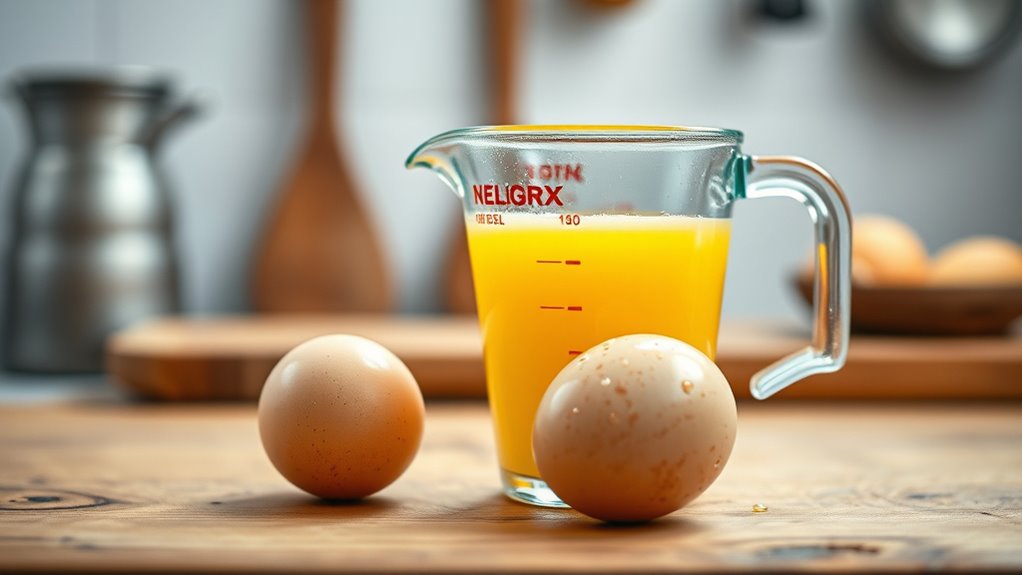
You’ll want to use about 3 tablespoons, or a quarter cup, of liquid egg to replace one whole egg in your recipes. This standard measure works well for large eggs, but if your recipe calls for different sizes, you might need to adjust slightly.
Always check the liquid egg carton label for specific guidelines, since brands vary.
Using the correct amount keeps your dish’s texture and flavor just right. Keep going, and you’ll find tips on adjustments and best uses.
Easy Ways To Convert Liquid Eggs To Whole Eggs
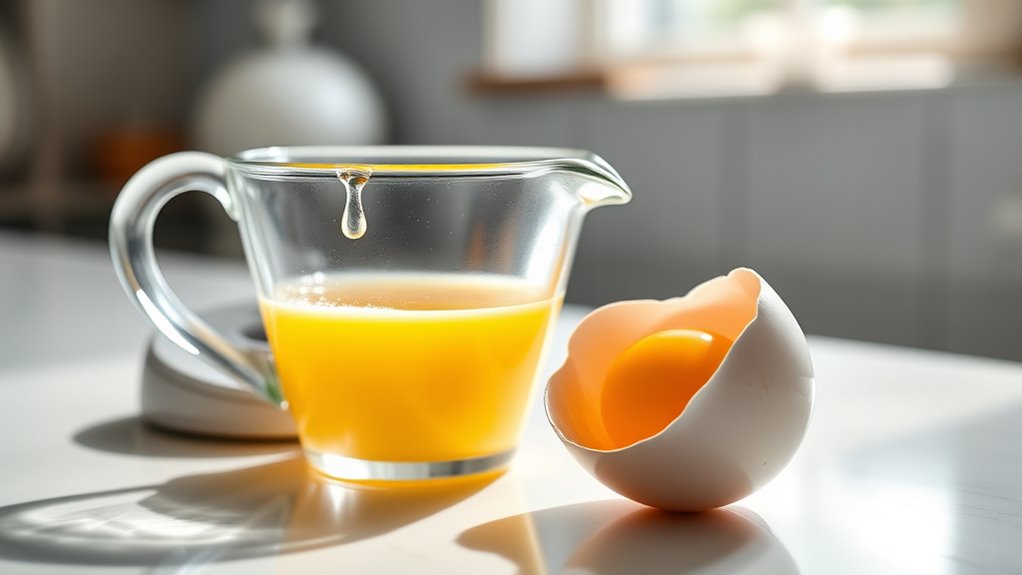
When you need to substitute liquid eggs for whole eggs, you can use about 3 tablespoons or 1/4 cup of liquid egg for each large whole egg. Before measuring, always shake the liquid eggs container well to make sure the contents are evenly mixed. This helps you get a consistent amount every time.
Keep in mind, the exact conversion might vary slightly depending on the product’s concentration, so it’s a good idea to check the packaging for specific instructions. Using liquid eggs is a convenient way to replace whole eggs in recipes, especially when you want to avoid cracking shells or dealing with yolks and whites separately.
With these easy conversions, you can confidently swap liquid eggs for whole egg without affecting your dish’s texture or taste.
How Much Liquid Egg Equals One Whole Egg?
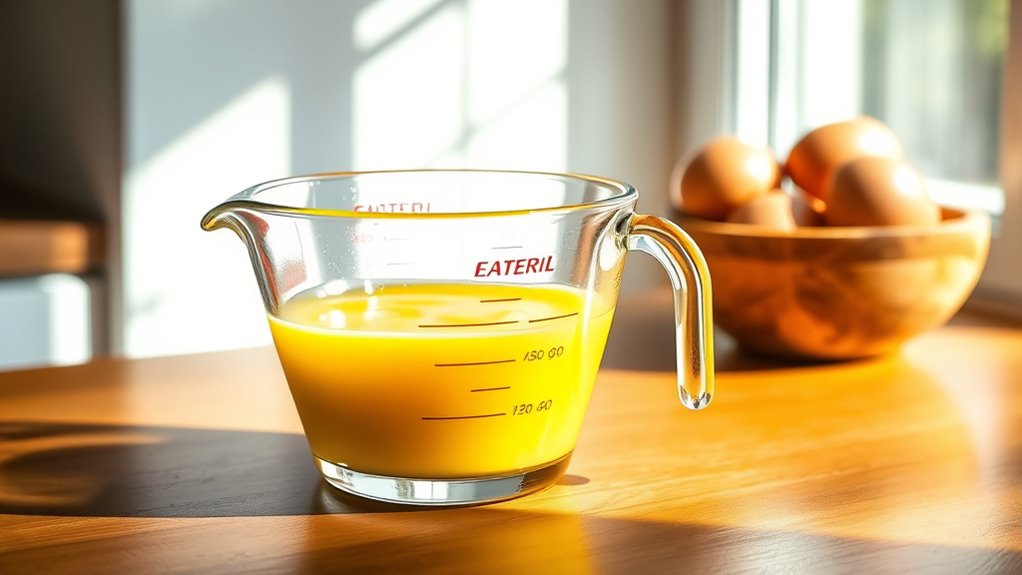
If you need to replace a whole egg in your recipe, about 3 tablespoons or 1/4 cup of liquid egg will do the trick. This measurement works well because liquid eggs are designed to equal whole eggs in volume and function.
When substituting, keep these points in mind:
- Most commercial liquid eggs use 1/4 cup per whole egg for consistency.
- Check the product label to confirm exact amounts since some brands vary slightly.
- Measuring carefully ensures your recipe turns out just right every time.
- Using liquid eggs saves you time cracking and separating whole eggs, making prep easier and cleaner.
Why Egg Size Matters For Liquid Egg Substitutions
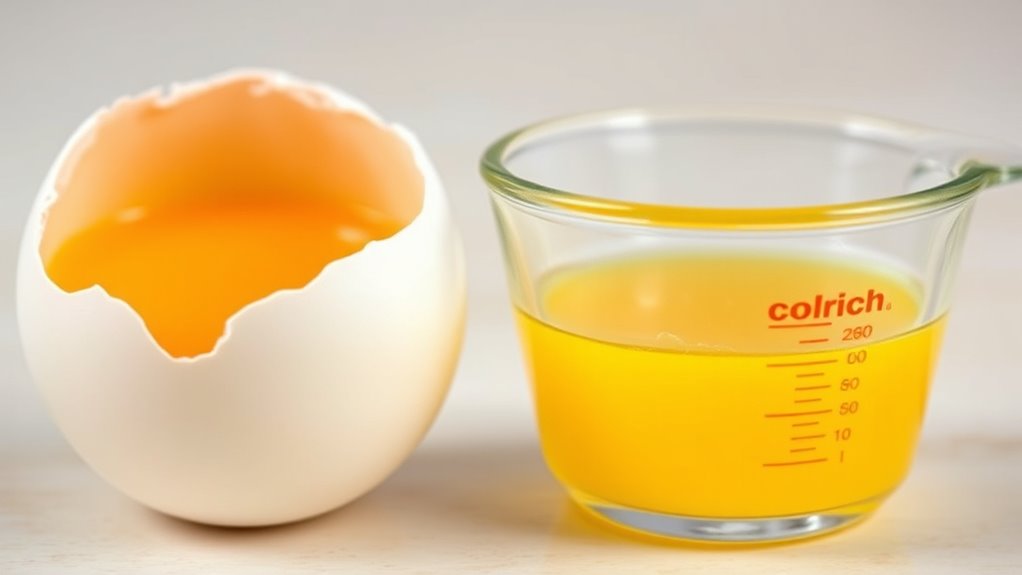
Because egg size directly affects the volume of liquid inside, you need to consider it carefully when substituting with liquid eggs to keep your recipe accurate. Larger eggs contain more liquid than smaller ones, so using the same amount of liquid egg for different egg sizes can throw off your recipe’s balance.
If you’re baking or making custards, matching the egg size precisely matters to achieve the right texture and structure. Liquid egg substitutes are measured by volume, so adjusting for egg size ensures you’re adding the correct portion.
Generally, 3 tablespoons of liquid egg equals one large egg, which helps maintain consistency. For most cooking like scrambling, egg size differences are less critical, but precision is key for baking success.
Using Liquid Egg Whites And Yolks As Whole Egg Replacements
Although liquid egg whites and yolks are often used separately, you can combine them to substitute whole eggs accurately in your recipes. This method ensures you get the right balance of proteins and fats without cracking fresh eggs.
Combine liquid egg whites and yolks to perfectly substitute whole eggs without cracking fresh ones.
Here’s how you can do it:
- Use about 2 tablespoons of liquid egg whites plus 1 tablespoon of liquid egg yolks to replace one whole egg.
- Mixing equal parts of liquid egg whites and yolks can also work well for many dishes.
- Remember, 4 tablespoons of liquid egg whites alone equal one large egg if you need just the whites.
- Combining these liquids maintains the texture and flavor you expect from whole eggs.
Common Recipes That Work Best With Liquid Eggs
You’ll find liquid eggs perfect for whipping up scrambled egg variations and filling breakfast burritos with ease.
They also shine in baking and binding, giving you consistent results in muffins, cakes, and meatloaf.
Let’s explore how these versatile eggs can simplify your favorite recipes.
Scrambled Eggs Variations
When you use liquid eggs for scrambled dishes, you gain consistency and convenience that streamline your cooking process. Since 3 tablespoons of liquid eggs equal one large egg, you can easily measure your portions without cracking shells or cleaning messes. This precise control helps you whip up perfect scrambled eggs every time, whether fluffy, creamy, or fully cooked.
Try these popular scrambled egg variations using liquid eggs:
- Classic fluffy scramble with a splash of milk
- Creamy cheese scramble with shredded cheddar
- Veggie-loaded scramble with spinach and bell peppers
- Protein-packed scramble with diced ham or sausage
Each recipe benefits from the ease and reliability of liquid eggs, making breakfast preparation quicker and less stressful. You’ll love how simple it is to customize your scrambled eggs without sacrificing taste or texture.
Breakfast Burrito Ingredients
Scrambled eggs set the stage for a variety of hearty breakfast dishes, and breakfast burritos are a perfect example. When you use liquid eggs, you get a quick, consistent egg filling without the hassle of cracking shell eggs. Since 1/4 cup of liquid eggs equals one large egg, it’s easy to portion exactly what you need for your breakfast burrito.
This makes adding ingredients like chorizo, potatoes, and cheese simple and efficient. The pre-mixed consistency of liquid eggs guarantees your filling has a uniform texture and flavor every time. If you’re preparing large batches—say, for school or catering—liquid eggs streamline the process, letting you produce tasty breakfast burritos quickly and reliably.
Baking And Binding Uses
Although baking and binding often call for precise egg measurements, liquid eggs offer a convenient and reliable alternative to whole eggs. You can seamlessly substitute liquid eggs in your favorite recipes without compromising texture or structure.
Here’s why you’ll love using liquid eggs:
- In baked goods like muffins, cakes, and bread, liquid eggs provide consistent moisture and promote even rising.
- When binding meatloaf, meatballs, or veggie fritters, 3 tablespoons of liquid eggs equal one whole egg, ensuring perfect cohesion.
- Liquid eggs guarantee precise texture in custards and quiches, where exact egg amounts matter.
- You avoid cracking and beating eggs, saving time and reducing mess with liquid eggs.
Switching to liquid eggs means you get the same great results as whole eggs, with added convenience and reliability.
How To Read Labels For Liquid Egg Crediting Information
To accurately credit liquid eggs in your meal planning, you’ll need to carefully examine the product label for serving size and formulation details. Look for statements like “1/4 cup equals 1 egg” on 100% egg products. Check if the liquid egg contains only eggs or additional ingredients, as this impacts crediting.
If labels aren’t clear, consult manufacturer websites to confirm eggs per cup. Always ensure the product’s crediting info aligns with meal program requirements.
| Label Detail | What to Look For | Impact on Crediting |
|---|---|---|
| Serving Size | E.g., 1/4 cup per egg | Determines portion size |
| Formulation Statement | “100% eggs” vs. mixed liquid | Affects nutritional value |
| Egg Count per Cup | Number of eggs per cup | Ensures accurate crediting |
| Additional Ingredients | Presence of fillers | May change crediting rules |
| Compliance Info | Meal program alignment | Meets regulatory standards |
Tips For Storing And Handling Liquid Eggs Safely
Understanding how to read labels for liquid egg crediting helps you select the right product, but proper storage and handling play a big role in keeping those eggs safe and fresh.
When dealing with liquid eggs, follow these tips to ensure safety and maintain quality:
- Store liquid eggs in the refrigerator at or below 40°F (4°C) and keep them in their original sealed container.
- Shake the carton well before each use to mix separated yolks and whites.
- Use liquid eggs within 3-5 days after opening, respecting the manufacturer’s recommended shelf life.
- Always keep the container tightly sealed and discard any liquid eggs that smell off, look discolored, or have an unusual texture. Proper storage and handling protect your health and keep your dishes delicious.
How To Adjust Recipes When Using Liquid Eggs Instead Of Shell Eggs
When you swap shell eggs for liquid eggs in a recipe, measuring accurately guarantees your dish turns out just right. Shake the liquid eggs carton well to mix yolks and whites before measuring. Use about 1/4 cup of liquid eggs for one large shell egg, but adjust for different egg sizes.
Check the product label, as some specify eggs per cup for precision. Here’s a handy guide:
| Egg Size | Shell Egg Volume | Liquid Eggs Equivalent |
|---|---|---|
| Small | 1.25 oz | 3 tbsp |
| Medium | 1.5 oz | 3.5 tbsp |
| Large | 1.75 oz | 1/4 cup (4 tbsp) |
| Extra Large | 2 oz | 5 tbsp |
| Jumbo | 2.25 oz | 5.5 tbsp |
Adjust liquid eggs amounts to match the egg sizes called for in recipes.
Frequently Asked Questions
What Does Dr. Gundry Say About Eggs?
Dr. Gundry advises you to limit eggs, especially conventional ones, to reduce inflammation and gut issues. He recommends pasture-raised or organic eggs and encourages moderation, emphasizing eggs should complement a varied, balanced diet for better health.
How Much Just Egg Liquid Equals One Egg?
When it comes to Just Egg liquid, you’ll want to use about 3 tablespoons to replace one whole egg.
It’s the whole nine yards for your recipe, so measure carefully and enjoy your cooking!
How Much Liquid to Replace One Egg?
You’ll need about 1/4 cup of liquid egg to replace one whole egg.
Just shake the container well before measuring to make certain it’s mixed evenly, and your recipe will turn out just right every time.
How Much Liquid Measure Is One Egg?
One whole egg measures about 3 tablespoons of liquid. When you’re substituting, use this amount to match one egg in your recipe.
Always double-check labels for precise measurements on liquid egg products.
Conclusion
Now that you know how much liquid egg equals one whole egg, are you ready to make your cooking even easier? Using liquid eggs can save time and reduce mess, but it’s important to measure carefully and adjust recipes when needed.
Remember to check labels and store them properly to keep things safe and fresh. With these tips, you’ll confidently swap liquid eggs in your favorite dishes without missing a beat!
Understanding how much liquid egg equals one whole egg is key to successful cooking. By mastering this conversion, you ensure your recipes turn out just right every time.