
7 Simple Steps to Make Scrambled Eggs Without Milk
Pick fresh, large eggs and season them with salt, pepper, or herbs for flavor. Whisk them vigorously to incorporate air and create fluffiness. These simple steps to make scrambled eggs without milk ensure a light and creamy texture.
Melt butter or vegan fat in a skillet, then cook eggs gently on medium-low heat. Stir constantly to prevent sticking and form soft curds. Remove eggs while still slightly runny so residual heat finishes cooking perfectly.
You can customize with cheese, veggies, or spices for variety. Keep going to discover tips that make your scrambled eggs unforgettable.
Pick Eggs and Seasonings That Taste Great
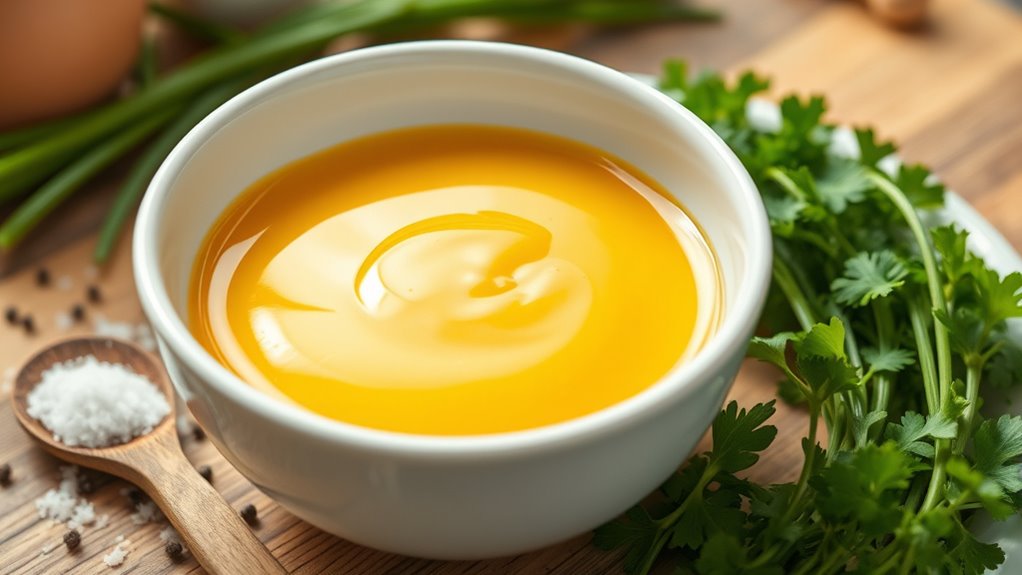
When you pick large, fresh eggs, you’ll guarantee your scrambled eggs have the best flavor and texture. Fresh eggs provide a rich base that lets your seasonings shine. Start by seasoning with about 1/4 teaspoon of salt per four eggs to enhance the natural taste without overpowering it.
Then, add pepper and herbs like chives or parsley for a fresh, vibrant flavor. Don’t hesitate to experiment with spices such as smoked paprika or garlic powder for a subtle twist. Once your eggs begin to set, fold in shredded cheese like cheddar or Monterey Jack to add a creamy, savory boost.
With the right combination of fresh eggs and thoughtful seasonings, your scrambled eggs will taste delicious every time.
Whisk Eggs Vigorously to Add Air for Fluffiness
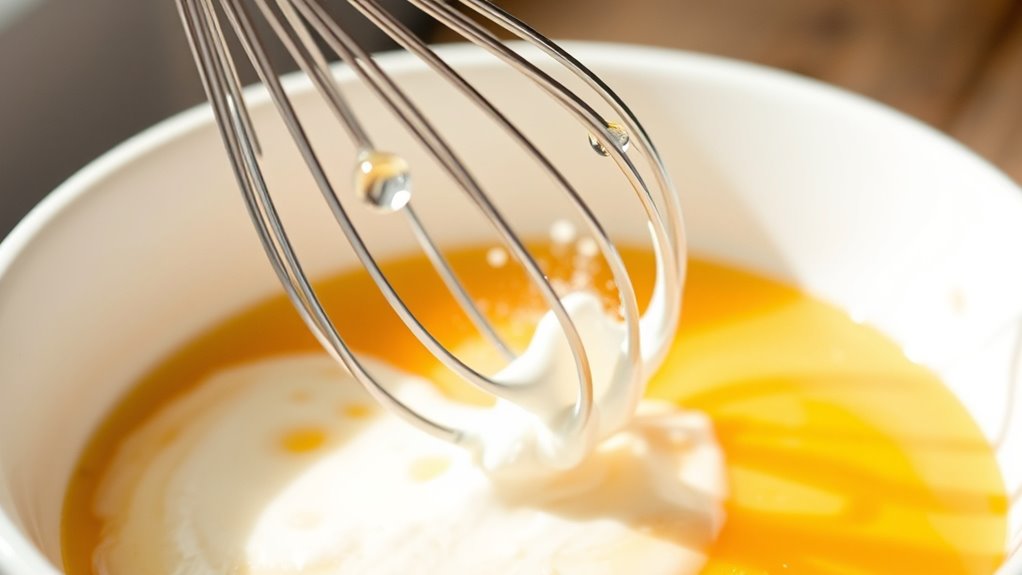
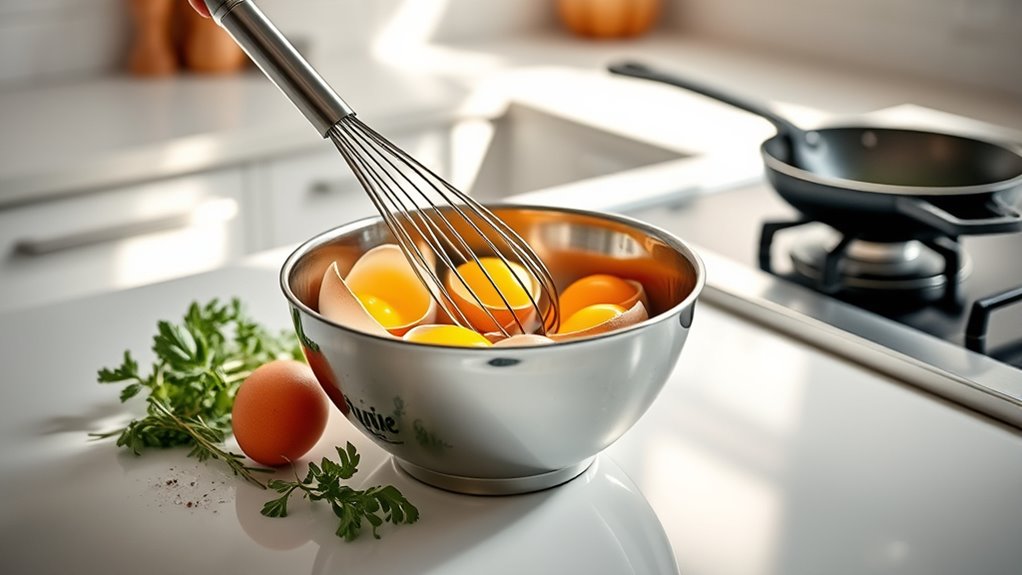
After selecting flavorful eggs and seasonings, the next step is to whisk your eggs vigorously to introduce air, which creates a light and fluffy texture. Use a wire whisk or fork to vigorously beat the egg mixture in rapid, circular motions for about 40 seconds. This process adds air, producing tiny bubbles and foam that signal proper aeration.
As you whisk eggs, the whites and yolks break down, blending smoothly into a uniform, slightly pale mixture. This well-blended egg mixture traps air, increasing volume and lightness. The result? Fluffy scrambled eggs that are tender and airy.
Don’t rush this step—thorough whisking is essential to achieve that perfect fluff without needing milk or extra ingredients.
Use Butter or Vegan Fat to Cook Eggs
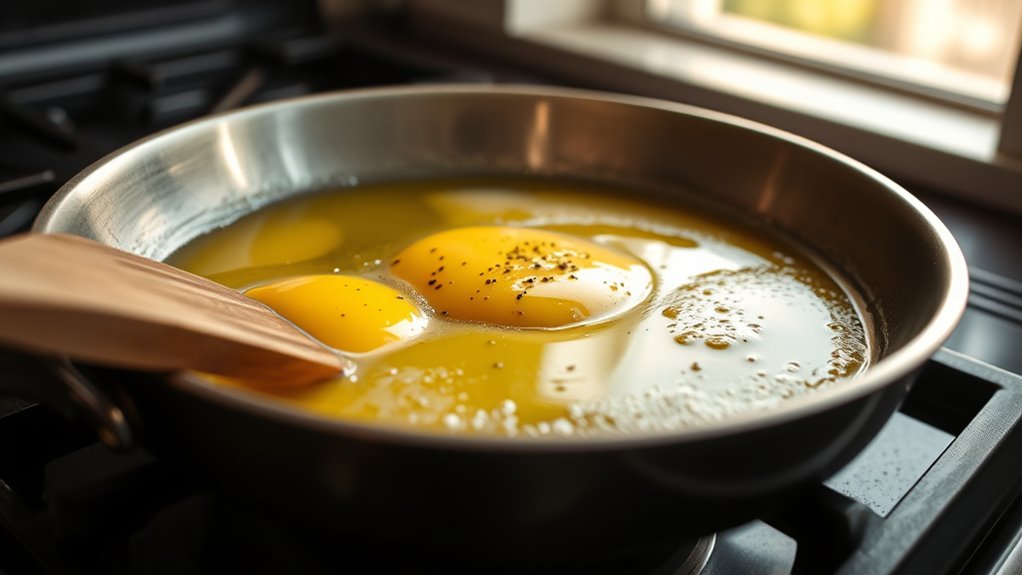
Why choose butter or vegan fat to cook your scrambled eggs? Butter and vegan fat create a rich, creamy coating on the skillet, preventing sticking and allowing you to cook eggs gently on low heat. Proper melting of these fats makes stirring smooth and helps you achieve soft eggs without milk.
| Fat Type | Amount per 4 Eggs | Key Benefit |
|---|---|---|
| Butter | 1-2 tablespoons | Rich flavor, smooth melting |
| Coconut Oil | 1-2 tablespoons | Dairy-free, subtle sweetness |
| Margarine | 1-2 tablespoons | Vegan-friendly, creamy texture |
| Olive Oil | 1 tablespoon | Light coating, heart-healthy |
| Vegan Butter | 1-2 tablespoons | Plant-based, similar to butter |
Choose your fat, melt it thoroughly in the skillet, and enjoy tender, fluffy scrambled eggs every time.
Cook Scrambled Eggs Gently on Medium-Low Heat
You’ll want to cook your scrambled eggs gently over medium-low heat to keep them soft and moist. High heat can quickly overcook them, making the texture tough and dry.
Importance Of Low Heat
You cook scrambled eggs on medium-low heat to guarantee they cook gently and evenly. Low heat ensures gentle cooking, preserving moisture retention and creating a soft texture. It prevents overcooking by allowing residual heat to finish cooking once removed from the stove.
Maintaining an even temperature helps you achieve fluffy eggs without browning or toughness.
| Benefit | Reason |
|---|---|
| Soft texture | Slow protein coagulation |
| Moisture retention | Prevents drying out |
| Fluffy eggs | Even heat distribution |
Using medium-low heat is essential for tender, creamy scrambled eggs. It avoids rapid coagulation that toughens eggs and instead promotes small curds and a custard-like consistency.
This simple heat control step makes all the difference in your scrambled eggs’ quality.
Preventing Overcooking Risks
Cooking scrambled eggs on medium-low heat not only helps maintain a soft texture but also plays a key role in preventing overcooking. By using low heat, you ensure gentle cooking, allowing the eggs to cook evenly without drying out or becoming rubbery. Continuous stirring during the cooking process distributes heat uniformly, avoiding hot spots that cause uneven cooking.
Mastering temperature control and timing is essential; removing the eggs from heat just before they fully set lets residual heat finish the job delicately. This approach prevents overcooking by leveraging the warmth already in the pan without exposing the eggs to excessive heat.
With careful attention to these steps, you’ll achieve perfectly cooked scrambled eggs every time, avoiding toughness and dryness caused by high heat or rushed cooking.
Maintaining Moisture And Texture
When you cook scrambled eggs gently over medium-low heat, the proteins don’t tighten too quickly, which helps keep the eggs moist and tender throughout. Using low heat promotes moisture retention by preventing rapid evaporation. Continuous stirring encourages small, soft curds, producing a creamy texture.
Remove the eggs from heat just before fully set to use residual heat for finishing, which prevents overcooking and dryness.
TechniqueBenefitResultLow heatGentle cookingMoist scrambled eggsContinuous stirringSmall curdsCreamy textureResidual heatFinishes cookingPrevents overcookingTiming removalAvoids dryingTender, fluffy eggs
Master these steps to maintain moisture and texture perfectly.
Stir Constantly to Prevent Sticking and Keep Eggs Soft
Although it might seem tedious, stirring your eggs constantly with a silicone spatula prevents them from sticking to the pan and helps create small, creamy curds that keep your scrambled eggs soft and moist. To achieve this, use a nonstick skillet over medium-low heat, which allows gentle cooking and reduces the risk of sticking and overcooking. Continuous stirring ensures uniform cooking by breaking up the eggs as they set, promoting soft eggs with a smooth texture. Make sure to scrape the edges of the pan regularly to release any eggs clinging to the surface.
Remove Eggs While Still Slightly Runny for Perfect Texture
You’ll want to take your scrambled eggs off the heat just before they’re fully set, while they’re still slightly runny.
The residual heat will finish cooking them perfectly, giving you tender, creamy eggs. If you wait too long, you risk overcooking and ending up with dry, rubbery eggs.
Timing Is Crucial
Because residual heat continues to cook the eggs after you remove them from the pan, it’s essential to take them off while they’re still slightly runny. Timing is vital to ensure your scrambled eggs cook perfectly without overcooking. When the eggs are just set but still show a glossy, creamy texture, that’s your cue to remove them.
This precise timing prevents the eggs from drying out or becoming rubbery. The residual warmth in the pan will finish the cooking, giving you perfectly fluffy scrambled eggs every time. If you wait too long, you risk overcooking, resulting in chalky or curdled texture.
Residual Heat Cooking
When you remove scrambled eggs from the heat while they’re still slightly runny, you let the residual heat complete the cooking gently, preventing dryness and overcooking. Residual heat cooks the eggs evenly, preserving moisture and ensuring perfect consistency.
To achieve this, remove from heat when eggs are glossy with a slightly liquid center. Then gently stir or fold to promote even cooking without breaking the delicate texture. The eggs will carry residual heat for about 30 seconds to a minute, finishing the process off the stove.
| Step | Benefit |
|---|---|
| Remove from heat | Prevents overcooking |
| Slightly runny eggs | Retain moisture |
| Gently stir | Ensures even cooking |
| Use residual heat | Finish cooking gently |
| Monitor closely | Achieve perfect consistency |
Avoid Overcooking Eggs
If you want scrambled eggs with the perfect creamy texture, remove them from the heat while they’re still slightly runny. Overcooking eggs leads to dryness and a rubbery texture, ruining their moist, fluffy appeal. To avoid this, follow these tips:
- Cook eggs over low heat and watch for visual cues—eggs should look just set but still glossy.
- Take the eggs off the stove about 30 seconds before they reach full firmness.
- Let residual heat finish the cooking off the burner, ensuring they’re perfectly cooked without dryness.
How to Serve and Customize Scrambled Eggs
Although scrambled eggs are delicious on their own, you can easily elevate their flavor and presentation by adding fresh herbs, cheese, or a variety of toppings. Serve your eggs plain or garnish them with herbs like chives, dill, or parsley to brighten the taste. Stir in shredded cheese such as cheddar or Monterey Jack just before removing your eggs from heat for a creamy texture.
Customize further by mixing in cooked vegetables, smoked salmon, or bacon to add protein and variety. Season your eggs with black pepper, paprika, or a dash of hot sauce to enhance flavor without extra calories. Pair your scrambled eggs with toast, roasted vegetables, or fresh fruit for a balanced meal.
These simple customizations make your scrambled eggs both tasty and satisfying.
Frequently Asked Questions
How to Do Scrambled Eggs Without Milk?
Whisk your eggs with a pinch of salt and a splash of water or dairy-free milk if you want.
Cook slowly in a non-stick pan with vegan butter, stirring gently until soft curds form, then remove before fully set.
What Can I Use in Place of Milk for Scrambled Eggs?
You can substitute water or plant-based milks like almond or oat milk in your scrambled eggs. A tablespoon per 2-3 eggs keeps them moist and fluffy without changing the flavor or making them runny.
Can You Cook Scrambled Eggs With Water Instead of Milk?
Yes, you can cook scrambled eggs with water instead of milk. Just whisk in about a tablespoon per two eggs, cook gently over low heat, and season well to keep them fluffy and tasty without the creaminess milk provides.
Conclusion
Don’t worry if you think scrambled eggs need milk to be creamy—using butter or vegan fat keeps them rich and fluffy without it. By whisking well and cooking gently, you’ll get soft, tender eggs every time.
Just remember to remove them while slightly runny for the perfect texture. These simple steps make milk-free scrambled eggs just as delicious, proving you don’t need milk to enjoy a classic breakfast favorite.
With these 7 simple steps to make scrambled eggs without milk, you can enjoy a creamy, fluffy breakfast anytime. This method ensures your eggs are just as tasty and satisfying without adding dairy.