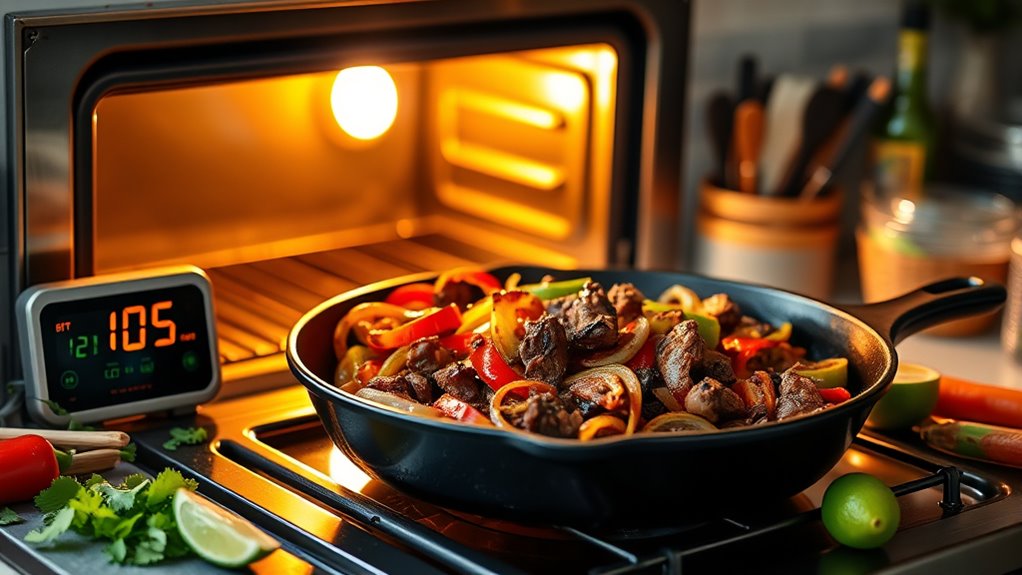
How Long to Cook Beef Fajitas in the Oven in 10 Easy Steps
Preheat your oven to 400°F to start cooking delicious beef fajitas in the oven. Prepare and season your beef and veggies well to enhance the flavors. Use a properly sized baking sheet to avoid overcrowding the ingredients.
Arrange everything in a single layer for even roasting. Cook the fajitas for 15–20 minutes, flipping halfway through to ensure they cook evenly. Check the steak’s doneness, aiming for medium-rare for the best texture.
Let the beef rest before serving. Serve your fajitas with warm tortillas and your favorite toppings. Store any leftovers properly for later enjoyment.
Keep going to discover tips that make your fajitas even better.
Preheat Oven to 400°F for Fajitas
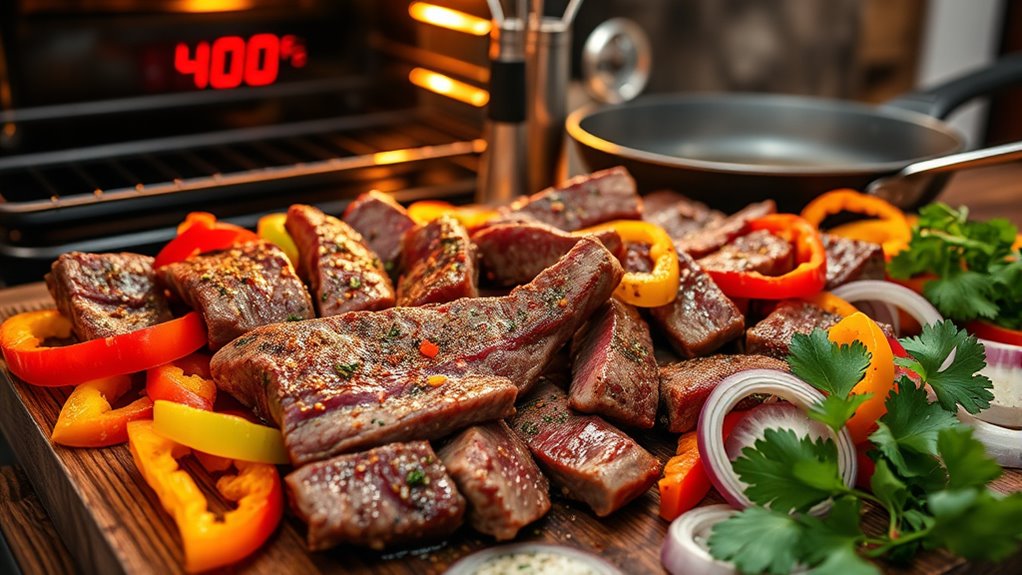
Before you start cooking your beef fajitas, preheat your oven to 400°F (200°C) to guarantee even heat distribution. Setting the correct oven temperature is vital—it allows your steak to sear properly while letting the vegetables caramelize without burning.
When you preheat oven to 400°F, you reduce cooking time and achieve tender meat alongside flavorful, roasted veggies. Don’t place the sheet pan inside until the oven fully reaches this temperature; this step ensures consistent cooking results.
Properly preheating the oven prevents overcooking and helps your fajitas cook through perfectly in about 15-20 minutes. Taking the time to preheat oven accurately sets the foundation for a delicious, evenly cooked meal every time.
Prepare and Season Beef and Vegetables
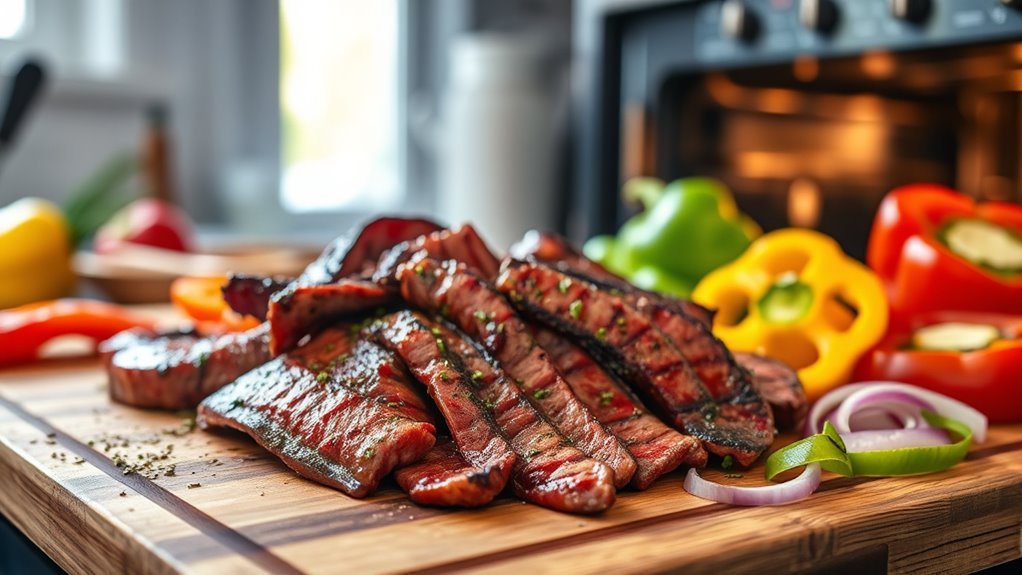
Although preheating the oven is important, your next step is to prepare and season the beef and vegetables. Start by thinly slicing flank or sirloin steak across the grain into ½-inch strips. Toss the beef with olive oil, fajita seasoning, and lime juice to boost flavor and tenderness.
Then, slice bell peppers and red onion into thin strips, coating them with olive oil and the same seasoning mix. Marinate both for at least 30 minutes to let flavors meld perfectly before cooking.
| Ingredient | Preparation | Seasoning |
|---|---|---|
| Beef | Thin strips, ½ inch | Olive oil, fajita seasoning, lime juice |
| Bell Peppers | Thin strips | Olive oil, fajita seasoning |
| Red Onion | Thin strips | Olive oil, fajita seasoning |
Select the Right Baking Sheet Size to Prevent Overcrowding
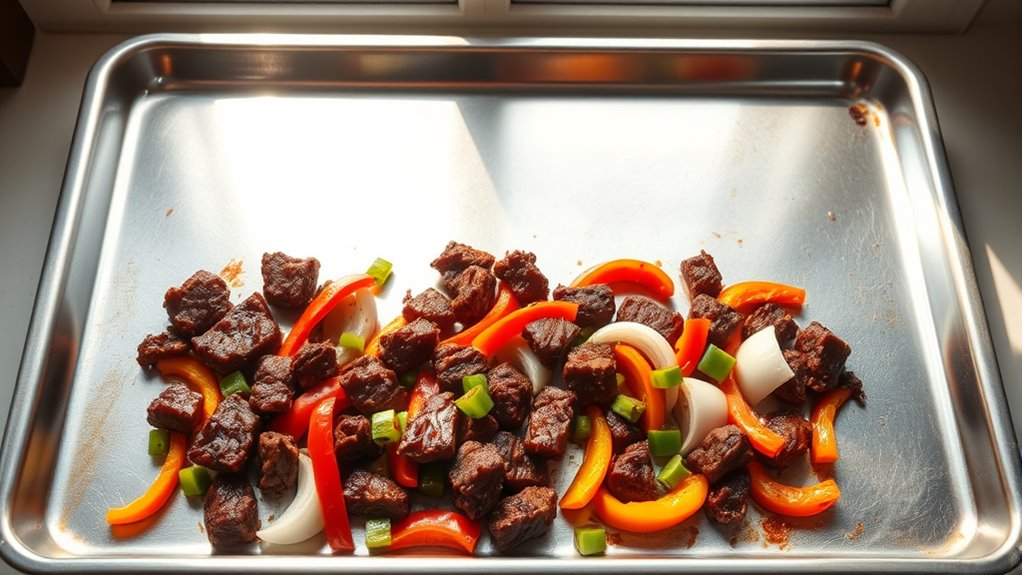
You’ll want to use a three-quarter size sheet pan, about 18×13 inches, to give your steak and veggies enough room to cook evenly. Overcrowding traps steam and prevents proper browning, making your fajitas soggy instead of crispy.
If your ingredients don’t fit comfortably, split them between two pans to keep the cooking consistent.
Optimal Sheet Pan Dimensions
When you choose the right sheet pan size, you guarantee your beef fajitas cook evenly with perfect caramelization. A three-quarter size (18×13 inch) sheet pan is ideal for flank steak and veggies, allowing enough space for airflow without overcrowding.
Using too large or too small pans can cause steaming instead of roasting. This table helps you pick the best sheet pan size for your fajitas:
| Sheet Pan Size | Effect on Cooking | Ideal Use |
|---|---|---|
| 18×13 inch | Even cooking, crisp edges | Perfect for flank fajitas |
| Larger pans | Ingredients steam | Avoid for smaller portions |
| Smaller pans | Overcrowding, steaming | Not recommended |
| Full sheet pan | May cause uneven roast | For larger batches |
| Half sheet pan | Limited space | Small portions only |
Choose wisely to get tender, flavorful beef every time!
Effects Of Overcrowding
Because overcrowding traps steam and limits airflow, your beef fajitas won’t brown properly and can turn soggy. When you cram too many ingredients on a small baking sheet, steam accumulates, preventing caramelization and crispness. Using a 3/4 sheet pan gives your beef and veggies enough space, allowing air to circulate freely.
This promotes even cooking, better browning, and enhances tenderness. Overcrowding also slows heat transfer, which can increase cooking time and dull flavors. By selecting the right size baking sheet, you maintain proper oven temperature and ensure your fajitas cook evenly and develop rich, savory taste.
Arrange Steak and Veggies for Optimal Roasting
You’ll want to arrange the steak and veggies in a single layer with enough space between pieces to allow the heat to circulate evenly. Keeping the steak on one side and the vegetables on the other helps them cook at the right pace without overcrowding.
Using a wire rack can also lift the ingredients, promoting better roasting and caramelization.
Proper Spacing On Sheet
To guarantee your beef fajitas roast evenly, arrange the sliced steak and vegetables in a single, even layer on the sheet pan without overlapping them excessively. Proper spacing is key; leave at least 1 inch between pieces to allow hot air to circulate freely. Using a large enough sheet pan, ideally a three-quarter size, prevents overcrowding and ensures each piece roasts rather than steams.
Avoid piling ingredients on top of each other, as that traps moisture and causes uneven cooking. For even better airflow, consider spreading everything out before roasting or using a wire rack to elevate the food.
Following these steps will help your fajitas cook uniformly, achieving that perfect roasted texture and flavor every time.
Layering For Even Cooking
When arranging your steak and vegetables for roasting, make sure to layer them thoughtfully to promote even cooking. Start by placing sliced vegetables in a single, even layer on the baking sheet, which ensures uniform roasting.
Next, add the seasoned steak strips on top of or beside the veggies, but avoid overcrowding to maintain proper air circulation. For ideal layering, use a wire rack to elevate the steak above the vegetables, allowing heat to circulate evenly around both.
If you don’t have a rack, space the steak and vegetables slightly apart so heat can reach all sides. This careful layering prevents steaming and overcrowding, resulting in caramelized, evenly cooked fajitas every time.
Roast Fajitas for 15–20 Minutes at 400°F
Although roasting fajitas at 400°F only takes 15 to 20 minutes, you’ll want to keep an eye on the steak’s internal temperature to hit your preferred doneness. Spread the seasoned steak and vegetables evenly on a lined sheet pan, making sure not to overcrowd so everything cooks evenly.
Place the sheet pan in your preheated oven and roast the fajitas until the steak reaches 130-135°F for medium-rare. Keep in mind, cooking times may vary slightly depending on steak thickness and your oven’s accuracy.
Once done, remove the sheet pan and let the fajitas rest for a few minutes. This resting period helps the juices redistribute, ensuring tender, flavorful beef when you slice and serve.
Flip and Stir Fajitas Halfway Through Cooking
Keeping a close eye on your fajitas as they roast helps you catch the perfect moment to flip and stir. Around the 10-minute mark, use tongs or a spatula to carefully flip the steak slices, ensuring even cooking and preventing burning on one side. Stir the peppers and onions at the same time to promote uniform heat exposure and help them caramelize beautifully.
Flipping the steak after about 7-8 minutes in a 400°F oven keeps the interior tender and medium-rare. This halfway flip and stir not only shortens cooking time but also guarantees consistent texture and flavor throughout. By doing this, you’ll achieve perfectly cooked fajitas with rich caramelization and juicy steak every time.
Check Steak Doneness for Perfect Tenderness
You’ll want to verify your steak’s internal temperature to hit that perfect medium-rare range of 130-135°F for tender fajitas. Keep an eye on visual cues too, like a slight pink center and firm texture. Using both methods ensures your steak is cooked just right every time.
Checking Internal Temperature
When cooking beef fajitas, checking the internal temperature guarantees you achieve the perfect tenderness every time. Use a meat thermometer to measure the internal temperature by inserting it into the thickest part of the steak, avoiding bone or fat for accuracy. Aim for 130-135°F if you prefer medium-rare or 140-145°F for medium doneness.
Remove the steak from the oven when it’s about 5°F below your target since it continues cooking while resting. Rest your steak for 10 minutes before slicing to let the juices redistribute, enhancing tenderness. Remember, thinly sliced beef cooks faster, so adjust your cooking time as needed to prevent overcooking.
This simple step guarantees your fajitas come out juicy and perfectly cooked every time.
Visual Doneness Indicators
Beyond using a meat thermometer, you can rely on visual cues to check if your beef fajitas have reached the right level of doneness. While the internal temperature should hit 130-135°F for medium-rare, these visual indicators help confirm perfect tenderness:
- The steak’s exterior looks browned and caramelized with visible juices.
- When sliced, the center remains slightly pink, showing it’s cooked just right.
- Cutting against the grain reveals tender, easy-to-slice meat.
- Vegetables appear caramelized and slightly charred, complementing the steak’s doneness.
- Juices released from the meat are clear but still present, indicating ideal cooking.
Using these visual cues alongside internal temperature measurements ensures your beef fajitas come out tender and flavorful every time.
Rest Fajita Steak Before Serving
Although it’s tempting to slice your fajita steak right off the grill, letting it rest for at least 10 minutes will keep it juicy and tender. When you rest the steak, the juices redistribute evenly throughout the meat, preventing them from spilling out when you cut into it. This step is essential because slicing immediately can cause the steak to lose its moisture, resulting in dryness.
To maintain warmth, cover the steak loosely with aluminum foil during this resting period. Resting becomes even more important if your steak reached a higher cooking temperature, ensuring it stays flavorful and tender. Taking the time to rest your fajita steak before serving makes a noticeable difference in taste and texture.
Serve With Fresh Toppings and Warm Tortillas
How do you elevate your beef fajitas to the next level? It’s all about serving them with fresh toppings and warm tortillas. Before serving, warm your tortillas in the oven or on a skillet to keep them soft and pliable.
Elevate beef fajitas by serving with fresh toppings and warm, soft tortillas for the perfect flavor and texture.
Then, arrange everything separately so everyone can customize their fajitas just the way they like. Don’t forget these essential toppings to boost flavor and texture:
- Sliced avocado for creaminess
- Chopped cilantro for freshness
- Diced tomatoes for juiciness
- Lime wedges to add a tangy zing
- Sour cream, shredded cheese, and salsa for extra richness
Store and Reheat Leftover Beef Fajitas Safely
When you have leftover beef fajitas, storing them properly is key to keeping their flavor and texture intact. Place your leftovers in an airtight container and refrigerate them for up to three days. Avoid leaving them at room temperature longer than two hours to prevent bacterial growth.
When it’s time to reheat, do so gently to preserve moisture and avoid overcooking. You can reheat in the microwave on medium power, covering the fajitas with a damp paper towel to retain moisture. Alternatively, use a skillet over medium heat, stirring occasionally until heated through.
These methods ensure your leftovers stay tasty and safe to eat without drying out or losing their delicious texture.
Frequently Asked Questions
How Long Do I Cook Beef Fajita in the Oven?
You’ll cook beef fajitas in the oven for about 15-20 minutes at 400°F.
Make sure your steak hits 130-135°F internal temperature for medium-rare, then let it rest for 10 minutes before slicing and serving.
How Long Do Fajitas Take in the Oven?
Fajitas take about 15-20 minutes in a 400°F oven.
You’ll want to cook the steak and veggies together, then rest the steak for 10 minutes before slicing to keep everything juicy and flavorful.
What Temperature to Cook Fajitas At?
You should cook fajitas at 400°F to 425°F. This temperature range guarantees your steak and veggies roast evenly, caramelizing nicely while maintaining the meat tender.
Preheat your oven for the best results every time.
How Long Should You Put a Steak in the Oven at 350 Degrees?
Think of cooking steak like timing a perfect song—too short, it’s unfinished; too long, it’s overplayed.
You’ll want to bake your steak at 350°F for about 20-25 minutes, flipping halfway for even doneness.
Conclusion
You might think cooking beef fajitas in the oven takes forever, but in just 15–20 minutes, you’ll have tender, flavorful steak and perfectly roasted veggies ready to enjoy. While the oven does the hard work, you get to relax and prepare your favorite toppings.
It’s the best of both worlds—quick cooking meets delicious results. So, don’t overthink it; the oven’s timing and your prep make a winning fajita feast every time. When considering how long to cook beef fajitas in the oven, remember that this quick method ensures juicy meat and vibrant vegetables for a satisfying meal.