How Much Sodium Is in Corned Beef?
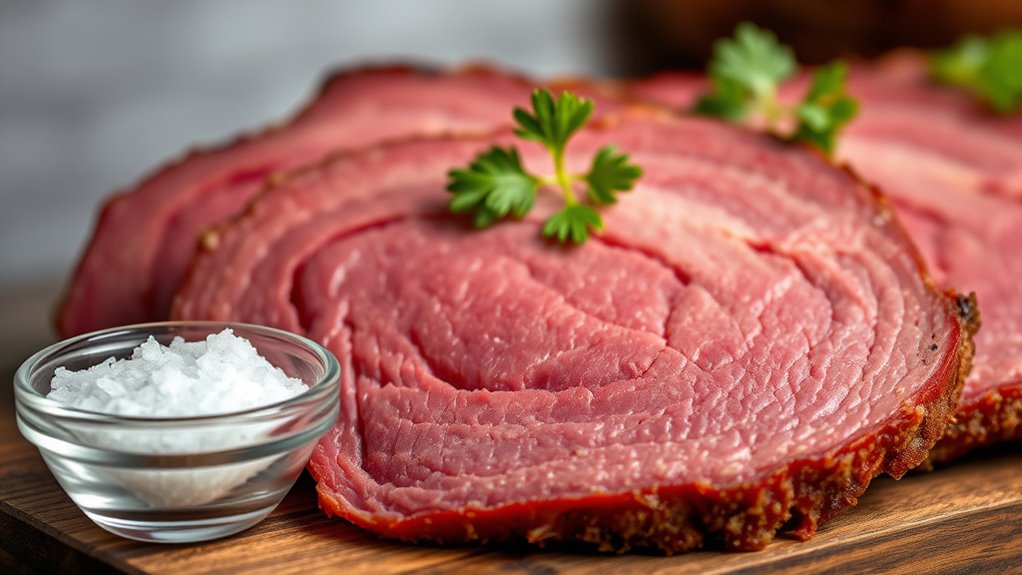
You’ll find about 476 milligrams of sodium in a typical 3-ounce slice of corned beef, almost half your daily limit. The saltiness comes from the curing process, where salt and preservatives soak into the meat.
Sodium levels can vary, and rinsing the meat can cut down some salt.
If you’re watching your sodium intake, portion control and lower-sodium options help. Keep exploring to discover how cooking and choices affect corned beef’s salt content.
How Much Sodium Is in a Typical Serving of Corned Beef?
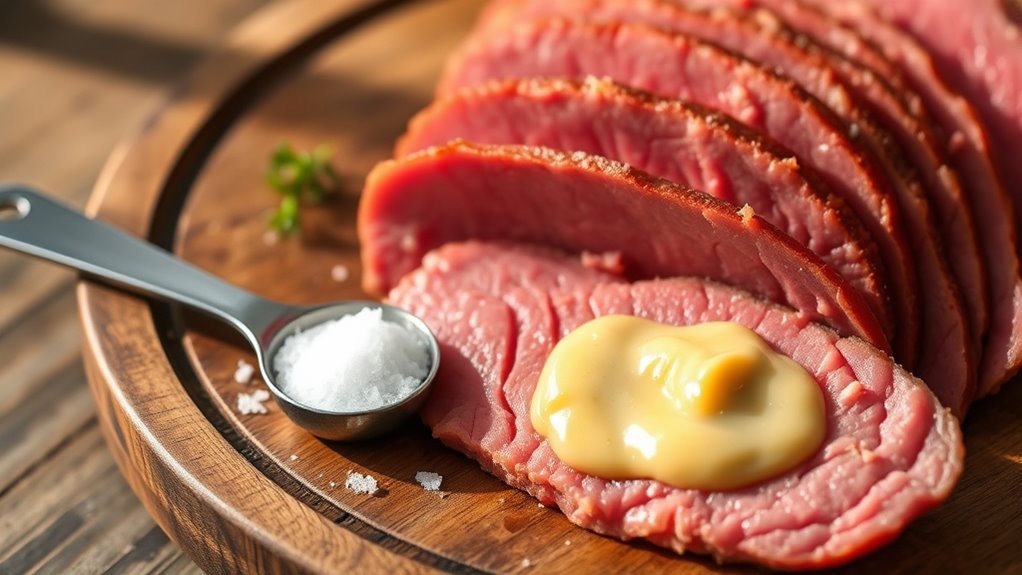
Although the sodium content can vary by brand and preparation, a typical serving of corned beef contains about 476 milligrams of sodium. That’s roughly 21% of the recommended daily value based on a 2,000-calorie diet.
When you eat a medium slice of corned beef, you’re already consuming nearly half of the advised sodium limit for the day. Keep in mind that sodium levels can fluctuate depending on how the meat is prepared and the brand you choose.
If you have more than one serving or pair corned beef with salty sides, your total sodium intake can quickly add up. Being aware of the sodium in each serving helps you manage your daily consumption effectively and make informed choices.
Why Corned Beef Has High Sodium Content
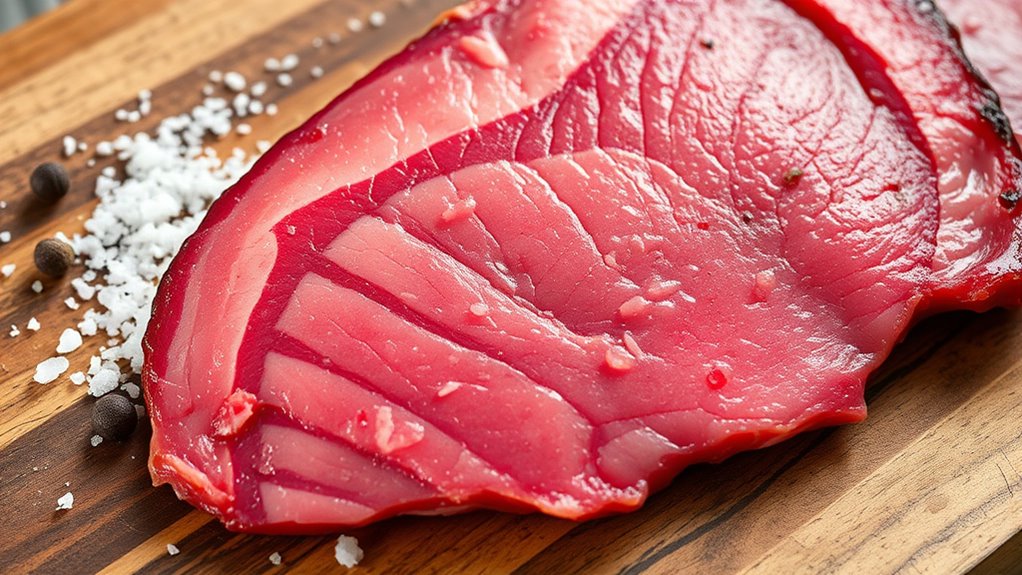
You might wonder why corned beef packs so much sodium in each serving. It’s mainly because the curing process soaks the meat in a salty brine with preservatives that keep it fresh and flavorful.
This method, along with added sodium-based ingredients, pushes the sodium levels higher than in fresh beef.
Role of Salt Preservatives
The high sodium content in corned beef comes primarily from the salt used during its curing process. Salt acts as a key preservative, preventing bacterial growth and extending the meat’s shelf life. When you eat corned beef, you consume sodium not only from salt but also from added compounds like sodium erythorbate and sodium phosphate.
Here’s why salt is essential in corned beef preservation:
- Salt inhibits harmful bacteria, keeping the meat safe to eat.
- It draws out moisture, which helps preserve texture and flavor.
- Salt enhances the curing process, ensuring the meat lasts longer.
- Additional sodium compounds improve flavor and moisture retention.
While salt is crucial for preservation, it also leads to the high sodium levels you find in every slice of corned beef.
Curing Process Explained
Because corned beef undergoes a curing process that soaks the meat in a salt-based brine, its sodium content rises dramatically compared to fresh beef. During curing, salt penetrates the meat, boosting sodium levels to nearly 1,000 mg per 100 grams.
You’ll also find additives like sodium erythorbate and sodium nitrite, which preserve the beef’s color and prevent bacterial growth but add to the total sodium. This curing method results in sodium amounts 4-5 times higher than in uncured beef.
Sodium Levels in Serving
Although corned beef tastes delicious, you should know it packs a high sodium punch—around 476 mg per slice, which takes up about 21% of your daily recommended limit. The sodium levels in each serving can vary, but here’s why corned beef often has high sodium content:
- Sodium is added during curing to preserve the meat and boost flavor.
- A standard serving (about 3 ounces) contains over 1,200 mg of sodium.
- This amount exceeds half of the daily sodium limit recommended for most adults.
- Frequent or large servings can quickly increase your total sodium intake, affecting heart health.
Comparing Sodium in Corned Beef to Other Processed Meats
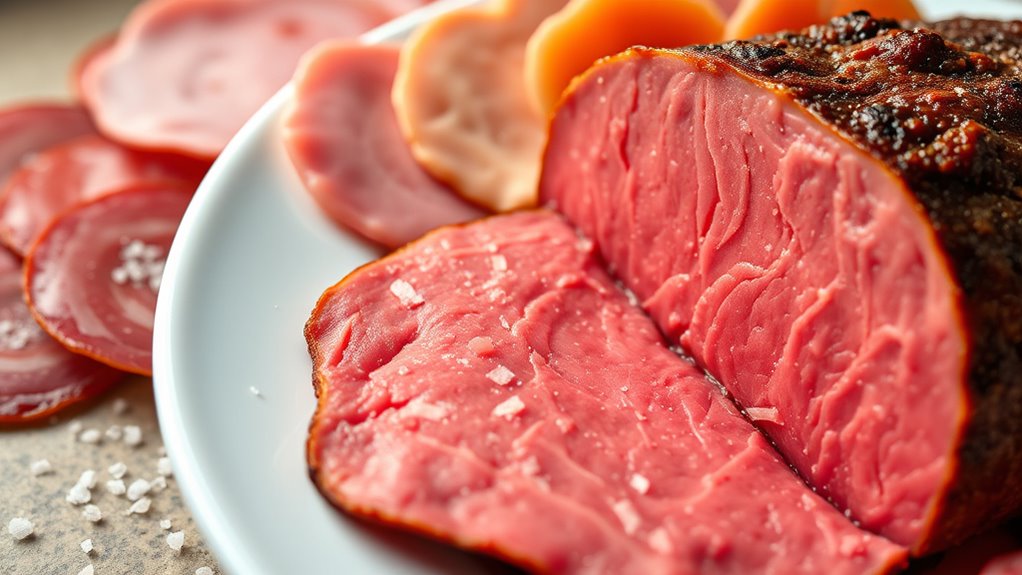
How does corned beef’s sodium content stack up against other processed meats? A typical slice of corned beef contains about 476mg of sodium, which is moderate compared to many processed meats. For example, ham and salami often exceed 1,000mg of sodium per serving, sometimes even topping 1,200mg in canned or deli-style varieties.
While corned beef’s sodium level is lower than some, it still contributes considerably to your daily intake—about 21% of the recommended value. Since processed meats vary widely in sodium content, it’s smart to be mindful of portions. Consuming too much sodium from any processed meat, including corned beef, can increase health risks, so moderation is key to managing your salt intake effectively.
How to Read Nutrition Labels for Corned Beef Sodium
When you check a corned beef label, focus on the sodium amount per serving and the % Daily Value (%DV) to see how it fits into your diet.
Understanding Sodium Amounts
Since sodium content in corned beef can vary widely, reading the nutrition label closely is essential to managing your intake. Nutrition labels show sodium per serving, which can range from 476mg to over 1,200mg depending on the portion size.
To understand sodium amounts, follow these steps:
- Check the serving size listed on the label to know how much corned beef the sodium value applies to.
- Note the sodium amount per serving—standard slices often contain around 476mg.
- Compare this sodium content to your own daily limits to avoid excess intake.
- Remember that high-sodium foods like corned beef should be eaten in moderation, especially if you monitor salt for health reasons.
Daily Value Percentages
Although sodium amounts in corned beef can seem confusing, the % Daily Value (% DV) on nutrition labels makes it easier for you to understand how much sodium you’re consuming. The % DV shows how much a serving contributes to your recommended daily sodium limit, based on a 2,000-calorie diet.
For example, one slice of corned beef typically contains around 476 mg of sodium, which equals about 21% of the Daily Value. Since values over 20% are considered high, you should limit intake if you’re watching your sodium.
Keep in mind, sodium amounts can vary by brand and serving size, so always check the nutrition label. Using the % Daily Value helps you compare products and make smarter choices to stay within healthy sodium limits.
How Corned Beef Sodium Affects Your Daily Salt Limit
Eating corned beef can quickly push your sodium intake toward or beyond the daily recommended limit of 2,300mg. Since one slice contains about 476mg of sodium, processed meats like corned beef add up fast.
To manage your salt intake, keep these tips in mind:
- Limit yourself to one or two slices to avoid excessive sodium.
- Balance your meal with low-sodium vegetables or whole grains.
- Be mindful of other high-sodium foods throughout the day.
- Check labels when buying processed meats to compare sodium levels.
Health Risks of Eating Too Much Sodium From Corned Beef
When you consume too much sodium from corned beef, you raise your risk of high blood pressure, which can lead to serious heart problems and stroke. Just one slice contains around 476mg of sodium, making it easy to exceed the recommended daily limit if you eat multiple servings.
High sodium intake from corned beef contributes to health risks like water retention and swelling, which can worsen conditions like hypertension. Regularly eating processed meats loaded with sodium increases your chances of cardiovascular issues. Being mindful of how much corned beef you consume is vital because excessive sodium intake directly impacts your heart health and overall well-being. Managing your sodium levels helps reduce these health risks effectively.
Tips to Reduce Sodium Intake When Eating Corned Beef
Managing your sodium intake from corned beef doesn’t have to mean giving it up completely. You can still enjoy it while keeping sodium levels in check by following these tips:
- Choose low-sodium or reduced-salt corned beef versions when available to cut down on sodium upfront.
- Rinse or soak cooked corned beef briefly to wash away some surface salt, reducing overall sodium content.
- Pair corned beef with fresh vegetables like cabbage and potatoes instead of processed sides to balance your meal’s sodium.
- Control your portion size and limit how often you eat corned beef to decrease your total sodium intake over time.
Lower-Sodium Corned Beef Options and Alternatives
You can cut down sodium by choosing leaner corned beef or rinsing it before cooking. Cooking methods and seasoning control also help lower sodium levels in your meals.
Plus, trying healthier alternatives like lean poultry or plant-based proteins can offer similar flavors with less salt.
Choosing Leaner Corned Beef
Although traditional corned beef tends to be high in sodium, you can choose leaner cuts like eye of round or sirloin to lower both fat and salt content. These lean options naturally contain less sodium, especially if you avoid added salts or preservatives.
Here’s how to select and enjoy leaner corned beef:
- Opt for reduced-sodium or no added salt brands, which have about 25-30% less sodium than regular corned beef.
- Choose lean cuts like eye of round or sirloin to reduce fat and sodium intake.
- Consider alternative meats like turkey or chicken breast prepared corned-style, with sodium often under 200mg per serving.
- Rinse cooked corned beef to remove surface salt, lowering sodium by 10-15%.
These steps help you enjoy corned beef with less sodium and a leaner profile.
Cooking Methods To Reduce Sodium
When preparing corned beef, choosing the right cooking methods can considerably lower its sodium content. Start by rinsing the meat thoroughly before cooking, which can reduce sodium by 10-15%. Instead of boiling, try steaming your corned beef; this helps leach out some sodium into the cooking water.
Also, opt for low-sodium or reduced-salt broth during cooking to cut down on added sodium. If you prefer more control, consider making homemade corned beef with less salt or purchasing commercially available lower-sodium versions. These cooking methods not only help manage sodium intake but also maintain flavor and tenderness.
Healthier Meat Alternatives
Beyond adjusting cooking methods, selecting healthier meat alternatives can further help you manage sodium intake from corned beef. Here are some practical options to contemplate:
- Choose lower-sodium corned beef varieties, which typically have 200-300mg sodium per slice compared to traditional 476mg.
- Look for brands offering reduced-sodium or no-added-salt versions using alternative curing and flavoring techniques.
- Use leaner cuts and trim visible fat before cooking homemade corned beef to reduce sodium content.
- Try plant-based protein alternatives like lentil or mushroom loaf, which provide flavorful, lower-sodium substitutes.
How Cooking Affects Sodium in Corned Beef
Since cooking corned beef often involves boiling or simmering, you can expect some sodium to leach into the cooking water. This process reduces the sodium content in the meat slightly, but if you consume the broth or cooking water, you’ll still intake much of that sodium.
To lower sodium further, you can rinse or soak the cooked corned beef, which may reduce sodium levels by 10-20%, depending on how long you soak it. Cooking methods like baking or roasting tend to retain more sodium in the meat, while boiling extracts more.
Keep in mind that discarding excess brine or cooking liquids after cooking also helps decrease sodium. So, your cooking choices directly affect the sodium content in corned beef.
Balancing Corned Beef in Your Diet to Manage Sodium
Adjusting how you include corned beef in your meals can help keep your sodium intake in check. Since a 3-ounce serving packs around 973mg of sodium, managing serving sizes is essential.
Controlling portion size of corned beef is key to managing your sodium intake effectively.
Here are four tips to balance sodium while enjoying corned beef:
- Opt for low-sodium or reduced-salt corned beef varieties when possible.
- Limit serving sizes to control how much sodium you consume per meal.
- Pair corned beef with fresh vegetables or other low-sodium sides to dilute overall sodium levels.
- Monitor how often you eat corned beef to avoid excessive sodium intake over time.
Frequently Asked Questions
Does Corned Beef Have High Sodium?
Yes, corned beef has high sodium, so you should watch your intake. Eating it regularly can quickly push your daily sodium limit, especially if you’re on a low-sodium diet.
Moderation is key to staying healthy.
Is Corned Beef Good for High Blood Pressure?
If you enjoy your blood pressure doing the salsa, corned beef’s your dance partner. But if you want to keep it calm, you’d better skip the salty beef and choose low-sodium options instead.
Does Rinsing Corned Beef Reduce Sodium?
Yes, rinsing corned beef can reduce sodium by about 10-20%, depending on how long you rinse or soak it.
For better results, soak it for several hours and change the water frequently.
Which Meat Is Lowest in Sodium?
Imagine choosing fresh chicken breast over salty chips—fresh meats like chicken and lean pork have about 50-70mg sodium per 100g, much lower than processed options, helping you keep your diet heart-friendly and balanced.
Conclusion
You might be surprised to find that a single serving of corned beef can pack a hefty sodium punch—sometimes more than you expect.
But here’s the coincidence: just by checking labels and choosing lower-sodium options, you can still enjoy its rich flavor without overloading on salt.
So next time you indulge, remember, a little awareness goes a long way in keeping your sodium in check while savoring every bite.
Knowing how much sodium is in corned beef helps you make better choices and maintain a balanced diet.