
10 Steps to Cook Corned Beef in a Dutch Oven
Start by choosing a flat cut of corned beef, rinsing it well, and seasoning with spices and herbs.
Cooking corned beef in a Dutch oven is a classic method that ensures tender, flavorful results. Put the beef in your Dutch oven, add aromatics and enough liquid like broth or beer to cover.
Bring it to a boil, skim the foam, then simmer on low for a few hours.
Add potatoes, carrots, onions, and cabbage last to keep them tender.
Let the meat rest before slicing against the grain for the best texture.
Keep going to uncover tips on timing, flavor, and serving. This step-by-step approach helps you master the art of preparing delicious corned beef every time.
Choose the Best Corned Beef Cut
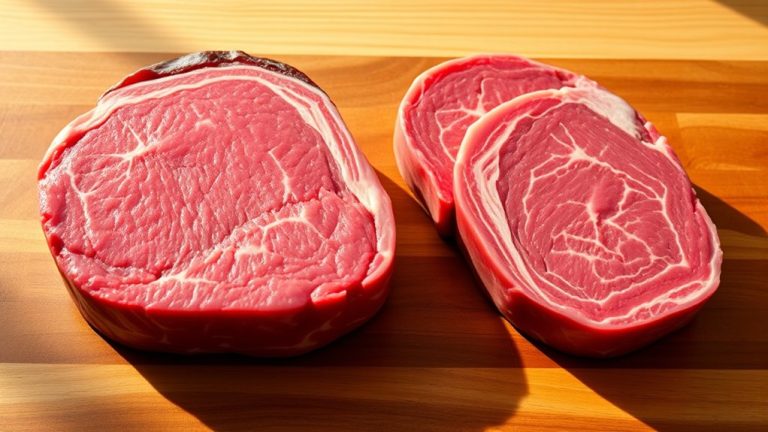
When choosing the best corned beef cut for your Dutch oven, start with the flat cut if you want uniform slices and tender meat. This cut comes from the brisket and has a consistent shape, making it perfect for even cooking. You’ll notice the flat cut has less marbling than the point cut, but that leaner profile helps it cook through evenly without excess fat.
Both cuts undergo curing with salt and spices to infuse flavor and preserve the meat, but the flat cut’s uniform thickness means it usually cooks faster and more predictably. When shopping, pick a piece with bright pink color and good marbling to ensure quality and freshness. Aim for a brisket weighing 3 to 4 pounds to guarantee enough tender slices for your meal and leftovers.
Rinse and Season the Corned Beef
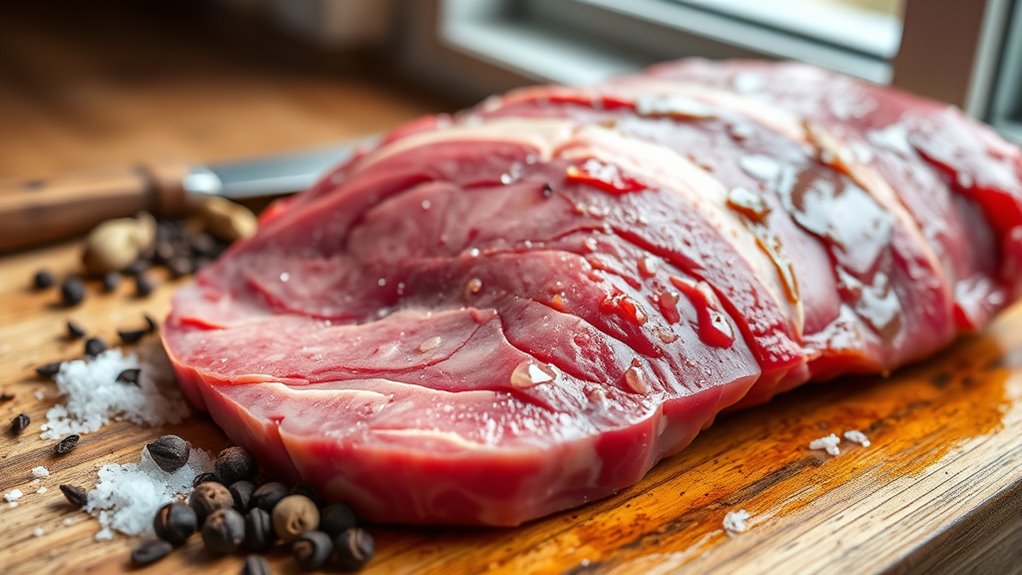
Before cooking, rinse your corned beef thoroughly under cold running water to wash away excess salt and brine. This step prevents the dish from becoming overly salty. After rinsing, pat the corned beef dry with paper towels to ensure proper browning and reduce splattering when searing in your Dutch oven.
Rinse corned beef under cold water to remove excess salt, then pat dry for perfect browning when searing.
Next, season the beef using the included seasoning packet or your own spice blend to boost flavor. You can also add extra herbs like garlic powder or black pepper for more aroma. Let your seasoned corned beef rest at room temperature for 15-20 minutes before cooking.
Remember these key points:
- Rinse to remove excess salt and brine
- Pat dry for better searing
- Season well with seasoning packet or spices
Add Aromatics and Liquid to Dutch Oven
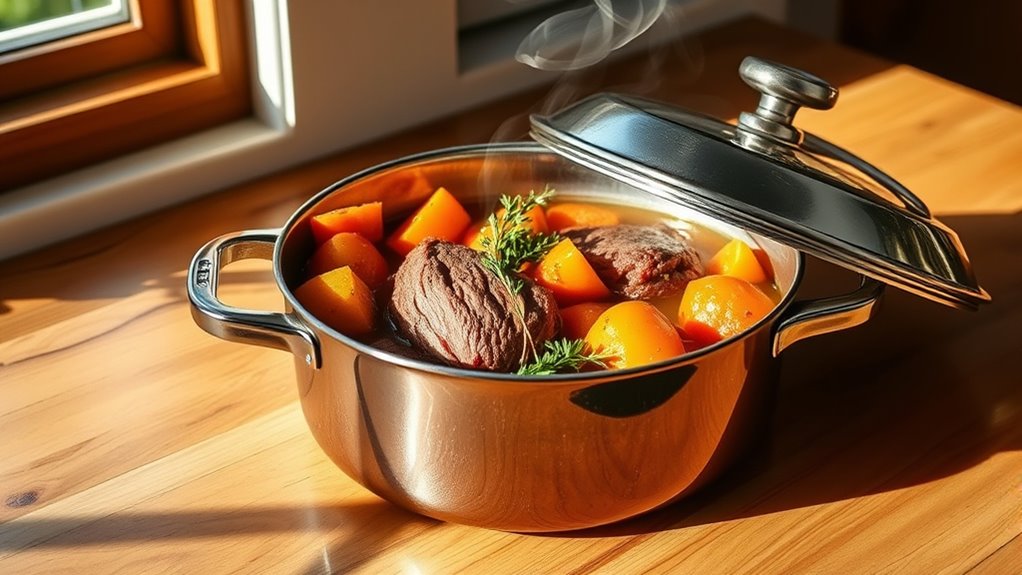
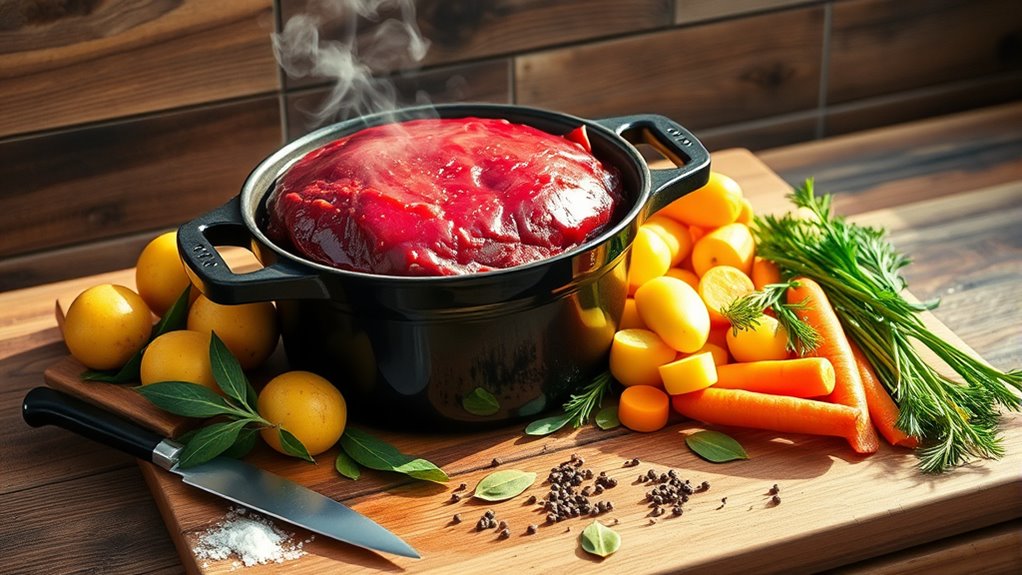
Now that your corned beef is seasoned, it’s time to add aromatics like garlic, bay leaves, and peppercorns to boost flavor. Choose a cooking liquid such as water, beef broth, or even dark beer to fully submerge the meat and enhance the taste.
These ingredients will create a rich, flavorful base as your corned beef cooks low and slow.
Selecting Aromatic Ingredients
Although the corned beef itself carries a strong flavor, adding aromatic ingredients to your Dutch oven will elevate the dish considerably. When selecting these aromatics, focus on building layers of flavor that complement the meat. Start with a seasoning packet or homemade pickling spices to infuse traditional tastes.
Then, incorporate garlic cloves and bay leaves for a robust aroma. Finally, add fresh herbs like thyme or rosemary to bring complexity to the simmering liquid. Here’s what to include:
- A peeled onion with garlic cloves and bay leaves for depth
- Seasoning packet or a mix of peppercorns and mustard seeds
- Fresh herbs such as thyme or rosemary for extra fragrance
These elements work together to enrich the corned beef’s flavor as it cooks.
Choosing Cooking Liquids
Building on your choice of aromatics, the next step is selecting the right cooking liquid to bring all those flavors together. Use enough beef broth, water, or beer to fully submerge the corned beef in your Dutch oven, covering it by at least an inch.
Adding seasonings like pickling spices and herbs enhances the depth of flavor in the liquid, while aromatics such as onion, garlic, bay leaves, and peppercorns infuse the meat during cooking. For a richer broth, consider a splash of Worcestershire sauce or a few whole cloves alongside your aromatics.
Keep the liquid at a gentle simmer, topping off with hot water or broth as needed to ensure the corned beef stays submerged throughout the cooking process.
Boil Corned Beef and Skim Foam
Bring the water, corned beef, and seasonings to a boil over high heat in your Dutch oven. As the mixture boils, you’ll see gray foam rising to the surface. It’s important to skim foam off regularly to keep the broth clear and free of impurities.
Use a slotted spoon or skimmer to remove this foam, which includes excess fat and unwanted particles.
Remember to:
- Skim foam frequently during boiling to maintain clarity
- Discard impurities to improve flavor and texture
- Use a Dutch oven for even heat distribution
This step ensures a clean cooking environment and prepares your corned beef for the next stage. Avoid stirring too much to prevent breaking the meat’s surface.
Simmer Corned Beef on Low Heat
Once you’ve brought the corned beef to a boil and skimmed the foam, lower the heat to maintain a gentle simmer. Avoid letting the liquid boil rapidly, as this can toughen the meat.
Keep an eye on the liquid level and add hot water if needed to keep the beef fully submerged throughout cooking.
Maintain Gentle Simmer
Although it might be tempting to crank up the heat, you’ll want to sustain a gentle simmer when cooking corned beef in your Dutch oven. Keeping the temperature between 185°F and 205°F ensures the meat stays tender without drying out. Use temperature control to adjust the heat as needed and avoid a rolling boil.
Always cover the Dutch oven with a tight-fitting lid to lock in moisture and maintain consistent heat. Don’t forget regular foam removal to keep the broth clear and prevent overflow.
To maintain a gentle simmer, remember to:
- Keep heat low for slow, steady cooking
- Use a lid to preserve moisture and temperature
- Skim off foam and fat regularly for clarity and safety
Avoid Rapid Boiling
Keeping your corned beef at a gentle simmer means avoiding rapid boiling, which can toughen the meat and dry it out. When you cook on low heat, the connective tissues break down slowly during slow cooking, resulting in tender beef that’s juicy and flavorful.
If the liquid bubbles vigorously, fats and collagen seize up, making the meat chewy instead of soft. To prevent overcooking and maintain a gentle simmer, keep the temperature just below boiling—around 185°F to 195°F. This careful temperature control guarantees the corned beef cooks evenly and stays moist.
Monitor Liquid Levels
To make certain your corned beef cooks evenly and stays tender, keep the liquid level just enough to cover the meat throughout simmering. Using your Dutch oven, maintain a gentle simmer so the broth extracts flavor without boiling vigorously.
Watch for evaporation and add hot water or broth as needed to prevent the liquid from drying out. Always cover your Dutch oven with a lid to trap moisture and avoid burning.
- Check liquid levels regularly to keep the meat submerged
- Adjust heat to maintain a steady simmer, not a rapid boil
- Add hot broth or water to compensate for evaporation
Prepare Vegetables for Cooking
How do you guarantee your vegetables cook evenly and absorb the rich flavors of your corned beef? Start by peeling carrots and cutting them into 1.5 to 2-inch pieces. This size ensures they cook uniformly and soak up the savory broth.
For potatoes, halve or quarter baby potatoes depending on their size, so they finish cooking within 15-20 minutes alongside the meat. Remove the cabbage core and slice it into 1 to 1.5-inch wedges for even tenderness. Peel the onion and cut it into quarters to release its sweetness during simmering.
Always complete your vegetable preparation just before adding them to the Dutch oven to preserve their freshness and texture. This careful preparation sets the stage for perfectly cooked vegetables infused with deep corned beef flavor.
Add Potatoes, Carrots, and Onions
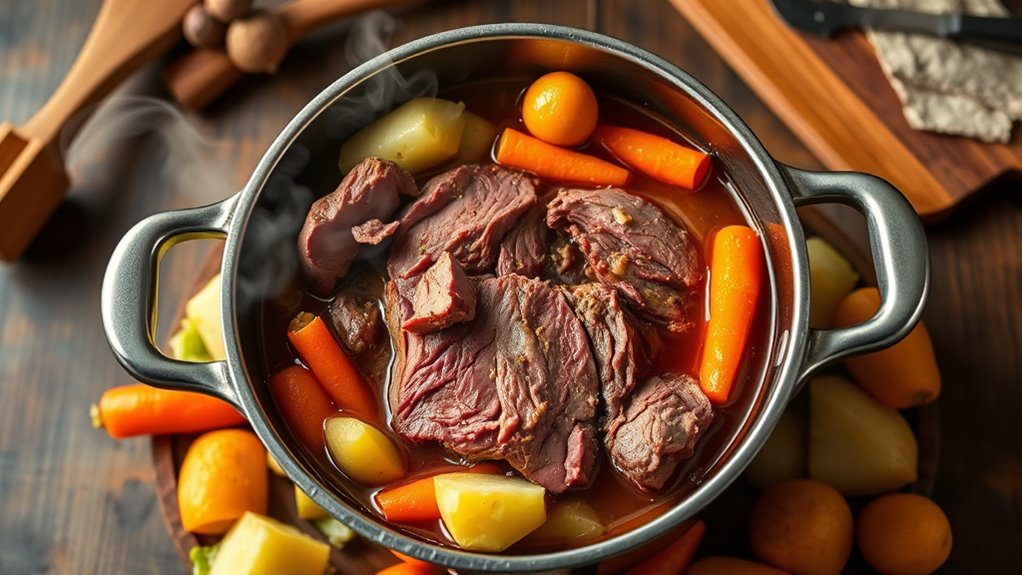
Once your corned beef has simmered for about two hours, add the quartered potatoes, sliced carrots, and whole peeled onions to the Dutch oven. Press the vegetables gently into the cooking liquid to guarantee they’re partially submerged, allowing them to soak up the rich flavors.
Continue simmering uncovered for 15 to 20 minutes until the potatoes are tender and fork-ready. As you simmer, remember to:
Simmer uncovered for 15-20 minutes until potatoes are tender and fork-ready, stirring gently for even cooking.
- Stir gently to evenly coat the potatoes, carrots, and onions with the broth.
- Skim off any surface fat for a cleaner, clearer cooking liquid.
- Keep the vegetables immersed just enough to absorb maximum flavor without overcooking.
This step enhances your dish by melding the vegetables’ natural sweetness with the savory corned beef, creating a harmonious balance.
Add Cabbage Last to Keep It Tender
After your potatoes, carrots, and onions have softened and soaked up the savory broth, it’s time to add the cabbage. To keep the cabbage tender and maintain its texture, you’ll want to add it last—about 15 minutes before the cooking finishes.
Cabbage cooks quickly and adding it too early leads to overcooking, which makes it mushy and limp. Cut the cabbage into wedges with the core intact; this helps it hold its shape during simmering.
Adding the cabbage late lets it soak up the flavorful broth without losing its bright color or crunch. By timing it right, you avoid excess water release and keep the cabbage vibrant and tender, perfectly complementing your corned beef and vegetables.
Rest and Slice Corned Beef Against Grain
Once your corned beef is done cooking, let it rest for at least 15 minutes to keep it juicy and flavorful. When you’re ready to slice, make sure to cut against the grain for tender, easy-to-chew pieces. Use a sharp knife and a stable surface to get clean, precise cuts every time.
Importance Of Resting
Although it’s tempting to slice your corned beef right away, you’ll get a juicier and more tender result if you let it rest for at least 15 minutes. Resting allows the juices to redistribute throughout the meat, preventing them from spilling out when you slice.
This step enhances both flavor and texture, especially once the internal temperature has cooled slightly from its peak of 195–205°F.
Keep these benefits in mind when you rest your corned beef:
- Retains juices, making each slice moist and flavorful
- Allows muscle fibers to relax, producing a tender bite
- Prevents loss of internal temperature too quickly, preserving quality
Technique For Slicing
When you let your corned beef rest, you set yourself up for easier slicing and a juicier result. After resting at least 15 minutes, the meat’s juices redistribute, making every slice tender and flavorful.
To carve properly, first identify the grain—the visible muscle fibers running through the beef. Always slice perpendicular to the grain; cutting against it shortens the fibers, ensuring each piece is tender and easier to chew.
Use a sharp carving knife to make smooth, clean cuts that preserve the meat’s integrity and prevent tearing. By following this technique for slicing, you’ll enjoy perfectly tender corned beef that’s juicy and easy to serve.
Serve Corned Beef With Vegetables and Broth
To bring out the best flavors, slice the corned beef against the grain and serve it alongside the tender potatoes, carrots, and cabbage cooked in the savory broth. Spoon some hot broth over the sliced meat and vegetables to keep everything moist and flavorful.
You can elevate your dish by adding a few finishing touches. Consider these:
- Garnish with chopped fresh parsley or a dollop of horseradish for a pop of color and spice.
- Offer traditional sides like Irish soda bread or mustard to complement the meal.
- Store leftovers in an airtight container with some broth to maintain tenderness and reheat within three days.
This way, you’ll enjoy every bite of your tender corned beef and vegetables, fully infused with the rich broth.
Frequently Asked Questions
How Long Does Corned Beef Take to Cook in a Dutch Oven?
You’ll need about 2.5 to 3 hours to cook corned beef in a Dutch oven at a low simmer.
Make sure it reaches 195°F to 205°F internally for tender, juicy results you’ll love.
How Do You Cook Beef in a Dutch Oven?
They say patience is a virtue, and when you cook beef in a Dutch oven, you’ll sear it first, add liquid and seasonings, simmer low and slow, then let it rest to lock in those flavors perfectly.
Searing the beef creates a flavorful crust that enhances the overall taste.
After searing, add your chosen liquid—like broth or wine—and seasonings to build depth.
Simmer the mixture gently over low heat, allowing the beef to become tender without drying out.
Finally, let the beef rest before serving; this step helps retain the juices and intensifies the flavor.
Can You Overcook Corned Beef in a Dutch Oven?
Yes, you can overcook corned beef in a Dutch oven. If you cook it too long, it becomes tough, stringy, or mushy.
Use a thermometer and stick to 2.5 to 3 hours for perfect tenderness.
Do You Cook Corned Beef Fat Side up or Down in a Dutch Oven?
You cook corned beef fat side up in a Dutch oven. Studies show this method retains up to 20% more moisture, letting the fat baste the meat, so you get a juicier, more flavorful result every time you cook.
Conclusion
Now that you’ve mastered cooking corned beef in your Dutch oven, you’ve unlocked a treasure chest of flavor and comfort. Like a well-tuned orchestra, each step harmonizes to create a tender, savory masterpiece.
Remember to slice against the grain and serve with those perfectly cooked veggies and broth. Enjoy every bite—you’ve turned simple ingredients into a warm, satisfying feast.
This method of cooking corned beef in a Dutch oven ensures a delicious meal that brings everyone to the table with smiles and full hearts.