
How to Make Beef Shoulder Steak Tender Step by Step
To make beef shoulder steak tender, start by choosing a cut like shoulder tender with good marbling. Marbling is key to ensuring the steak remains juicy and flavorful. Let the steak rest at room temperature for 20-30 minutes before cooking.
Next, pat the steak dry and season it generously with salt and pepper. Searing the steak on high heat for about 3 minutes per side helps form a flavorful crust.
Use a meat thermometer to cook the steak to medium-rare, aiming for an internal temperature of 130°F.
After cooking, let the steak rest for 5-10 minutes. This allows the juices to redistribute throughout the meat, enhancing tenderness.
When ready, slice the steak against the grain to maximize tenderness. Keep following to discover more tips for perfect tenderness.
How to Make Beef Shoulder Steak Tender: The Basics
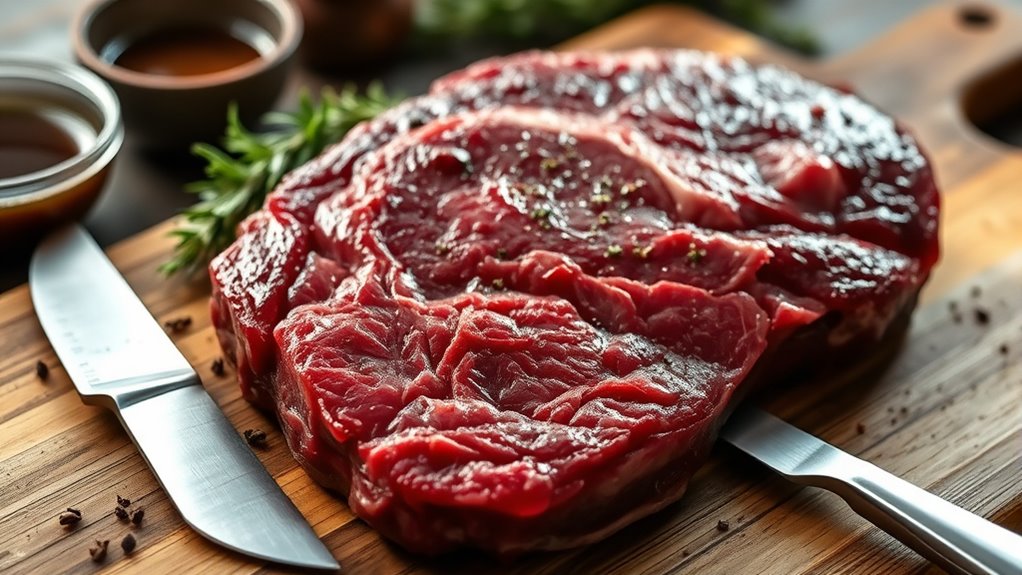
Although beef shoulder steak can be tough, you can make it tender by marinating it for several hours to break down the connective tissues. Start with a marinade that includes acidic ingredients like vinegar or citrus juice to soften the shoulder’s fibers.
When cooking, sear the steak quickly at high heat to create a flavorful crust while locking in moisture. Then, cook the shoulder steak to an internal temperature of about 130°F for medium-rare to keep it juicy and tender.
After cooking, let the steak rest for at least three minutes so the juices redistribute evenly. For even more tenderness, try gentle methods like braising or slow roasting, which help break down tougher shoulder cuts without drying them out.
Choose the Best Beef Shoulder Steak for Tenderness
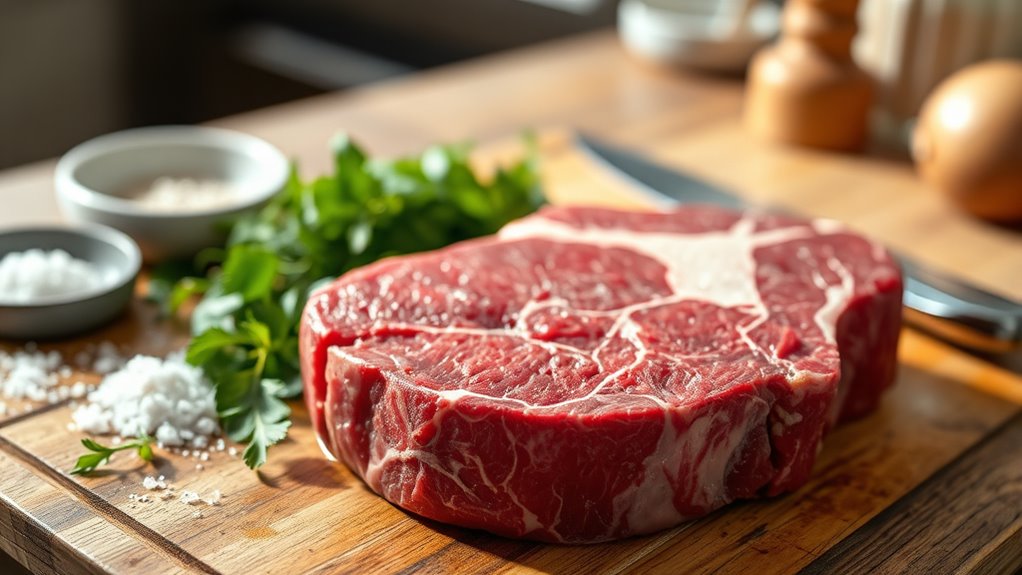
When picking your beef shoulder steak, focus on cuts like the shoulder tender, known for its tenderness and uniform shape. Choose a fresh, bright red piece with fine grain and minimal connective tissue to guarantee it cooks evenly.
Don’t forget that good marbling boosts flavor and keeps your steak juicy and tender after cooking.
Selecting Quality Cuts
To get the most tender beef shoulder steak, you’ll want to pick cuts labeled “shoulder tender,” “Scotch tender,” or “tarsas major.” When selecting quality cuts, look for beef shoulder tender steaks that are bright red with minimal marbling and no grayish or brown spots—these indicate freshness and high quality.
Choose cylinder-shaped cuts that are uniform in thickness to ensure even cooking and consistent tenderness. Opt for steaks weighing over half a pound to guarantee enough size for easy preparation and ideal texture. Avoid tougher alternatives like flank or skirt steak if tenderness is your goal, as they require different cooking methods.
Recognizing Shoulder Tender
How can you easily spot the best beef shoulder steak for tenderness? Focus on the shoulder tender, a small, cylinder-shaped cut of beef that weighs just over half a pound. This prized piece resembles a filet mignon in texture, making it perfect for quick cooking and slicing.
When choosing your shoulder tender, look for a uniform shape and a bright red color, which signal freshness and quality. Unlike other shoulder cuts, this one stays tender even when cooked thoroughly, so it’s a favorite among steak lovers. Minimal marbling is typical for this cut of beef, so don’t worry if you see little fat.
Importance Of Marbling
Although the shoulder tender is naturally lean, paying attention to marbling can make a big difference in tenderness and flavor. Marbling refers to the intramuscular fat that melts during cooking, keeping your beef shoulder steak juicy and tender.
When selecting your cut, look for visible fat streaks running through the meat—this indicates higher marbling and better moisture retention. Choosing a steak with good marbling ensures it won’t dry out and will have a melt-in-your-mouth texture once cooked.
Prepare and Season Shoulder Steak Properly (Including Room Temperature Tips)
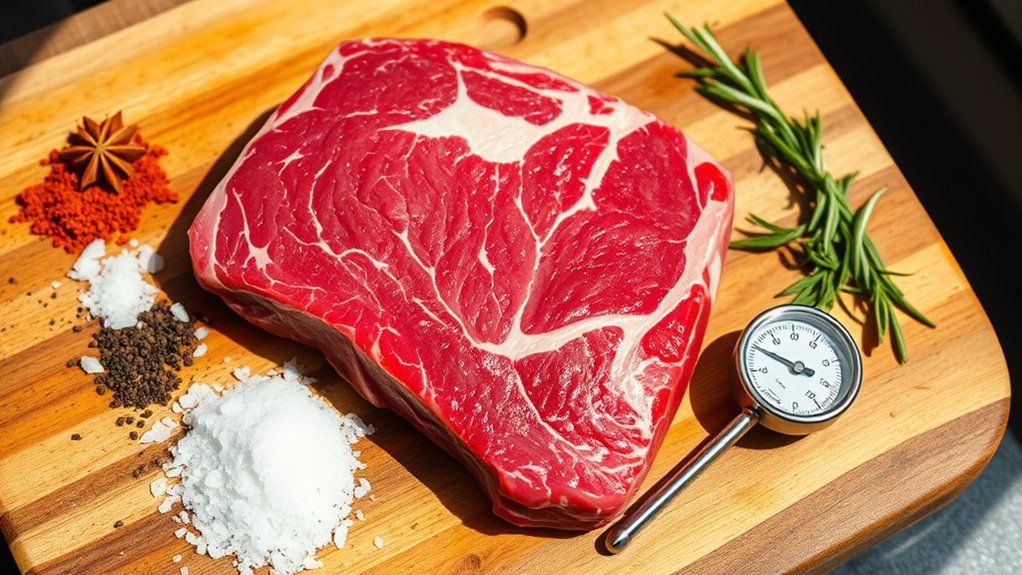
Before cooking, let your beef shoulder steak rest at room temperature for 20 to 30 minutes to guarantee it heats evenly. This step guarantees the steak cooks uniformly, preventing cold spots.
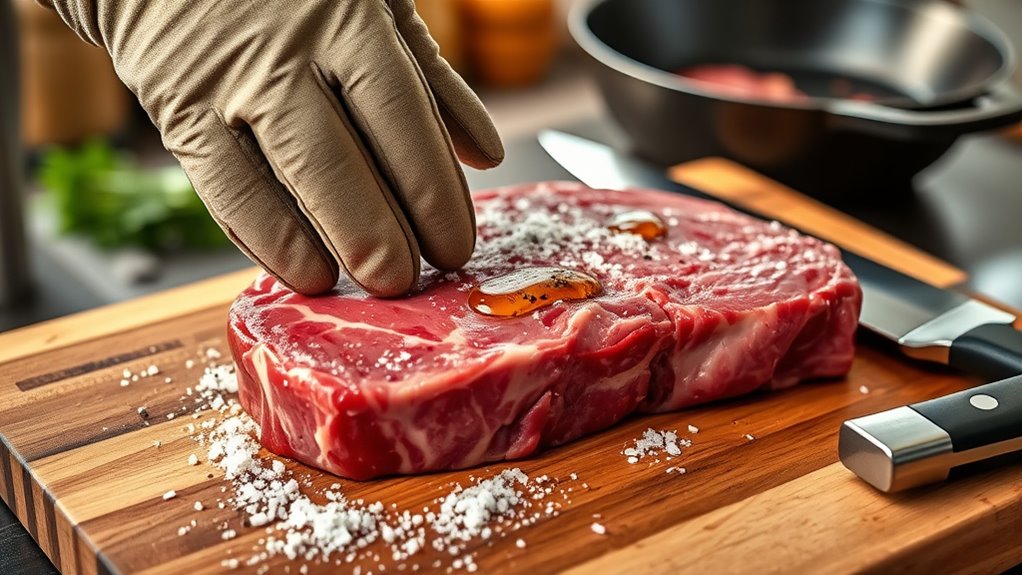
Next, pat the shoulder steak dry with paper towels to remove excess moisture, which helps achieve better seasoning adhesion and a proper sear later on. Generously season the steak with salt, pepper, and any other spices you prefer, rubbing the seasoning into the meat to enhance flavor penetration.
For added tenderness, consider marinating your steak for 4 to 24 hours in an acidic mixture like vinegar or citrus. Finally, let the seasoned steak rest briefly at room temperature again before cooking to promote an even internal temperature and improve texture.
Sear Shoulder Steak to Develop a Tender Crust
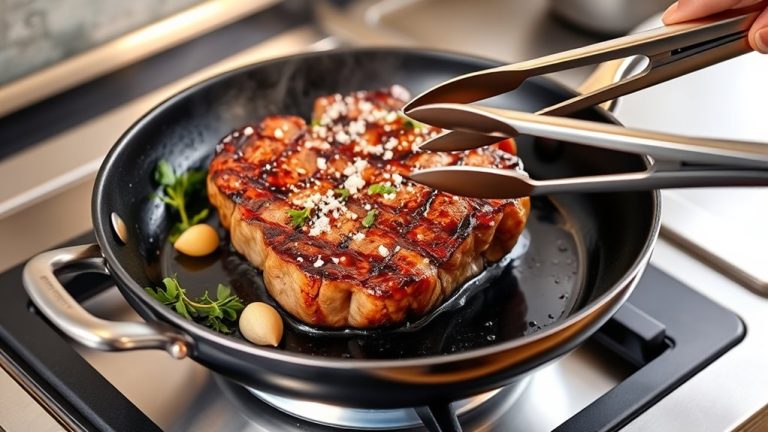
When you preheat a cast-iron skillet or grill pan to medium-high heat, you set the stage for a perfect sear that locks in juices and flavor. Pat your shoulder steak dry with paper towels to remove moisture, then season generously with salt and pepper.
Place the steak in the hot pan without overcrowding it, and sear for about 3 minutes per side. Avoid moving the steak so a crispy, caramelized crust forms, enhancing tenderness and taste.
| Step | Detail |
|---|---|
| Preheat pan | Medium-high heat |
| Dry steak | Use paper towels |
| Season | Salt and pepper generously |
| Sear duration | 3 minutes per side |
| Pan management | Avoid overcrowding |
This method guarantees a beautifully seared shoulder steak with a tender crust.
Use a Meat Thermometer for Perfect Shoulder Steak
You’ll want to insert a meat thermometer into the thickest part of your shoulder steak to get an accurate temperature reading. This helps you cook the steak precisely to your preferred doneness without overcooking.
Keeping a close eye on the temperature guarantees your steak stays tender and juicy every time.
Accurate Temperature Monitoring
Although cooking times can vary, using a reliable instant-read meat thermometer lets you track the internal temperature of your beef shoulder steak with precision. Insert the meat thermometer into the thickest part of the steak, steering clear of bone or fat to get an accurate reading. Remove the steak from the heat once it hits your desired internal temperature—130°F for rare or 135°F for medium-rare.
After cooking, rest the steak for at least 3 minutes to let the juices redistribute; this rest period can slightly raise the internal temperature. By focusing on temperature rather than cooking time alone, you ensure your shoulder steak reaches perfect doneness without risking overcooking or undercooking.
Accurate temperature monitoring is key to tender, flavorful results every time.
Optimal Cooking Precision
Since shoulder steak can be tough if overcooked, using a reliable meat thermometer helps you achieve perfect doneness every time. Insert the meat thermometer into the thickest part of the steak, steering clear of bone or fat to get an accurate internal temperature. Aim for 130°F if you prefer medium-rare or 140°F for medium doneness.
As soon as your steak hits the target temperature, remove it from heat to prevent further cooking. Don’t forget to rest the steak for at least 3 minutes afterward; this allows the juices to redistribute, making the meat tender and juicy.
Keep checking the internal temperature consistently, especially for thicker cuts, so you can cook your shoulder steak precisely and enjoy ideal tenderness.
Rest Your Steak to Retain Maximum Tenderness
When you finish cooking your beef shoulder steak, let it rest for at least five minutes to let the juices redistribute evenly. This vital step guarantees your steak stays tender and juicy. Resting reduces internal pressure, allowing the meat fibers to relax and lock in moisture, preventing dryness.
Here’s how to get the best rest for maximum tenderness:
- Rest your steak loosely wrapped in foil to keep it warm but avoid trapping steam.
- Place it on a cutting board or plate—never slice immediately after cooking.
- Allow 3 to 10 minutes for the juices to spread evenly throughout the meat.
Slice Shoulder Steak Against the Grain for Best Texture
To get the most tender bite from your beef shoulder steak, you need to slice it against the grain. This means cutting perpendicular to the muscle fibers, which shortens them and improves tenderness. First, identify the grain by spotting the lines of muscle fibers.
Use a sharp knife to make clean cuts, and always slice just before serving to keep the texture perfect. Resting the steak for at least 5 minutes after cooking helps juices redistribute, enhancing tenderness.
| Step | Tip | Why It Matters |
|---|---|---|
| Identify the grain | Look for muscle fiber lines | Guides proper slicing |
| Use a sharp knife | Clean, precise cuts | Prevents tearing |
| Slice against grain | Cut perpendicular to fibers | Shortens fibers, tenderer |
| Slice before serving | Maintain juice and texture | Best flavor and tenderness |
Try Alternative Cooking Methods to Keep Shoulder Steak Tender
Although shoulder steak is a tougher cut, you can keep it tender by using alternative cooking methods that break down the muscle fibers and lock in moisture. Choosing the right cooking method makes all the difference in enjoying a juicy, flavorful steak.
Shoulder steak can be tender and juicy if cooked with methods that break down muscle fibers and seal in moisture.
Try these methods for the best results:
-
- Braise the steak in beef broth or wine at low heat for 2-3 hours to soften the meat thoroughly.
- Grill marinated steak over medium-high heat for several hours to enhance tenderness and flavor.
- Use a slow cooker on low for 6-8 hours to achieve melt-in-your-mouth texture.
Store and Reheat Shoulder Steak Without Losing Juiciness
Mastering the cooking techniques for shoulder steak is just the start; how you store and reheat it plays a big role in keeping it juicy and tender. Store your cooked shoulder steak in an airtight container in the refrigerator for up to 4-5 days to lock in moisture.
When it’s time to reheat, let the steak come to room temperature first. Then, gently reheat it in a covered skillet over medium heat or in a 275°F oven for 7-8 minutes. Avoid high heat, which dries out the meat and ruins its tender texture.
To preserve juiciness, add a splash of broth, gravy, or a pat of butter while reheating. Following these steps ensures your shoulder steak stays flavorful and tender every time.
Frequently Asked Questions
How to Cook Shoulder Steak to Make It Tender?
You should marinate the shoulder steak, then cook it quickly over high heat to 130°F for medium-rare.
Rest it for a few minutes, and slice against the grain to keep it tender and juicy.
How Do You Tenderize a Beef Shoulder Steak?
To tenderize beef shoulder steak, you’ll break down its fortress by marinating in acidic juices, puncturing with a tenderizer, then slow-cooking gently.
Rest it, and slice against the grain to reveal its softened heart.
What Are Beef Shoulder Steaks Good For?
You’ll find beef shoulder steaks great for quick-cooking dishes like fajitas, stir-fries, or grilling.
They’re also perfect for marinating or braising, balancing rich flavor and tenderness when cooked properly.
What Is the Secret Ingredient to Make Beef Tender?
The secret ingredient? Salt. It’s not just seasoning—it breaks down proteins, tenderizing your beef. Sprinkle it well before cooking, and you’ll reveal juicier, more flavorful steak every time.
Trust me, you’ll taste the difference.
Conclusion
Making your beef shoulder steak tender is like crafting a fine melody—it takes the right notes and timing. By choosing quality meat, seasoning well, searing properly, and resting before slicing against the grain, you’ll discover juicy, tender bites every time.
Don’t forget to use a meat thermometer to ensure perfect doneness. Try alternative cooking methods like slow cooking or marinating to keep that tenderness alive.
Store and reheat carefully, so your steak stays as delicious as the first bite. Following these steps will help you make beef shoulder steak tender every time, resulting in a flavorful and satisfying meal.