

How to Check if Jack Link Beef Jerky Is Gluten Free
To check if Jack Link Beef Jerky is gluten-free, start by examining the ingredient list closely for any wheat, soy sauce, or malt derivatives.
Look for official gluten-free labels or certifications on the packaging, as not all varieties are safe.
You can also contact Jack Link’s customer service or consult trusted third-party gluten-free sources for confirmation.
Since gluten presence is uncertain in many flavors, knowing what to watch for helps you choose safely and confidently.
Keep exploring to find out how to spot the safest options.
Is Jack Link Beef Jerky Gluten-Free?
Wondering if Jack Link Beef Jerky is gluten-free? The answer isn’t straightforward. Jack Link’s packaging doesn’t explicitly label their beef jerky as gluten-free, so you’ll need to verify each product carefully.
Many of their jerky varieties contain wheat or soy ingredients, which may have gluten. Without a certified gluten-free label, you can’t be certain the product meets the standard of 10 ppm or less gluten.
Many Jack Link jerky products contain wheat or soy and lack certified gluten-free labels, so gluten presence is uncertain.
While Jack Link provides some gluten-free information online, their jerky doesn’t carry official gluten-free certification. If you require a confirmed gluten-free snack, it’s best to contact Jack Link’s customer service or check third-party testing results before eating.
This extra step ensures your safety and avoids gluten exposure.
How to Identify Gluten-Free Labels on Jack Link Jerky
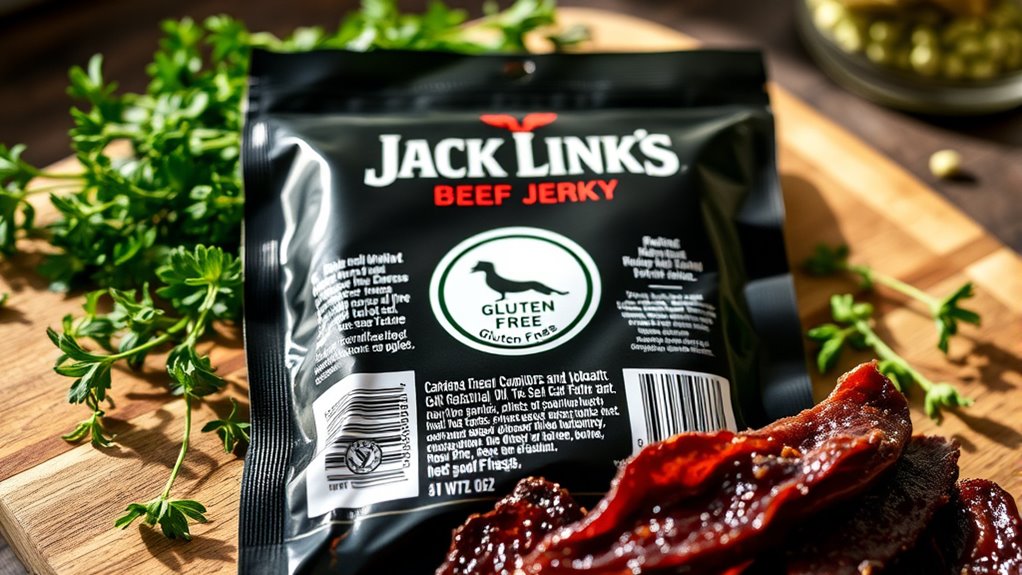
You’ll want to look for clear gluten-free symbols on Jack Link’s packaging to quickly spot safe options. Don’t just trust the label at face value—confirm its authenticity by checking the ingredient list or the company’s website.
Taking these steps helps ensure you’re choosing jerky that truly meets gluten-free standards.
Recognizing Gluten-Free Symbols
Although not all Jack Link’s beef jerky packages carry a gluten-free certification logo, you can still identify gluten-free options by carefully examining the packaging. Recognizing gluten-free symbols is key: look for official Gluten-Free Certification marks that confirm the product meets strict gluten standards. Jack Links often includes clear labels or statements about gluten content, making your search Made Easy.
Always read ingredient lists to spot products that contain wheat, barley, or malt; sometimes additives like corn syrup or citric acid may signal gluten presence or cross-contamination risks. Understanding the amount of gluten found helps you meet your dietary needs safely.
Verifying Label Authenticity
When checking Jack Link’s beef jerky for gluten-free options, verifying the authenticity of gluten-free labels is essential. First, look for a “gluten-free” label on the packaging, which means the product has been tested to contain 20 ppm or less gluten. Next, check the ingredient list for wheat, barley, rye, or triticale—these grains indicate gluten presence.
Also, verify if the product carries a gluten-free certification seal from a recognized organization, ensuring strict safety standards. Don’t forget to visit Jack Link’s official website or product description via provided links for additional gluten-free claims or production details.
What Ingredients in Jack Link Beef Jerky May Contain Gluten?
Since Jack Link’s beef jerky often includes soy sauce and other flavorings, you need to watch out for gluten-containing ingredients like wheat-based additives or preservatives. Not all Jack Link’s products are labeled GF, so feel free to check the ingredient list carefully.
For example, Link’s Original Beef may contain wheat-derived components unless it’s specifically labeled gluten-free.
| Ingredient | Possible Gluten Source |
|---|---|
| Soy Sauce | Contains wheat unless GF |
| Hydrolyzed Wheat Protein | Direct gluten source |
| Maltodextrin/Caramel Coloring | May contain gluten depending on process |
Always review product labels to avoid gluten exposure when enjoying Jack Link’s beef jerky.
Why Gluten-Free Certification Matters for Jack Link Jerky
Identifying gluten-containing ingredients in Jack Link’s beef jerky can be tricky, especially because not all products clearly state their gluten status. That’s why gluten-free certification matters—it gives you peace of mind. When you see that certification, it means the product:
- Contains 20ppm or less gluten, meeting strict safety standards
- Has undergone rigorous testing to confirm gluten levels
- Is less likely to have cross-contamination from shared processing lines
It also offers a reliable way to spot safe jerky options among many unlabelled products. Plus, it comes from trusted organizations ensuring accurate gluten-free claims.
Without this certification, you risk consuming gluten unknowingly. So, always check for official gluten-free labels to confidently include Jack Link beef jerky in your gluten-free diet.
What the Community Says About Jack Link Jerky and Gluten
Although Jack Link’s beef jerky doesn’t always clearly label gluten content, many community members suggest you call customer service to confirm if a specific product is gluten-free. Since some products list wheat or soy ingredients, the community warns that not all Jack Link jerky is safe for gluten-sensitive individuals.
You’ll often find that packaging lacks explicit gluten-free labels, so checking the ingredient list alone isn’t enough. Users emphasize that without official gluten-free certification, it’s best to verify product details directly with the manufacturer.
How to Assess Cross-Contamination Risks in Jack Link Jerky
To assess cross-contamination risks in Jack Link jerky, start by checking if their manufacturing process uses shared equipment with gluten-containing products. Look closely at the product labels and certifications for any gluten-free claims or allergen warnings.
Don’t hesitate to contact the company directly to confirm their cleaning protocols and facility certifications.
Manufacturing Process Insights
When you want to assess cross-contamination risks in Jack Link beef jerky, understanding their manufacturing process is essential. Since their products aren’t universally labeled gluten-free, you should dig deeper into their production methods. Consider these key points:
- Confirm if production lines also handle gluten-containing foods
- Check if they use dedicated equipment or thorough cleaning protocols
- Find out if the company tests for gluten residues regularly
- Request detailed information directly from the manufacturer
- Look for explicit gluten-free labeling to reduce uncertainty
Shared Equipment Concerns
Since Jack Link’s products aren’t always labeled gluten-free, you’ll want to confirm whether their equipment is shared with gluten-containing items. Shared equipment can increase cross-contamination risks if cleaning isn’t thorough. To assess this, contact Jack Link’s for details on their manufacturing lines and cleaning protocols.
Some facilities handle both gluten and gluten-free products but use strict cleaning and testing to keep gluten below 20ppm. Getting explicit confirmation helps you make a safe choice.
| Aspect | What to Check |
|---|---|
| Equipment use | Dedicated or shared |
| Cleaning protocols | Frequency and thoroughness |
| Cross-contact controls | Procedures to prevent contamination |
| Gluten testing | Validation of gluten levels |
| Manufacturer info | Availability of detailed responses |
Labeling and Certification
Although Jack Link’s jerky isn’t always clearly labeled gluten-free, you can assess cross-contamination risks by looking for certification marks on the packaging and scrutinizing the ingredient list for gluten sources like wheat or soy sauce. To better evaluate safety, consider these steps:
- Look for a gluten-free certification label indicating less than 20ppm gluten.
- Check ingredients for wheat, soy sauce, or maltodextrin from gluten sources.
- Contact Jack Link’s to ask about cross-contamination and shared equipment.
- Review any third-party gluten testing or verification programs linked to the product.
- Verify if the manufacturing uses dedicated gluten-free lines or cleaning procedures.
These actions help you determine if the jerky meets your gluten-free needs and reduces cross-contact risks.
Comparing Jack Link Beef Jerky’s Gluten-Free and Regular Varieties
If you want to enjoy Jack Link’s beef jerky without gluten worries, you need to pay close attention to the product labeling and ingredient list. Regular Jack Link’s jerky often contains wheat-based ingredients like soy sauce, which means it’s not gluten-free unless specifically stated.
In contrast, some varieties carry a clear “gluten-free” label, confirming they meet the standard of 20 ppm or less gluten. When comparing, check for wheat, soy sauce, or other gluten-containing additives on regular products. The gluten-free options will have a distinct label and ingredient list free from these components. Always verify by reading packaging and checking Jack Link’s official website to ensure you pick the right gluten-free variety before buying or eating.
Tips for Safely Enjoying Jack Link Beef Jerky on a Gluten-Free Diet
When choosing Jack Link beef jerky on a gluten-free diet, you should always start by checking the product label for a gluten-free certification. This guarantees the product meets gluten standards and reduces contamination risks.
To safely enjoy your jerky, keep these tips in mind:
- Verify the gluten-free designation or certification badge on the packaging.
- Carefully read the ingredient list for gluten-containing items like soy sauce or maltodextrin.
- Contact Jack Link’s customer service to confirm gluten-free status of specific flavors or batches.
- Choose products labeled gluten-free to minimize cross-contamination concerns.
- Avoid jerky varieties without clear gluten-free labeling or with ambiguous ingredient lists.
Following these steps helps you enjoy Jack Link beef jerky without compromising your gluten-free lifestyle.
Not Sure If Jack Link Jerky Has Gluten? Here’s What to Do
Since Jack Link’s beef jerky doesn’t carry a gluten-free label, you’ll need to carefully check the ingredient list for any wheat, soy, or gluten-derived additives before deciding to eat it.
If you’re unsure, visit Jack Link’s official website or contact their customer service to see if your specific product has been tested and certified gluten-free. You can also use third-party apps or websites that scan product barcodes to quickly verify ingredients and gluten content.
When in doubt, it’s safer to pick jerky products explicitly labeled gluten-free or from brands that offer certified gluten-free options. Taking these steps helps you avoid gluten exposure and enjoy your snack worry-free.
Frequently Asked Questions
What Beef Jerky Is Gluten Free?
You’ll find gluten-free beef jerky by checking labels for “gluten-free” certification or avoiding ingredients like soy sauce and wheat.
Some Jack Link’s varieties are gluten-free, but always verify the packaging or contact the company for confirmation.
Can You Eat Beef Jerky With Celiac Disease?
You shouldn’t eat most beef jerky with celiac disease unless it’s labeled gluten-free. Many contain wheat or soy, and cross-contamination risks exist.
Always check ingredient lists and confirm gluten-free certification before eating.
Are Mr. Beast Jack Links Gluten Free?
You can’t bet the farm on Mr. Beast Jack Links being gluten free. They usually contain wheat ingredients.
You should check the label closely and contact customer service to be sure before you snack.
Do Slim Jims Contain Gluten?
Slim Jims usually contain gluten because many varieties have wheat-based ingredients. You should always check the label carefully for gluten-free certification or allergen info.
If unsure, contact the manufacturer to avoid gluten exposure.
Conclusion
Think of checking if Jack Link Beef Jerky is gluten-free like reading the map before a hike—you wouldn’t want to get lost. Many find relief knowing Jack Link clearly labels gluten-free options, reducing guesswork. Just like a trusted guide prevents wrong turns, those labels make your gluten-free journey safer and tastier.
So, always double-check the packaging—you’ll avoid surprises and enjoy your snack worry-free every time. When verifying if Jack Link Beef Jerky is gluten free, looking for the gluten-free label is key. This simple step ensures you can confidently enjoy your jerky without worry.