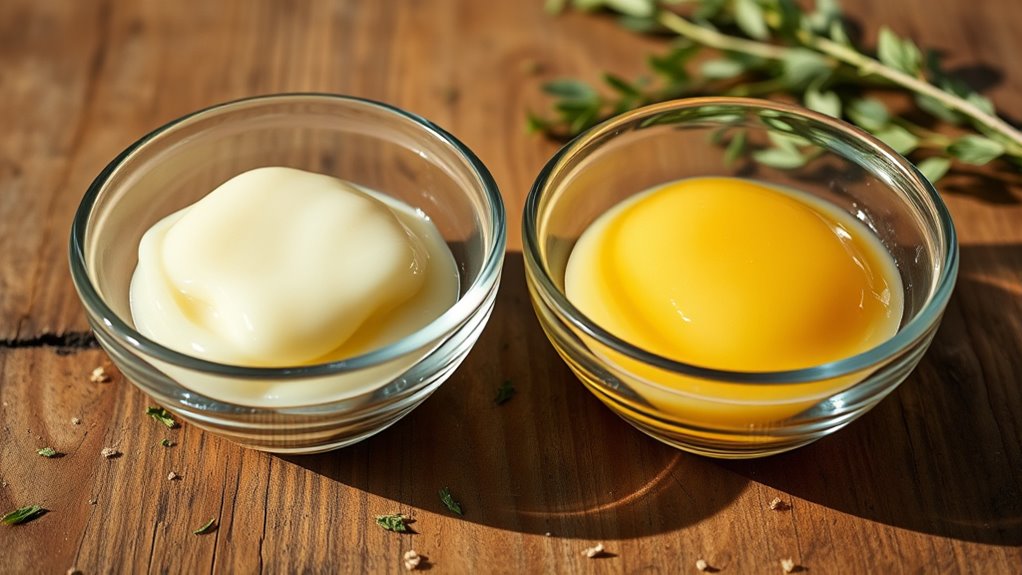
Are Lard and Beef Tallow the Same?
Lard and beef tallow aren’t the same, though both are rendered animal fats. Lard comes from pork fat; beef tallow is made from cattle fat, mainly suet. These fats differ in flavor, texture, nutrition, and smoke points.
Lard has a milder taste, while beef tallow offers a richer flavor. In terms of cooking, lard is ideal for baking, providing a tender texture.
Beef tallow, on the other hand, works better for high-heat frying due to its higher smoke point.
Understanding when and how to use each fat can enhance your cooking. Keep exploring their unique qualities and benefits to make the best choice for your recipes.
What Are Lard and Beef Tallow Made From?
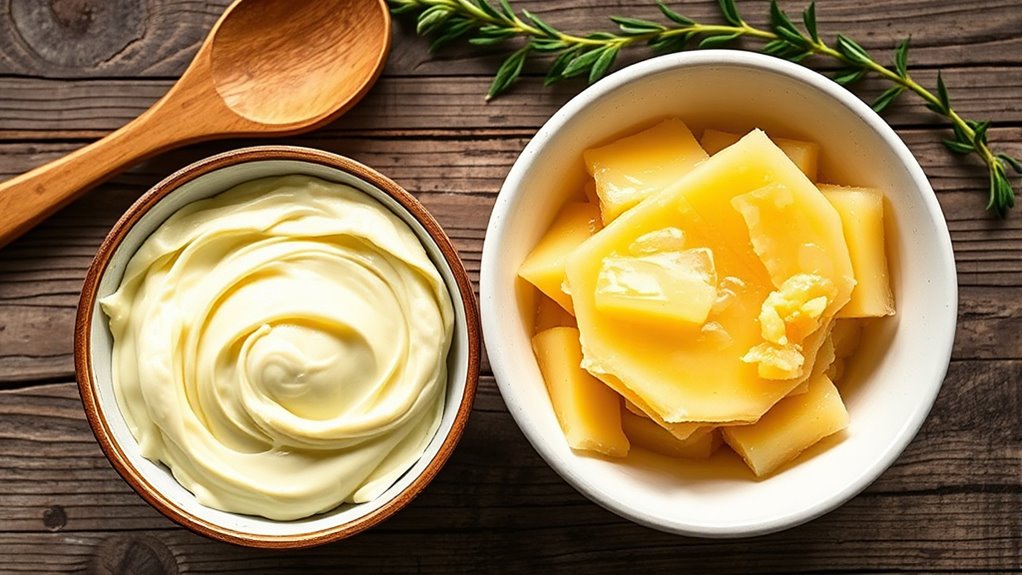
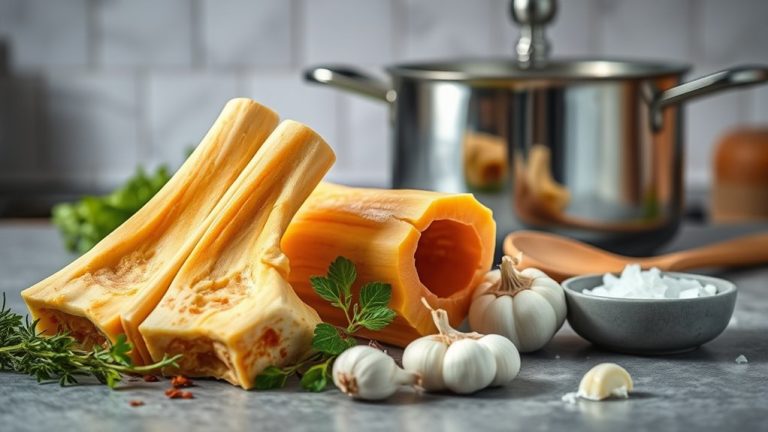
Lard and beef tallow come from different animals—lard is rendered pork fat, usually taken from a pig’s belly, shoulder, or back, while beef tallow is made by rendering fat from cattle, primarily kidney fat known as suet or other beef fat deposits.
When you render fat, you gently heat it to separate impurities, resulting in a pure, stable cooking fat. Pork fat used to make lard contains a mix of saturated, monounsaturated, and polyunsaturated fatty acids, giving it its unique qualities.
On the other hand, beef tallow is mostly composed of saturated and monounsaturated fats, sourced mainly from suet or other beef fat deposits. Understanding these origins helps you appreciate how each rendered fat suits different culinary needs.
How Do Lard and Beef Tallow Differ in Flavor and Texture?

You’ll notice lard has a mild, slightly sweet flavor, while beef tallow carries a rich, savory taste. When it comes to texture, lard is soft and spreadable, whereas tallow is firmer and more brittle at room temperature.
These differences affect how each fat behaves in cooking and baking.
Flavor Profiles Compared
Although both come from animal fats, their flavors and textures set them apart considerably. When you compare the flavor profiles, lard offers a neutral taste with a mild, subtle sweetness, making it incredibly versatile. This neutral taste allows other ingredients in your dish or baked goods to shine without overpowering them.
On the other hand, beef tallow carries a distinct beefy flavor that adds rich, savory depth to whatever you’re cooking. If you’re aiming to enhance hearty, meat-based recipes, tallow’s bold flavor works perfectly. So, whether you want a mild fat that blends seamlessly or a fat that brings a robust, beefy flavor, understanding these differences helps you choose the right ingredient for your culinary needs.
Texture and Consistency
Beyond flavor, texture and consistency play a big role in how these fats perform in cooking and baking. Understanding the differences between lard and beef tallow can help you choose the right fat for your recipe. Their texture and consistency mainly come from their fatty acids composition.
Lard is softer and more spreadable at room temperature, making it perfect for flaky pastries or spreading.
Beef tallow is firmer and waxier, with a denser, more brittle texture similar to solid butter. Tallow’s higher saturated fat content gives it a stable, solid consistency that holds up well in high-heat cooking.
What Vitamins and Fatty Acids Do Lard and Beef Tallow Contain?

Both lard and beef tallow contain essential vitamins and fatty acids that can benefit your health. Lard is rich in vitamin D, especially from pasture-raised pigs, supporting bone health.
Beef tallow offers fat-soluble vitamins A, B12, E, and K, which promote immune and skin health. Regarding fatty acids, lard mainly provides monounsaturated fats like oleic acid, good for your heart.
Tallow contains conjugated linoleic acid (CLA), known for anti-inflammatory and metabolic benefits. Both fats include saturated, monounsaturated, and polyunsaturated fats, influenced by diet and processing.
| Nutrient Type | Lard | Beef Tallow |
|---|---|---|
| Vitamins | Vitamin D | Vitamins A, B12, E, K |
| Fatty Acids | Monounsaturated (Oleic) | CLA (Conjugated Linoleic Acid) |
| Nutritional Benefits | Bone health | Immune & skin support, metabolism |
Why Smoke Point Matters for Cooking With Lard and Beef Tallow
You’ll want to consider the smoke points when cooking with lard or beef tallow since they affect how each fat handles heat. Beef tallow’s higher smoke point makes it great for frying and searing, while lard works well for baking and moderate frying.
Picking the right fat helps you avoid off-flavors and keeps your food healthy and tasty.
Smoke Point Comparison
When cooking with lard or beef tallow, understanding their smoke points can help you choose the best fat for your recipe. Beef tallow usually has a higher smoke point (around 420°F) compared to lard’s 375-385°F. This means that properly rendered fat like tallow is great for high-temperature cooking without breaking down or producing unpleasant smoke.
Lard’s lower smoke point comes from its higher polyunsaturated fat content, making it less ideal for intense heat. Consider these points when selecting your fat:
- Beef tallow suits deep frying, searing, and roasting due to its high smoke point
- Lard works well for medium-heat cooking and baking
- Purity and processing affect smoke point; unrefined fats smoke sooner
Picking the right fat keeps flavors intact and cooking safe.
Impact On Cooking Techniques
Since smoke point directly affects how fats behave under heat, understanding the differences between lard and beef tallow can improve your cooking results. Beef tallow’s higher smoke point—around 420°F—makes it ideal for high-temperature frying, searing, and deep-frying, where fats need to stay stable without burning.
Lard, with a slightly lower smoke point (370-400°F), suits gentler cooking techniques like sautéing and baking. Using a fat with an appropriate smoke point prevents smoke, off-flavors, and harmful compounds from forming. Keep in mind, refinement influences smoke points, so unrefined fats may not perform as well at high heat.
Choosing Fat For Heat
Why does choosing the right fat for heat matter in cooking? Because the smoke point of fats directly affects how well they perform during high-temperature cooking. Using a fat with too low a smoke point can cause burning, off-flavors, and harmful compounds.
Here’s what you need to know:
- Lard’s smoke point is around 370°F, making it great for medium-heat baking and sautéing.
- Beef tallow has a higher smoke point, about 420°F, ideal for deep-frying and searing.
- Choosing the right fat preserves flavor and nutritional quality by preventing smoke and breakdown.
Best Culinary Uses for Lard and Beef Tallow
Although both lard and beef tallow come from animal fats, you’ll find they shine in different culinary roles. Lard’s soft texture and neutral flavor make it perfect for flaky pie crusts, tender pastries, and soft cookies. Its melt-in-your-mouth quality enhances delicate baked goods, making it a go-to fat for lighter, flakier results.
On the other hand, rendered beef fat or beef tallow excels in savory culinary uses like deep frying and roasting. Its high smoke point and rich, beefy flavor add depth to hearty dishes, while its firmness suits frying and roasting better than lard.
How to Store Lard and Beef Tallow to Keep Them Fresh
To keep your lard and beef tallow fresh, store them properly by using airtight containers and keeping them cool and dark. Lard lasts best in the refrigerator, while beef tallow can handle room temperature but stays fresher longer when chilled. Freezing either fat extends their shelf life markedly, so label your containers to track freshness easily.
Optimal Storage Conditions
When you store lard and beef tallow properly, you can keep them fresh for months or even up to a year. Understanding the right storage conditions is key to maximizing their shelf lives. For best results, focus on controlling temperature, light exposure, and container type.
- Keep beef tallow in an airtight container in a cool, dark pantry to maintain quality without refrigeration.
- Store lard in the refrigerator within an airtight container to prevent spoilage and extend freshness.
- Freeze either fat in opaque containers to block light and slow oxidation, preserving them up to a year or more.
Always use dark, opaque containers to minimize light exposure, and check for sour odors or discoloration before use. Proper storage guarantees your fats stay fresh and ready for cooking.
Shelf Life Comparisons
Since lard and beef tallow have different storage needs, knowing how to handle each fat can help you keep them fresh longer. Tallow has a longer shelf life and can last up to a year at room temperature if stored in a cool, dark, airtight container. To further extend its freshness, you can freeze tallow or use vacuum-sealed jars that minimize oxidation.
On the other hand, lard requires refrigeration to maintain its quality and usually stays fresh for several months when kept in an airtight container. Both fats must be protected from heat, light, and moisture to avoid rancidity. By following proper storage methods—freezing tallow or refrigerating lard—you’ll prevent spoilage and maximize their shelf life effectively.
Can You Substitute Lard and Beef Tallow in Recipes?
How well can you swap lard for beef tallow in your recipes? Lard often works as a good substitution, but expect some differences in flavor and texture. Here’s what to keep in mind:
- Frying with lard yields a softer, less crispy result due to its lower melting point compared to beef tallow.
- In baked goods like pie crusts, lard creates a lighter, flakier texture, while tallow offers a denser, meatier flavor.
- Nutritionally, beef tallow contains more omega-3s and conjugated linoleic acid, which lard might lack, so consider your dietary goals.
Adjust cooking time or temperature when substituting to get the best results. Overall, lard and beef tallow can be swapped, but knowing these nuances will help you perfect your dishes.
Using Lard and Beef Tallow in Skincare and Soap Making
Beyond the kitchen, lard and beef tallow serve as valuable ingredients in skincare and soap making. You’ll find both fats rich in skin-friendly lipids, with tallow especially beneficial due to its similarity to human skin lipids. This helps support hydration and skin barrier repair.
When rendered and purified, lard and beef tallow create moisturizing, gentle soaps. Tallow’s higher levels of vitamins A, D, E, K, and conjugated linoleic acid (CLA) make it a preferred choice for nutrient-rich skincare.
| Property | Lard | Beef Tallow |
|---|---|---|
| Fatty Acid Profile | Moderate saturation | High saturation & MUFA |
| Skin Benefits | Moisturizing | Supports skin repair |
| Vitamins | Low | Rich in A, D, E, K |
Why Grass-Fed and Pasture-Raised Sources Improve Quality
When you choose lard or beef tallow from grass-fed and pasture-raised animals, you get fats that are richer in omega-3 fatty acids and conjugated linoleic acid (CLA), boosting their nutritional value. These fats offer a healthier balance compared to conventional sources.
Plus, pasture-raised animals consume a variety of plants, which enhances the quality and flavor of the fat.
Here’s why grass-fed and pasture-raised sources improve quality:
- Higher levels of conjugated linoleic acid (CLA) and omega-3s support better health.
- Nutritional value increases with less oxidized, nutrient-dense fats.
- Richer aroma and flavor come from the animals’ natural diet.
Environmental and Ethical Considerations in Lard and Beef Tallow Production
Choosing fats from grass-fed and pasture-raised animals not only enhances nutritional quality but also influences the environmental and ethical aspects of lard and beef tallow production. When you opt for animal fats sourced through sustainable practices, you support lower greenhouse gas emissions and improved biodiversity.
Ethical sourcing guarantees animals are pasture-grazed and treated humanely, aligning with your values. Rendering lard and tallow also promotes waste reduction by utilizing by-products.
| Factor | Impact |
|---|---|
| Source | Pasture-raised vs. factory-farmed |
| Environmental Impact | Lower emissions with sustainable practices |
| Animal Welfare | Higher with ethical sourcing |
| Waste Reduction | Utilizes by-products effectively |
| Biodiversity | Promoted by pasture-based systems |
Choosing responsibly benefits the planet and respects animal welfare.
Frequently Asked Questions
Is Beef Tallow Healthier Than Lard?
Yes, beef tallow is generally healthier than lard if you choose pasture-raised sources. It offers better fatty acids, a higher smoke point, and longer shelf life.
These qualities support metabolic health and reduce inflammation when used moderately.
Can I Replace Lard With Beef Tallow?
Funny you ask—yes, you can replace lard with beef tallow. Just remember, tallow’s flavor is beefier and firmer, so your dish might taste richer and have a denser texture.
Adjust seasoning accordingly!
Why Was Beef Tallow Banned in the US?
Beef tallow was banned because people believed its saturated fat raised heart disease risk. You’d find regulations pushed vegetable oils instead, aiming to reduce cholesterol and improve heart health, even though recent studies challenge those views.
Is Beef Tallow Actually Lard?
You might think beef tallow is lard, but it’s not quite that simple. They’re both cozy kitchen fats, yet beef tallow comes from cows, while lard is a pig’s gift.
They’re close cousins, not twins.
Conclusion
So, are lard and beef tallow the same? Not quite. While both are animal fats, lard comes from pigs and tallow from cows, giving each unique flavors, textures, and uses. You might think they’re interchangeable, but their smoke points and nutrient profiles differ enough to impact your cooking and skincare.
Next time you reach for one, consider which suits your recipe or routine best—you’ll taste and feel the difference! Understanding the differences between lard and beef tallow can help you choose the right fat for frying, baking, or moisturizing, ensuring the best results every time.