How Long to Smoke Beef Ribs at 300°F for Complete Results
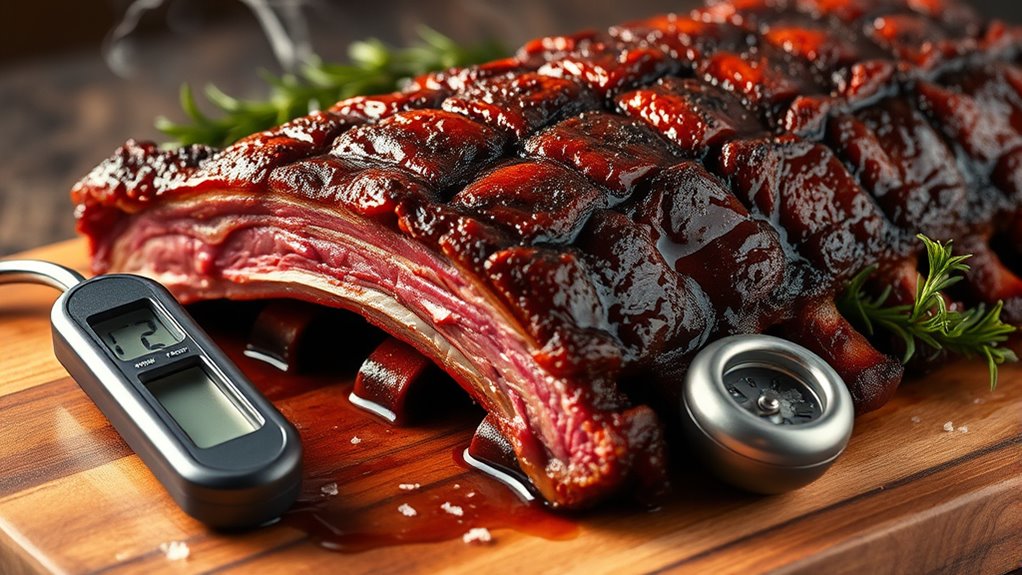
If you smoke beef ribs at 300°F, plan for about 3 to 4 hours until they hit an internal temperature around 200°F, which makes them tender and flavorful. Achieving the perfect smoked beef ribs requires attention to temperature and timing.
To get the best results, wrap the ribs in foil once they reach 165-170°F to lock in moisture and speed up cooking. Keep your smoker steady, use a reliable thermometer, and avoid opening the door too often.
There’s more to perfecting your ribs, including seasoning, resting, and monitoring techniques. These steps help enhance flavor and ensure your beef ribs come out juicy and delicious every time.
Is 300°F the Right Temperature for Smoking Beef Ribs?
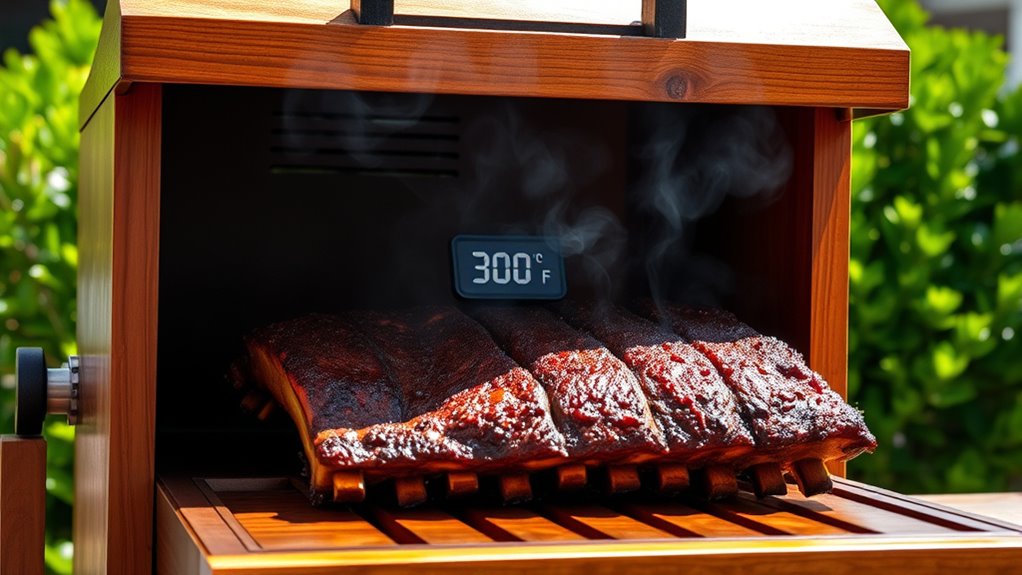
While 300°F isn’t the traditional low-and-slow temperature, it can be a great choice if you want to smoke beef ribs faster without sacrificing flavor. This hot and fast method lets you reach that ideal internal temperature of about 200°F in just 3 to 4 hours, depending on the size of your beef ribs.
You’ll develop good tenderness and a slightly firmer bark compared to slower smoking. However, you need to watch the meat closely since higher temps can dry it out. Wrapping or basting during the cook helps maintain moisture.
If you want flavorful, tender beef ribs but don’t have time for a long smoke, 300°F offers a solid balance—just keep an eye on timing and temperature to get it right.
Picking the Best Beef Ribs for 300°F Smoking
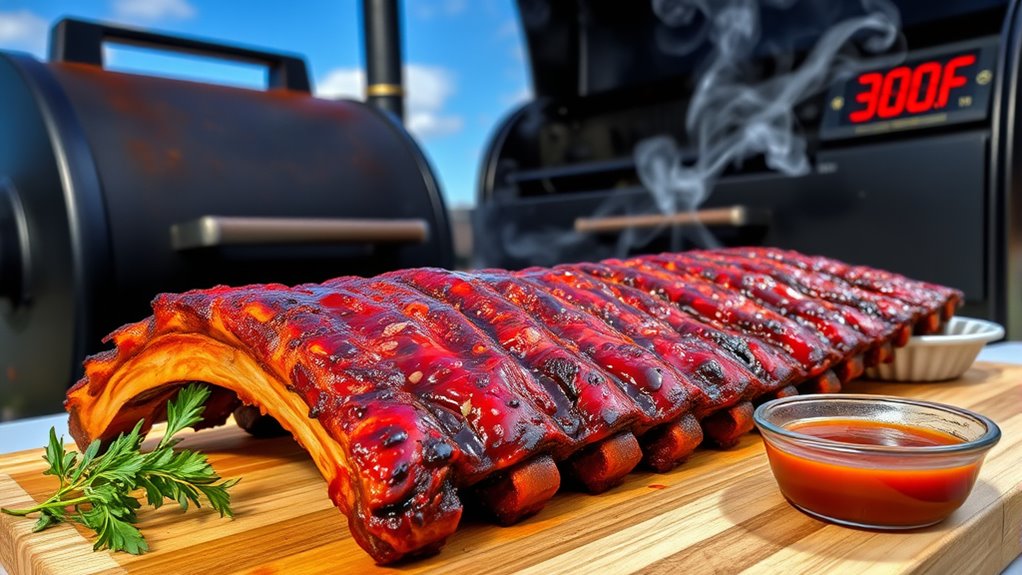
Choosing the right beef ribs makes all the difference when smoking at 300°F, as thicker, meatier cuts like short ribs or plate ribs handle the heat better without drying out. When you pick your beef ribs, look for full racks of back ribs or chuck ribs with good marbling and plenty of intercostal meat.
Avoid excessive connective tissue to ensure tenderness after smoking. Also, choose ribs with the membrane removed or one that’s easy to peel off; this helps the smoke beef flavors penetrate deeper and improves texture. Center-cut or Dino ribs, known for their uniform thickness and size, are excellent options to achieve consistent results.
Seasoning Tips for Smoking Beef Ribs at 300°F
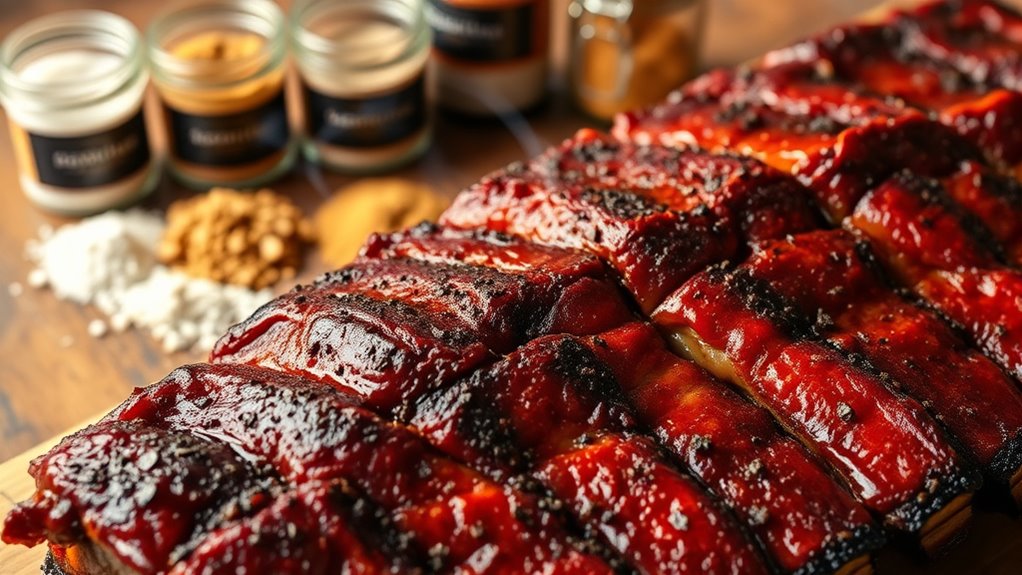
You’ll want to start by removing the membrane from your beef ribs to help the seasoning penetrate better and improve texture.
Next, apply a simple rub with coarse black pepper and kosher salt, adding spices like garlic powder or paprika for extra flavor.
Using a binder like mustard will help the rub stick and create a tasty bark during smoking at 300°F.
Essential Beef Rib Rubs
A classic beef rib rub starts with a simple 3:1 ratio of coarse black pepper to kosher salt, creating a bold foundation that brings out the meat’s natural flavor. When preparing smoked beef back ribs, apply this seasoning generously and evenly to make certain it adheres well during smoking at 300°F.
You can enhance your rub by adding garlic powder, onion powder, or a specialty blend like Hardcore Carnivore Black for extra depth. After seasoning, let the ribs rest for 15-30 minutes to allow the flavors to penetrate the beef.
Membrane Removal Benefits
Before applying your carefully crafted rub, take a moment to remove the membrane from your beef ribs. Membrane removal is essential because it allows your seasonings and smoke to directly contact the meat, boosting flavor absorption. This thin, tough layer acts as a barrier, preventing rubs from adhering evenly and limiting the depth of seasoning.
By peeling it off, you guarantee your rub penetrates fully, creating a more tender, flavorful bark. Additionally, removing the membrane prevents a chewy, rubbery texture that can detract from your ribs’ overall enjoyment.
For smoking at 300°F, membrane removal guarantees a better texture and more consistent flavor throughout. Skipping this step can result in uneven seasoning and a less satisfying bite, so don’t overlook it for the best results.
Setting Up Your Smoker for 300°F
Before you start smoking, make sure your smoker holds a steady 300°F by adjusting vents or pellet feeds as needed.
Choosing the right wood is key since it directly affects the flavor of your beef ribs.
Let’s explore how to control temperature and pick the best wood for smoking.
Temperature Control Techniques
When you set your smoker to 300°F, you’ll need a reliable thermometer to preheat it accurately and maintain that temperature throughout the cooking process. Accurate temperature control is vital to ensure your beef ribs cook evenly and reach the ideal tenderness.
Place a digital or analog thermometer probe inside the smoker to continuously monitor the internal temp. Avoid opening the smoker door frequently, as this causes temperature fluctuations. Use quality heat sources like hardwood pellets or charcoal, and adjust vents or dampers to stabilize the heat.
Regularly check the internal temp and make small adjustments as needed to keep it steady at 300°F. This consistent temperature control will give you perfectly smoked beef ribs every time.
Wood Choice Impact
Controlling temperature at 300°F sets the stage, but the type of wood you choose shapes the flavor your beef ribs will carry. Hickory wood delivers a strong, sweet, and smoky flavor that perfectly complements beef ribs smoked at this temperature.
To maintain consistent smoke and flavor, use hickory bisquettes placed in your smoker’s designated tray or smoker box. Pre-soaking these bisquettes helps delay combustion, letting you extend smoke output during the cooking process.
The aroma of hickory smoke at 300°F infuses your ribs with a bold, rich taste, elevating the final result. By carefully selecting and preparing hickory wood, you ensure your beef ribs develop that classic smoky profile everyone loves.
How Long Should You Smoke Beef Ribs at 300°F?
Although smoking beef ribs at 300°F cooks them faster than lower temperatures, you’ll still want to allow about 2.5 to 3 hours to reach ideal tenderness. When you smoke beef ribs at this temperature, the timing depends on the size and thickness of the rack.
For best results, consider wrapping the ribs in foil after 1.5 to 2 hours to retain moisture and speed up cooking. Keep a close eye on the process by regularly checking the internal temperature with a meat probe. This helps guarantee the ribs cook evenly and reach the perfect level of tenderness.
What Internal Temperature Should You Target When Smoking Beef Ribs at 300°F?
When smoking beef ribs at 300°F, you’ll want to target an internal temperature between 200°F and 210°F for the best tenderness. This temperature range guarantees the meat breaks down properly, giving you a juicy, flavorful result.
Using a meat thermometer helps you hit that perfect texture without guessing.
Optimal Internal Temperature
If you want tender, flavorful beef ribs smoked at 300°F, you’ll need to target an internal temperature between 200°F and 210°F. This range guarantees the ribs are fully tender and juicy. During smoking, reaching 165-170°F signals that the ribs have developed flavor but aren’t completely tender yet.
Wrapping ribs in foil at this stage helps retain moisture and finish the cooking process. To achieve the perfect result, use a reliable meat thermometer to monitor internal temperature accurately.
- Aim for 165-170°F before wrapping ribs in foil
- Target 200-210°F for fully tender ribs
- Use a quality thermometer for precise smoking
- Foil wrapping maintains moisture during cooking
Temperature and Texture
Smoking beef ribs at 300°F calls for hitting an internal temperature around 200°F to reveal the perfect texture. When the ribs reach this temperature, the connective tissues break down fully, giving you tender, juicy meat that falls off the bone.
This internal temperature is essential to achieve the ideal tenderness and a rich smoked flavor. Typically, it takes about 3 to 4 hours to get there, depending on the size and thickness of your ribs.
Make sure you use a reliable meat thermometer to monitor the internal temperature accurately throughout the smoking process. Reaching 200°F ensures your beef ribs are cooked thoroughly while maintaining that sought-after tenderness and mouthwatering texture you want every time.
How Foil Wrapping Helps Tenderize Beef Ribs at 300°F
While cooking beef ribs at 300°F, wrapping them in foil traps moisture and creates a steaming effect that tenderizes the meat. This foil wrapping prevents moisture loss, allowing collagen to break down efficiently, which results in juicier, more tender ribs.
Wrapping beef ribs in foil at 300°F traps moisture, creating steam that tenderizes and enhances juiciness.
By wrapping at the right internal temperature (around 165-170°F), you lock in the juices, accelerating the tenderization process and reducing overall cooking time. After foil treatment, unwrapping the ribs lets the exterior develop a flavorful bark while keeping the interior tender.
- Foil wrapping preserves moisture for better collagen breakdown
- Steaming effect speeds up the tenderizing process
- Locks in juices at ideal internal temperature
- Maintains flavor while producing a tender, juicy rib
Using foil wrapping is key to tenderize beef ribs perfectly at 300°F.
How to Monitor and Adjust Your Smoker at 300°F
Maintaining a steady 300°F in your smoker guarantees the foil-wrapped beef ribs cook evenly and become tender as intended. Use a reliable digital thermometer to monitor temperature, checking at least every 30 minutes.
Keep the smoker lid closed to avoid heat loss and temperature fluctuations. Adjust airflow vents or dampers to fine-tune heat and keep the temperature stable. Opening the smoker frequently causes temperature drops, so limit door openings during cooking.
| Action | Purpose | Frequency |
|---|---|---|
| Use digital thermometer | Accurate temperature reading | Continuous |
| Keep lid closed | Maintain consistent heat | Always |
| Adjust vents/dampers | Regulate temperature | As needed |
| Check temperature | Ensure stability | Every 30 minutes |
Resting and Serving Beef Ribs Smoked at 300°F
Once your beef ribs reach an internal temperature of 200°F, you’ll want to wrap them in peach paper or foil and let them rest for at least an hour in a cooler wrapped with towels. This resting period allows the meat to reabsorb its juices, enhancing tenderness and flavor. Proper resting is crucial to achieve the best texture and mouthfeel in your smoked beef ribs.
Rest beef ribs at 200°F wrapped in peach paper or foil for at least an hour to enhance tenderness and flavor.
To maximize your resting benefits:
- Use peach paper or foil to retain moisture
- Rest ribs for a minimum of 30 minutes, ideally up to 2 hours
- Keep ribs insulated in a cooler wrapped with towels
- Slice between the bones after resting for easy serving
Following these steps ensures your beef ribs deliver juicy, flavorful results every time.
Common Mistakes When Smoking Beef Ribs at 300°F
Resting your beef ribs properly sets the stage for a great meal, but smoking them at 300°F presents its own challenges. One common mistake is not maintaining a consistent smoking temperature, which causes uneven cooking and affects texture. You might also wrap the ribs too early or too late, compromising bark development or moisture balance.
Another pitfall is applying too much sugar or thick sauces before or during smoking; at 300°F, these can burn, creating a bitter taste. Indispensably, skipping the use of a meat thermometer leads to guesswork—without checking for an internal temperature of 200°F to 205°F, your ribs risk being undercooked or overdone. Stay vigilant with temperature control and timing to avoid these typical errors.
Frequently Asked Questions
How Long Do I Smoke Beef Ribs at 300 Degrees?
You’ll want to smoke beef ribs at 300°F for about 2.5 to 3 hours. Wrap them in foil after 1.5 to 2 hours, and check for an internal temperature of 200-205°F to guarantee tenderness.
Is 300 Too High to Smoke Ribs?
Don’t throw the baby out with the bathwater—300°F isn’t too high to smoke ribs if you keep a close eye on them.
You’ll get tender, juicy ribs by monitoring temperature and moisture carefully throughout cooking.
How Long Will Ribs Cook at 300 Degrees?
You’ll cook beef ribs at 300°F for about 2.5 to 3 hours. Use a meat thermometer to hit 200-205°F internally, and consider wrapping them in foil after 2 hours to keep them juicy and tender.
What Temp Do Beef Ribs Fall off the Bone?
When beef ribs hit around 200°F to 210°F, they fall off the bone like magic.
You’ll know they’re perfect when the meat’s tender enough to pull apart easily—just use a meat thermometer to check!
Conclusion
Smoking beef ribs at 300°F usually takes about 3 to 4 hours for tender, juicy results. Did you know that maintaining a steady 300°F can reduce cooking time by up to 25% compared to lower temps?
By seasoning well, wrapping in foil, and monitoring your smoker closely, you’ll nail that perfect balance of smoky flavor and tenderness every time. Just remember to let your ribs rest before serving—they’ll thank you with every bite!
For complete results, smoking beef ribs at 300°F ensures a flavorful and tender outcome that’s worth the wait.