
How Many Calories Are in 1 Cup of Ground Beef?
You’ll find that 1 cup of cooked ground beef contains between 440 and 530 calories, depending on its fat content—leaner options have fewer calories, while fattier cuts pack more.
Cooking methods also impact calorie count since fat and moisture loss concentrate calories per cup.
Choosing lean ground beef and proper cooking can help manage calories effectively.
If you want to understand how fat, nutrients, and cooking styles influence these numbers, there’s more to explore.
How Many Calories Are in 1 Cup of Ground Beef?
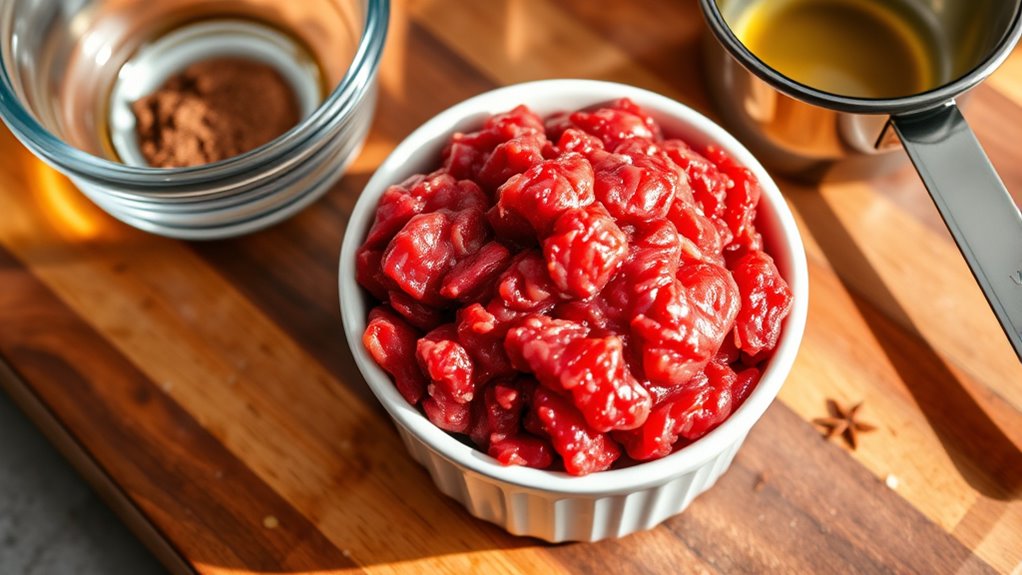
Although the calorie content varies, you can expect about 440 to 530 calories in one cup of cooked ground beef, depending mainly on its fat percentage. When you cook ground beef, the calories you consume hinge on the meat’s fat content and cooking method.
For instance, leaner ground beef, like 90% lean, contains roughly 440 calories per cup, while fattier options, such as 80% lean, push closer to 530 calories. Cooking also plays a role; draining excess fat or adding ingredients can shift the total calories.
To get an accurate estimate, you’ll want to contemplate both the lean-to-fat ratio and how you prepare the ground beef. This way, you can better manage your calorie intake without guessing.
How Does Fat Content Change Ground Beef Calories?
You’ll notice that the fat percentage in ground beef directly affects its calorie count. For example, higher fat ground beef packs more calories per cup because fat has more than twice the calories of protein.
Choosing leaner options can considerably reduce your calorie intake without sacrificing protein.
Fat Percentage Impact
How does the fat content in ground beef affect its calorie count? The fat percentage directly influences how many calories you get per cup. Higher fat percentages, like 80% lean ground beef, contain more calories because fat is calorie-dense—about 9 kcal per gram.
For example, 3 ounces of 80% lean ground beef has roughly 230 calories, while 97% lean has about 130 calories for the same amount. This means as the fat percentage rises, so do the calories. If you want fewer calories, choosing leaner ground beef with a higher lean-to-fat ratio, such as 90% lean or above, helps.
Each 10% increase in fat adds roughly 20–50 calories per 3-ounce serving, making fat percentage a key factor in managing your calorie intake from ground beef.
Calorie Variations By Fat
When you choose ground beef with higher fat content, you increase its calorie count markedly because fat packs about 9 calories per gram, compared to protein’s 4 calories per gram. For example, 70% lean ground beef (30% fat) contains roughly 235 calories per 3-ounce cooked serving, while lean ground beef with 90% lean (10% fat) has about 184 calories for the same portion.
This difference stems from the fat content, as higher fat means more calories from fat, making the beef more energy-dense. Each 10% drop in fat typically lowers the calorie count by 50 to 60 calories per 3 ounces. So, choosing lean ground beef is a smart way to cut calories without sacrificing protein.
Comparing Calories in Different Types of Ground Beef
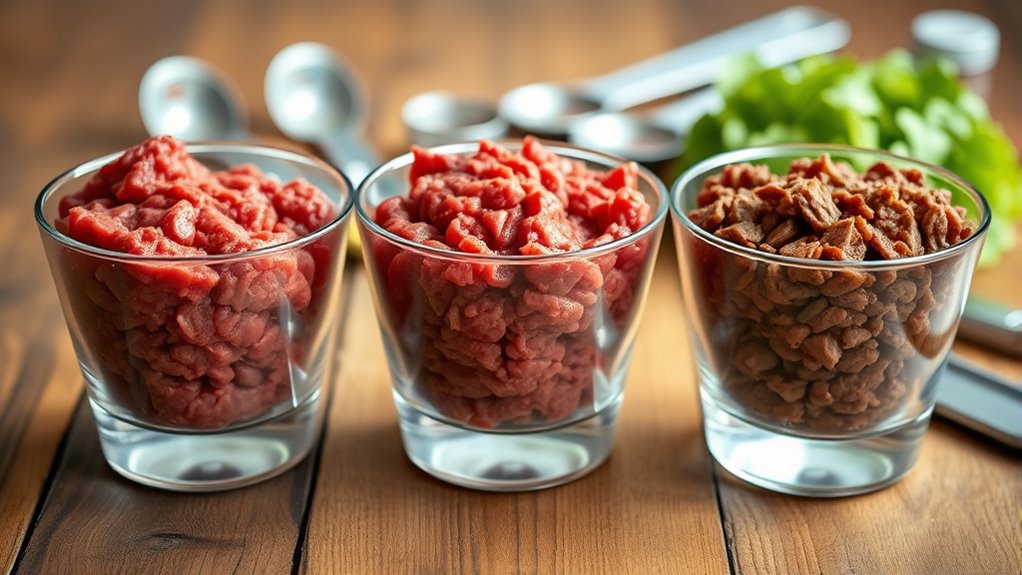
Although ground beef comes in various fat percentages, you can easily compare their calorie content by looking at typical servings. For example, a 1-cup cooked serving of 85% lean ground beef contains about 218 calories, while leaner options like 97% lean drop to around 130 calories per cup.
On the other hand, ground beef with higher fat, such as 70% lean, packs up to 235 calories in the same serving size. Keep in mind, cooking methods and volume-to-weight conversions can affect these numbers slightly.
What Protein, Fat, and Nutrients Are in Ground Beef?
Because ground beef varies in fat content, its protein, fat, and nutrient levels also differ. When you choose ground beef, you’re getting more than just calories—you’re adding valuable nutrients to your diet.
Here’s what you can expect in a typical serving:
- Protein: About 24 grams per 3-ounce cooked portion, providing high-quality protein essential for muscle repair and growth.
- Fat: Ranges from roughly 3.8 grams in 97% lean to over 13 grams in 70% lean ground beef, affecting calories and flavor.
- Nutrients: Rich in vitamin B12, iron, zinc, and niacin, all vital for energy metabolism and immune function.
How Cooking Methods Affect Ground Beef Calories
When you cook ground beef, water loss concentrates the fats and calories, making it more calorie-dense per cup than raw meat. How you cook it—grilling, frying, or broiling—also changes the fat content, which affects the calorie count.
Choosing leaner beef and cooking methods that drain fat can help control the calories you consume.
Calorie Changes During Cooking
As you cook ground beef, water and fat start to evaporate or drain away, which changes the calorie concentration in each cup. The cooked beef ends up denser because moisture leaves, so each cup packs more calories than raw.
Here’s what you should know:
- Cooking methods like frying or grilling reduce moisture, making the beef more calorie-dense per cup.
- Draining excess fat after cooking lowers the total calories you’ll consume.
- Nutrition labels usually reflect cooked weight, meaning the calories listed are for moisture-reduced beef.
Fat Content Variations
Different cooking methods don’t just change the moisture content of ground beef—they also affect its fat content and calorie count. When you fry or sauté ground beef, added oils can increase calorie density, while boiling or baking often reduces fat and calories by allowing fat to drain away. Grilling or broiling helps excess fat drip off, giving you a leaner beef product with fewer calories per cup.
Choosing lean beef with a higher lean-to-fat ratio, like 97% lean, naturally lowers fat content and calories compared to 80% lean beef. Remember, cooking concentrates nutrients and calories due to moisture loss, so cooked ground beef is denser in calories. Draining fat after cooking also cuts calorie density, helping you control your intake more precisely.
Tips to Manage Ground Beef Calories When Choosing and Cooking
Although ground beef can be calorie-dense, you can manage its impact by choosing leaner cuts and cooking smartly. To keep your meals healthier, focus on these key tips:
- Opt for lean ground beef, like 90% or 97% lean, to cut calories without sacrificing protein.
- Practice portion control by measuring your ground beef accurately—stick to recommended serving sizes to avoid overeating.
- Use cooking methods such as grilling, broiling, or draining excess fat after cooking to lower calorie content effectively.
Additionally, try adding vegetables or low-calorie ingredients to bulk up your meal without extra calories. Avoid adding unnecessary oils or fats during cooking.
Frequently Asked Questions
How Many Calories Are in 1 Cup of Cooked Ground Beef?
You’ll find about 230 to 250 calories in one cup of cooked ground beef, depending on its fat content.
Choosing leaner beef or draining fat while cooking can help you reduce those calories easily.
How Many Calories Are in 1 Lb of 80/20 Ground Beef?
You’ll find about 800 calories in 1 pound of raw 80/20 ground beef.
After cooking, calories drop slightly to around 720–760 due to fat and water loss, depending on your cooking method.
Is One Cup of Ground Beef 4 Ounces?
Yes, one cup of cooked ground beef generally weighs about 4 ounces.
Keep in mind, the exact weight can vary depending on how it’s cooked and packed, but 4 ounces is the standard measure.
How Many Calories Are in Half a Cup of 93% Lean Ground Beef?
Half a cup of 93% lean ground beef packs about 150 calories. When you cook it, those calories concentrate, so you’re fueling your body with protein while keeping fat in check—smart, satisfying, and simply delicious.
Conclusion
Now that you know how fat content and cooking methods impact the calories in 1 cup of ground beef, you can make smarter choices without breaking the bank. Whether you go lean or regular, balancing your portions and cooking style helps keep your meals nutritious and satisfying.
Just remember, don’t bite off more than you can chew—moderation is key to enjoying ground beef while staying on track with your health goals. Understanding the calories in ground beef allows you to plan meals better and maintain a balanced diet. Incorporating this knowledge ensures you get the most out of your meals without overindulging.