How Many Calories Are in a Bowl of Beef Stew
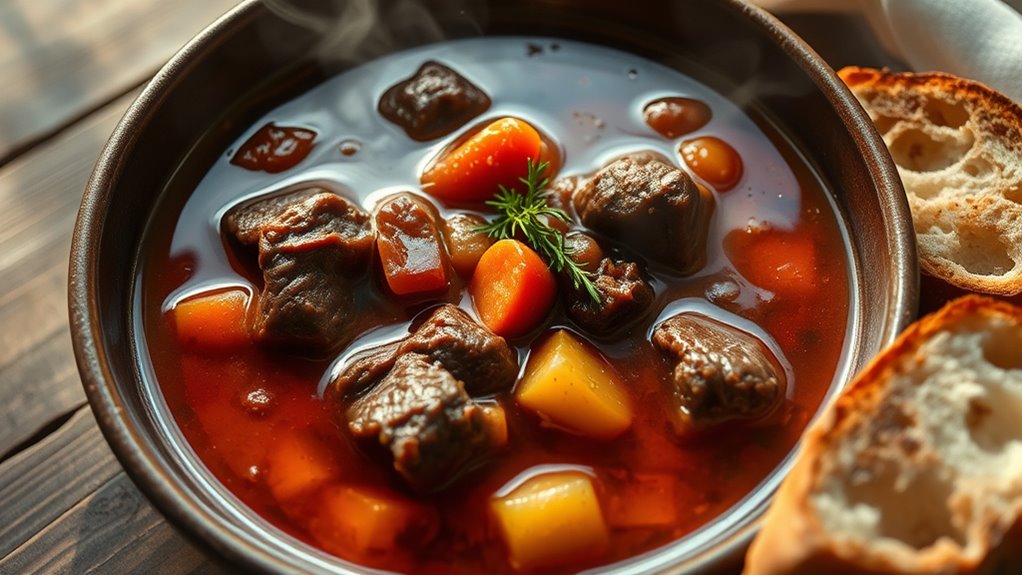
A bowl of beef stew typically has around 300 to 400 calories, but this depends on ingredients and portion size.
Leaner cuts and more veggies lower calories, while added potatoes, flour, and fats increase them.
Store-bought versions often have more calories due to added oils and preservatives.
You can reduce calories by using lean meat, skipping extra fats, and boosting veggies.
Keep exploring for tips on calorie control and the stew’s other nutritional benefits.
What Factors Affect Beef Stew Calorie Count?
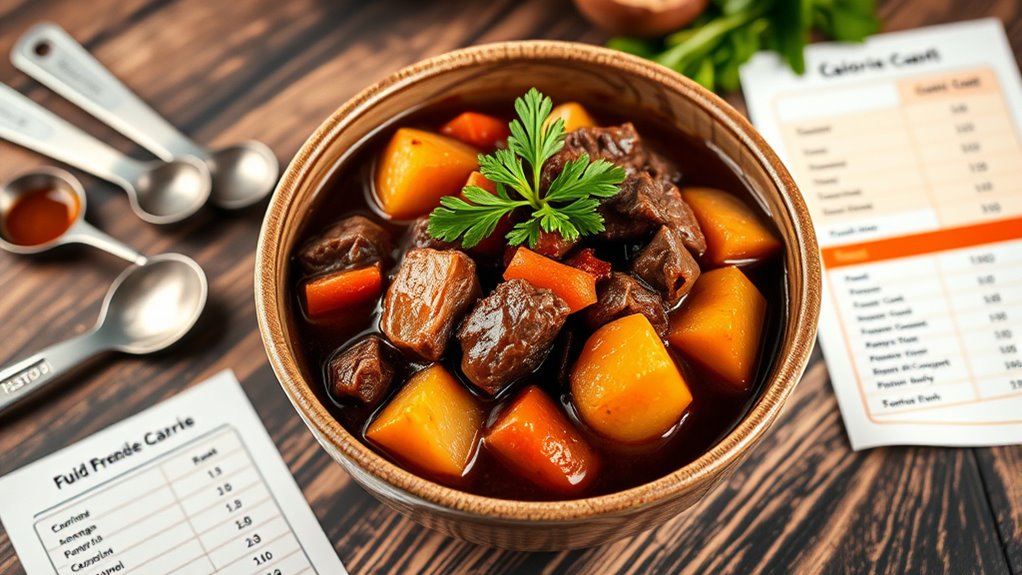
Because the calorie count of beef stew depends on several factors, you should consider the cut of meat, added ingredients, cooking methods, portion size, and any fats like butter or oil used during preparation. The calorie content varies markedly with the cut of beef you choose—lean cuts lower calories, while fattier ones raise them.
Ingredients like potatoes, carrots, or thickening agents, such as flour, add calories, so be mindful of what you include. Your cooking method also plays a role: slow cooking typically retains fat, while frying may increase it.
While portion size influences total calorie intake, it’s best to focus on the calorie content of the stew itself first. By controlling these elements, you can better manage the overall calories in your beef stew.
How Do Portion Sizes Impact Beef Stew Calories?
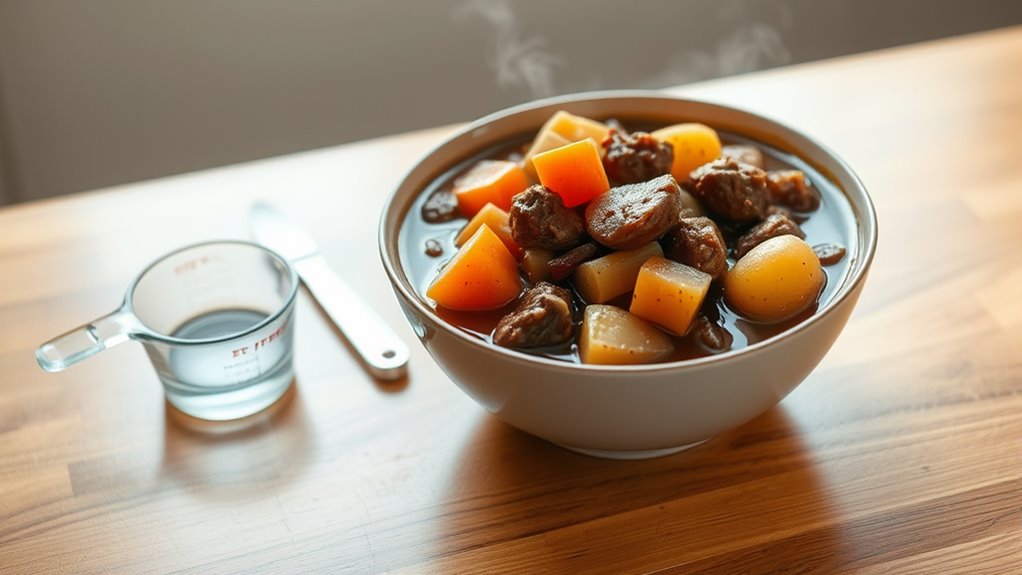
When you increase the portion size of beef stew, you naturally consume more calories since the total calorie count rises with the amount served. Managing portion sizes is key to effective calorie management, especially with calorie-dense dishes like beef stew. For example, a standard 383-gram bowl has about 320 calories, so halving the serving size cuts calories roughly in half.
Adjusting your portion sizes lets you enjoy beef stew while staying within your daily calorie goals. Here’s how portion sizes impact your calorie intake:
- Larger servings mean more calories consumed
- Smaller portions reduce calorie intake considerably
- Precise serving size helps track calories accurately
- Portion control prevents overeating
- Flexible portions allow customization for dietary needs
Being mindful of portion sizes makes calorie management with beef stew simpler and more effective.
Which Ingredients Add the Most Calories to Beef Stew?
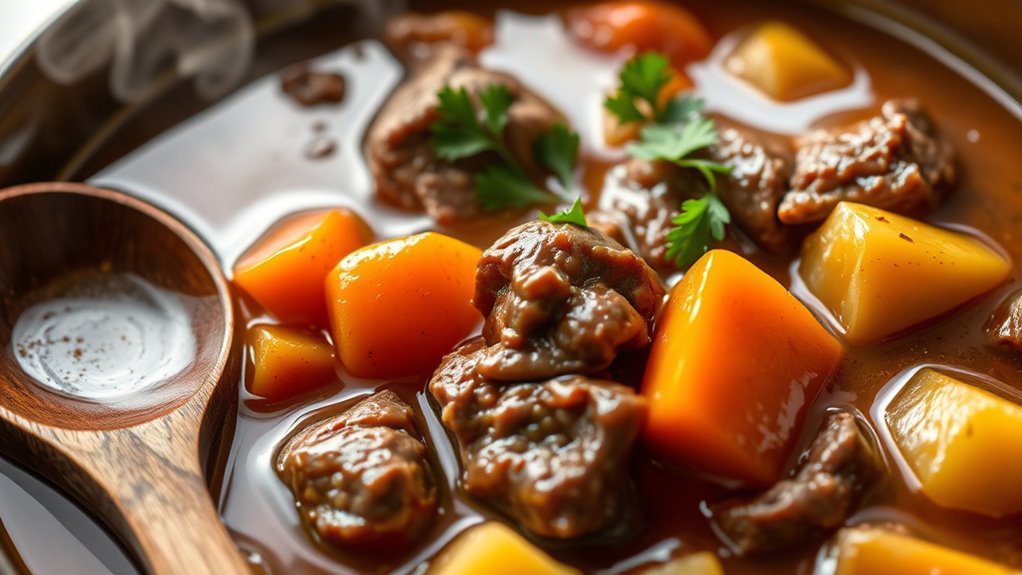
Several key ingredients drive the calorie content in beef stew, with beef itself contributing the most due to its high protein and fat content. When you add beef, you’re packing in about 28-30 grams of protein per serving, which notably raises the calories. Potatoes and carrots also add to the calorie count, mainly through carbohydrates—potatoes provide roughly 17 grams of carbs per serving.
Don’t overlook the flour used to coat the meat, which adds extra calories from carbs and some fat. Additionally, fats from the beef and any oils or fats you include further increase the total calories. While broth and herbs enhance flavor, they add minimal calories, making the beef, starches, and added fats the main calorie-driving ingredients in your beef stew.
How Do Homemade and Store-Bought Beef Stew Calories Compare?
You’ll find that calories in beef stew can vary a lot between homemade and store-bought versions, mainly due to different ingredients. Homemade stew lets you control what goes in, so you can reduce fats or thickeners to lower calories.
Meanwhile, store-bought options often include preservatives and sodium, which can affect both calorie count and nutrient density.
Calorie Variations Overview
Although both homemade and store-bought beef stews offer comforting flavors, their calorie content can vary considerably. When you compare calorie counts per serving, homemade stews typically range from 235 to 320 calories, while store-bought options can go from 250 up to 400 calories. Portion size and nutritional factors like added fats and preservatives play key roles in these differences.
Consider these points about calorie variations:
- Homemade stews let you control ingredients, often lowering calorie size.
- Store-bought versions may contain added oils and thickeners, increasing calories.
- Preservatives and sodium in store-bought stews can impact calorie density.
- Serving size directly influences total calorie intake.
- Reading nutritional labels helps you choose stews that fit your calorie goals.
Ingredients Impact Calories
When you compare homemade and store-bought beef stew, the ingredients play a crucial role in determining calorie content. Homemade stew typically contains 235-320 calories per bowl, depending on your choice of ingredients and portion size. You can control calories by using lean cuts of beef and limiting added fats.
Including potatoes, carrots, or thickening agents will increase calories, but portion control helps manage intake. Store-bought versions vary more widely, ranging from 200 to over 400 calories per serving, often due to added preservatives, oils, and thickeners.
Nutritional labels on store-bought stew make it easier to check exact calories, but you sacrifice some control over ingredients. Ultimately, your ingredient choices in homemade stew let you tailor calories more precisely than most store-bought options.
Nutrient Density Differences
Because homemade beef stew lets you choose fresh, lean ingredients, it usually offers better nutrient density compared to store-bought versions. You can control calories by adjusting fat content and selecting nutrient-rich vegetables. Store-bought beef stew often contains preservatives, added sugars, and starches that increase calorie density but lower nutrient quality.
Here’s how they compare:
- Homemade beef stew calories typically range from 235-320 per serving
- Store-bought beef stew calories vary widely, often 200-400+ per bowl
- Homemade versions allow for lean meats and fresh veggies to boost vitamins
- Store-bought stews may include thickening agents and higher sodium levels
- Nutrient density is generally higher in homemade stew due to whole ingredients
Choosing homemade beef stew helps you maximize nutrients while managing calories effectively.
How Can You Reduce Calories in Your Beef Stew?
You can cut calories in your beef stew by choosing leaner cuts like sirloin or tenderloin. Adding more vegetables not only boosts fiber but also stretches the stew without extra calories. Swapping high-sodium broth for low-sodium options helps keep both calories and salt in check.
Lean Meat Choices
Selecting lean cuts like sirloin or round can considerably cut down the calories and fat in your beef stew. When you choose lean meat, you reduce the fat content, which directly lowers the calorie count. To make your beef stew healthier, consider trimming visible fat from the meat before cooking.
Also, use less or no added oil when browning to keep calories in check. Here’s how to manage lean meat choices for a lighter stew:
- Pick lean beef cuts like sirloin or round
- Trim any visible fat before cooking
- Skip or minimize added oils during browning
- Use broth-based recipes to avoid extra fat calories
- Incorporate more vegetables to increase volume without many added calories
These steps help you enjoy a flavorful beef stew with fewer calories.
Vegetable Substitutions
Lean meat choices play a big role in cutting calories, but swapping out certain vegetables can make an even bigger difference in your beef stew’s calorie count. Consider vegetable substitutions like replacing starchy potatoes with low-calorie options such as cauliflower or zucchini. These swaps profoundly reduce the calorie content while keeping your stew hearty.
You can also add more non-starchy vegetables like spinach or green beans to increase volume without adding many calories. These vegetables provide nutrients and fiber but keep your stew light. Avoid high-calorie thickeners and minimize added fats to maintain a lower calorie count.
Lower Sodium Options
Although beef stew often relies on rich broth for flavor, choosing low-sodium beef broth or water instead of regular stock can drastically cut down on sodium without sacrificing taste. You can reduce the sodium content by steering clear of processed ingredients like bouillon cubes, which are often loaded with salt and sugar.
Instead, enhance your stew with herbs and spices like garlic, pepper, and bay leaves, which add robust flavor without extra sodium. Here are some simple ways to keep your beef stew lower in sodium and calories:
- Use low-sodium beef broth or water
- Limit added salt
- Season with herbs and spices
- Avoid processed ingredients such as bouillon cubes
- Add more vegetables to bulk up the stew
These steps help you enjoy a healthier, flavorful beef stew.
What Nutritional Benefits Does Beef Stew Offer Beyond Calories?
Because beef stew contains a rich blend of nutrients, it offers much more than just calories. You get a hefty dose of high-quality protein—about 30 grams per serving—which supports muscle repair and growth. The vitamins in beef stew, like vitamin A and B12, help boost your immune system and aid red blood cell production.
It’s also packed with essential minerals such as iron and potassium, which promote healthy blood circulation and muscle function. Plus, antioxidants like lycopene in the stew can help reduce inflammation and oxidative stress. Beyond these, you benefit from folate, magnesium, and omega-3 fatty acids, all contributing to your overall health.
How to Calculate Beef Stew Calories From Ingredients?
When you want to know exactly how many calories are in your beef stew, start by breaking down each ingredient’s calorie content. Use nutrition labels or a trusted food database to find calories per unit for every ingredient. Multiply that by the amount you use, then add all those numbers together to get total calories.
To find beef stew calories, add up each ingredient’s calories using nutrition labels and portion sizes.
Finally, divide by the number of servings to find calories per bowl.
Here’s how to calculate beef stew calories from ingredients:
- Identify each ingredient and its quantity
- Look up calories per unit (gram, ounce, cup)
- Multiply calories per unit by quantity used
- Add all calorie values for total nutrition info
- Divide total calories by servings for per serving count
This method guarantees accuracy, though cooking variations can slightly affect calories.
Calorie Ranges for Popular Beef Stew Recipes?
If you want to estimate the calories in your beef stew, knowing typical calorie ranges for popular recipes can help. Calories in beef stew vary widely based on ingredients, portion size, and preparation. Leaner recipes with fewer fats typically have lower nutritional values, while richer stews with oils and starches increase calorie counts.
Here’s a quick guide:
| Beef Stew Type | Calories per Bowl | Notes |
|---|---|---|
| Lean & Low-Fat | 250 – 300 | Uses lean meat, minimal fats |
| Homemade Traditional | 320 – 383 | Balanced ingredients |
| Rich & Hearty | 400+ | More oils, starches, thickener |
Keep portion size in mind, as it directly impacts the calories you consume with each serving of beef stew.
Frequently Asked Questions
How Many Calories Are in a Bowl of Homemade Stew?
You’ll find about 320 calories in a typical bowl of homemade stew. Keep in mind, ingredients and portions affect this, so use lean beef and measure servings to control calorie intake effectively.
Can I Eat Beef Stew on a Diet?
Yes, you can eat beef stew on a diet. Just choose lean meat, watch portion sizes, and limit added fats and sodium.
This way, you’ll enjoy a nutritious, satisfying meal without exceeding your calorie goals.
How Many Calories Are in 2 Cups of Homemade Beef Stew?
Two cups of homemade beef stew usually have around 640 calories, but it can vary depending on your recipe. If you add extra fats or sugars, expect more calories.
Always check your specific ingredients for accuracy.
Are Stews High in Calories?
Stews can be calorie-packed treasure chests, filled with rich meats and hearty veggies. You’ll find they often carry more calories than lighter soups, so if you’re watching intake, you’ll want to enjoy them in moderation.
Conclusion
When you sit down to a warm bowl of beef stew, you’re tasting a blend of flavors that can either tip the calorie scale or stay light as a breeze. By choosing your ingredients wisely and watching portion sizes, you can keep your meal both hearty and healthy.
Think of your stew as a canvas—you hold the brush to paint a nourishing, satisfying picture that fuels your body without weighing it down. Understanding how many calories are in a bowl of beef stew helps you make informed choices.
With the right balance, your beef stew can be a delicious and nutritious meal that fits perfectly into your dietary goals.