How Many Calories Are in 1/2 Cup Ground Beef
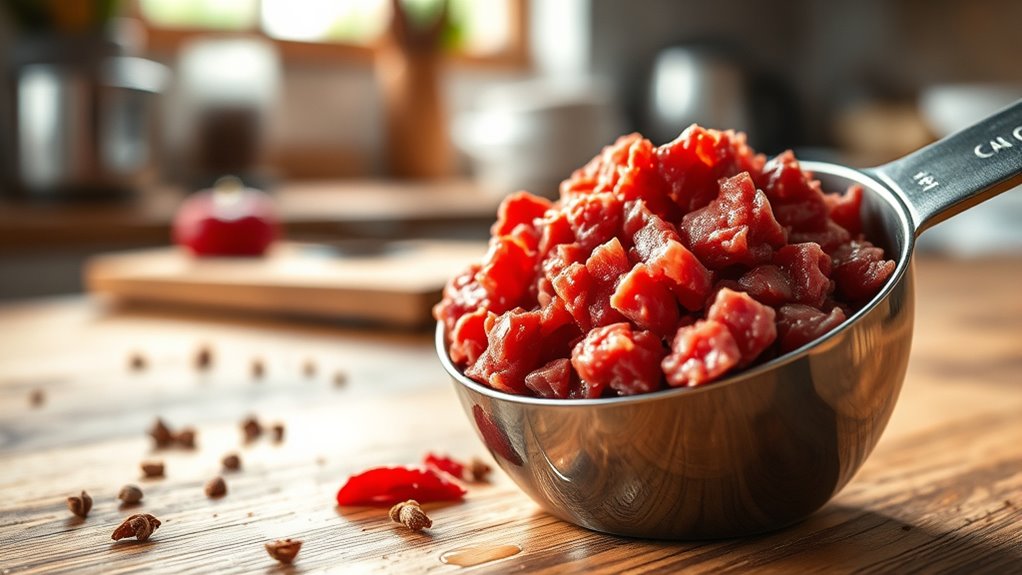
If you’re eating 1/2 cup of cooked ground beef, expect about 170 to 200 calories depending on fat content and how it’s prepared. Cooking reduces water, which concentrates calories, so cooked portions have more calories per volume than raw.
Most calories come from fat, but you’ll get protein and important nutrients too.
Choosing lean ground beef can help lower calories, and understanding these details lets you manage your meals better. There’s a lot more to learn about how these factors influence nutrition.
Calories in 1/2 Cup Ground Beef: Exact Numbers and Serving Size
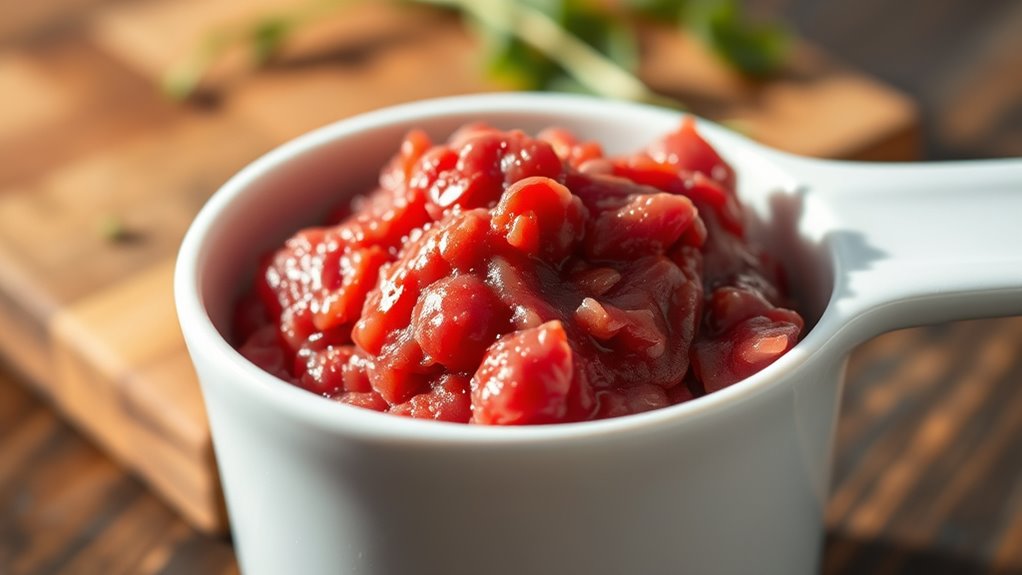
Wondering how many calories you’ll get from a half-cup of ground beef? A typical serving size of cooked ground beef, about 170-200 grams, contains roughly 243 calories. This number is based on ground beef that’s 85% lean, making it a solid source of nutrition.
Keep in mind, the exact calories can vary slightly depending on the fat content and how you cook it. That half-cup serving provides around 1016 kilojoules of energy, so it’s not just about calories but also the nutrient density you’re getting.
When tracking your intake or planning meals, knowing the precise calories in your ground beef serving size helps you stay informed and maintain a balanced diet.
Raw vs Cooked Ground Beef: How Calories Change
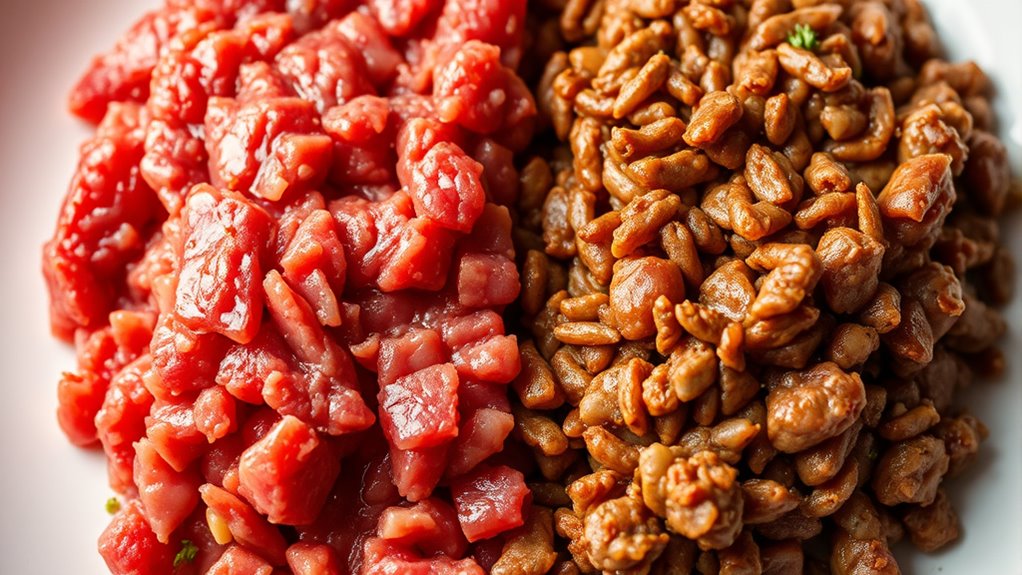
When you cook ground beef, its weight drops because water evaporates, which concentrates the calories in a smaller portion. This means half a cup of cooked beef packs more calories than the same volume of raw beef.
Understanding this weight change helps you better estimate the true calorie content in your servings.
Calorie Differences Explained
Although cooking ground beef reduces its weight by evaporating water, it actually increases the calorie density per ounce. When you cook ground beef, water loss causes the nutrients and calories to become more concentrated. This means cooked ground beef has roughly 77 calories per ounce, compared to about 72 calories per ounce when raw.
Because of this nutrient concentration, a half-cup of cooked beef can contain more calories than the same volume of raw beef. If you’re tracking your calorie intake, it’s important to measure ground beef after cooking to get an accurate count. Understanding how water loss affects calories helps you make better nutrition choices and avoid underestimating how many calories you’re actually consuming in your cooked meals.
Cooking Impact On Weight
Because cooking ground beef causes it to lose water and fat, you’ll notice its weight decreases while its calorie density rises. As the moisture content drops during cooking, the meat shrinks, concentrating calories in a smaller volume. This means a half-cup of cooked ground beef contains more calories than the same half-cup raw.
The cooking weight reduction results mainly from water loss, especially when frying or grilling, which intensifies calorie density per ounce. Nutritional labels typically reflect cooked ground beef values, so the calorie count changes depending on whether you measure before or after cooking. Understanding these shifts helps you accurately track calorie intake, as cooking methods considerably affect the moisture content and thus the calorie density of your ground beef servings.
How Cooking Affects Ground Beef Calories
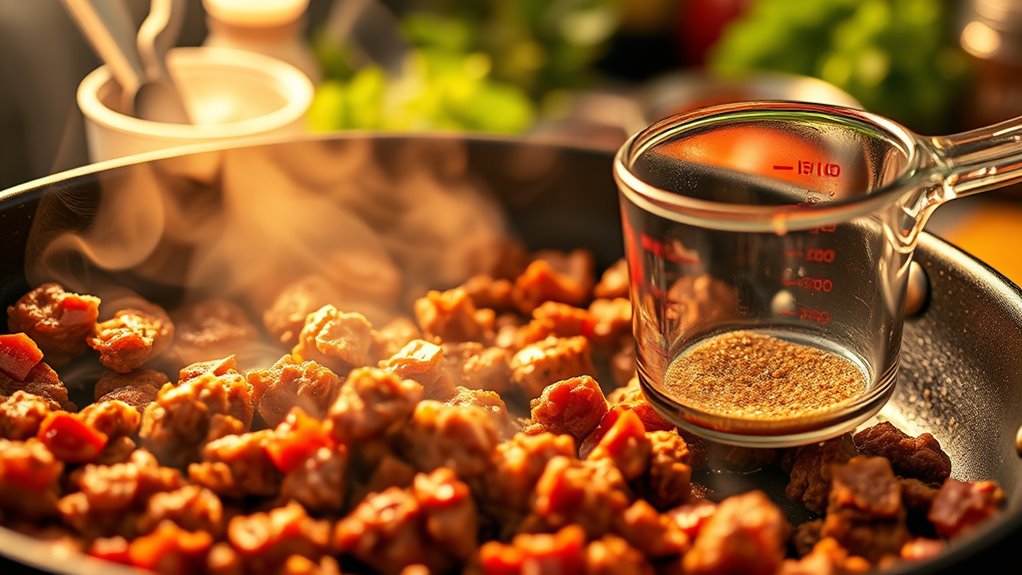
When you cook ground beef, the moisture evaporates, concentrating the calories per ounce. You might notice the fat content changes too, especially if you drain the excess grease.
Understanding these shifts helps you better estimate the true calorie count in your cooked portion.
Calorie Changes When Cooking
Since cooking ground beef causes it to lose water and fat, you’ll notice its calories become more concentrated per ounce. For example, the calories in 1 ounce of raw ground beef are about 72 kcal, but once cooked, that same ounce contains roughly 77 kcal. This increase occurs because the meat loses water and fat during cooking, reducing its weight but not its total calories.
When comparing cooked vs raw ground beef, the calorie concentration rises due to this loss. Different cooking methods, like frying or grilling, can affect how much water and fat are lost, slightly changing calorie concentration.
Fat Content Variations
Although cooking ground beef reduces its water content, it concentrates the fat and calories in each serving. This happens because as water loss occurs, the fat content remains relatively unchanged, making the calories denser per portion.
Here’s how the cooking method influences fat content variations:
- Frying ground beef typically retains more fat, increasing calories due to less fat drained away.
- Boiling or simmering can reduce fat content by allowing some fat to render out, lowering calories slightly.
- Using leaner ground beef or draining fat during cooking considerably cuts both fat content and total calories.
Moisture Loss Impact
Because cooking ground beef drives out moisture, you end up with a denser, more calorie-packed portion. When you cook ground beef, moisture loss reduces its water content considerably. This shrinkage concentrates the nutrients and calories, increasing the calorie density per ounce compared to raw meat.
For instance, raw ground beef has about 77 calories per ounce, but as it loses water during cooking, the same weight contains more calories. This means if you measure half a cup of cooked ground beef, it will have more calories than half a cup of raw ground beef.
Understanding how cooking ground beef affects moisture loss helps you better estimate calorie intake, especially if you’re tracking your diet or portion sizes.
Nutrient Breakdown: Protein, Fat, and Carbs in Ground Beef
When you eat half a cup of cooked ground beef, you get about 117 calories, mostly from fat and protein. This serving delivers a balanced nutrient profile with minimal carbohydrates. Here’s the breakdown:
- Protein: You’ll get roughly 9.9 grams, which supports muscle repair and growth.
- Fat: Around 9.4 grams contribute to about 75% of the calories, providing essential energy.
- Carbohydrates: Less than 1 gram, making ground beef a very low-carb choice.
This combination makes ground beef a rich source of crucial nutrients like iron and zinc, too.
Types of Fats in Ground Beef and Their Effect on Calories
Fat plays a major role in the calorie content of ground beef, and understanding the types of fats it contains can help you make informed choices about your diet. Ground beef contains various types of fats, including monounsaturated, saturated, and small amounts of trans fats. Each gram of fat adds about 9 calories, so the total fat content markedly affects the calorie count.
Monounsaturated fats, roughly 2.48 grams per serving, are healthier and contribute to calories without raising cholesterol much. Saturated fat, about 2.18 grams per ounce, adds around 20 calories but can impact heart health. Trans fats, although minimal, still add calories but are often reduced during processing. Knowing these fats’ types in ground beef helps you better manage calorie intake.
How Seasonings Affect Ground Beef Calories
When you season ground beef with common spices like salt, pepper, or garlic, you won’t add many calories.
However, if you use marinades or spice blends with sugar, oil, or butter, the calorie count can rise noticeably.
Keep an eye on what you add to balance flavor without packing in extra calories.
Common Seasoning Calories
How much do seasonings really add to your ground beef’s calorie count? Generally, common seasonings like salt, pepper, garlic, and chili powder add negligible calories—usually less than 5 calories per teaspoon. However, additional ingredients found in some seasonings can increase the total calories more noticeably.
- Dry herbs and spices contribute almost no calories, so they won’t impact your ground beef’s calorie content.
- Marinades or sauces with sugar and oil can add 20-50 calories per tablespoon, considerably boosting the total.
- Ingredients like cheese or creamy dressings add substantial calories, often between 30-100 per serving, making a big difference.
Be mindful of pre-seasoned ground beef, as added ingredients can raise calories beyond plain ground beef’s count.
Flavoring Impact On Nutrition
Although seasonings like salt, pepper, and garlic add minimal calories to your ground beef, the overall impact on nutrition depends largely on what and how much you use. Simple herbs and spices contribute less than 5 calories per teaspoon, barely affecting the total calorie count.
However, commercial flavorings such as marinades or spice mixes often contain added sugars or oils, increasing the calories depending on the quantity. Using oil-based seasonings or butter for flavoring can substantially raise the calorie content—just one tablespoon adds about 120 calories.
To keep your ground beef meal low in calories, choose dry herbs and spices without added fats or sugars. Being mindful of the type and amount of flavoring helps you maintain control over your dish’s nutritional profile.
Ground Beef Calories in Popular Recipes and Dishes
Since 1/2 cup of cooked ground beef packs between 170 and 200 calories, depending on its fat content, you’ll want to contemplate this when adding it to your favorite recipes. Knowing the calories per serving size helps you balance meals effectively.
Half a cup of cooked ground beef contains 170 to 200 calories, depending on fat content.
Here are three popular dishes where ground beef calories matter:
- Tacos – A typical serving includes about 1/2 cup of cooked ground beef, contributing considerably to the calorie total.
- Pasta sauces – Adding ground beef boosts protein but also adds 170-200 calories per serving size.
- Casseroles – Recipes often call for 1/2 cup ground beef per portion, influencing the dish’s overall calorie content.
Understanding % Daily Values for Ground Beef
Knowing the calories in ground beef is just one part of managing your diet. To fully grasp how it fits into your daily nutrition, you need to understand the % Daily Value (DV) listed on labels. The DV shows how a serving size of ground beef contributes to your overall nutritional needs based on a 2,000-calorie diet.
Ground beef’s fat content is significant, with about 62% of its calories coming from fat. This means its saturated fat DV is around 11%, which is important to note if you’re watching your fat intake. Additionally, protein and cholesterol in ground beef also have their own %DVs, helping you compare its nutritional values to other foods and make balanced choices.
How to Manage Calories When Eating Ground Beef
How can you enjoy ground beef without overloading on calories? Effective calorie management starts with smart choices and portion control. Here’s how you can keep your meals balanced:
- Measure your servings carefully. Half a cup of cooked ground beef typically contains 170-200 calories, so controlling your portion helps you stay within your calorie goals.
- Opt for lean ground beef to reduce calories without sacrificing flavor. Leaner cuts lower fat content, cutting down overall calorie intake.
- Balance your plate by incorporating vegetables or lighter side dishes. This adds volume and nutrition while keeping total calories in check.
Choosing Lean Ground Beef for Lower Calories
Choosing lean ground beef is a smart way to cut calories without giving up on taste or nutrition. When you opt for lean ground beef, such as 90% lean, you considerably lower the calorie content—about 150-170 calories per 1/2 cup cooked—compared to higher-fat options. The fat percentage directly impacts calories; for example, 80% lean beef has roughly 200 calories, while 95% lean drops to around 140 calories per serving.
Leaner cuts reduce saturated fat intake, benefiting your health without sacrificing protein or essential nutrients like iron and zinc. By choosing lean ground beef, you maintain excellent nutritional value while managing your calorie intake more effectively, making it a smart choice for anyone focused on healthier eating.
Frequently Asked Questions
How Many Calories Are in 1/2 Cup of Cooked Ground Beef?
You’ll find about 170 to 200 calories in half a cup of cooked ground beef, depending on its fat content.
Leaner options lean toward 170 calories, while fattier ones can reach closer to 200 calories.
How Many Calories Are in Half a Cup of 93% Lean Ground Beef?
Half a cup of 93% lean ground beef packs about 243 calories. You’ll get 34 grams of protein, making it a great muscle-building choice.
It’s low in carbs but has around 17 grams of fat.
How Many Calories Are in a Half Cup of 80/20 Ground Beef?
You’ll find about 171 calories in a half cup of cooked 80/20 ground beef. This includes roughly 5.2 grams of fat and 7.1 grams of protein, making it a flavorful, energy-rich choice.
How Many Calories in a Half a Cup of Beef?
You’ll find about 243 calories in half a cup of cooked ground beef, though it depends on fat content. Choosing leaner beef lowers calories, while added seasonings or oils can increase the total amount you consume.
Conclusion
Think of ground beef like a garden—you control what you plant and how you tend it. Choosing lean cuts and cooking wisely is like watering and pruning, helping you keep calories in check while enjoying rich flavors. Just as a gardener cultivates balance, you can manage your intake to nourish your body without overindulging.
When considering how many calories are in 1/2 cup ground beef, remember that portion size and fat content make a difference. Opting for leaner ground beef reduces calorie intake while still providing protein and flavor.
So, take charge of your plate like you would your garden—mindfully and with care—and savor every bite. Being aware of how many calories are in 1/2 cup ground beef helps you make informed choices for a balanced diet.