
How to Calculate Many Calories in a Cup of Cooked Ground Beef
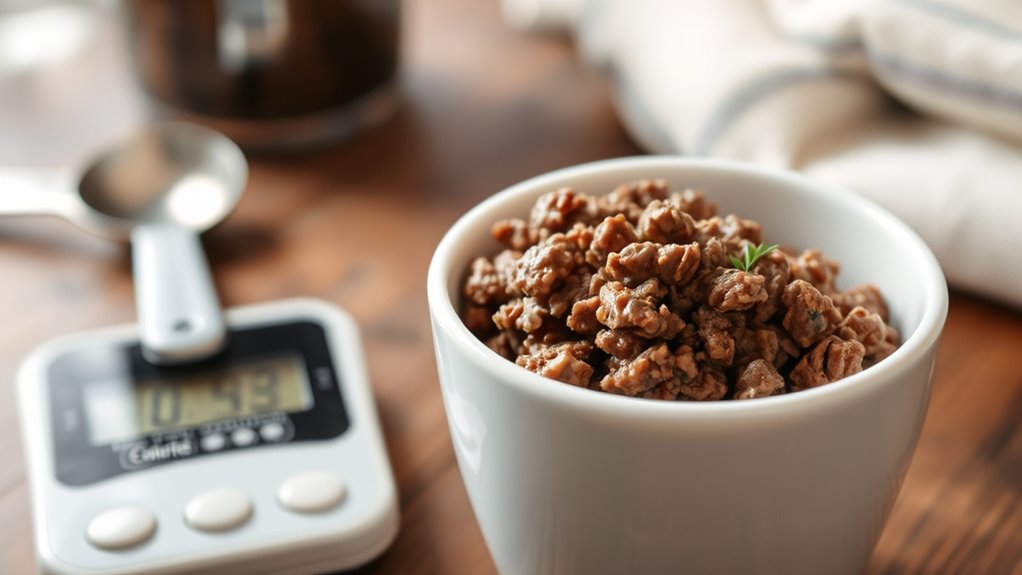
To calculate calories in a cup of cooked ground beef, first weigh it since a cup typically weighs about 5 ounces.
Knowing how many calories are in a cup of cooked ground beef is essential for accurate dietary tracking.
Then, check the beef’s fat content because leaner beef has fewer calories—85% lean burns around 290 calories per cup, while 93% lean drops to about 210.
Multiply the weight by calories per ounce based on fat ratio for accuracy.
Keep in mind, cooking method and added fats can change calories.
There’s more to know for precise tracking.
Calories in a Cup of Cooked Ground Beef
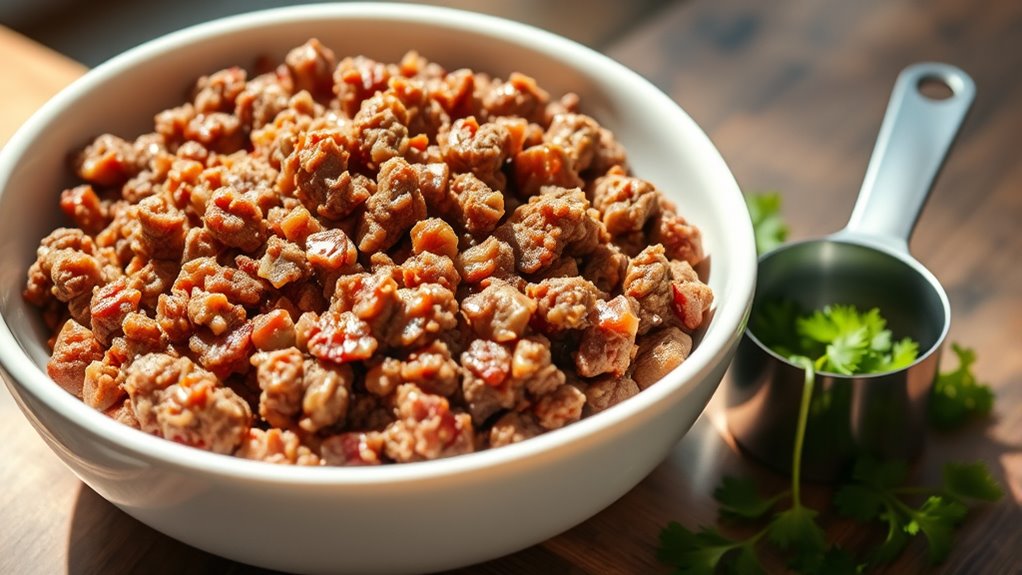
While the exact calorie count can vary, one cup of cooked ground beef generally contains between 250 and 300 calories, depending largely on its fat content. If you choose leaner ground beef, like 93% lean, you’ll find the calories drop to around 170 to 200 per cup.
The fat percentage in the raw meat and how you cook it both influence the calorie total. For example, draining off excess fat after cooking can markedly reduce calories in your portion.
Keep in mind, the calorie content isn’t fixed—it changes with the type of ground beef you pick and your cooking method. Knowing these details helps you manage your calorie intake more accurately when enjoying ground beef in your meals.
Measure Cooked Ground Beef Accurately
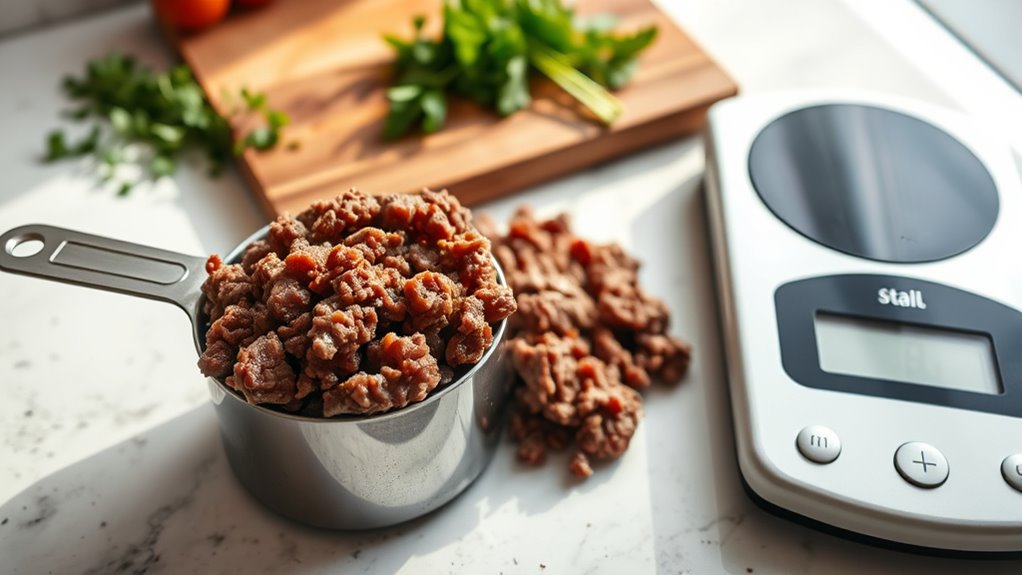
Knowing the calorie range in cooked ground beef is helpful, but to track your intake accurately, you need to measure your portion precisely. The key is to measure the weight of your cooked beef every time, since cooking reduces water content and changes weight.
Here’s how to do it right:
- Use a kitchen scale to weigh your cooked ground beef in grams or ounces for exact measurements.
- Remember that 1 cup of cooked ground beef typically weighs around 140 grams (5 ounces), so use this as a reference.
- Record the weight consistently after cooking to ensure your calorie calculations remain accurate.
Calories in Different Ground Beef Fat Ratios
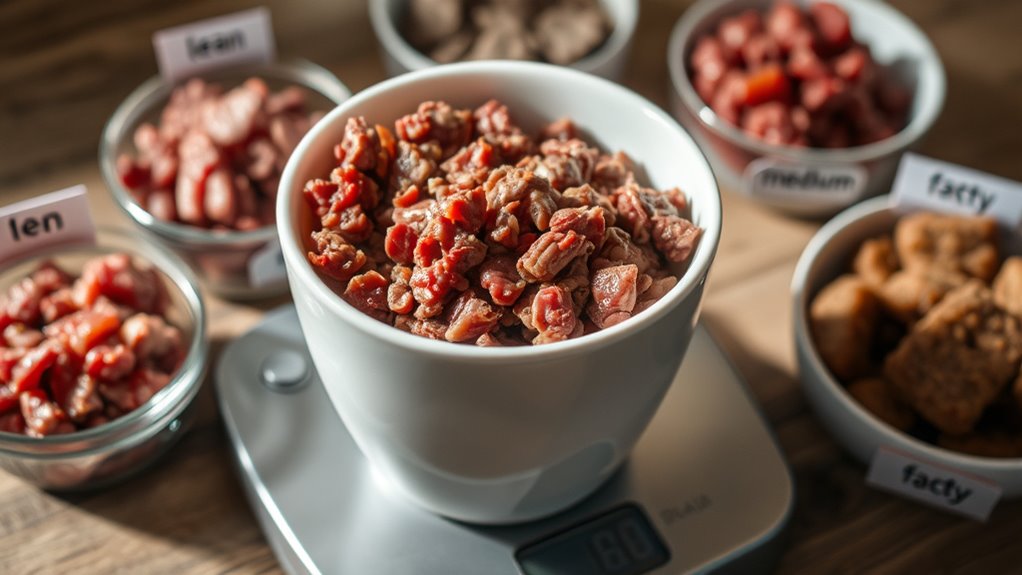
Because the fat content directly affects calorie levels, you should consider the lean-to-fat ratio when calculating calories in ground beef. Different fat ratios mean different calorie counts per cup of cooked ground beef. For example, 80% lean ground beef packs more calories than 93% lean due to higher fat content.
Here’s a quick reference to help you estimate the calories based on fat ratio:
| Ground Beef Fat Ratio | Calories per Cup (136g) |
|---|---|
| 80% lean | 340 |
| 85% lean | ~290 |
| 93% lean | 210 |
Knowing these values helps you better manage your calorie intake when cooking or meal prepping with ground beef.
Why Weighing Beef Beats Using Volume
You’ll get more accurate calorie counts by weighing your ground beef instead of measuring by volume since weight reflects the actual amount of meat. Cooking causes beef to shrink by about 25%, so volume can mislead you about how much you’re really eating.
Using a scale eliminates guesswork and keeps your portions consistent for better nutrition tracking.
Weight vs Volume Accuracy
Although measuring ground beef by volume might seem convenient, weighing it offers far greater accuracy for calculating calories. When you rely on volume, factors like how tightly the beef is packed or air gaps can skew the amount, making calorie estimates unreliable.
Weight, on the other hand, gives you a precise measurement that stays consistent regardless of preparation.
Here’s why weight beats volume for accuracy:
- Volume varies due to packing density and air pockets.
- Cooked beef density changes with cooking methods, affecting volume.
- Weight measurement eliminates guesswork, providing consistent calorie counts.
Cooking Shrinkage Impact
When ground beef cooks, it shrinks by about 25% as it loses water and fat, which changes its volume but not its calorie content. That’s why weighing beef beats using volume for calorie count. Cooking methods affect how much moisture and fat you lose, so volume measurements like cups can mislead you.
Weighing raw beef before cooking gives you a consistent base, letting you track calories precisely.
| Cooking Method | Shrinkage (%) | Effect on Volume |
|---|---|---|
| Pan-fry | ~25 | Volume decreases |
| Grill | ~30 | Volume decreases more |
| Boil | ~20 | Volume decreases less |
Using weight instead of volume accounts for shrinkage and guarantees accurate calorie tracking every time.
Consistent Measurement Benefits
Because cooking changes the volume of ground beef through water and fat loss, weighing it offers you a more accurate and consistent way to measure calories than using cups or other volume estimates. Volume measurements vary because packing density and moisture content shift during cooking, reducing measurement accuracy.
When you weigh your beef, you gain:
- Precise measurement in grams or ounces, unaffected by cooking method variations.
- Consistency by relying on raw or cooked weight rather than unpredictable volume.
- Improved accuracy for tracking macros and calories, aiding better dietary management.
Using weight eliminates guesswork and ensures your calorie calculations reflect the true nutritional content of your ground beef, making meal planning and tracking far more reliable.
Convert Cooked Beef Weight to Calories
To convert cooked ground beef weight to calories, you’ll need to measure the beef accurately and multiply by its calorie content per ounce. One cup of cooked ground beef usually weighs between 5 and 6 ounces, depending on moisture loss and cooking method. Use a kitchen scale to get the precise weight.
Once you have the weight, multiply it by 77 calories per ounce, which is the approximate calorie content for cooked ground beef. For example, if your cooked beef weighs 5 ounces, multiply 5 by 77 to get 385 calories. Keep in mind that draining fat during cooking might lower the calorie count, so adjust if necessary.
Accurate weight measurement guarantees you calculate calories correctly and maintain better control over your intake.
How Cooking Changes Ground Beef Calories
Although cooking ground beef reduces its weight by losing water and fat, it doesn’t lower the total calories you started with. When you cook ground beef, the calories stay roughly the same, but the portion shrinks. This means the calorie density per ounce increases in cooked ground beef.
Cooking ground beef reduces weight but keeps calories nearly the same, increasing calorie density per ounce.
To understand how cooking changes calories, consider:
-
- A 4-ounce raw portion usually shrinks to about 3 ounces after cooking but contains nearly the same calories.
- Draining fat during cooking can lower the final calorie count.
- Cooking methods like grilling or baking affect how much fat remains, altering calories slightly.
Adjust Ground Beef Calories by Lean-to-Fat Ratio
When you adjust ground beef calories, the lean-to-fat ratio plays a crucial role in determining the final calorie count. Each ratio affects how many calories you consume per ounce. For example, 80% lean beef has more fat and calories than 93% lean.
To calculate accurately, multiply the cooked weight by the calorie value per ounce specific to the lean-to-fat ratio.
| Lean-to-Fat Ratio | Calories per 3 oz Cooked | Calories per Ounce Cooked |
|---|---|---|
| 80% Lean | 215 | 71 |
| 85% Lean | ~190 | ~63 |
| 93% Lean | 170 | 57 |
Use this table to adjust calories precisely based on your ground beef’s lean-to-fat ratio.
Calculate Calories in Mixed Ground Beef Recipes
If your recipe combines different types of ground beef or includes other ingredients, you’ll need to calculate calories based on the cooked weight of each component. Start by weighing the cooked ground beef varieties separately since fat content affects calorie density.
Then, use nutrition labels or reliable databases to find calories per ounce for each type. Finally, adjust for any non-beef ingredients included in the recipe.
Follow these steps:
- Determine the cooked weight of each ground beef type.
- Multiply each weight by its specific calories per ounce.
- Add calories from other ingredients based on their nutrition information.
This method guarantees accurate calorie totals, reflecting the nutrition of your mixed ground beef recipe.
Common Calorie Counting Mistakes With Cooked Beef
You might be using raw weight to estimate calories, but cooking causes water loss that changes the beef’s weight and calorie density.
Without measuring your cooked portions, you could be eating more or less than you think. Getting accurate portion sizes after cooking is key to tracking calories correctly.
Raw Vs Cooked Weight
Although cooking ground beef reduces its weight by about 25% due to water and fat loss, many people mistakenly calculate calories based on the cooked weight without adjusting for this change. To get accurate calorie counts, focus on the raw weight rather than the cooked weight. Here’s why:
- Raw weight reflects the true amount of beef before water and fat evaporate.
- Cooked weight fluctuates depending on cooking time and method, making it unreliable.
- Calories per ounce stay consistent in raw beef, so measuring raw weight ensures accuracy.
If you use cooked weight, you must apply conversion factors to avoid underestimating or overestimating calories. Consistently tracking either raw weight or cooked weight—with proper adjustments—helps you maintain precise calorie counts.
Portion Size Accuracy
Accurately measuring portion sizes plays a big role in calculating calories for cooked ground beef. Many people underestimate calories because cooking causes water loss, concentrating calories per volume. If you measure the portion size after cooking but calculate calories based on raw weight, you’ll likely overestimate your intake.
To avoid this, either weigh the beef raw and apply a conversion factor—like multiplying raw weight by 0.75 to estimate cooked weight—or use nutritional info specific to cooked beef. Also, don’t forget added fats or cooking methods like frying with oil, which increase calories markedly.
Relying solely on volume measures, such as cups, without considering density or cooking loss, often leads to inaccurate calorie counts. Being precise with portion size ensures your calorie tracking stays accurate.
Easy Tips to Track Ground Beef Calories Every Time
When tracking ground beef calories, weighing the meat before cooking gives you the most precise starting point since cooking reduces its weight by releasing water. To accurately monitor calories per serving, follow these easy tips:
- Always check the fat percentage on the label—higher fat means more calories per ounce.
- Use USDA data or nutrition labels, which estimate about 74 calories per 3-ounce cooked ground beef serving.
- After cooking, weigh the beef again or apply conversion formulas like multiplying raw weight by 0.75 to get cooked weight.
Frequently Asked Questions
How Many Calories Are in 1 Cup of Cooked Ground Beef?
You’ll find about 220 calories in one cup of cooked ground beef at 85% lean.
If you choose leaner options or drain fat after cooking, you can reduce the calories to around 170 or less.
How Much Is 1 Cup of Cooked Ground Beef in Ounces?
You want precision, you want simplicity—you get 1 cup of cooked ground beef weighing about 5 ounces.
Keep in mind, it can vary between 4 to 6 ounces depending on cooking and moisture, but 5 is standard.
How Many Calories Are in Half a Cup of 93% Lean Ground Beef?
Half a cup of 93% lean cooked ground beef has about 180 calories. Since it weighs roughly 4 ounces, you can count on approximately 45 calories per ounce to track your intake accurately.
Do You Calculate Calories Before or After Cooking?
You calculate calories before cooking because ground beef loses about 25% weight when cooked.
Conclusion
Think of calculating calories in cooked ground beef like tuning a musical instrument—you want every note just right. By measuring accurately, considering fat ratios, and weighing instead of guessing, you strike the perfect balance.
This harmony helps you take control of your nutrition, turning every meal into a mindful moment. So, keep these tips close, and let your calorie counting sing with precision every time you cook up ground beef.
Accurate calorie calculation in cooked ground beef is key to managing your diet effectively. Remember to factor in cooking methods and fat content for the best results.