
What Is a Lean Cut of Beef and How to Choose It
A lean cut of beef is a healthier choice, known for its lower fat content—usually under 10g per serving—and high protein levels. Understanding what makes a cut lean can help you make better dietary decisions.
Common lean cuts include sirloin, round, and tenderloin, which have minimal marbling and less visible fat.
When selecting beef, opt for USDA Choice or Select grades, as they generally contain less fat. Look for labels marked “lean” or “extra-lean” to ensure you’re choosing the healthiest option.
Before cooking, trim any excess fat to reduce fat intake further.
Use healthier cooking methods such as grilling or broiling to keep the beef lean and flavorful. Keep exploring to discover how to pick, prepare, and enjoy lean beef best.
What Is Lean Beef Nutritionally?
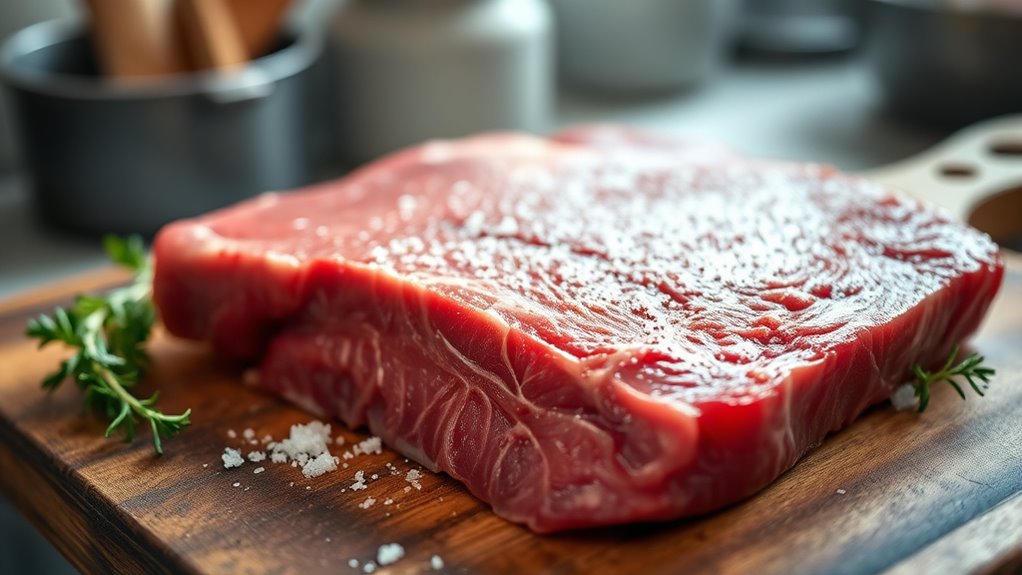
What makes lean beef a smart choice nutritionally? When you choose lean beef, you’re opting for meat with low fat content—under 10 grams of total fat and 4.5 grams of saturated fat per 3.5-ounce serving. It also contains less than 95 milligrams of cholesterol, making it heart-friendly.
Lean cuts provide a rich source of high-quality protein, offering about 22 to 25 grams per serving to support your muscle health. Plus, lean beef delivers essential nutrients like iron, zinc, B vitamins, and omega-3 fatty acids.
Nutritional standards, regulated by agencies like the USDA, guarantee that lean beef consistently meets these criteria. So, by selecting lean beef, you’re getting nutritious, protein-packed meat with balanced fat and cholesterol levels to fit a healthy diet.
Which Beef Cuts Are Naturally Lean?
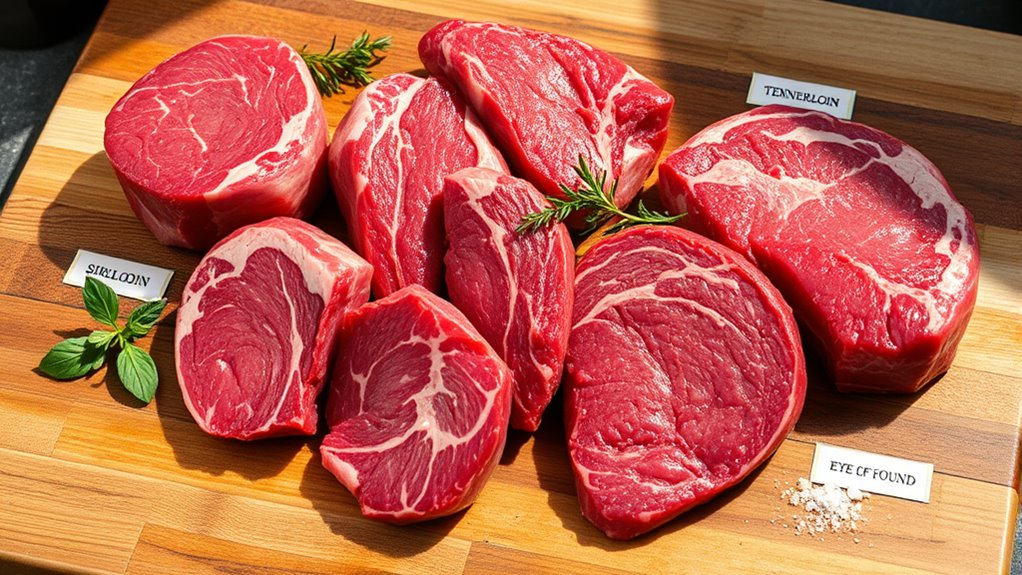
When choosing lean beef, knowing which cuts naturally contain less fat can help you make smarter choices. Lean beef cuts come from muscles that do less work, like the round, sirloin, and tenderloin. These lean cuts have minimal marbling, meaning less intramuscular fat, so you get more protein with less fat.
Cuts such as eye of round, top sirloin, and sirloin tip are naturally low in fat and calories, making them perfect for healthier meals.
| Lean Cut | Muscle Location |
|---|---|
| Eye of Round | Round (less work) |
| Top Sirloin | Sirloin |
| Sirloin Tip | Sirloin |
Picking these lean cuts ensures flavorful beef with less fat and high protein content.
How Beef Grades Affect Lean Cuts
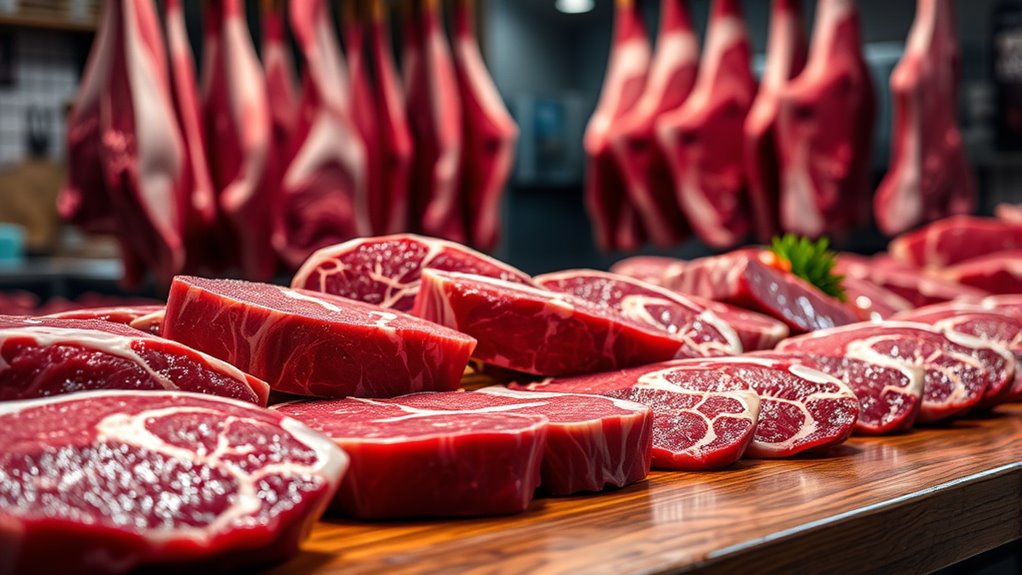
Although USDA beef grades like Prime, Choice, and Select focus on marbling and overall quality, they don’t directly indicate how lean a cut is. USDA grades primarily assess marbling, which relates to intramuscular fat, rather than total fat content. Choice and Select grades tend to have less marbling and are generally leaner options compared to Prime, but leanness can vary within each grade.
You’ll find lean cuts across all USDA grades, so relying solely on these labels won’t guarantee low fat content. Instead, use the grades as a guide: selecting Choice or Select increases your chances of choosing leaner beef. To be sure, look beyond USDA grades and consider specific fat content or nutrient information when selecting lean cuts.
Identifying Lean Beef by Appearance and Labels
Since selecting lean beef can be tricky, you should pay close attention to both appearance and labels to make the best choice. Look for labels that say “lean” or “extra-lean,” which meet government standards for low fat content. Checking the USDA grade helps too—Choice and Select grades usually have less marbling than Prime, indicating leaner cuts.
Selecting lean beef requires attention to labels and USDA grades for low fat, like Choice or Select.
Visually, lean beef is bright red with minimal white fat streaks. Cuts like sirloin, round, and flank are good examples.
- Bright red color with little to no marbling
- Labels stating “lean” or “extra-lean”
- USDA Choice or Select grades on the tag
Also, review the nutrition label for fat and cholesterol levels to confirm the beef’s leanness.
Tips for Buying Lean Beef at the Store or Butcher
Choosing lean beef doesn’t stop at recognizing labels and appearance—you’ll want to apply that knowledge when shopping to make the healthiest choice. Look for beef grades like “Choice” or “Select,” which usually have lower fat compared to “Prime.” When you choose lean cuts, focus on those with the least visible marbling and fat, such as sirloin, tenderloin, or round steaks.
For ground beef, opt for 90% or 95% lean meats to reduce fat and calorie intake. Don’t hesitate to ask your butcher for leaner cuts or details about fat and cholesterol content. Checking nutrition labels or requesting information on fat and cholesterol levels helps you pick cuts with lower fat, ensuring you bring home the healthiest options available.
Why Lean Beef Is Better for Your Health
You’ll find that choosing lean beef gives you high-quality protein with less saturated fat, helping support heart health and weight management. Lean cuts also pack essential nutrients like iron, zinc, and B vitamins without extra calories. Making lean beef a regular part of your meals can improve your overall nutrient intake and reduce health risks.
Health Benefits Of Lean
A lean cut of beef offers numerous health advantages by containing less fat and cholesterol than regular cuts. Choosing lean beef means you’re opting for a heart-healthier option that supports your overall well-being. Its high-quality protein helps you build and repair muscles while promoting satiety, which can aid in weight management.
Plus, lean beef supplies essential nutrients your body needs to stay energized and healthy.
Here’s what lean beef brings to your plate:
- Lower cholesterol levels, reducing cardiovascular risk
- Rich protein content for muscle strength and repair
- Crucial nutrients like iron and B vitamins for immune support
Nutrient Profile Highlights
Although many cuts of beef offer valuable nutrients, lean beef stands out by delivering essential vitamins and minerals with less fat and fewer calories. When you choose lean beef, you get a nutrient profile rich in high-quality protein, iron, zinc, and B vitamins—all pivotal for muscle maintenance and overall health.
Lean beef contains less than 4.5 grams of saturated fat per serving, which helps you manage your saturated fat intake and supports heart health by improving cholesterol levels. Besides protein, the vitamins and minerals found in lean beef contribute to energy production and immune function.
How to Prepare Lean Cuts for Healthy, Tender Meals
Start by trimming any visible fat from your lean beef to keep your meal healthier. Choose cooking methods like grilling or broiling to lock in flavor without adding extra fat.
These simple steps help you enjoy tender, nutritious beef every time.
Trimming Visible Fat
How can trimming visible fat from beef transform your meals into healthier, more tender dishes? When you trim beef carefully, you reduce fat content by up to 30%, making lean cuts even better for your health.
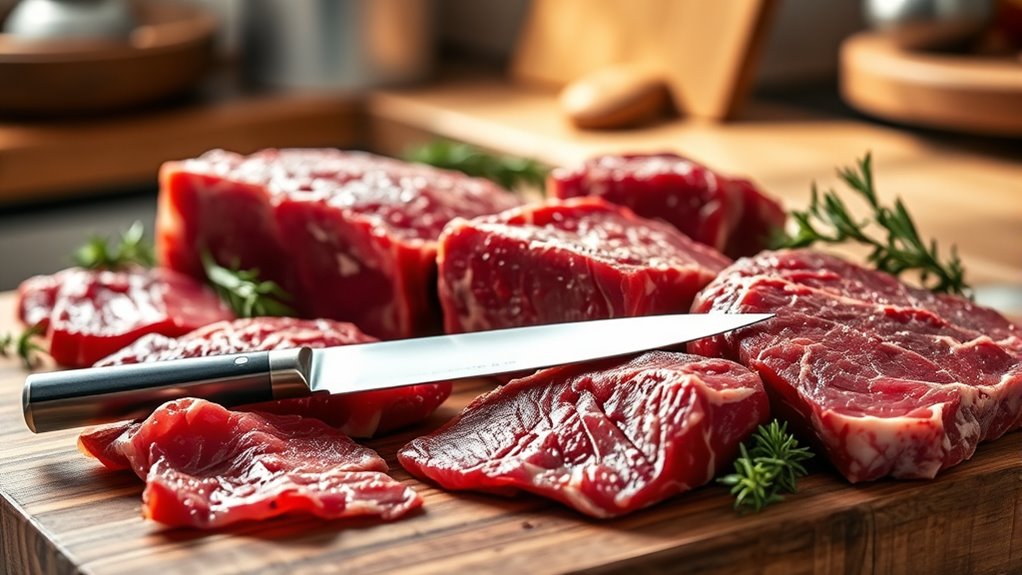
Use a sharp knife during cooking preparation to cut away solid fat and marbling before cooking. This simple step helps reduce fat while enhancing tenderness.
Here’s what you should focus on when trimming visible fat:
- Removing thick fat layers and visible streaks before cooking
- Rinsing cooked ground beef in hot water to wash away extra fat
- Skimming hardened fat from pan drippings after resting meat
Cooking Methods Tips
Trimming visible fat lays the groundwork for healthier beef dishes, but choosing the right cooking methods really brings out the best in lean cuts. To keep your meals healthy and tender, opt for grilling, broiling, roasting, or stir-frying—these healthy cooking methods preserve flavor without adding extra fat.
Before cooking, trim visible fat and drain any excess fat afterward to reduce fat content further. Marinate your lean cuts with acidic ingredients like vinegar or citrus; this helps tenderize the meat and boosts flavor.
Avoid microwave cooking, as it can toughen lean cuts. For tougher cuts, slow-cooking is your best bet to tenderize and maintain juiciness. Finally, slice cooked beef across the grain to make it easier to chew and more enjoyable.
Best Cooking Methods for Lean Beef Cuts
When you want to bring out the best in lean beef cuts, choosing the right cooking method is essential. Tender cuts like filet mignon and top sirloin shine with grilling, broiling, or roasting, which preserve their natural flavor and juiciness.
Selecting the right cooking method lets tender lean beef cuts like filet mignon and top sirloin truly shine.
For tougher cuts such as shank or round, slow-cooking and braising break down connective tissues, making them tender and delicious. Thin slices like flank or skirt steak do best with quick, high-heat techniques like stir-frying to lock in moisture.
- Sizzle your top sirloin over an open flame using grilling or broiling
- Let shank simmer slowly in a braise until fork-tender
- Flash-cook thin flank steak strips in a hot skillet with stir-frying
These methods highlight lean beef’s best qualities without adding unnecessary fat.

How to Add Lean Beef to a Balanced Diet
Although lean beef offers valuable nutrients, you should enjoy it in moderation and prepare it wisely to keep your diet balanced. Start by choosing lean cuts of beef and trimming visible fat before cooking. Use healthy cooking methods like grilling, baking, or stir-frying to preserve nutrition and avoid added fats.
When cooking ground beef, drain and rinse it to remove excess fat and cholesterol. Pay attention to portion control, aiming for about 3 ounces per serving to fit lean beef into your balanced diet. Also, balance your meals by including other protein sources such as fish, poultry, beans, and nuts.
When to Limit Lean Beef Intake
Because eating too much lean beef can raise your intake of saturated fats and cholesterol, you should limit how often you include it in your meals. Consuming lean beef in moderation helps lower your risk of heart disease and supports overall health.
Limit lean beef to moderate amounts to reduce saturated fat intake and support heart health.
If you have specific health conditions like high cholesterol or heart disease, it’s especially important to restrict red meat consumption. Also, if you have dietary restrictions or are pregnant, consult a healthcare professional before adding lean beef regularly.
Consider limiting lean beef intake when:
- Preparing meals rich in other protein sources like fish or legumes
- Managing health conditions sensitive to saturated fats and cholesterol
- Following dietary restrictions that recommend reduced red meat consumption
Moderation is key for maintaining a heart-healthy diet.
Frequently Asked Questions
What’s the Best Lean Cut of Beef?
The best lean cut of beef is top sirloin, tenderloin, or eye of round. You’ll want to choose cuts with less marbling and visible fat.
Always check for USDA Choice or Select grades for leaner options.
How to Choose Lean Beef?
You’ll want beef labeled “Choice” or “Select,” as it’s leaner than “Prime.” Look for cuts with less marbling, like sirloin, or ground beef with 90%+ lean content to keep fat low and nutrition high.
Is 90/10 or 80/20 Beef Better?
You’ll want 90/10 beef if you’re aiming for fewer calories and less fat, perfect for leaner dishes.
Choose 80/20 when you want juiciness and richer flavor, ideal for moist, flavorful recipes.
What Is the Best Cut of Beef for a Lean Roast?
You might think lean roasts lack flavor, but top sirloin offers great taste with low fat. Eye of round is even leaner, while bottom round saves money.
Choose “Choice” or “Select” for the best results.
Conclusion
Choosing lean cuts of beef is like picking the brightest stars in the meat aisle—nutritious, flavorful, and ready to shine on your plate. By knowing which cuts are naturally lean and how to spot them, you can savor healthy meals without sacrificing taste.
With the right cooking methods and smart shopping tips, you’ll turn lean beef into a delicious, balanced part of your diet. Understanding what is a lean cut of beef helps you make informed choices for healthier eating.
So go ahead—make lean beef your kitchen’s shining star by choosing lean cuts of beef that support your wellness goals.