
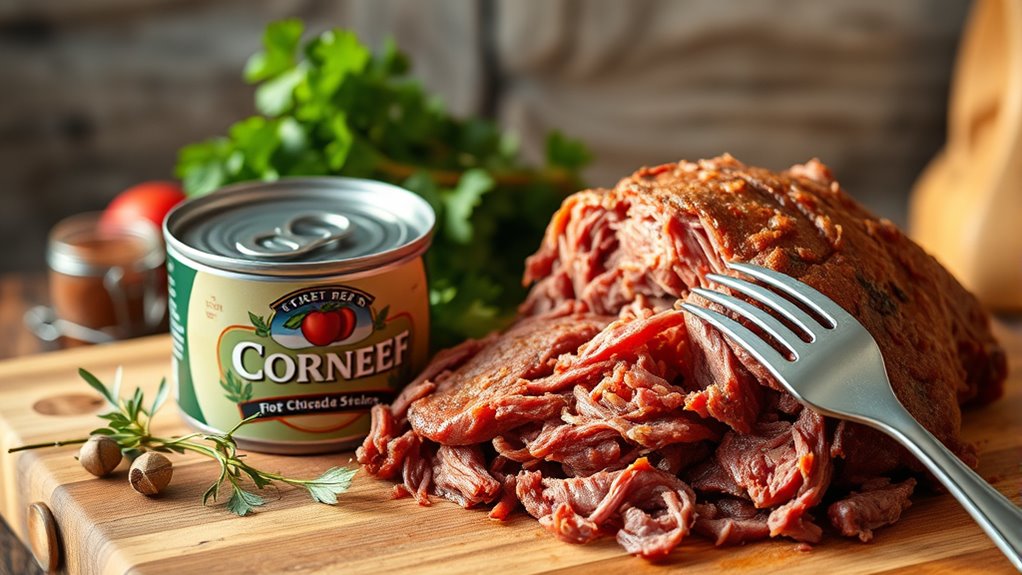
What Is Canned Corned Beef Made Of?
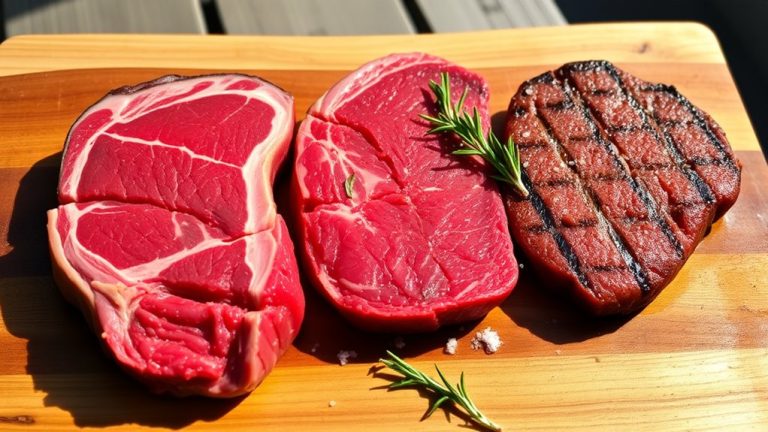
If you’re wondering what canned corned beef is made of, it’s primarily tough cuts of beef like brisket that have been cured in a brine with salt, spices, and preservatives such as sodium nitrite.
This curing keeps it safe, flavorful, and shelf-stable while giving it its distinctive taste and color.
It’s fully cooked and ready to eat straight from the can.
Keep exploring to understand how the curing process, additives, and production affect its flavor, texture, and nutrition.
What Is Canned Corned Beef Made Of And How Is It Prepared?
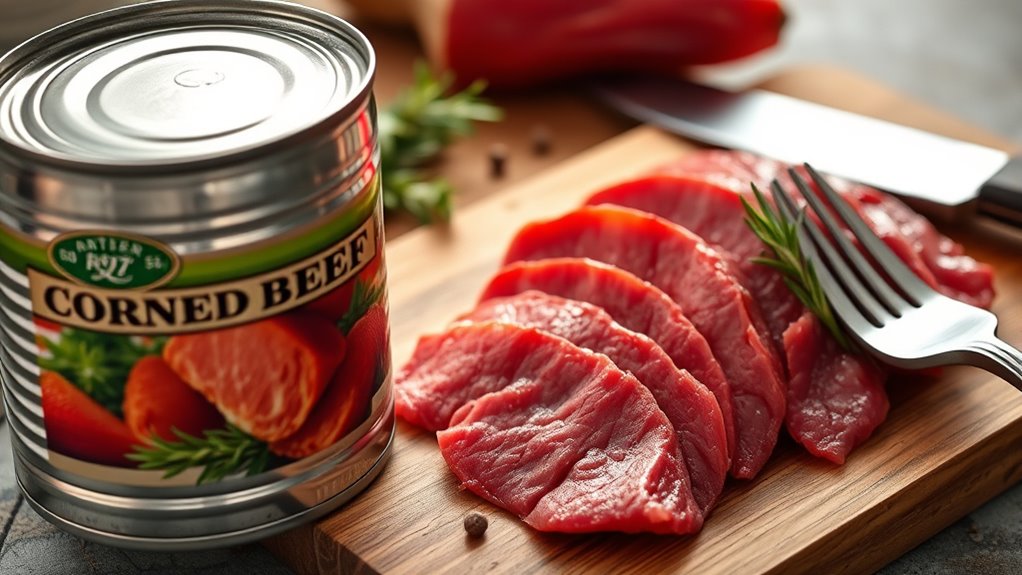
Canned corned beef is made from tougher cuts of beef, like brisket, which are cured with salt, spices, and preservatives to develop flavor and guarantee preservation. You’ll find that the curing process involves soaking the beef in a brine filled with salt, sugar, saltpeter, and an array of spices.
This brine not only preserves the meat but also imparts the distinctive salty, seasoned flavor and the characteristic pink color you expect. After curing, the beef is cooked and sealed within cans through a high-temperature sterilization process, ensuring safety and a long shelf life.
Thanks to this careful preparation, canned corned beef arrives fully cooked and ready to eat straight from the can or used in various dishes, making it a convenient and flavorful choice.
How Is Canned Corned Beef Cured And Preserved?
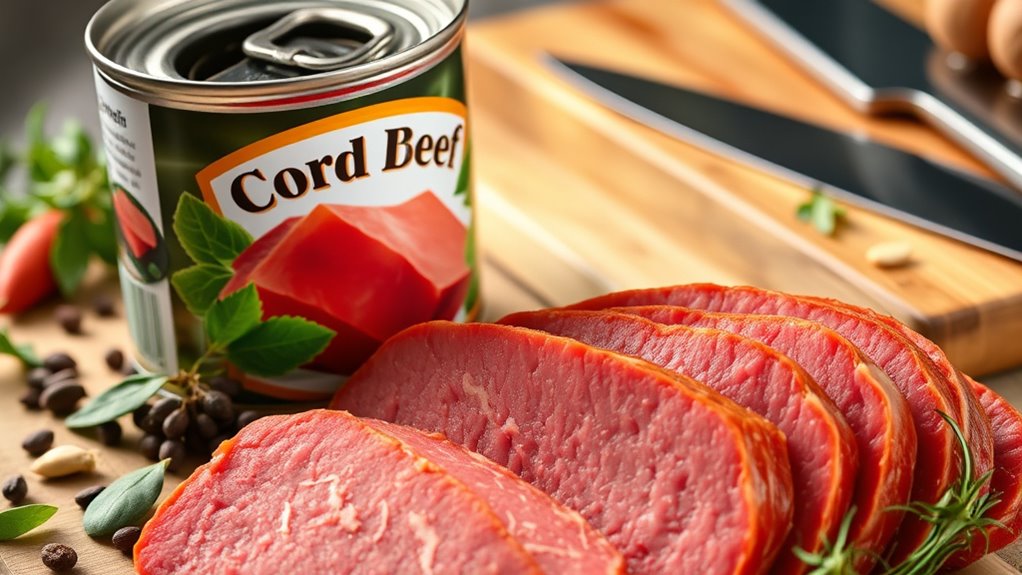
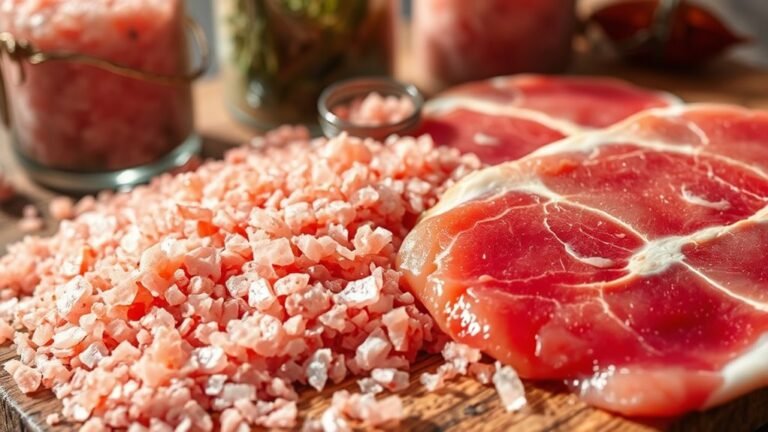
The curing and preservation of corned beef start with soaking the meat in a brine packed with salt, sugar, spices, and preservatives like sodium nitrite. This brining process lasts 5 to 7 days, allowing the flavors to infuse deeply. Sodium nitrite plays a key role, giving corned beef its pink hue and preventing harmful bacteria.
After curing, the beef undergoes sterilization by cooking in sealed cans under high pressure and temperature. This step ensures safety and extends shelf life. Here’s what happens during curing and preservation:
- Meat soaks in a flavorful brine with salt and spices
- Sodium nitrite inhibits bacterial growth
- Brining softens and seasons the beef thoroughly
- Sterilization cooks and seals the product safely
- Pressure heating preserves freshness for long storage
You can trust this process to deliver safe, tasty canned corned beef.
What Role Does Saltpeter Play In Canned Corned Beef?
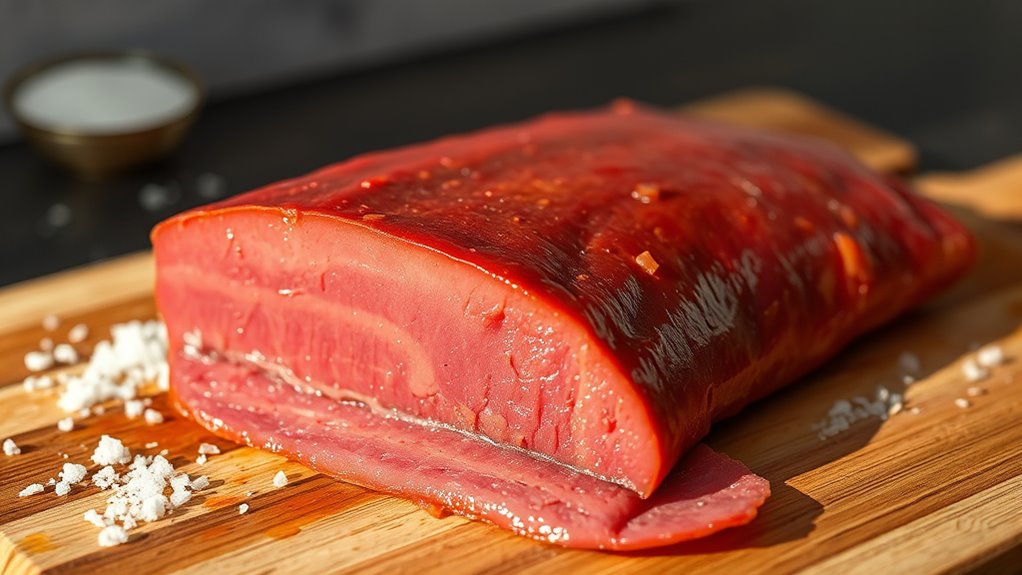
Although you might not see it listed explicitly, saltpeter plays a crucial role in preserving corned beef by preventing bacterial growth and enhancing its flavor and color. As a curing agent, saltpeter acts as a preservative that controls microbial activity, helping extend the shelf life of canned corned beef.
It contains nitrates, which react with meat proteins to promote color development, giving corned beef its characteristic pink or red hue. Besides preservation, saltpeter contributes to the flavor, imparting a slightly salty, savory taste typical of cured meats.
While many producers now reduce or eliminate saltpeter due to health concerns linked to nitrates and nitrites, it historically served as an effective method to maintain safety, appearance, and flavor in canned corned beef.
How Do Curing Methods Affect Flavor And Texture?
Saltpeter not only preserves corned beef but also influences its flavor and color, which ties directly into how curing methods shape the final product. When you opt for wet curing and dry curing, you’re deciding how the meat’s flavor and texture develop.
Saltpeter preserves corned beef while shaping its unique flavor and vibrant color through curing methods.
Wet curing soaks the meat in a brine of salt, sugar, and spices, resulting in tender meat with a balanced, savory flavor. Dry curing applies salt and spices directly, creating a firmer texture and a more intense salty, spiced taste.
Here’s what to consider:
- Wet curing produces moist, easily sliced meat
- Dry curing yields denser, fibrous texture
- Longer dry curing boosts salt and spice intensity
- Saltpeter adds a distinctive cured flavor and deep red color
- The balance of salt and spices defines the final taste profile
How Does Canned Corned Beef Differ From Fresh Or Deli Corned Beef?
When you compare canned corned beef to fresh or deli versions, you’ll notice differences in texture and consistency—the canned kind is softer and mushier. Preparation also varies since canned corned beef is pre-cooked and ready to eat, while fresh or deli options require slicing and serving.
Plus, the flavor and saltiness of canned corned beef tend to be more uniform and salty due to preservatives, unlike the richer taste of freshly prepared meat.
Texture and Consistency
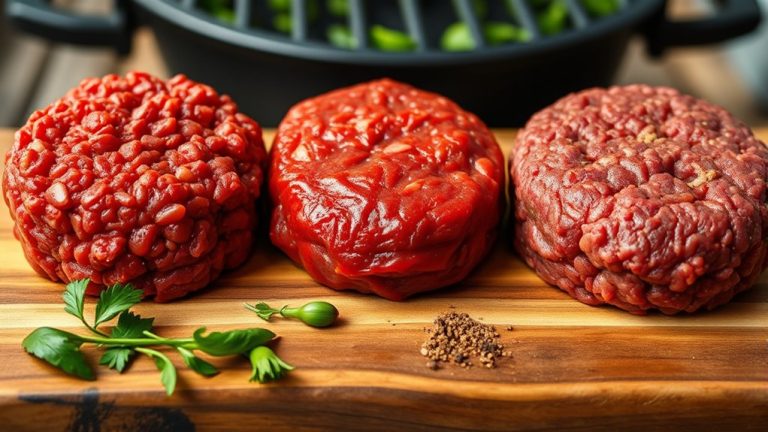
Because canned corned beef undergoes high-temperature sterilization, you’ll notice its texture differs considerably from fresh or deli versions. The process breaks down connective tissues, resulting in a softer, more homogenized product. Unlike fresh corned beef’s firm, sliceable texture, canned corned beef is finely shredded or minced, giving it a mushiness that’s more processed.
Here’s what sets canned corned beef’s texture and consistency apart:
- Soft, mushy feel due to cooking and canning
- Uniform, spreadable paste from finely shredded meat
- Looser consistency from breakdown of connective tissues
- Less firm and elastic than fresh or deli slices
- More homogenized and processed, lacking chewy bite
Understanding these differences helps you set expectations when using canned corned beef in recipes.
Preparation and Cooking
Understanding the softer, more uniform texture of canned corned beef helps clarify how its preparation and cooking differ from fresh or deli versions. During the canning process, the beef undergoes curing, cooking, and sterilization inside sealed cans, making it fully cooked and ready to eat straight from the container.
This sterilization step guarantees preservation without the need for further cooking, unlike fresh or deli corned beef, which requires slow braising or boiling to develop tenderness and flavor. The canning process creates a product that’s sterilized for safety and has a consistent texture, whereas fresh or deli corned beef is typically sliced from cured meat and demands additional preparation.
Flavor and Saltiness
Although you might expect canned corned beef to taste similar to fresh or deli versions, its flavor and saltiness stand out distinctly due to the curing and sterilization processes. You’ll notice the intense saltiness caused by the curing process with salt and nitrates, which is stronger than what you get in fresh corned beef.
The high-temperature sterilization during canning alters the flavor profile, giving it a richer, more pronounced saltiness. Unlike fresh or deli options, canned corned beef has a uniform, processed flavor dominated by curing spices and preservatives.
- Intense saltiness from salt and nitrates
- Rich flavor profile shaped by high-temperature sterilization
- Uniform, processed flavor unlike adjustable fresh options
- Presence of curing spices enhancing savory notes
- Fixed saltiness due to preservatives and curing process
Where Is Canned Corned Beef Produced Today?
You might be surprised to learn that over 80% of canned corned beef comes from Brazil today, making it the top producer worldwide. While Uruguay’s Fray Bentos once dominated the market, production has largely shifted to South America and even Scotland for certain brands.
Let’s explore how these major production centers shape what ends up on your table.
Major Production Countries
While canned corned beef is produced in various countries, Brazil leads the market, supplying about 80% of the world’s demand as of 2011. You’ll find Brazil factories dominating the global supply thanks to its robust meat-processing industry.
South America plays a key role, with Uruguay historically significant though no longer a major player. Other production countries contribute to regional markets, ensuring canned corned beef remains widely available.
Consider these facts about major production countries:
- Brazil is the largest global producer, focusing on large-scale manufacturing.
- Uruguay, especially Fray Bentos, had early prominence in canned corned beef.
- The United States and Argentina serve local and regional demands.
- Meat-processing hubs in Asia and the Middle East also produce canned corned beef.
- South America remains central to global canned corned beef production.
Historical Production Centers
Where does canned corned beef come from today, and how has its production shifted over time? Historically, Fray Bentos in Uruguay was a major production center, famous for its high-quality canned meats and corned beef factories until the late 1960s.
Since then, production has largely moved within South America, with Brazil now dominating the market. Brazil accounts for about 80% of the world’s canned corned beef production, supplying major brands like Hormel and Goya thanks to its cost-effective large-scale manufacturing.
While other countries like Argentina, Australia, and some Asian nations contribute, Brazil remains the hub for modern canned corned beef manufacturing. This shift highlights how historical manufacturing centers evolved, focusing production where resources and infrastructure best support the global demand for canned meats today.
What Preservatives And Additives Are Used In Canned Corned Beef?
Because canned corned beef needs to stay safe and flavorful, manufacturers add preservatives like sodium nitrite or potassium nitrite to prevent bacterial growth and keep its characteristic pink color. These curing agents are essential but often come with concerns due to potential compounds formed during cooking.
Besides preservatives, several additives improve taste, texture, and shelf life. You’ll typically find flavor enhancers that boost the meat’s savory profile, spices to provide distinct seasoning, and phosphates to retain moisture and improve texture.
Sodium chloride (salt) is used for preservation and flavor. Sometimes sugar or proprietary solutions are added for balanced taste. These ingredients work together to maintain quality while ensuring the product remains safe and enjoyable to eat.
What Are The Health And Nutrition Facts About Canned Corned Beef?
How does canned corned beef fit into your diet? It offers a decent protein boost, with about 13 grams per 2-ounce serving, plus 8% of your daily iron needs. However, as a processed meat, it comes with notable health risks.
The high sodium content—around 550 milligrams per serving—can raise blood pressure if you eat it often. It also contains preservatives like sodium nitrite, which help maintain color and shelf life but may contribute to the formation of potentially carcinogenic N-nitrosamines.
The fat content is relatively high, at about 8 grams per serving, adding to calorie intake. While canned corned beef provides some nutrition, you should moderate your consumption to balance benefits with these health concerns.
Frequently Asked Questions
Is Canned Corned Beef Healthy?
Canned corned beef isn’t the healthiest choice because it’s high in sodium and saturated fat. You can enjoy it occasionally, but don’t eat it too often to avoid heart and blood pressure issues.
What Exactly Is Canned Corned Beef?
Canned corned beef is a cured, cooked beef product sealed in a can for preservation. It’s tender, salty, and pink from curing salts, designed for long shelf life and convenient use in meals.
What Part of a Cow Is Corned Beef From?
You might think corned beef comes from prime cuts, but it actually uses tougher parts like brisket or round. These cuts are cured and cooked to become tender, giving canned corned beef its unique texture and flavor.
What Ingredients Are in Canned Corned Beef?
You’ll find canned corned beef made from cured beef, salt, sugar, sodium nitrite, and spices like cloves, bay leaves, and peppercorns. These ingredients preserve the meat, add flavor, and keep its distinctive pink color.
Conclusion
Now that you know what goes into canned corned beef and how it’s carefully prepared and preserved, you can appreciate the subtle art behind its flavor and texture. While it might not be the freshest cut on the block, it offers a convenient, time-tested option that’s stood the test of time.
Just remember to enjoy canned corned beef in moderation—after all, even comfort food has its little secrets when it comes to health. Understanding what canned corned beef is made of helps you make informed choices and savor this classic product responsibly.