How to Spot the Difference Between Angus Beef and Regular Beef
You can spot the difference between Angus beef and regular beef by checking for the Certified Angus Beef logo, which guarantees higher marbling, tenderness, and consistent quality. Look for USDA grades like Prime or upper Choice, as Angus often meets these standards, unlike typical beef from mixed breeds.
Be cautious of labels claiming Angus without certification. Knowing these signs helps you pick better-tasting beef every time.
There’s more to learn about cuts and cooking to get the most flavor.
Angus Beef vs. Regular Beef: What’s the Difference?
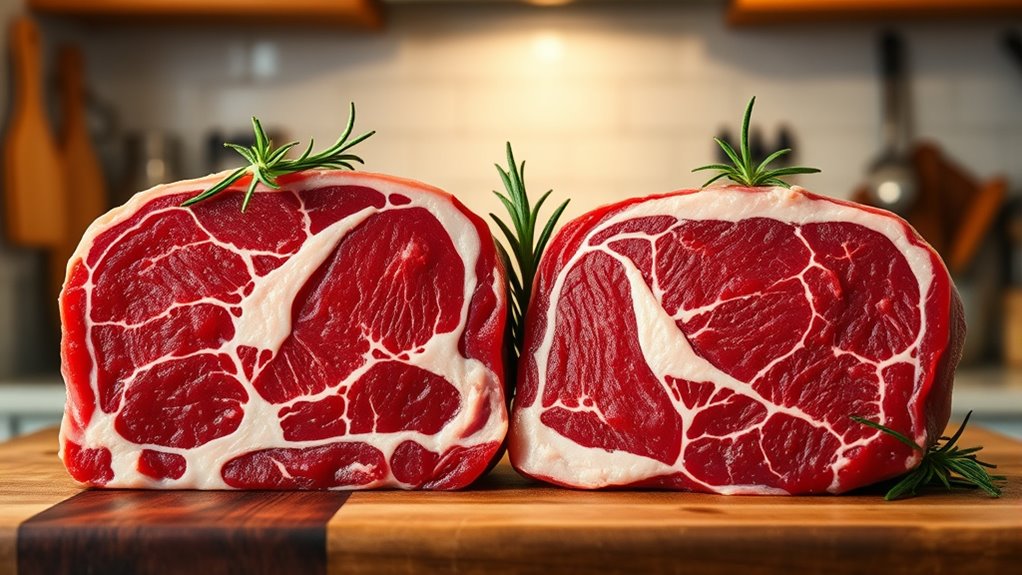
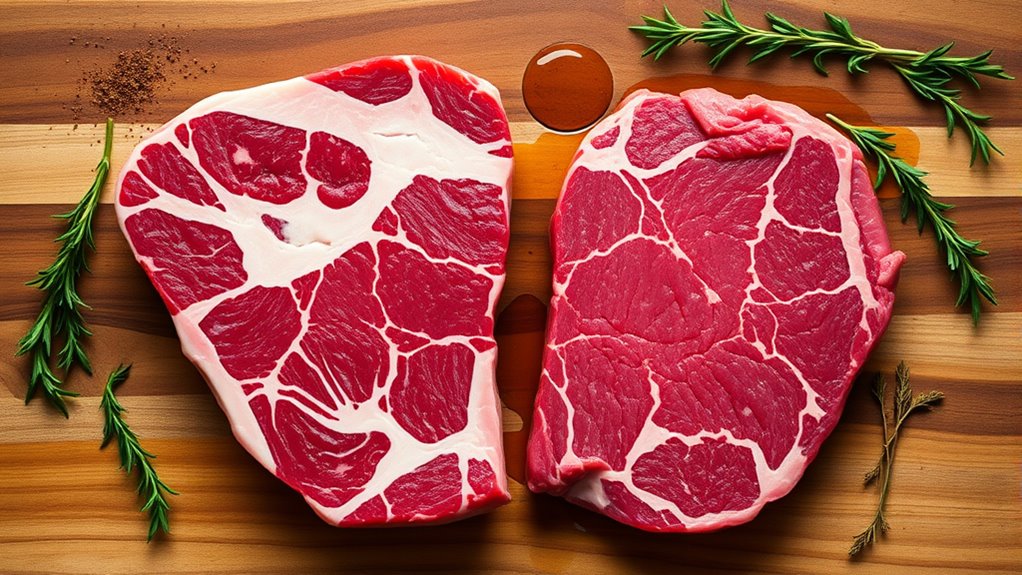
While both Angus beef and regular beef come from cattle, Angus beef stands out because it originates from the Angus breed, known for its superior marbling and consistent quality. When you buy Angus beef, look for breed identification and quality standards that set it apart from regular beef, which often comes from various breeds with less marbling.
However, the label “Angus” alone doesn’t guarantee quality. Certified Angus Beef meets strict USDA grade requirements, including specific marbling levels and tenderness criteria, distinguishing it from non-certified Angus or regular beef.
Special USDA grades and marbling levels help you spot higher-quality Angus beef, ensuring you get better flavor and texture compared to typical store-brand options.
USDA Grades: What They Mean for Angus Beef
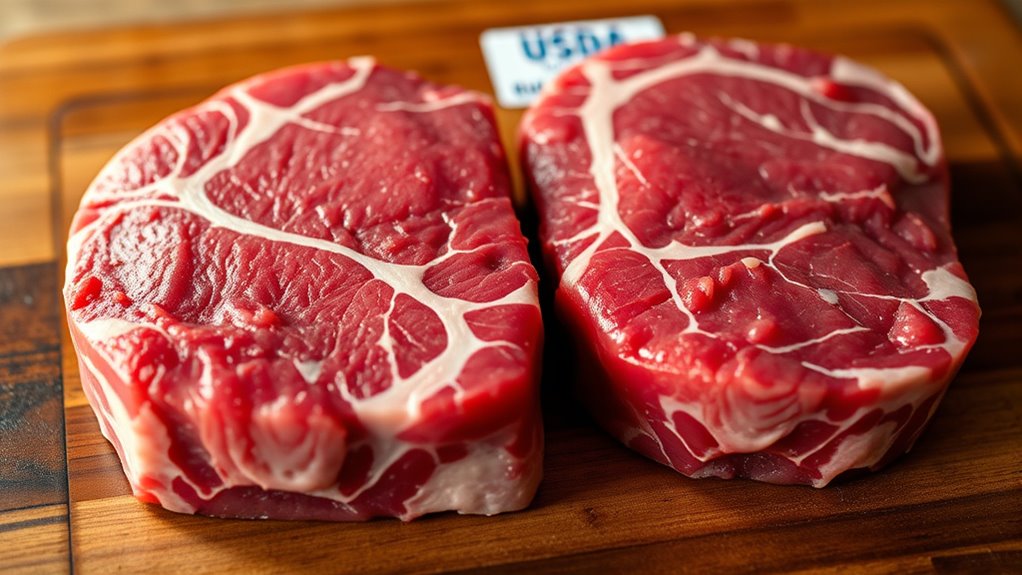
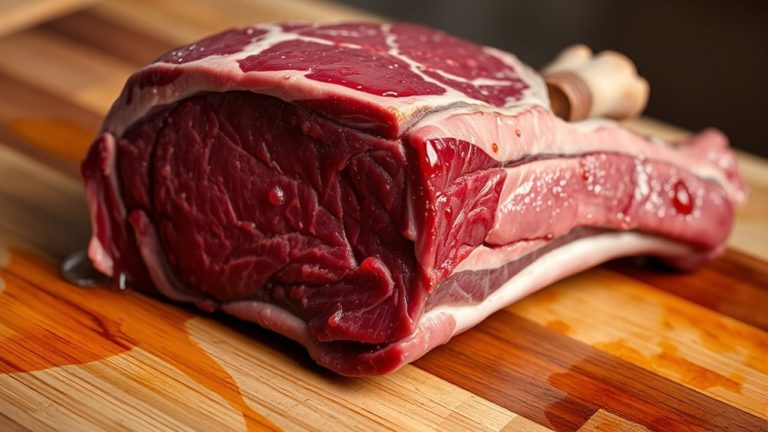
Understanding the USDA grading system can help you better evaluate the quality of Angus beef you’re buying. USDA grades—Prime, Choice, and Select—are based on marbling, tenderness, and overall beef quality, not on breed labels like Angus. While many Angus beef cuts align with higher grades like Prime or Choice due to their marbling, not all Angus beef qualifies for these top beef grades.
The USDA grading process relies on trained inspectors appraising marbling, age, and color, ensuring you get a consistent evaluation of quality. Here’s what you should know:
- Prime offers the highest marbling and tenderness
- Choice has less marbling but still good quality
- Select is leaner with less juiciness
- Angus beef often meets Choice or Prime standards
- Breed labels don’t guarantee USDA grade quality
Certified Angus Beef: Quality and Taste Standards
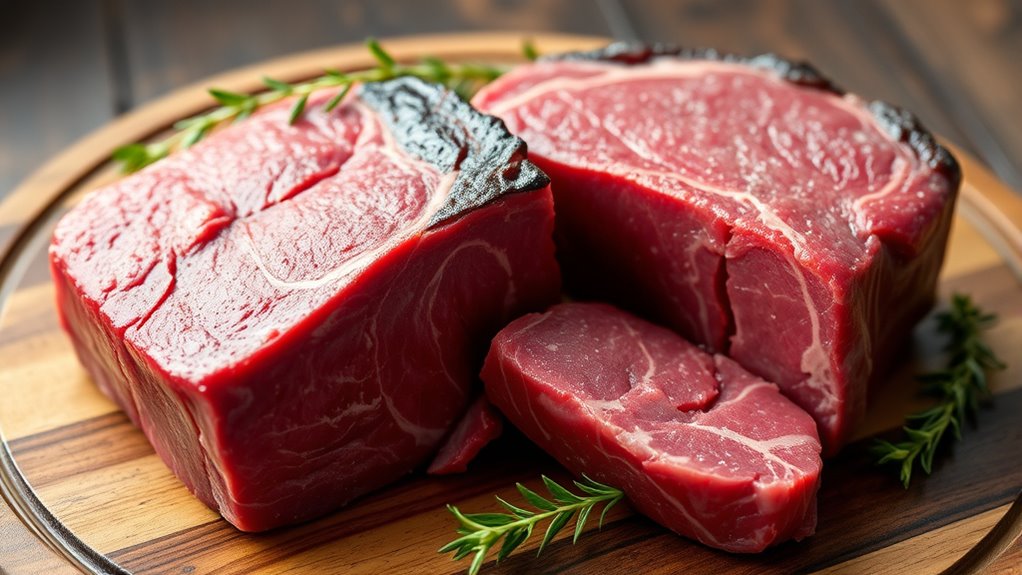
Since you want beef with exceptional flavor and tenderness, Certified Angus Beef (CAB) offers a reliable choice. CAB comes from cattle with at least 51% Angus breed genetics and meets 10 strict marbling standards and beef quality criteria. This certification guarantees the beef surpasses USDA Choice but stays within USDA Prime grades, verified through precise beef grading by USDA graders.
The CAB label assures superior marbling, which enhances tenderness and flavor you can taste in every bite. Unlike regular beef, Certified Angus Beef maintains consistent quality, making it a premium option. With CAB, you get beef that not only meets rigorous USDA grades but also delivers the rich, juicy experience that true Angus breed beef is known for, ensuring your meal is always satisfying.
How to Spot Authentic Angus Beef at the Market
When you shop for Angus beef, spotting authentic cuts starts with checking the label closely. Look for the Certified Angus Beef logo, which guarantees the meat meets strict USDA standards for marbling and tenderness. Beware of generic Angus labels without certification, as these may only confirm the Angus breed, not premium beef quality.
Review the beef grading—USDA Prime or Upper 2/3 Choice grades often indicate higher quality assurance. Finally, buy from reputable butchers or trusted stores to make certain of authenticity.
- Look for the Certified Angus Beef logo
- Verify “100% Angus” claims with certification
- Avoid uncertified Angus labels
- Check USDA beef grading like USDA Prime
- Purchase from trusted retailers
This helps you identify authentic Angus beef with superior marbling and flavor.
Popular Angus Beef Cuts and Cooking Tips
Now that you know how to identify authentic Angus beef, let’s explore some of the most popular cuts and how to cook them to bring out their best flavor and texture. Angus beef cuts like ribeye steak and sirloin stand out for their marbling and USDA grades, which directly impact beef tenderness and flavor profile.
Use high-heat cooking methods such as grilling or pan-searing to enhance ribeye’s rich, buttery taste. For leaner sirloin, try marinating or slow cooking to maintain tenderness. Always rest your steak after cooking to maximize beef quality.
| Cut | Cooking Tip |
|---|---|
| Ribeye | High-heat cooking |
| Sirloin | Marinating or slow |
| Tenderloin | Quick sear |
| Brisket | Slow cooking |
| Chuck | Braising |
Frequently Asked Questions
Does Angus Beef Taste Different Than Regular Beef?
Yes, Angus beef tastes richer and more tender than regular beef. You’ll notice its buttery, juicy flavor thanks to higher marbling, giving you a savory, melt-in-your-mouth experience.
This is especially true in premium cuts like ribeye and sirloin. The enhanced marbling in Angus beef contributes significantly to its distinct taste and texture.
How to Identify Angus Beef?
You spot Angus beef by looking for the Certified Angus Beef® logo or labels stating “100% Angus.”
Also, check USDA grades like Prime or Choice, since breed alone doesn’t guarantee top quality or tenderness.
Is There a Difference Between Angus Beef and Regular Beef?
You’ll find Angus beef often carries a richer story, with more marbling and flavor, but regular beef isn’t without charm.
Look for Certified Angus labels or USDA grades to guide your choice confidently.
Is All Beef Angus Beef?
No, not all beef is Angus beef. Angus refers to a specific cattle breed, but many beef products come from other breeds or mixed cattle.
Always check labels for Certified Angus Beef to guarantee quality standards.
Conclusion
So, next time you’re staring at beef labels like a detective on a juicy case, remember: not all beef’s created equal—unless you’re okay with mystery meat masquerading as Angus.
If you want that melt-in-your-mouth, certified Angus experience, don’t just trust the fancy fonts or the “Angus-ish” claims. Become a label ninja, spot the real deal, and savor the difference.
Because, honestly, your taste buds deserve a little less drama and a lot more steak. Knowing how to spot the difference between Angus beef and regular beef ensures you get quality every time.