
How to Tell the Difference Between Corned Beef and Brisket
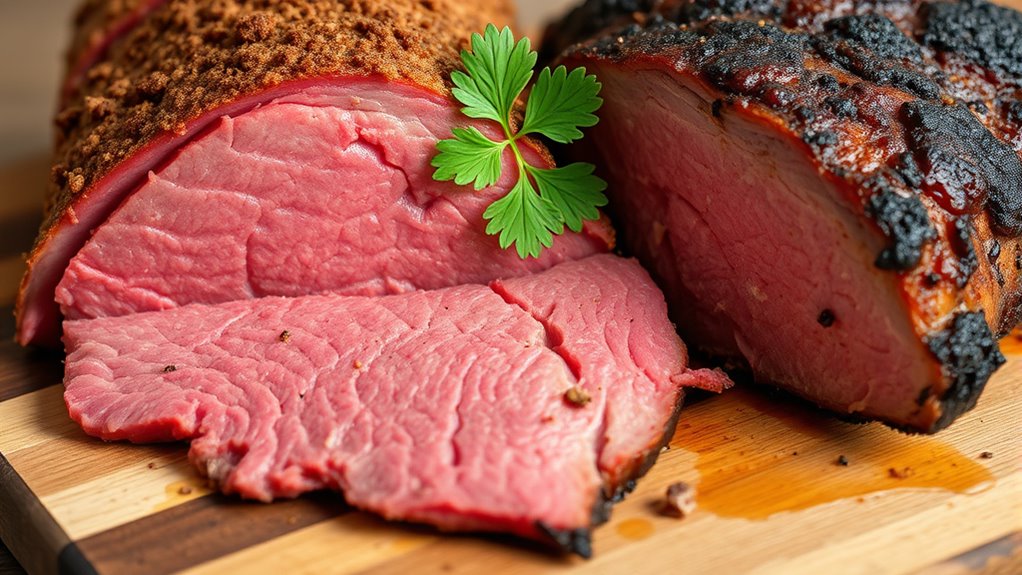
You can tell the difference between corned beef and brisket by their appearance and flavor. Corned beef is cured and salted, giving it a pink or reddish color with visible seasoning. Brisket, on the other hand, is fresh beef with a natural deep red color and a thick fat layer.
Corned beef tastes salty and tangy, while brisket offers a rich, natural beef flavor. If you want to know about cooking methods and when to swap one for the other, keep exploring.
What Is Corned Beef?
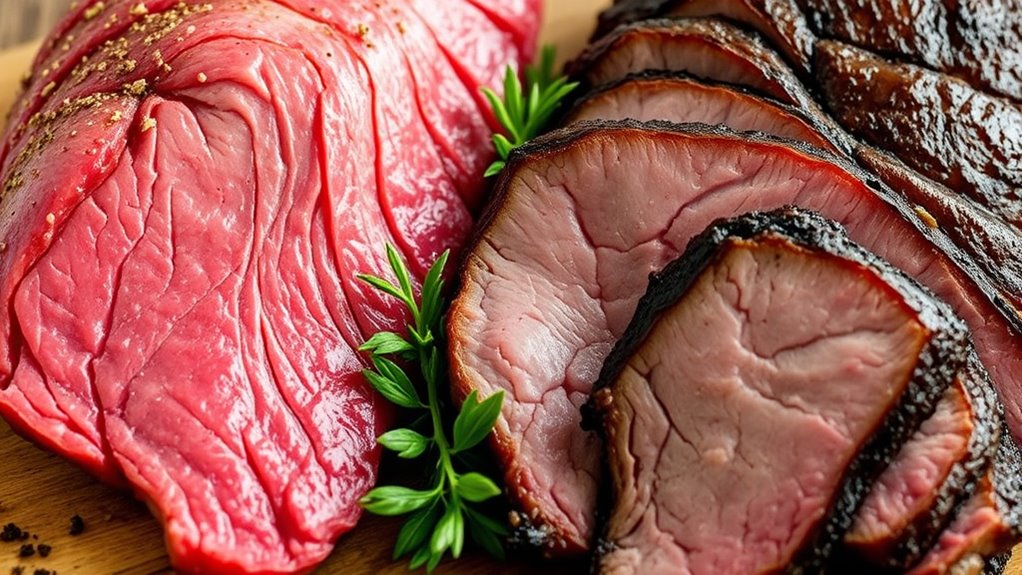
Although it starts as a cut of beef like brisket or beef navel, corned beef undergoes a curing process where it’s soaked in a salty brine with spices. This curing transforms the meat, giving corned beef its distinctive pink or reddish color that you won’t find in fresh brisket. The brine not only preserves the beef but also infuses it with flavor over several days.
After curing, you can buy corned beef raw, ready for boiling, or pre-cooked for slicing. You’ll often see corned beef featured in Irish cuisine, especially during St. Patrick’s Day celebrations.
What Is Beef Brisket?
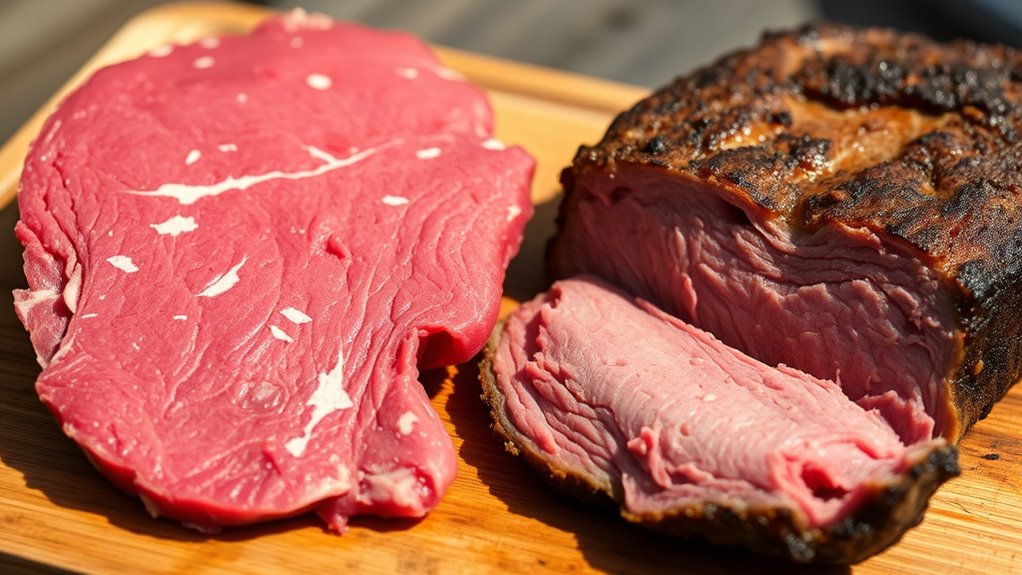
Beef brisket comes from the cow’s chest or lower breast and is prized for its rich flavor and dense muscle fibers. This primal cut typically weighs between 10 to 20 pounds and features a thick fat layer that helps keep it moist during cooking. When you choose beef brisket, you’ll notice it has two main parts: the flat cut, which is leaner, and the point cut, which carries more fat and flavor.
To get the best results, cook this cut slowly—smoking, braising, or roasting helps break down the tough connective tissues. Whether you’re preparing a classic barbecue or a hearty roast, understanding the characteristics of beef brisket guarantees you’ll make the most of this flavorful, versatile cut.
Corned Beef vs. Brisket: Key Differences in Appearance and Flavor
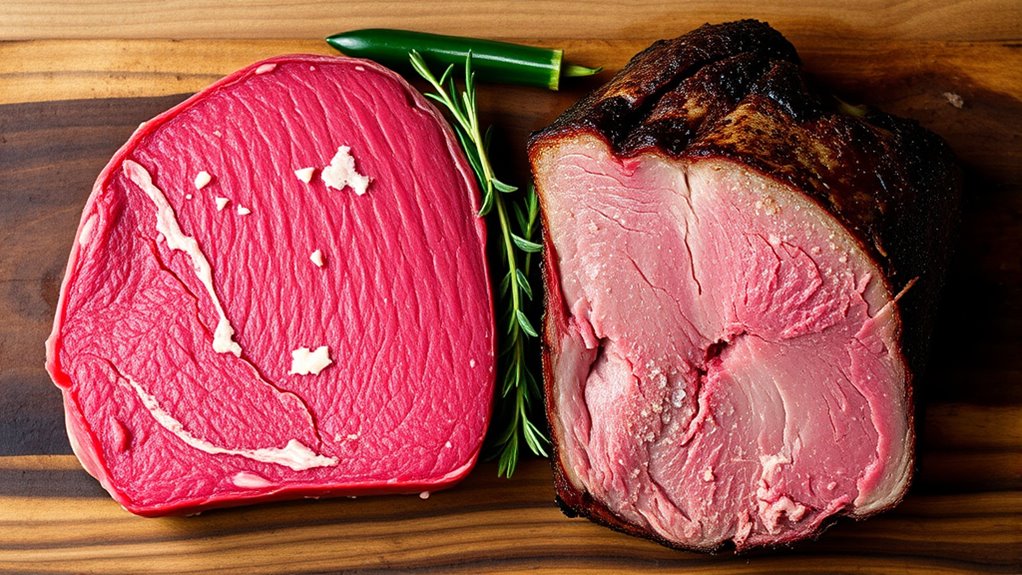
When you compare corned beef to brisket, you’ll notice distinct differences in both appearance and flavor that reflect their unique preparation methods. Corned beef brisket shows a pink or reddish hue from curing with salt and spices, often with visible seasoning on its surface. In contrast, brisket retains its natural deep red or brown color and looks smooth and unseasoned.
Flavor-wise, corned beef offers a salty, tangy taste with pickling spices, while brisket delivers a rich, natural beef flavor without added curing. Corned beef tends to be tender and moist after cooking, thanks to its brined state, whereas brisket needs slow cooking to develop tenderness and maintain its authentic beef essence. These key differences help you distinguish between the two cuts easily.
How to Cook Corned Beef and Brisket: Methods and Tips
When cooking corned beef, you’ll want to boil or simmer it gently with spices until it’s tender, usually about 2-3 hours.
For brisket, slow cooking methods like smoking or roasting at low temperatures work best and take longer, around 4-6 hours.
Knowing the right technique for each cut helps you get the most flavor and tenderness every time.
Boiling And Simmering
Although boiling might seem straightforward, properly simmering corned beef or brisket is key to tender, flavorful results. Start by placing the meat in a large pot, covering it with cold water at least an inch above the meat.
Bring it to a rolling boil over high heat, then lower the heat to let it simmer gently—this prevents toughness. For corned beef, simmer for about 2.5 to 3 hours per 3-4 pound piece; brisket may need 3 to 4 hours depending on size.
Add aromatics like onions, garlic, bay leaves, and pickling spices during simmering to boost flavor, especially with corned beef. After cooking, rest the meat for 10-15 minutes before slicing against the grain to maximize tenderness.
Smoking And Slow Cooking
Beyond boiling and simmering, smoking and slow cooking offer distinct ways to prepare corned beef and brisket that highlight their unique qualities. When smoking brisket, keep the temperature steady between 225-275°F and use woods like hickory or oak to develop a rich smoky crust. This low and slow process, lasting 6-12 hours, breaks down connective tissues, making the brisket juicy and tender.
Corned beef, on the other hand, is rarely smoked unless turned into pastrami. Instead, you’ll typically slow cook it by simmering in pickling spices for 2-3 hours after soaking to reduce excess salt. Use a meat thermometer to reach 195-205°F for brisket, while corned beef is done when it shreds or slices easily.
Both methods bring out their best textures and flavors.
When Can You Substitute Corned Beef for Brisket?
You can substitute corned beef for brisket in recipes where a saltier, more seasoned flavor works well, like stews or sandwiches. Just remember to adjust your seasoning since corned beef is already cured and salty.
Also, you’ll need to tweak cooking times and methods because corned beef cooks faster and is often boiled or simmered instead of slow-cooked.
Flavor Compatibility Considerations
When considering substituting corned beef for brisket, you should keep in mind that corned beef’s heavy salting and curing give it a distinct tangy flavor and increased saltiness that can substantially alter your dish. The curing process infuses corned beef with aromatic spices, making its flavor profile quite different from fresh brisket’s natural beef taste.
If your recipe relies on the mild, unprocessed flavor of brisket, corned beef might overpower it. Additionally, since corned beef is already cured, you’ll need to adjust other seasonings and liquids to avoid over-salting.
Understanding these differences in brisket and corned beef flavor compatibility will help you decide when substitution works best without compromising your dish’s intended taste.
Cooking Method Adjustments
Understanding how corned beef’s pre-cured nature affects flavor sets the stage for adjusting cooking methods when substituting it for brisket. Since corned beef is often cooked meat, you’ll want to modify your approach to avoid overcooking or drying it out.
Here’s when you can swap corned beef for brisket:
- Use corned beef in recipes needing quick reheating or slicing, like sandwiches or stews, because it’s already tender and moist.
- Cut down cooking time considerably; unlike raw brisket, corned beef doesn’t require slow roasting to become tender.
- Avoid substituting corned beef in dishes that depend on the texture developed by slow roasting or smoking raw brisket, unless you adjust for its saltiness and seasoning.
These adjustments help maintain the dish’s balance and texture.
Tips for Buying Quality Corned Beef and Brisket
Although both corned beef and brisket come from the same cut of meat, selecting quality pieces requires attention to specific details. When buying corned beef, look for labels clearly stating it’s cured or seasoned, and check for a moist, firm texture without excessive liquid or discoloration.
For brisket, choose cuts with a deep, uniform red color, a thick fat cap, and minimal discoloration to ensure freshness and good marbling. Always opt for reputable suppliers or trusted brands known for fresh, well-cured, or properly aged meat. Paying attention to these factors will help you pick the best corned beef and brisket, ensuring tenderness, flavor, and safety in your cooking.
Popular Recipes and Uses for Corned Beef and Brisket
Since corned beef and brisket come from the same cut but undergo different preparations, they shine in distinct recipes. You’ll find corned beef perfect for dishes that highlight its salty, tangy flavor, while brisket works best when slow-cooked or smoked to develop rich, beefy tastes.
Here are popular uses for each:
- Corned beef is great in Reuben sandwiches, Irish boiled dinners, or simply simmered and reheated.
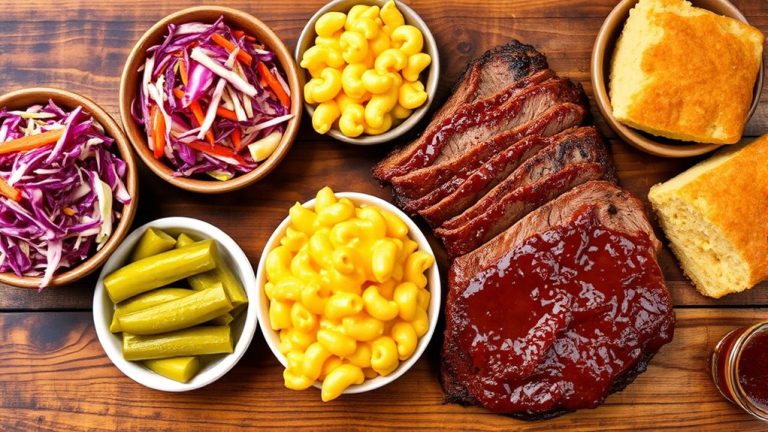
- Brisket shines in Texas-style barbecue, slow-cooked pot roasts, or hearty beef stews.
- Both can be turned into sandwiches, but corned beef offers a distinct cured taste, while brisket provides a smoky, tender bite.
Knowing this helps you pick the right recipe to showcase either corned beef or brisket perfectly.
Frequently Asked Questions
Is There a Difference Between Corned Beef and Corned Beef Brisket?
Yes, there’s a difference. Corned beef brisket is brisket that’s been cured with a salt brine, while corned beef can come from various cuts.
What Is Poor Man’s Brisket?
Poor Man’s Brisket is a budget-friendly beef cut, usually from cheaper parts like the navel, slow-cooked to tenderness.
You’ll find it flavorful and economical, perfect for sandwiches or stews when prepared right.
How to Identify Beef Brisket?
You’ll spot beef brisket by its deep red color and thick fat layer. It feels dense and fibrous, with a coarse grain and irregular shape.
Look for labels saying “beef brisket” and a sizable, unprocessed cut.
Does Corned Beef Taste Like Brisket?
No, corned beef doesn’t taste like brisket. You’ll notice corned beef’s salty, tangy, and spiced flavor from curing, while brisket has a natural, richer beef taste without those pickling spices.
Conclusion
Now that you know corned beef and brisket are basically the same cut but treated differently, you can see why they often get mixed up—like two sides of the same tasty coin. Whether you’re slow-cooking brisket or boiling corned beef, both bring rich flavors to your table.
So next time you’re at the store or planning a meal, you’ll confidently pick the right one and enjoy a delicious dish without any guesswork. Understanding the difference between corned beef and brisket helps ensure your recipe turns out perfect every time.