
How to Tell the Difference Between Wagyu Beef and Kobe Beef
You can tell Wagyu and Kobe beef apart by origin and certification. Wagyu beef refers to several Japanese cattle breeds known for rich marbling and tenderness.
Kobe beef, a premium type of Wagyu, comes specifically from Tajima strain cattle born, raised, and processed in Hyogo Prefecture under strict regulations.
Kobe beef must meet high grading standards like A4 and BMS 6+. Its rarity and distinct flavor set it apart from other Wagyu varieties.
If you want to understand these differences deeply, you’ll find plenty more fascinating details ahead.
Defining Wagyu Beef and Its Key Characteristics
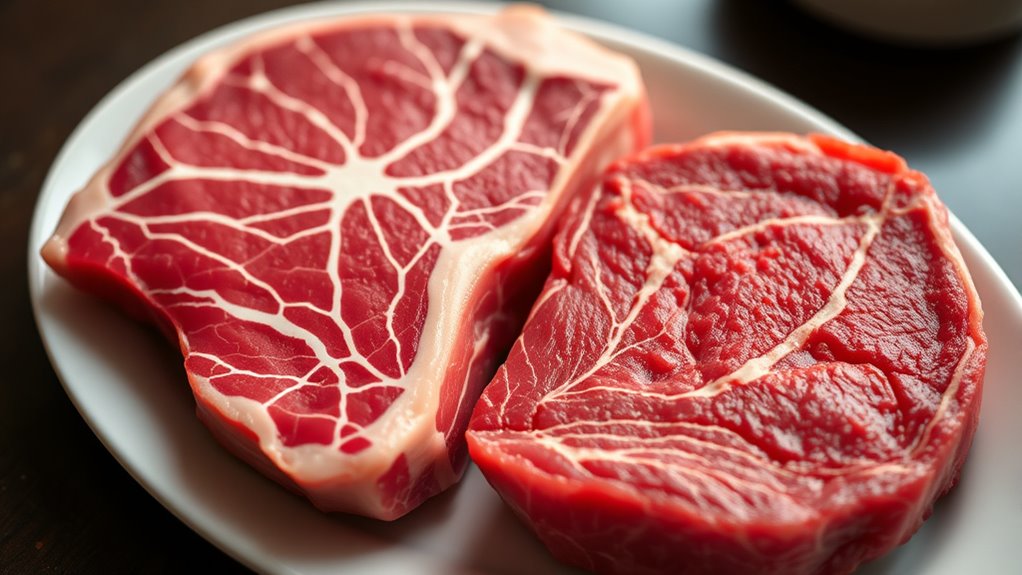
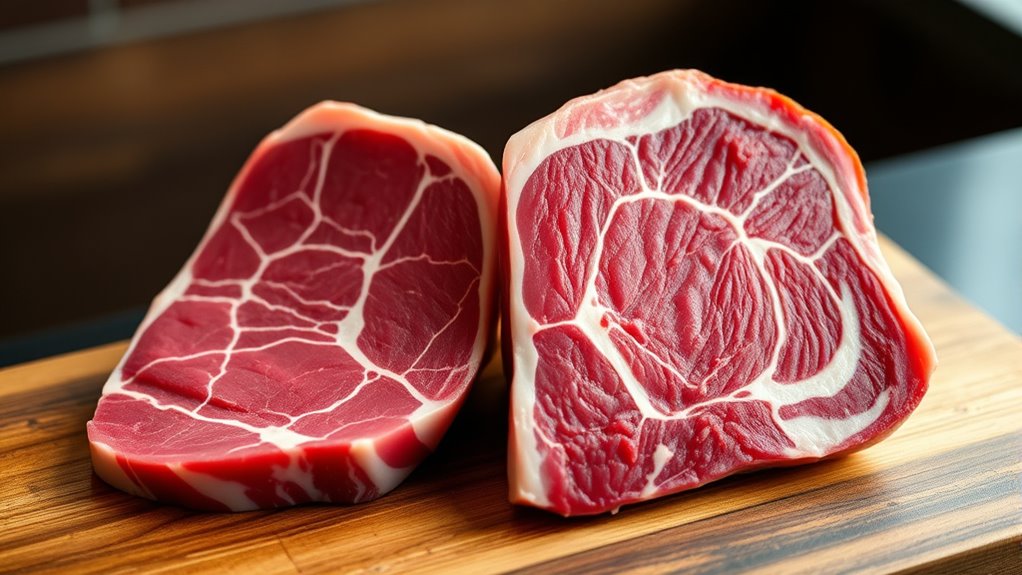
Although you might hear Wagyu beef and Kobe beef used interchangeably, Wagyu specifically refers to several Japanese cattle breeds, such as Japanese Black, Brown, Polled, and Shorthorn, known for their exceptional marbling and rich flavor. When you choose Wagyu beef, you’re getting meat prized for its high fat content and tender meat texture that melts in your mouth.
The Japanese grading system ranks Wagyu from A1 to A5, with A5 representing the highest quality based on marbling, color, texture, and fat quality. Wagyu cattle are raised under strict standards to maximize marbling and flavor, ensuring consistent high quality. You’ll often see Japanese Black cattle highlighted, as they’re especially renowned for producing superior marbling and premium beef.
Origin and Breed Differences Between Kobe and Wagyu Beef
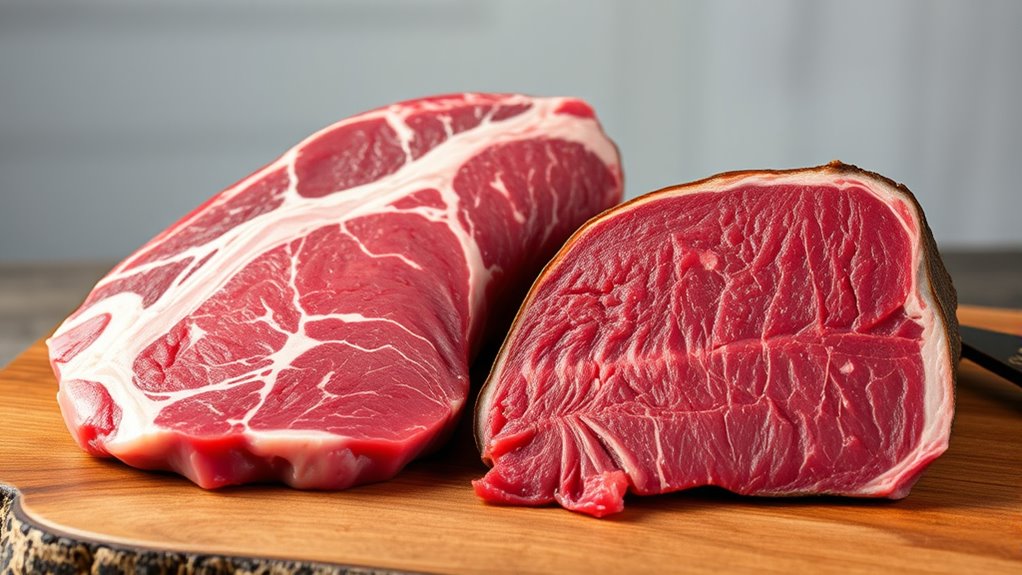
Understanding the distinctions between Wagyu and Kobe beef starts with their origins and breeds. Wagyu beef broadly refers to beef from any Japanese cattle breed, including Japanese Black cattle, Brown, Polled, and Shorthorn, raised across Japan and even internationally. Kobe beef, however, has a strict origin requirement: it must come from the Tajima strain of Japanese Black cattle born, raised, and processed exclusively in Hyogo Prefecture.
This specific breed and geographic origin set Kobe beef apart. Additionally, Kobe beef must meet rigorous regional standards and obtain Kobe certification to qualify. While all Kobe beef is Wagyu, not all Wagyu meets the stringent origin and breed criteria that define Kobe beef.
Understanding these differences helps you appreciate why Kobe beef commands a unique status within the Wagyu category.
Kobe Beef’s Unique Origin and Strict Regulations
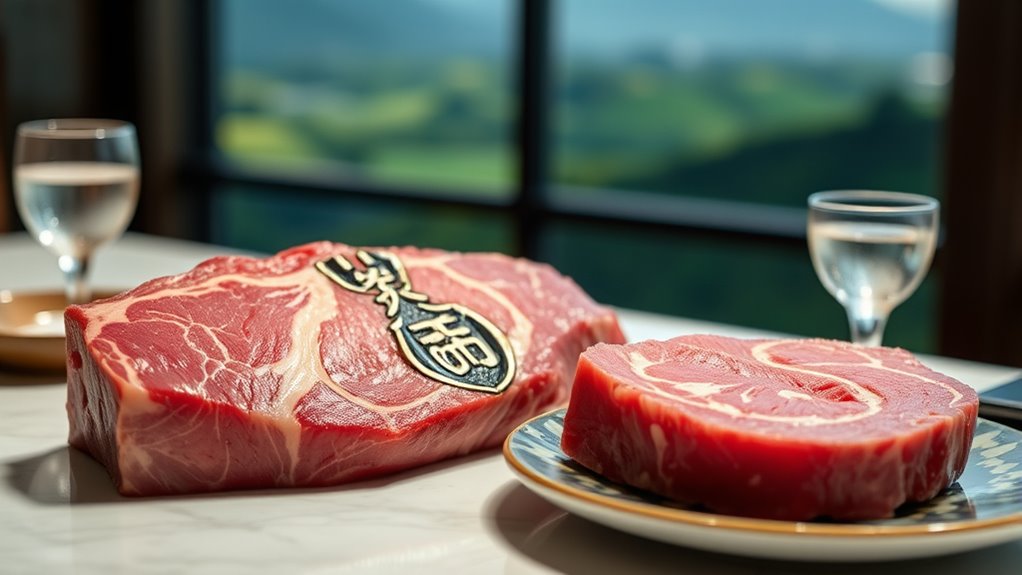
Because Kobe beef comes exclusively from Tajima-gyu cattle born, raised, and processed in Hyogo Prefecture, you can be sure it meets some of the strictest standards in the world. Unlike other Wagyu beef, Kobe beef undergoes a rigorous certification process that enforces breed-specific and regional standards. Each cut is traceable through a unique ID, ensuring authenticity and transparency.
To qualify, the beef must meet strict grading standards, including a minimum A4 quality grade and a BMS score of 6 or higher. This traceability and adherence to regional standards make Kobe beef exceptionally rare and exclusive. When you choose Kobe beef, you’re selecting a product with verified origin, unmatched quality, and a guarantee rooted in meticulous regulation and tradition.
How Wagyu and Kobe Beef Are Graded
Kobe beef’s strict origin and certification standards set a high bar, but how do you know its quality matches the reputation? Both Wagyu grading and Kobe beef grading follow the Japanese Meat Grading Association’s rigorous grading system. You’ll find that beef is evaluated on yield grade (A to C) and quality grade (1 to 5), with a special focus on the marbling score, or BMS score, which ranges from 3 to 12.
Kobe beef must score at least A4, often boasting a BMS of 6 or higher, ensuring superior marbling and texture. A5 Wagyu represents the highest tier in meat grading standards, reflecting exceptional fat quality, color, and firmness. This strict grading process guarantees you get authentic, premium beef every time.
Flavor, Marbling, and Texture: Kobe vs. Wagyu
When you taste Kobe beef, you’ll notice its marbling is consistently fine and uniform, creating a melt-in-your-mouth texture that stands out even among Wagyu varieties. Kobe beef boasts a high marbling score, typically BMS 6 or higher, which contributes to its exceptional tenderness and delicate meat texture. Its flavor profile is rich, buttery, and slightly sweet, with subtle nutty undertones that enhance every bite.
While Wagyu from other regions can offer impressive marbling, its flavor and texture vary more widely depending on breed and feeding. Wagyu’s flavor profile may be milder or more savory, and the meat texture less refined. Overall, Kobe beef’s superior marbling and distinctive flavor make it uniquely tender and flavorful compared to broader Wagyu options.
Why Kobe Beef Is So Rare and Special
Although many people have heard of Kobe beef, you might be surprised to learn how rare and special it truly is. Kobe beef comes exclusively from Tajima cattle raised in Hyogo Prefecture, ensuring strict regional origin and genetic purity. Only about 3,000 animals qualify annually due to rigorous quality standards and strict grading.
Here’s why Kobe beef is so exclusive:
- Meticulous care and a specific low-stress diet increase production costs and limit supply.
- Certified Kobe beef must meet strict standards like a BMS of 6+ and an A4 or higher grade.
- It’s heavily regulated and only available through certified producers, making it rare worldwide.
These factors combine to make authentic Kobe beef a limited, prized delicacy you won’t easily find outside Japan.
Frequently Asked Questions
How to Tell if Meat Is Wagyu?
You can tell if meat is Wagyu by checking for fine marbling, a deep red color with creamy fat, certification labels, and a tender, buttery aroma when cooked.
Avoid uncertified “Wagyu” claims to guarantee authenticity.
What Is the Difference Between Kobe Beef and Wagyu Beef?
Think of Kobe beef as the crown jewel of Wagyu—it’s Wagyu from a specific Tajima lineage, raised and certified only in Hyogo, Japan.
You’ll spot Kobe by its strict grading and traceable origin, setting it apart.
Is A5 the Same as Kobe?
No, A5 isn’t the same as Kobe. A5 is a grading for top-quality beef, but Kobe must be A4 or A5 and come specifically from Hyogo Prefecture, meeting strict regional and breed standards you can’t overlook.
How to Tell Real Kobe Beef?
You can tell real Kobe beef by checking for its unique 10-digit ID, certified Tajima bronze label, and A4 or higher grade with BMS 6+.
Always buy from trusted suppliers or specialized restaurants.
Conclusion
Now that you know the difference between Wagyu and Kobe beef, you can appreciate their unique origins, distinct flavors, and meticulous grading. You’ll recognize Wagyu for its rich marbling and Kobe for its exclusive heritage and strict standards.
You’ll savor Wagyu’s tenderness and cherish Kobe’s rarity. Whether you’re choosing Wagyu or Kobe, you’ll value quality, tradition, and craftsmanship in every bite—and that makes all the difference.
Understanding these differences helps you make an informed choice when selecting premium beef. Both Wagyu beef and Kobe beef offer exceptional taste experiences that highlight the best of Japanese beef culture.