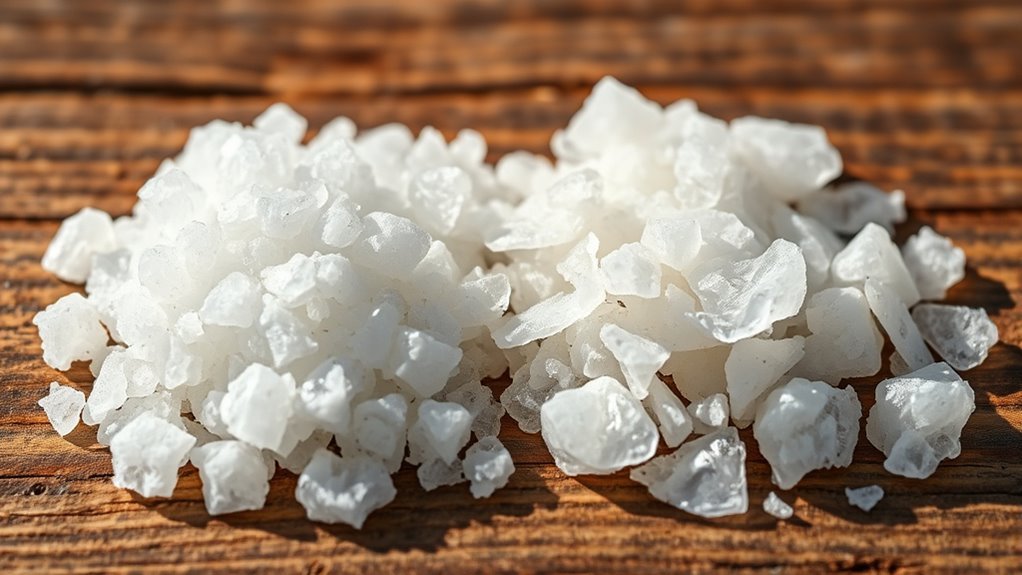
10 Reasons Canning Salt and Sea Salt Are Not the Same
You can’t use canning salt and sea salt interchangeably because they differ in purity, grain size, and additives. Canning salt is pure sodium chloride without iodine or anti-caking agents, ensuring clear brine and consistent preservation.
Sea salt, on the other hand, contains minerals, irregular crystals, and sometimes additives that cloud brine, alter flavor, and can even risk spoilage.
Its coarse grains make measuring tricky and slow dissolution, which isn’t ideal when you’re aiming for safe, high-quality canning.
So, if you want your canned goods to last and taste just right, understanding these differences is really key before you choose your salt. It might seem like a small detail, but it makes a big difference in your canning success!
Key Takeaways
- Canning salt is pure sodium chloride without additives, while sea salt contains minerals and impurities that affect preservation quality.
- Additives like iodine and anti-caking agents in sea salt cause brine cloudiness and off-flavors, unlike additive-free canning salt.
- Canning salt’s fine grain ensures accurate measurement and faster dissolution, whereas sea salt’s coarse crystals pack unevenly and dissolve slower.
- Minerals in sea salt can alter flavor, hinder fermentation, and increase spoilage risk, unlike the consistent purity of canning salt.
- Using canning salt maintains clear brine and food safety, while sea salt’s impurities lead to discoloration and potential preservation failures.
What Makes Canning Salt Different From Sea Salt?
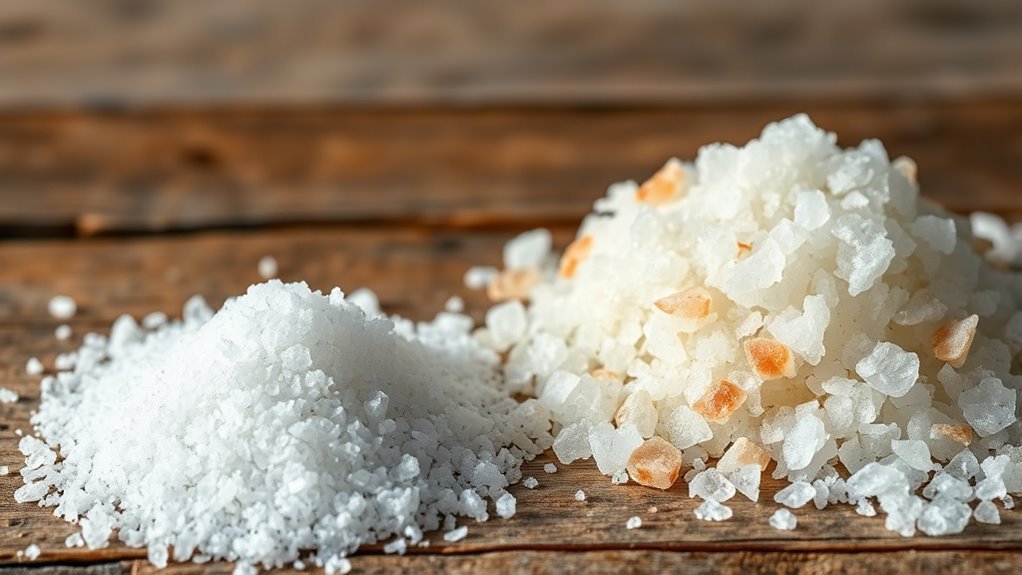
What sets canning salt apart from sea salt is its purity and texture, which are essential for preserving food effectively. When you use canning salt, you get a fine, pure sodium chloride without any additives like iodine or anti-caking agents.
Canning salt’s purity and fine texture make it ideal for effective and safe food preservation.
This means your preserved foods stay clear and avoid any cloudiness or discoloration. On the other hand, sea salt contains minerals and impurities that can interfere with the canning process.
Its larger, irregular crystals don’t dissolve as evenly, which can cause inconsistent salt concentrations and affect the final product’s taste and safety. Because canning salt lacks these additives and has a uniform fine texture, you can measure it accurately every time.
That way, you’re ensuring safe and consistent results. If you want your home-canned goods to look and taste their best, relying on canning salt rather than sea salt is the smarter choice.
Why Does Purity Matter in Canning Salt?
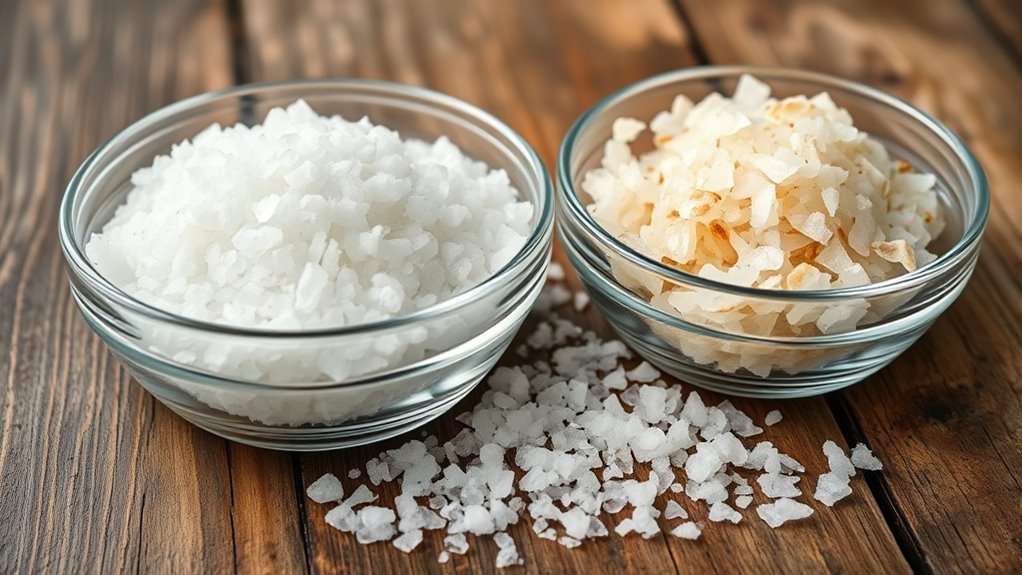
Why should you prioritize purity when choosing salt for canning? Purity matters because canning salt contains only sodium chloride, free from additives and impurities that can cloud brine or alter your food’s flavor.
When you use salt with additives, like iodine or anti-caking agents, it can cause cloudy brine and off-flavors. This compromises your canned goods’ quality and safety.
Here’s a quick comparison to help you visualize why purity is key:
| Pure Canning Salt | Salt with Additives |
|---|---|
| No impurities or residues | Contains anti-caking agents |
| Dissolves evenly | May cause cloudy brine |
| Maintains food clarity | Can introduce off-flavors |
How Do Additives Like Iodine and Anti-Caking Agents Affect Your Canning?
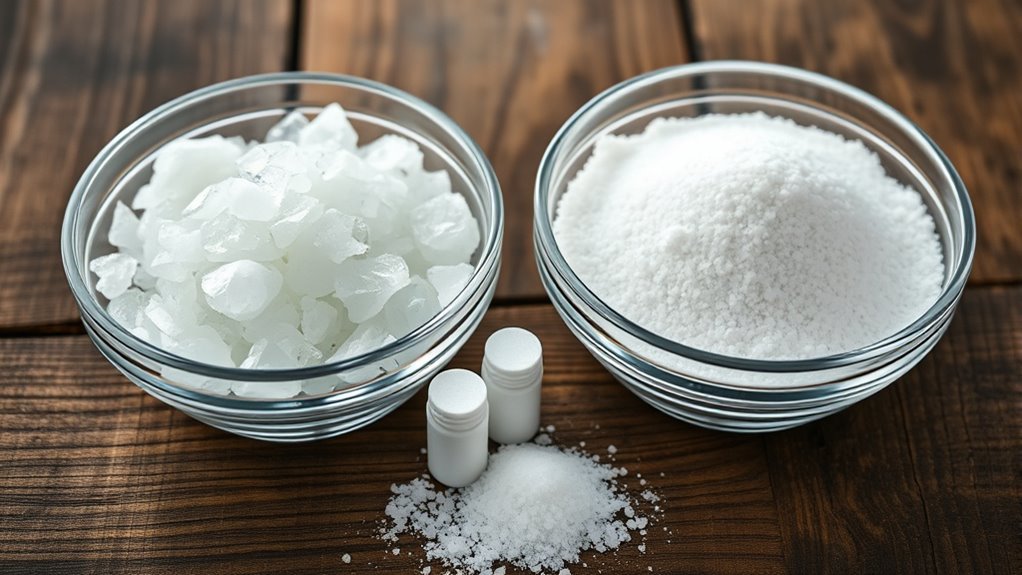
You’ll notice iodine in salt can cause discoloration and off-flavors in your canned goods. It’s kind of a bummer because it changes the look and taste you’re aiming for.
Anti-caking agents might cloud your brine, messing with the clarity you want in preserved foods. Nobody wants a cloudy jar when you’re proud of your pickles or sauerkraut.
These additives can also disrupt fermentation, so choosing pure canning salt helps keep your results clean and tasty. It’s a simple swap that makes a big difference!
Impact of Iodine
How does iodine in salt affect your canning results? When you use iodized salt, the iodine can cause discoloration and off-flavors in your canned foods. This makes iodized salt a poor choice compared to non-iodized salts like canning salt or kosher salt.
Iodine can also interfere with fermentation by inhibiting beneficial bacteria. This can compromise the safety and quality of your preserves. So, it’s better to avoid iodized salt when canning.
| Effect | Iodized Salt |
|---|---|
| Discoloration | Likely |
| Off-flavors | Possible |
| Bacteria inhibition | Yes |
To keep the best appearance and taste, avoid iodized salt. Stick to additive-free salts specially made for canning. It really makes a difference!
Role of Anti-Caking Agents
Although anti-caking agents like Yellow Prussiate of Soda keep table and some kosher salts free-flowing, they can cause cloudiness in your canned foods. These additives are great for preventing clumps but aren’t ideal for canning.
When you use salts with anti-caking agents, you risk altering the chemical balance of your brine, which might affect both preservation and food safety. That’s why canning salt is formulated without these additives—to give you a pure, consistent product that won’t interfere with your canning process.
Effects on Brine Clarity
When additives like iodine and anti-caking agents enter your brine, they often cause cloudiness or discoloration. This can make your canned goods look unappetizing.
Anti-caking agents, such as Yellow Prussiate of Soda, may react with the brine. This reaction produces sediments or a cloudy appearance that can be mistaken for spoilage.
Iodine can darken or stain pickles and other preserved foods. Over time, this compromises their visual appeal.
Sea salt’s minerals and impurities can also reduce brine clarity compared to pure canning salt. So, it’s best to avoid them if you want a clear brine.
To keep your brine clear and stable, use pure, additive-free canning salt. This guarantees your canned goods look fresh and inviting every time.
How Does Grain Size Impact Salt Measurement in Canning?
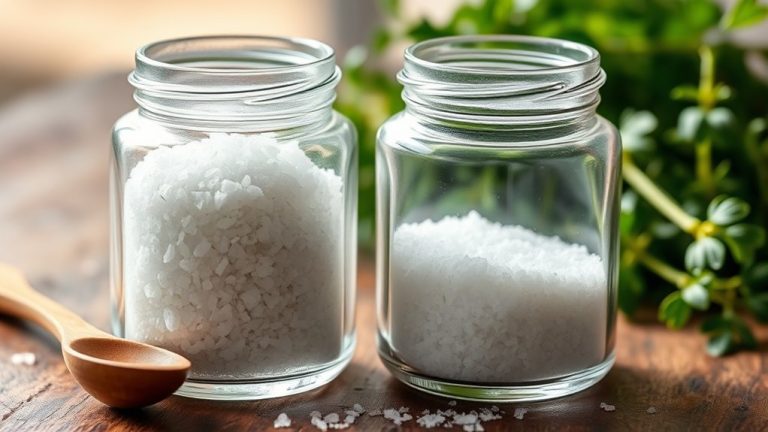
Since grain size directly affects how salt fits into a measuring cup, you can’t rely on volume alone for accurate canning measurements. Smaller grains, like canning salt, pack more densely than larger grains, such as sea salt.
This means a cup of sea salt contains less actual salt by weight compared to the same volume of canning salt. That can throw off your recipe’s salinity. When you measure by volume, this difference in grain size can lead to inconsistent preservation results and even safety risks.
To get precise measurement, especially with larger grains, weighing salt is your best bet. This way, you’re adding the correct amount regardless of grain size.
Using the right grain size and measurement method helps maintain consistent flavor, texture, and preservation quality in your canned goods. Ignoring grain size differences can easily impact the success of your pickling and fermentation efforts.
Why Does Canning Salt Dissolve Faster Than Sea Salt?
Because canning salt has a finer grind and a purer texture than sea salt, it dissolves much faster in liquids. When you use canning salt, its fine granules increase the surface area exposed to the liquid, allowing it to dissolve more quickly and evenly.
In contrast, sea salt typically contains larger, coarser crystals that take longer to break down. You’ll also find that sea salt often has mineral impurities and moisture, which can slow the dissolving process and lead to inconsistent results.
Since canning salt is free from additives and moisture, it guarantees a smooth, predictable dissolution rate. This quality is especially important in canning, where uniform salt distribution affects preservation.
How Do Minerals in Sea Salt Change Flavor and Appearance?
How exactly do the minerals in sea salt affect the flavor and appearance of your preserved foods? Minerals like magnesium, calcium, and potassium add a subtle mineral or slightly metallic flavor that can change your recipe’s taste.
These minerals also impact the color, giving sea salt a gray or off-white hue compared to the pure white of canning salt. Because mineral levels vary by brand, the flavor and appearance of your canned goods may not be consistent. Plus, these minerals can interact with acidic or alkaline ingredients, subtly altering the final color or flavor.
Here’s a quick look at how key minerals influence flavor and appearance:
| Mineral | Effect on Flavor & Appearance |
|---|---|
| Magnesium | Adds a slight metallic taste; gray tint |
| Calcium | Mild mineral flavor; may cause off-white hue |
| Potassium | Enhances savory notes; can affect color |
Understanding these effects helps you choose the right salt for your preserves.
What Does Cloudiness in Brine Reveal About Your Salt Choice?
When you notice cloudiness in your brine, it often means your salt contains additives or impurities that affect clarity. Using canning salt, which is pure and additive-free, keeps your brine clear and safe for preserving.
Pay attention to cloudiness—it can be a visual warning of potential spoilage or off-flavors in your canned goods. It’s a simple sign, but an important one to watch for!
Causes Of Brine Cloudiness
If you notice cloudiness in your brine, it often means your salt contains additives or impurities that affect its clarity. Salt with anti-caking agents or minerals can leave particles suspended, causing cloudiness during and after dissolving.
Pure canning salt dissolves completely, giving you clear brine. On the other hand, sea salt or regular table salt may contain minerals or additives that discolor and cloud the solution.
This cloudiness not only impacts the visual quality but may also signal potential spoilage or contamination. Choosing the right salt is essential because impurities in non-canning salts can compromise the safety and appearance of your preserved foods.
Salt Additives And Effects
Although you might not always notice, the cloudiness in your brine reveals a lot about the salt you’re using, especially when it comes to additives. Canning salt is pure sodium chloride without anti-caking agents, so it dissolves completely, leaving your brine clear.
On the other hand, sea salt and table salt often contain anti-caking agents or impurities that cause cloudiness. These additives not only affect the appearance but can also interfere with fermentation by inhibiting beneficial bacteria growth.
When you see cloudy brine, it’s a sign that your salt includes extra minerals or chemicals, which might impact both safety and flavor. Choosing salt without additives guarantees a clear brine and supports a healthy fermentation process for your canned foods.
Visual Indicators Of Spoilage
Cloudiness in your brine offers a clear sign about the type of salt you’ve used and its impact on your preserved food. When your brine turns cloudy, it often reveals impurities or additives from non-canning salts like sea salt or table salt.
These impurities can affect the preservation process and may signal spoilage. Canning salt, being pure, dissolves clear, ensuring the safety and quality of your preserved foods.
Watch for these visual indicators:
- Cloudiness suggests mineral residues or additives.
- Impurities can cause unwanted discoloration.
- Sediment in brine hints at compromised preservation.
- Clear brine indicates pure, canning-appropriate salt.
- Cloudy brine warns against using salts with additives.
Choose your salt wisely to keep your preserves safe and visually appealing.
When Can Sea Salt Harm Your Pickling or Fermentation?
When you choose sea salt for pickling or fermentation, you risk introducing minerals and impurities that can cloud your brine and disrupt the fermentation process. These minerals may cause uneven fermentation, resulting in less clear or inconsistent batches.
Sea salt’s larger, irregular grains also make it tricky to measure accurately, which can throw off salt concentrations *essential* for safe fermentation. Some sea salts contain trace minerals that alter the flavor of your fermented foods, potentially spoiling the intended taste profile.
Additionally, certain sea salts include anti-caking agents or additives that inhibit the growth of beneficial bacteria, compromising fermentation safety and success. Using unrefined sea salt might even introduce unwanted contaminants or spoilage organisms, increasing the risk of unsafe fermentation outcomes.
How Can You Safely Substitute Salt in Home Canning?
Choosing the right salt impacts not just fermentation but also home canning safety and quality. When replacing salt, you must use the same weight of a different salt type to maintain the proper preservation balance.
For instance, kosher salt can substitute canning salt safely if you measure by weight, not volume, because its grains are larger. Avoid table salt with anti-caking agents or iodine, as they can interfere with preservation and clarity unless your recipe allows them.
Keep these points in mind when substituting salt in home canning:
- Always measure salt by weight, not volume.
- Use pure salts like canning or pickling salt for best results.
- Adjust amounts carefully to maintain concentration.
- Skip iodized or anti-caking table salts unless specified.
- Verify your measurements to ensure safety and quality.
What Are Best Practices for Choosing Salt in Canning?
The best way to guarantee safe and high-quality home canning is to select the right salt. You should choose canning salt because it’s pure sodium chloride without additives, ensuring your preserves stay clear and safe.
Avoid sea salt since its minerals and impurities can cloud your brine and alter texture. Also, steer clear of iodized salts and those with anti-caking agents—they can cause discoloration and interfere with fermentation.
When measuring salt, use weight instead of volume. Different salts have varying grain sizes, so weighing ensures the correct salt concentration for safety and flavor.
Following these best practices helps maintain the clarity, safety, and quality of your canned foods. Using canning salt guarantees consistent salt concentration, which is essential for effective preservation and preventing spoilage.
Frequently Asked Questions
Can You Substitute Canning Salt With Sea Salt?
You shouldn’t substitute canning salt with sea salt because sea salt’s minerals and coarse grains can affect preservation, flavor, and clarity.
Stick to canning salt for safe, consistent results in your home canning recipes.
What Is the Disadvantage of Sea Salt?
Imagine cloudy jars and strange flavors ruining your preserves—that’s the disadvantage of sea salt. It’s inconsistent, contains minerals and impurities, and can mess with your food’s taste and safety.
Does It Matter What Kind of Salt You Use for Canning?
Yes, it matters what salt you use for canning. You want pure canning salt to avoid cloudiness and spoilage.
Using sea salt or table salt with additives can ruin your preserves and affect safety. So, it’s really best to stick with the pure stuff.
Is Morton Kosher Salt the Same as Canning Salt?
No, Morton kosher salt isn’t the same as canning salt. You’ll find it coarser and with additives, so it’s best to avoid using it for canning.
This helps guarantee safety and consistent results in your preserves. It’s always better to stick with the right type of salt when you’re canning.
Conclusion
Choosing the right salt for canning is like picking the perfect key to open your jar’s flavor and safety. Canning salt, pure and precise, guarantees your preserves shine clear and crisp. Meanwhile, sea salt’s impurities can cloud your efforts and affect the final result.
When you use the right salt, you’re not just preserving food—you’re sealing in memories, trust, and care. So, let canning salt be the guardian of your kitchen’s treasured creations. Remember, using canning salt ensures clarity, safety, and the best taste in your preserves every time.