

What Is the Main Theme of Peter Pan?
You’ll discover that the main theme of *Peter Pan* revolves around the longing to stay young and the fear of growing up. Childhood innocence and imagination play key roles in creating a magical world where fantasy blends with reality.
This theme captures the universal desire to hold onto youth and avoid the responsibilities of adulthood.
The story also highlights how motherhood offers warmth amid adventure. Peter’s strong sense of fairness guides his actions throughout the tale.
Keep exploring, and you’ll find even deeper layers of meaning beneath this timeless story.
Childhood Innocence and the Fear of Growing Up
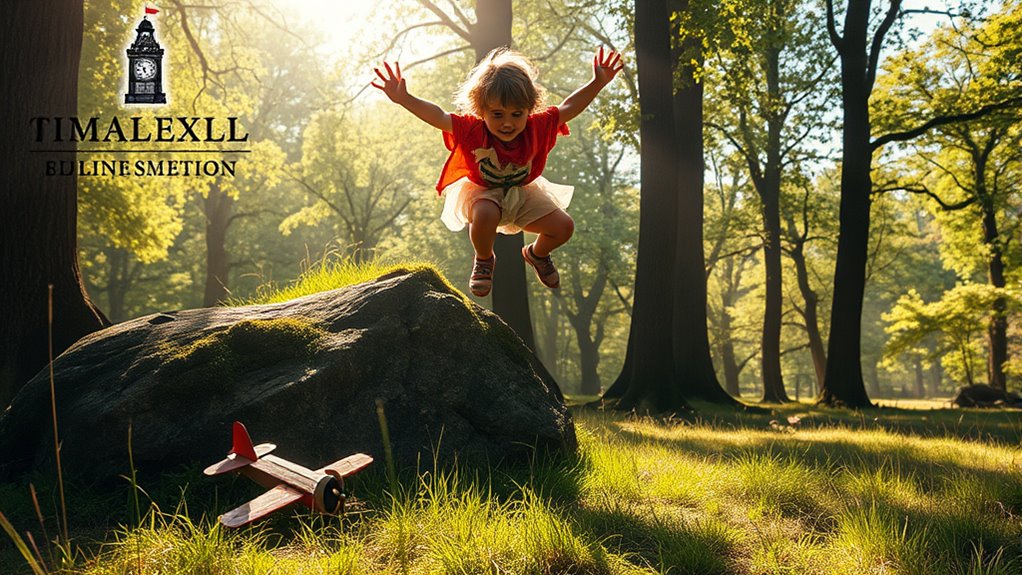
The story of Peter Pan captures your desire to stay young forever, embodying childhood innocence and a deep fear of growing up. You see eternal youth as a magical state where childhood wonder never fades, and the innocence lost during maturing feels like a painful sacrifice. Peter Pan represents this refusal to accept adulthood, clinging to the carefree spirit of youth.
Yet, the tale also shows that the fear of growing up isn’t just about avoiding responsibilities but about losing the precious, fleeting innocence that defines childhood. Wendy’s journey highlights that while childhood innocence is cherished, maturing is inevitable. Peter Pan reminds you that although eternal youth is tempting, embracing change is part of life’s natural course, even if it means saying goodbye to childhood wonder.
Where Fantasy Meets Reality in *Peter Pan

As you explore Peter Pan’s world, you quickly find that fantasy and reality aren’t strictly separate—they constantly blend together. In Neverland, childhood imagination transforms simple moments into thrilling adventures, showing how Peter Pan and Wendy experience the world through a unique perception.
This magical island blurs the lines between childhood and adulthood, revealing how imagination shapes understanding rather than existing apart from reality. Barrie’s story invites you to see that the boundary between fantasy and reality is flexible, with both domains influencing each other.
Through Peter Pan’s adventures, you realize that childhood isn’t just a phase but a space where imagination and real-life experiences coexist, shaping how you view the world and the passage between growing up and holding onto wonder.
Imagination and Wonder in *Peter Pan

You see childhood as a time when fantasy feels real and every day holds magic. *Peter Pan* shows how adults often lose that sparkle, trading wonder for routine.
You’ll explore how the story reminds you to hold onto imagination even as you grow up.
Childhood Fantasy Realized
Imagination takes center stage in *Peter Pan*, inviting you to step into a world where fantasy and reality blend seamlessly. In Neverland, your childhood fantasy comes alive, filled with endless adventure and boundless innocence. You see how imagination shapes everything, turning dreams into vivid experiences where the impossible feels real.
Peter’s world shows you that holding onto this imaginative spirit preserves the joy and purity unique to childhood. As you explore Neverland, you realize that fantasy isn’t just escapism—it’s an essential part of growing up, keeping your sense of wonder sharp. This blend of make-believe and reality encourages you to embrace creativity, reminding you that childhood’s magic lies in the power of your own imagination and the adventures it *accesses*.
Adults’ Lost Sparkle
Why do adults seem to lose their sparkle as they grow older? In *Peter Pan*, adults are shown to have lost their wonder and imagination, symbolized by their glassy-eyed, dull stares. As you move from childhood to adulthood, you often suppress the vibrant imagination that once filled your world.
Peter Pan embodies eternal childhood, reminding you of the pure, unspoiled imagination you tend to forget. Barrie highlights how this lost wonder makes fairy tales and dreams fade, as adult responsibilities take over.
If you hold onto that childlike sense of imagination and wonder, you preserve joy and creativity in your life. *Peter Pan* challenges you to reclaim the sparkle adults so often lose and keep your childhood’s magic alive.
How Motherhood Shapes Life in Neverland
How does motherhood influence the lives of children in Neverland? In *Peter Pan*, motherhood plays a crucial role in shaping childhood development. You see, maternal figures like Wendy and Mrs. Darling provide the emotional security the Lost Boys desperately need.
Their maternal love offers stability amid the chaos of Neverland, helping children grow while still enjoying their imagination and freedom. Wendy’s nurturing role highlights how motherhood isn’t just about care but also guidance, giving the Lost Boys a sense of comfort and belonging.
Yet, Peter’s resistance to maternal bonds shows the tension between wanting independence and needing a mother’s support. Ultimately, motherhood in Neverland symbolizes both the warmth of childhood and the bittersweet step toward maturity you can’t avoid.
Peter Pan’s Moral Code: Fairness and Honor
Motherhood in Neverland offers warmth and guidance, but Peter Pan charts his own path when it comes to rules and conduct. You’ll notice Peter’s moral code centers on fairness, honor, and integrity, especially in battle.
He insists on fighting with good form, reflecting an aristocratic sense of justice that values respect for opponents. Peter refuses to cheat or use dishonorable tactics, showing you that true bravery means upholding moral uprightness even in difficult situations.
His commitment to fairness isn’t just about play; it’s a fundamental part of who he is. By holding himself to these standards, Peter demonstrates that justice and honor are essential for meaningful interactions, teaching you that courage involves more than winning—it requires integrity at every turn.
Why *Peter Pan* Continues to Captivate All Ages
You’ll find that *Peter Pan* keeps enthralling audiences because it taps into our shared love for childhood wonder and imagination. Its universal themes speak to both kids and adults, offering something meaningful no matter your age.
Enduring Childhood Fascination
| Aspect | Appeal to Children | Appeal to Adults |
|---|---|---|
| Childhood Innocence | Relatable, fun characters | Reminds of lost simplicity |
| Eternal Youth | Desire to never grow up | Longing for youth’s vibrancy |
| Imagination | Adventure and magic | Creative escape from routine |
| Neverland | Fantasy world exploration | Symbol of freedom and nostalgia |
| Nostalgia | New experiences | Reflects on past joys |
Universal Themes Explored
What makes *Peter Pan* resonate with readers of all ages? It’s the universal themes woven throughout the story—childhood innocence, imagination, and the longing for immortality. You connect with Peter’s world where children can fly, and you’re invited to believe in fairies.
These elements tap into your own memories of wonder and the joy of endless possibilities. At the same time, the story acknowledges the loss of innocence as you grow, highlighting the tension between carefree youth and adult responsibilities.
This balance keeps the tale relevant, reminding you of the magic in childhood and the bittersweet nature of growing up. *Peter Pan* continues to captivate because it celebrates adventure, love, and the timeless desire to hold onto that youthful spirit.
Cross-Generational Appeal
The timeless themes of *Peter Pan* don’t just speak to children—they reach adults too, creating a shared experience across generations. You’ll find its childhood innocence and imagination spark wonder in young minds while stirring nostalgia in adults, reminding you of your own youth.
The story’s universal themes of growing up, love, and loss connect deeply, making it relevant regardless of age. Whether you watch Disney’s animated film or see a stage production, *Peter Pan* invites both children and adults to reflect and dream.
This cross-generational appeal guarantees the tale remains timeless, offering layered symbolism that entertains kids and provokes thought in adults. You experience a narrative that bridges ages, celebrating the magic of holding onto imagination while facing life’s realities.
Frequently Asked Questions
What Is the Theme of the Story Peter Pan?
You’ll find Peter Pan’s theme revolves around holding onto childhood wonder while facing growing up’s reality. It shows how imagination lets you escape adulthood briefly, but you’ll still need to accept life’s natural changes.
What Is the Main Message of Peter Pan?
You’ll discover Peter Pan’s main message celebrates cherishing childhood’s charm and creativity while courageously confronting change.
It reminds you to balance blissful belief with bravery, blending imagination and maturity to navigate life’s natural nuances.
What Is the Main Theme of Peter?
The main theme of Peter is the struggle to stay young forever while facing growing up. You’ll see his fight between endless childhood freedom and the responsibilities adulthood brings, reminding you to cherish innocence yet accept reality.
What Is the Life Lesson of Peter Pan?
Imagine refusing to grow up like Peter Pan; the life lesson here is you’ll miss out on love and responsibility.
You’ve got to balance imagination with maturity to truly enjoy life’s meaningful adventures and relationships.
Conclusion
You can’t help but feel the magic of *Peter Pan* tugging at your heart, reminding you that childhood innocence and imagination are treasures worth holding onto.
As you journey through Neverland, you see how the fear of growing up dances with the joy of endless wonder. So, why not embrace a little of Peter’s world?
After all, isn’t life itself a never-ending adventure waiting for you to take flight? The main theme of *Peter Pan* celebrates the importance of preserving youthfulness and the power of imagination in a world that often demands growing up.