

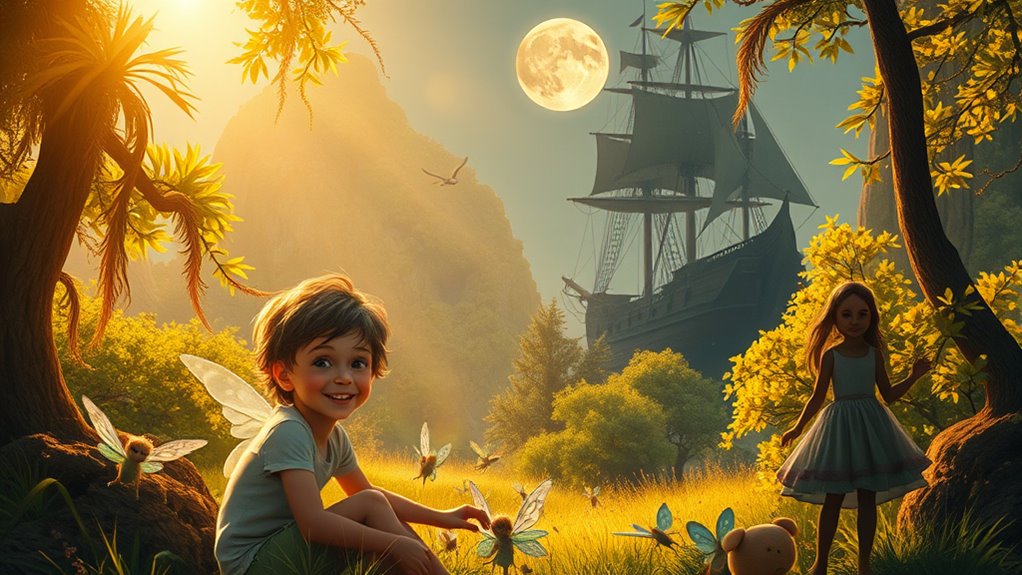
How to Identify the Theme of the Story Peter Pan
To identify Peter Pan’s theme, focus on the clash between childhood innocence and growing up. Notice how imagination shapes the story, making Neverland a place where belief blurs reality and fantasy.
Pay attention to maternal love, which offers emotional security amidst adventure.
Look for symbols like Peter’s shadow or fairies that highlight childhood’s fragile magic.
As you explore these elements, you’ll start to see why Peter Pan’s themes still deeply resonate across generations.
Understanding Peter Pan’s Central Theme
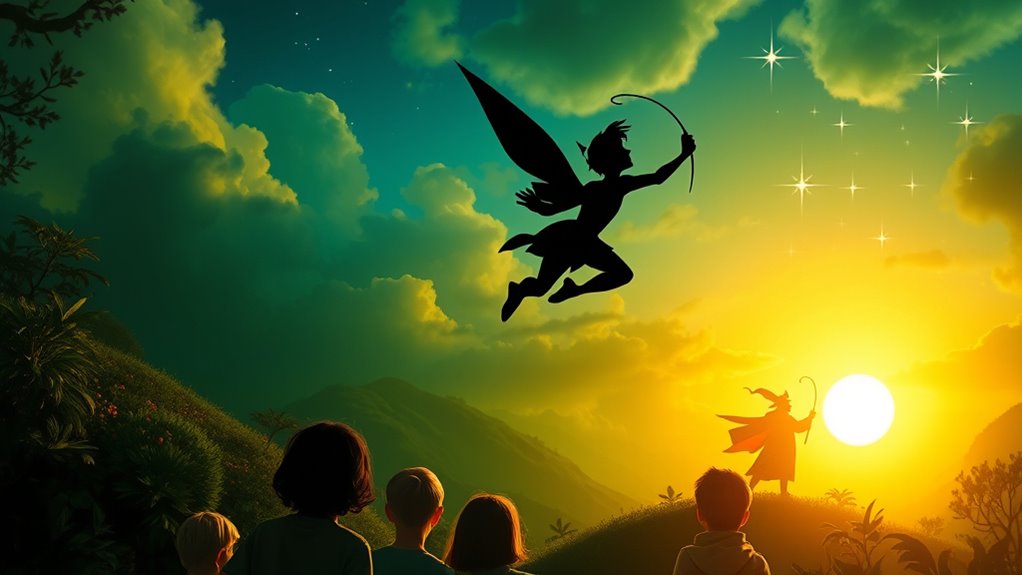
How does Peter Pan capture the struggle between staying young and facing the adult world? You see it through Peter’s embodiment of eternal youth, where childhood isn’t just a stage but a cherished fantasy. The story taps into your imagination, painting a world—Neverland—where innocence thrives and responsibilities fade away.
Peter’s adventures highlight the magic of childhood, reminding you how precious and fleeting that time is. Through flying fairies and endless play, the tale shows your desire to hold onto innocence while recognizing the pull of growing up. This tension between clinging to a carefree fantasy and confronting reality forms the heart of the story, making you reflect on what it means to truly grow up without losing the wonder of your imagination.
Why Childhood and Growing Up Are Key Themes in Peter Pan

You’ll notice that Peter Pan’s eternal childhood represents a longing to hold onto innocence and freedom. At the same time, the story contrasts this with the natural process of growing up, showing both its challenges and necessary changes.
Understanding this tension helps you see why these themes are central to the story’s message.
Eternal Childhood Symbolism
Why does Peter Pan captivate audiences with its portrayal of childhood? You see, Peter embodies eternal childhood, symbolizing the desire to stay young and preserve innocence forever. Neverland, the magical setting, represents a place untouched by time, where childhood wonder thrives endlessly.
Through powerful symbolism—like fairies and Wendy’s worry about growing up—the story highlights how fleeting innocence truly is. When you explore Peter’s world, you connect with the tension between holding onto that magic and the reality of growing older. This theme resonates because it reflects a universal longing to keep the joy and freedom of youth alive.
Ultimately, Peter Pan invites you to embrace the spirit of childhood, reminding you why those moments of wonder matter so deeply.
Growth Versus Innocence
While Peter Pan embodies the enchanting allure of eternal childhood, Wendy represents the pull of growing up and embracing responsibility. You’ll see that the story balances the joy of innocence with the inevitability of maturity.
As you explore this theme, consider how:
- Peter’s refusal to grow up symbolizes the desire to hold onto childhood and eternal youth.
- Wendy’s acceptance of adult duties highlights the natural process of growth and maturity.
- Symbols like fairies emphasize the fragile, fleeting nature of innocence amid life’s changes.
How Imagination Brings Peter Pan’s Story to Life

Imagination fuels the magic of Peter Pan, letting characters like Peter and Tinker Bell fly and shape the enchanting world of Neverland. You’ll find that belief is key—Neverland exists through your imagination and the characters’ faith in its magic. The story blurs make-believe and reality, showing how vivid imagination can turn mental images into something real.
When you embrace this belief, Neverland becomes more than a place; it’s a living world shaped by creativity. Peter’s confidence in imagination reminds you that magic thrives when you truly believe. By engaging your imagination, you bring the story to life and experience the wonder that makes Peter Pan timeless and unforgettable.
Why Maternal Love Matters in Peter Pan
Although Peter Pan’s adventures celebrate freedom and fantasy, maternal love plays a crucial role in grounding the story’s emotional core. You see this through Wendy’s nurturing role, which symbolizes the universal need for care and emotional connection. Her transformation into a mother figure reveals how maternal love offers stability and identity.
Consider these points:
Wendy and Mrs. Darling embody maternal love, grounding Peter Pan’s adventures with care and emotional security.
- Wendy embodies nurturing and maternal affection, fulfilling Peter’s subconscious longing for care.
- Mrs. Darling’s unwavering maternal love highlights its enduring power in shaping children’s growth.
- Maternal love provides a essential foundation that balances Peter’s wild adventures with emotional security.
What Courage and Cowardice Teach Us About Peter Pan’s Characters
Even when faced with danger, Peter Pan shows true bravery by fighting fairly and refusing to exploit his advantages against Captain Hook, which reveals his strong moral compass. You’ll notice that his courage contrasts sharply with Captain Hook’s cowardice, seen in Hook’s frequent attempts to escape rather than confront challenges head-on. This dynamic highlights key lessons about moral character: bravery isn’t just about fighting, but about how you choose to face fear.
While Peter’s innocence sometimes blinds him to risks, Wendy demonstrates a different kind of courage through her nurturing strength, taking responsibility for others. By examining both courage and cowardice, you understand how these traits shape the characters and underscore the story’s message about the complexities of bravery and the importance of integrity.
Why Memory and Innocence Still Matter in Peter Pan
How do memory and innocence shape the world of *Peter Pan*? They are the pillars holding childhood’s magic alive. You see, memory and innocence aren’t just themes; they’re the lifeblood of the story, reminding you why childhood matters.
Here’s why they still resonate:
- Wendy’s effort to “fix the old life in their minds” shows how memory preserves innocence and childhood’s wonder.
- The fairy’s life depends on children’s belief, symbolizing how innocence fuels imagination and keeps magic real.
- Peter’s refusal to grow up reflects a deep nostalgia for the purity and joy of childhood.
How Symbolism Highlights Childhood and Growth in Peter Pan
Why do certain objects and characters in *Peter Pan* carry such powerful meanings? You’ll notice Peter’s shadow symbolizes his strong hold on childhood and his refusal to grow up, while Wendy’s frock marks her growth from innocence to maturity. Fairies like Tinker Bell, living only as long as children believe in them, highlight how fleeting childhood innocence really is.
When you explore Neverland, its ever-changing landscape reflects how different characters perceive childhood and imagination uniquely. Together, these symbols reveal the tension between holding onto youth and the inevitable process of growing up.
What Key Quotes Reveal About Peter Pan’s Themes
- How imagination blurs the line between fiction and reality, inviting you to believe in Neverland’s magic.
- The power of belief, as Peter insists imagination can make things real, challenging your perceptions of what’s possible.
- The tension between childhood innocence and the inevitability of growing up, reflected in Wendy’s worries and memories.
These quotes invite you to reflect on how imagination and belief shape your experience, while also acknowledging the bittersweet reality of leaving childhood behind.
They reveal the complex interplay between innocence, ego, and the evolving sense of reality.
How Reality Versus Fantasy Shapes Peter Pan’s Plot
You’ll notice how Peter Pan blurs the line between reality and fantasy, making Neverland both a real place and a product of imagination.
As you explore the story, you see how the characters’ dreams and beliefs shape their perceptions, turning fantasy into something tangible.
This interplay between worlds drives the plot, showing how imagination influences what feels real.
Blurring Lines Between Worlds
Although Neverland feels like a magical escape, its existence depends on the characters’ belief and imagination, blurring the line between reality and fantasy. As you explore the story, you’ll notice how perception shapes what feels real or imagined.
Neverland isn’t just a place; it’s a reflection of how imagination and reality intertwine. Consider these points:
- Characters’ varying perceptions of Neverland show that reality is subjective, influenced by belief.
- Imagination transforms mental images into tangible experiences, making fantasy almost real.
- The shifting nature of Neverland—from safe haven to perilous land—demonstrates how perception alters your grasp on reality versus fantasy.
You realize that in *Peter Pan*, the boundaries between worlds are fluid, inviting you to question what’s truly real.
Imagination’s Role In Reality
How does imagination shape the world of *Peter Pan*? In this story, imagination blurs the line between reality and fantasy, making make-believe feel real. You see, characters like Peter Pan believe imagination alone can create tangible experiences—like flying or magical creatures.
Your perception of Neverland changes depending on your belief, showing how imagination shapes reality. This flexible boundary lets fantasy influence how characters see their world, transforming mental images into lived experiences.
| Aspect | Influence |
|---|---|
| Imagination | Transforms thoughts into reality |
| Fantasy | Adds magical elements to perception |
| Reality | Blends with make-believe through belief |
You realize imagination acts as a bridge, connecting your inner visions with the external world in *Peter Pan*.
Dreams Influencing Perception
Where do dreams end and reality begin in *Peter Pan*? This story blurs those lines, showing how dreams influence perception. You see, Peter’s imagination transforms fantasy into a lived experience, making Neverland feel real.
Dreams act as a bridge between internal truths and external reality, shaping how characters view childhood and adulthood. Consider these points:
- Dreams fuel Neverland’s magic, making fantasy tangible when belief is strong.
- Imagination allows Peter and others to reshape reality, blending what’s real with what’s dreamed.
- Perception shifts based on dreams, highlighting how mental images can become “real” through belief.
Why Peter Pan’s Themes Still Resonate Today
Why do Peter Pan’s themes still strike a chord with audiences today? Because they tap into your longing for eternal childhood, imagination, innocence, nostalgia, and childhood wonder. In a world rushing toward adulthood, Peter’s refusal to grow up speaks to your desire to hold onto those precious qualities.
| Theme | Why It Resonates | Modern Impact |
|---|---|---|
| Eternal Childhood | Desire to keep innocence | Influences views on childhood |
| Imagination | Escape from a fast-paced world | Inspires creativity in media |
| Nostalgia | Reflects longing for simpler times | Connects to childhood memories |
| Childhood Wonder | Celebrates joy and play | Shapes education and playtime |
You see, these themes remain relevant because they reflect your own experiences and hopes, making Peter Pan timeless.
Frequently Asked Questions
What Is the Theme of the Story Peter Pan?
The theme of Peter Pan is the struggle between holding onto childhood innocence and facing the reality of growing up.
You’ll see how imagination, love, and memory shape this bittersweet journey of eternal youth versus maturity.
What Is the Theme in a Story?
The theme in a story is the main message or insight about life that the author wants you to understand.
You’ll find it by noticing repeated ideas, character choices, and how conflicts get resolved throughout the story.
What Is the Message of Peter Pan?
Imagine a child refusing to grow up, just like Peter Pan. The message tells you to cherish childhood’s innocence and imagination while balancing growing up’s responsibilities, showing how belief can keep wonder alive even as you mature.
What Is the Moral Lesson of the Story Peter Pan?
You’ll learn that cherishing childhood’s innocence and imagination is crucial, but you also need to accept growing up, love, and responsibility.
Peter Pan teaches you to balance wonder with maturity for a fulfilling life.
Conclusion
So, you’ve navigated the magical mess of flying boys, ticking crocodiles, and lost children—congratulations! Now, when you spot Peter Pan refusing adulthood like it’s a broccoli-flavored nightmare, you’re not just seeing a kid avoiding chores; you’re witnessing the eternal battle between growing up and staying forever young.
Embrace the whimsy, but remember—behind every fairy dust sparkle is a serious lesson sneaking in, disguised as a mischievous grin. Identifying the theme of the story Peter Pan means recognizing this delicate balance between innocence and maturity. It’s about understanding how the narrative explores the challenges of growing up while cherishing the freedom of childhood.