
How to Season a Carbon Steel Pan With the Best Oils
To season your carbon steel pan effectively, use high smoke point, neutral oils like grapeseed, canola, or sunflower. These oils are ideal for creating a durable, non-stick surface through proper seasoning.
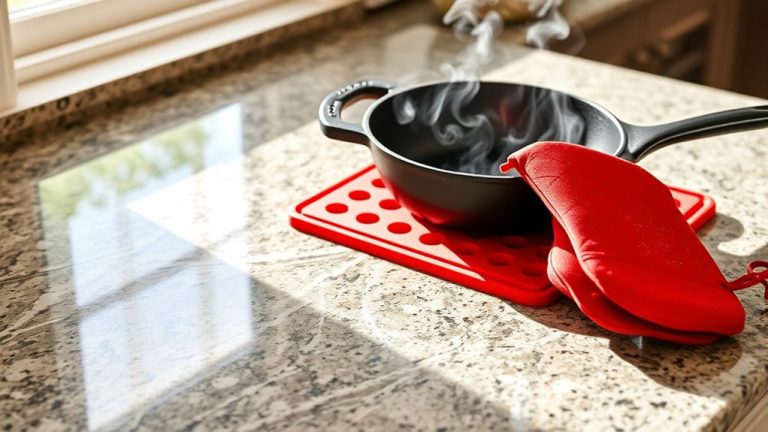
Apply a very thin, even layer of oil and wipe off any excess. Heat the pan until the oil begins to smoke—this triggers polymerization, bonding the oil to the pan.
Avoid low smoke point or flavored oils, as they can leave sticky residues. Proper seasoning not only builds protection but also enhances cooking performance.
Keep going if you want tips on maintenance and more advanced seasoning methods.
Choosing the Best Oil for Seasoning Carbon Steel
When seasoning your carbon steel pan, choosing an oil with a high smoke point is crucial because it guarantees effective polymerization, forming a durable, non-stick layer. Oils like grapeseed, canola, and avocado are excellent choices due to their neutral flavors and high smoke points. Their molecular structure polymerizes efficiently during the seasoning process, creating a strong protective coating on your pan’s surface.
Avoid oils with lower smoke points, such as olive oil or butter, because they can cause uneven seasoning and sticky residues. To achieve the best results, apply a very thin layer of high smoke point oil and heat it until it smokes, signaling successful polymerization. This approach ensures your seasoning carbon steel pan develops a smooth, long-lasting non-stick finish.
Why Smoke Point Matters When Seasoning Your Pan
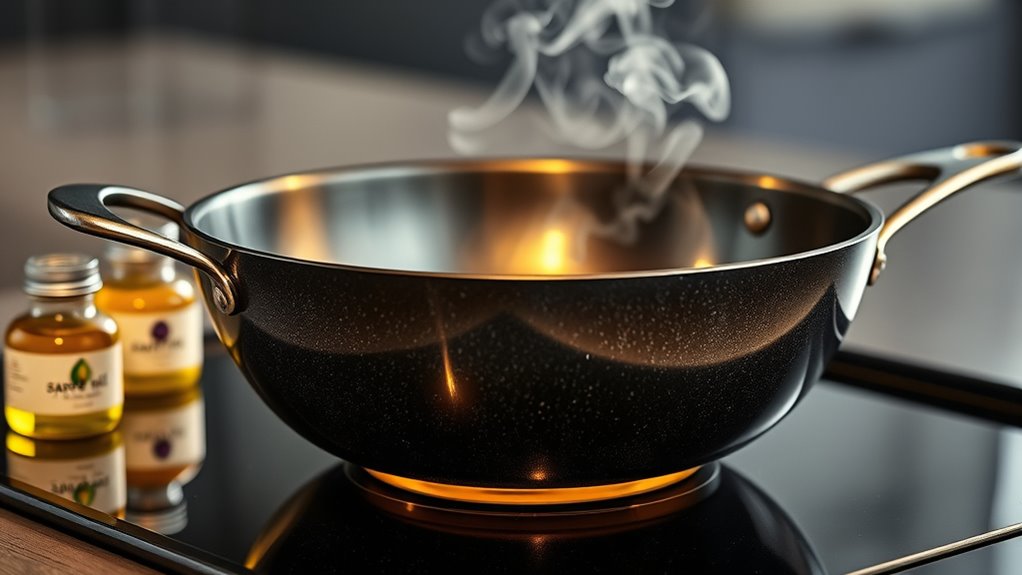
When seasoning your pan, knowing the smoke point of your oil is key because it marks the temperature where the oil starts to break down and form that essential non-stick layer. You want to heat the oil just enough to reach this point, allowing polymerization without burning it.
Choosing oils with higher smoke points, like grapeseed or avocado, helps you get a smooth, durable seasoning without excessive smoke or sticky residue.
Understanding Smoke Point
Although it might seem like just smoke, the smoke point actually signals a crucial stage in seasoning your carbon steel pan. The smoke point is the temperature at which oils start to break down and produce visible smoke. When seasoning, reaching this precise temperature triggers polymerization, where the oil molecules bond to form a durable, nonstick layer on your pan.
Choosing oils with higher smoke points, like grapeseed or avocado oil, lets you heat the pan hotter without burning the oil, ensuring an even, strong seasoning. If you heat the oil past its smoke point, harmful compounds can form, and your seasoning may become uneven or damaged. Watching for the smoke to appear and then fade helps you nail the right temperature for perfect pan seasoning.
Smoke Point And Polymerization
Since reaching the smoke point triggers polymerization, you need to heat your oil just right to form a durable, nonstick layer on your carbon steel pan. The smoke point acts as the critical heat threshold where oil breakdown begins, allowing polymerization to bond oil molecules to the pan’s surface.
Heating beyond this point risks burning the oil, causing uneven seasoning and sticky residue instead of a smooth non-stick layer. Carefully monitoring the smoke point guarantees your seasoning develops properly for long-lasting protection.
| Stage | Temperature Range | Result |
|---|---|---|
| Below Smoke Point | Below heat threshold | Oil remains liquid, no polymerization |
| At Smoke Point | At heat threshold | Polymerization begins, forming non-stick layer |
| Above Smoke Point | Exceeds threshold | Oil burns, uneven seasoning |
Choosing High Smoke Oils
Why does the smoke point of your oil matter so much when seasoning a carbon steel pan? It’s simple: the smoke point signals when your seasoning oil starts to break down and polymerize, forming that durable, non-stick layer you want.
Choosing high smoke oils like grapeseed or avocado oil ensures you can reach the right temperature without burning the oil. These neutral oils handle high-temperature cooking perfectly, promoting even polymerization. Avoid low smoke oils like extra virgin olive oil—they can leave sticky, uneven residues.
- High smoke oils prevent burning during seasoning
- Heating oil to its smoke point triggers polymerization
- Neutral oils like grapeseed and avocado are ideal
- Low smoke oils cause uneven seasoning and stickiness
Pick oils with a high smoke point for the best seasoning results.
Best Neutral Oils for Seasoning Carbon Steel: Grapeseed, Canola, Sunflower
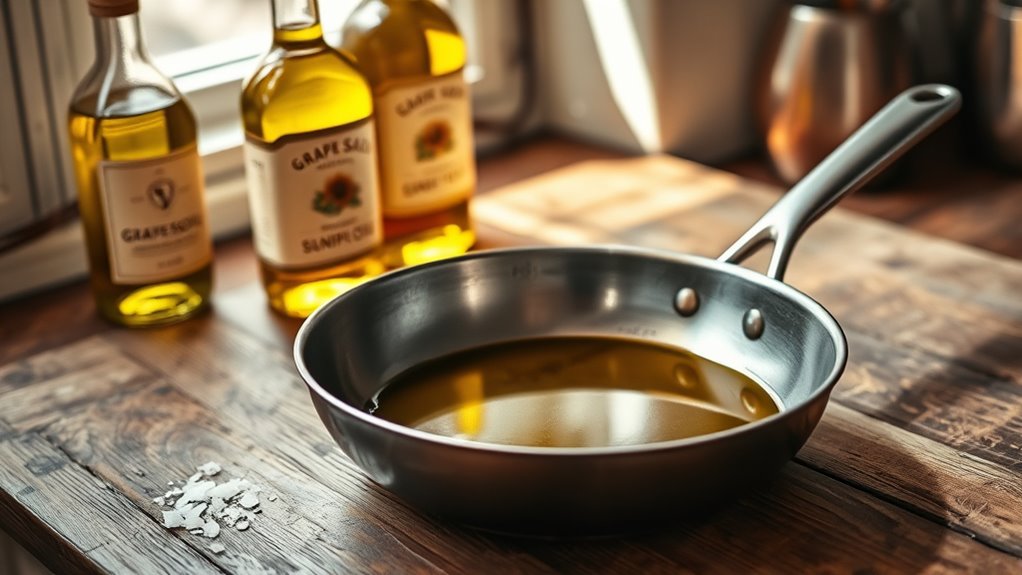
You want oils with a high smoke point to create a durable seasoning without burning. Grapeseed, canola, and sunflower oils offer neutral flavors, so your pan won’t pick up unwanted tastes.
Plus, these oils are affordable, making them smart choices for building and maintaining your carbon steel pan’s surface.
High Smoke Point Benefits
When seasoning your carbon steel pan, choosing oils with a high smoke point like grapeseed, canola, or sunflower makes a big difference. These seasoning oils handle high heat without burning, essential for effective polymerization. Heating the oil to its smoke point allows it to bond firmly, creating a durable, non-stick layer perfect for high-temperature cooking.
Here’s why high smoke point oils work best:
- They withstand the intense heat needed for seasoning without breaking down.
- Polymerization is more complete, resulting in a smoother, longer-lasting finish.
- They prevent sticky residues that low smoke point oils often leave behind.
- The non-stick layer formed supports versatile, high-temperature cooking without degrading.
Using these oils ensures your pan seasons evenly and stays reliable.
Neutral Flavor Advantages
Choosing oils with a high smoke point is important, but their neutral flavor makes them even better for seasoning your carbon steel pan. Neutral oils like grapeseed, canola, and sunflower not only withstand high heat but also avoid flavor transfer, so your pan won’t carry unwanted tastes from one dish to another.
When you season your pan with these oils, they effectively polymerize, forming a smooth, durable layer that enhances the nonstick surface. Grapeseed oil’s 420°F smoke point, canola’s affordability and 400°F heat tolerance, and sunflower oil’s impressive 450°F smoke point make them perfect choices.
Using these neutral oils guarantees your seasoning process builds a reliable, versatile coating that keeps your carbon steel pan performing at its best without compromising the flavors of your meals.
Cost-Effective Seasoning Choices
Although many oils can season carbon steel pans, grapeseed, canola, and sunflower stand out as cost-effective, reliable choices. These seasoning oils offer a high smoke point and neutral flavor, letting you build resilient seasoning without affecting your food’s taste. Plus, they’re perfect for regular maintenance and touch-ups.
- Grapeseed oil polymerizes well at 420°F, forming a durable, non-stick layer.
- Canola oil, with a 400°F smoke point, is affordable and widely available.
- Sunflower oil boasts the highest smoke point at 450°F, ideal for tough seasoning jobs.
- All three are inexpensive, easy to find, and deliver long-lasting results.
Choosing these oils helps you maintain your carbon steel pan efficiently and economically without compromising quality.
When to Use Avocado Oil for Seasoning Carbon Steel
Because avocado oil boasts a smoke point around 520°F, you’ll want to use it whenever your seasoning process requires high heat. This high smoke point allows avocado oil to fully polymerize without breaking down, creating a durable, long-lasting layer on your carbon steel pan. When seasoning carbon steel, heat is essential for forming a stable, even coating, and avocado oil withstands intense temperatures better than many oils.
Using it guarantees your pan develops a professional-quality finish with enhanced non-stick and rust-resistant properties. It’s especially ideal for initial seasoning or maintaining your pan after heavy-duty cooking. Though avocado oil can be pricier, its ability to produce a tough, resilient seasoning layer makes it worth the investment for serious cooks.
Using Seasoning Wax Blends for a Durable Carbon Steel Coating
When you want to build a tough, long-lasting seasoning on your carbon steel pan, seasoning wax blends offer an excellent solution. These blends combine high smoke point oils with rice bran wax to create a durable coating that enhances adherence.
As you heat the pan, the waxes polymerize, forming a hard, protective layer that resists chipping and flaking.
Using seasoning wax blends helps you:
- Achieve a smooth, even coating that improves with use
- Build a robust, professional-grade finish
- Ensure a long-lasting non-stick surface
- Enhance the pan’s performance and durability
Oils to Avoid When Seasoning Your Carbon Steel Pan
Seasoning wax blends create a strong, lasting coating, but the choice of oil still plays a big role in how well your carbon steel pan seasons. Avoid olive oil since its low smoke point and high saturated fat content cause uneven seasoning. Flavored oils like sesame or infused oils can leave sticky residues and prevent a smooth finish.
Unrefined oils, including cold-pressed or unfiltered varieties, produce uneven coatings because solids burn during high heat. Stay away from oils with added sugars or aromatics—they tend to caramelize, causing sticking and difficulties building a durable layer. Solid fats like coconut oil don’t work well either; their solid state at room temperature and high saturated fat levels lead to burning and patchy seasoning.
Choose oils with high smoke points and clean profiles for the best results.
Step-by-Step Oil Application for Seasoning Carbon Steel
Although it might seem simple, applying oil correctly is essential to building a strong, even seasoning layer on your carbon steel pan. To get it right, follow these steps carefully:
- Use a high smoke point oil like grapeseed, canola, or avocado oil.
- Apply a very thin, even layer with a cloth or paper towel, wiping off any excess until the pan looks dry and streak-free.
- Spread the oil evenly over the entire pan, including sides and handle if you’re oven-seasoning.
- Heat the pan until the oil smokes (around 450°F) to start forming the seasoning layer.
Repeat this process multiple times to gradually build a durable, non-stick layer on your pan.
How to Build and Maintain a Strong Seasoning Layer
Since building a strong seasoning layer requires patience, you’ll want to apply a very thin coat of high smoke point oil evenly across your pan, making sure to wipe off any excess to prevent stickiness. Heat your pan gradually to about 450°F until the oil starts to smoke, signaling polymerization and the formation of a durable layer.
Let each layer cool completely before repeating the oil application and heating process. This cycle helps you build a cohesive seasoning that improves non-stick performance and protects the pan. Use a clean, dry cloth to spread the oil evenly and remove moisture.
With regular cooking and light oil reinforcement, your seasoning layer will deepen, making your carbon steel pan more resilient and rust-resistant over time.
Benefits of Pre-Seasoned Made In Carbon Steel Pans
When you choose a Made In carbon steel pan, you get the advantage of a factory-applied seasoning that lets you cook right away without extra prep. This pre-seasoned finish guarantees your pan delivers reliable performance from the start, eliminating the hassle of initial seasoning.
The pan’s performance improves as you maintain proper seasoning, developing a natural nonstick surface that enhances cooking and cleaning.
Benefits include:
- Immediate use without needing to build an initial seasoning layer
- Durable coating that resists rust and improves with use
- Consistent pan’s performance for better cooking results
- Simplified care that prevents sticky or uneven seasoning
With a pre-seasoned Made In pan, you get a head start on seasoning, making your cooking experience smoother and more enjoyable.
Frequently Asked Questions
What Is the Best Oil to Season Carbon Steel Pans With?
You should use avocado oil to season your carbon steel pan because it has a high smoke point and creates a durable, long-lasting coating.
Apply a thin layer and heat until it smokes for best results.
How to Properly Season a Carbon Steel Pan?
Imagine you just wiped your pan clean and dry. You’ll coat it thinly with grapeseed oil, heat it until smoking, cool, then repeat several times.
This builds a strong, smooth, non-stick surface you’ll love.
What Is the Best Oil to Use on Carbon Steel Knives?
You should use a neutral, high smoke point oil like grapeseed or canola to season your carbon steel knives. They polymerize well, creating a durable, protective layer without sticky residue or flavor interference.
Avoid flaxseed oil.
What Is the Best Oil to Season Pans With?
You should season your pan with high smoke point oils like grapeseed, canola, or sunflower oil. These oils polymerize well, creating a durable, non-stick coating that lasts longer and performs better than lower smoke point or saturated fats.
Conclusion
Seasoning your carbon steel pan properly can boost its non-stick performance by up to 70%, making cooking and cleaning much easier. Choosing oils with high smoke points like grapeseed or avocado guarantees a durable, even coating. Remember, consistent maintenance builds a stronger seasoning over time.
With the right oils and care, your pan will develop a natural, resilient surface that improves with every use—turning your kitchen tool into a reliable, long-lasting companion. Using the best oils for seasoning carbon steel pans ensures optimal durability and non-stick properties. This careful seasoning process is key to maintaining your pan’s performance and longevity.