Best 3 Salts for Formaldehyde Applications Explained
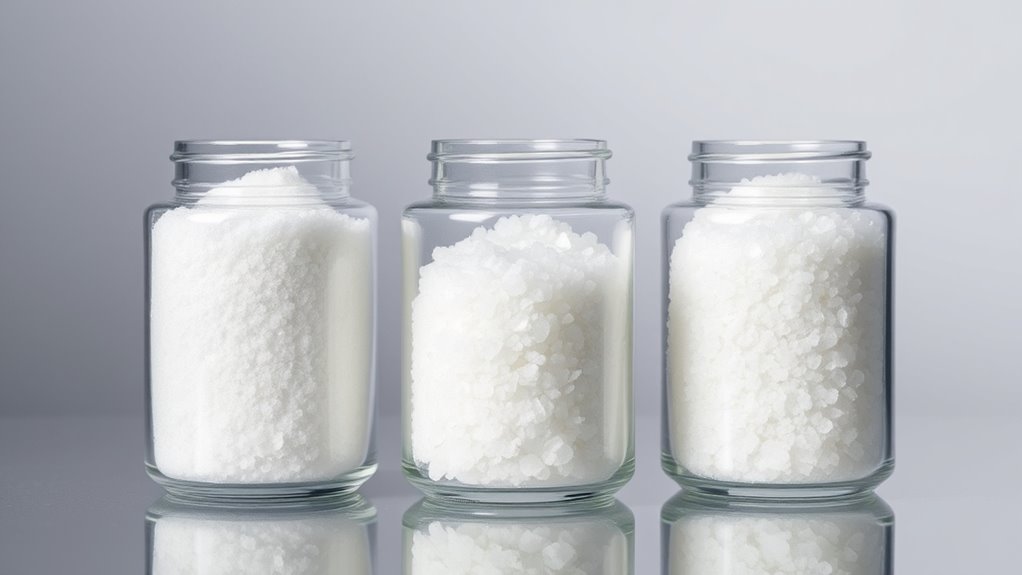
If you want to effectively neutralize formaldehyde, using salts like melamine formate, calcium hydroxide, and melaminium succinate is a smart choice. These best 3 salts for formaldehyde applications offer efficient removal through different mechanisms. Incorporating these salts enhances formaldehyde control in various environments.
Melamine formate and melaminium succinate bind formaldehyde in water through stable ionic structures and hydrogen bonding. This interaction helps trap formaldehyde molecules, reducing their harmful effects. Meanwhile, calcium hydroxide excels at removing formaldehyde from air and filters by forming stable complexes.
These salts also work well in resin composites for long-lasting control. Their unique chemical properties ensure sustained formaldehyde neutralization. Keep exploring, and you’ll find how their unique properties maximize formaldehyde removal in various applications.
Why and How Salts Neutralize Formaldehyde in Solutions
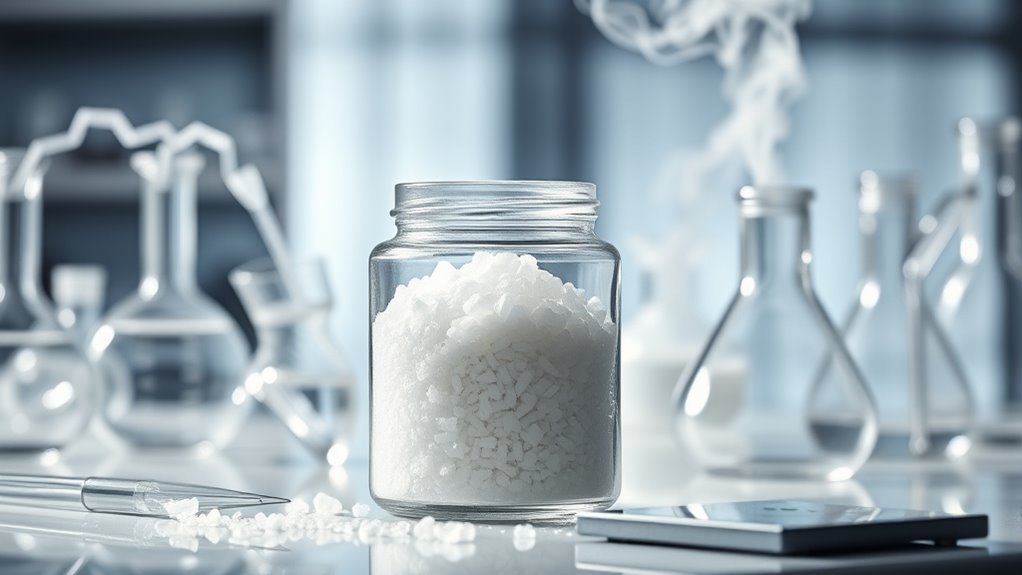
Although formaldehyde poses significant health risks, you can effectively neutralize it in solutions using certain salts like melaminium and melamine acids. These melamine salts form stable ionic structures that dissolve well in water, enhancing formaldehyde neutralization.
Through hydrogen bonding and chemical interactions, the salts bind formaldehyde molecules, reducing their free concentration. This formaldehyde binding leads to formaldehyde sequestration, converting harmful formaldehyde into less volatile, stable ionic salts.
Such salts, including melamine formate and melaminium succinate, leverage high water solubility to maximize contact and reaction efficiency.
Metal Salts That Remove Formaldehyde From Air and Filters
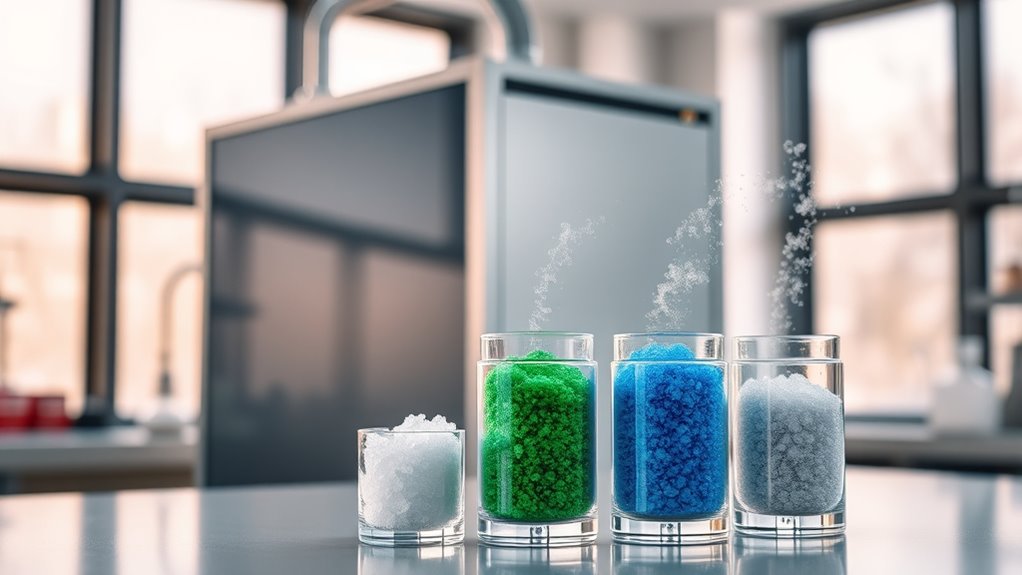
Building on the effectiveness of melamine salts in neutralizing formaldehyde in solutions, metal salts offer powerful options for removing formaldehyde from the air and filtration systems. You can rely on metal salts like calcium hydroxide and zinc sulfate for formaldehyde absorption through complex formation, creating stable compounds that reduce airborne levels.
In air filtration, silver and copper-based metal salts provide antimicrobial properties while promoting catalytic oxidation, breaking down formaldehyde efficiently. Magnesium oxide excels in chemisorption, trapping formaldehyde within its crystal structure for long-term removal.
When incorporated as filter catalysts, these metal salts enhance formaldehyde removal by combining chemical reactions with physical absorption. Their effectiveness depends on solubility, surface area, and ability to catalyze oxidation, making metal salts essential for advanced air filtration and formaldehyde control.
Salt-Resin Composites for Enhanced Formaldehyde Control
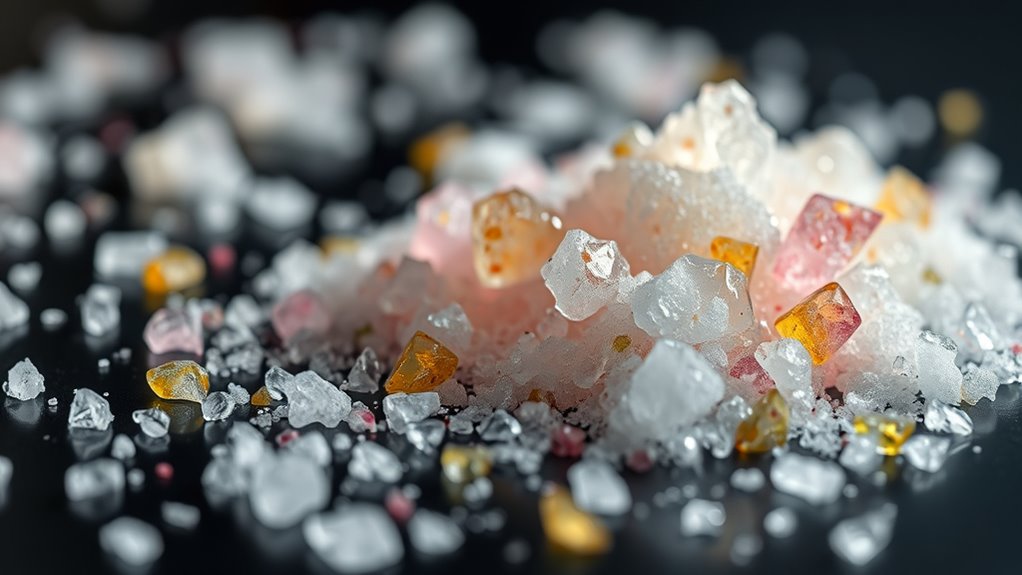
When you combine salts like melamine formate with resin matrices, you create salt-resin composites that considerably boost formaldehyde adsorption and immobilization. These composites use ionic salts derived from melamine salts and organic acids to enhance cross-linking within the resin, which markedly reduces formaldehyde emissions.
By improving thermal stability, salt-resin composites maintain their effectiveness even under elevated temperatures. The hydrogen-bonding networks formed in these materials facilitate long-term formaldehyde immobilization, decreasing off-gassing and improving indoor air quality.
Incorporating these optimized salt-resin composites into filters and building materials can achieve up to 96% formaldehyde reduction. If you’re looking to control formaldehyde effectively, leveraging melamine salt-based composites offers a powerful, durable solution that combines chemical efficiency with enhanced material stability.
Frequently Asked Questions
What Are the Different Types of Formaldehyde Resins?
You’ll find three main types of formaldehyde resins: phenol-formaldehyde, urea-formaldehyde, and melamine-formaldehyde.
Each offers unique properties like thermal stability, fast curing, or chemical resistance for different applications you choose.
What Will Neutralize Formaldehyde?
To neutralize formaldehyde, you’ll want to use melamine salts or phosphate buffers—they’re like knights in shining armor, binding and neutralizing harmful molecules while preventing acid formation and pigment changes.
You can trust these agents to work effectively.
What Preservatives Release Formaldehyde?
You’ll find preservatives like glutaraldehyde, phenol-formaldehyde resins, parabens, and isothiazolinones release formaldehyde over time. They’re popular for antimicrobial effects but watch for emissions that depend on pH, temperature, and stability.
What Type of Resin Can Be Specified to Reduce Formaldehyde Emissions?
You should specify phenol-formaldehyde resins or melamine-urea-formaldehyde resins with melamine salts—they reduce formaldehyde emissions effectively.
Alternatively, consider formaldehyde-free options like polyurethane adhesives to eliminate emissions altogether.
Conclusion
When you use the right salts, like calcium chloride, you can effectively neutralize formaldehyde in your environment. Imagine a school installing calcium chloride-based filters that not only trap but break down formaldehyde, creating safer classrooms for kids.
By choosing metal salts or salt-resin composites, you’re not just filtering air—you’re actively removing harmful chemicals. This simple step can transform how you protect your space from formaldehyde’s risks.
In conclusion, the best 3 salts for formaldehyde applications, including calcium chloride, offer a powerful solution to purify air. Using these salts ensures cleaner, healthier environments by effectively reducing formaldehyde exposure.