5 Best Camera Settings for Stunning Photos in 2027
To capture stunning photos in 2027, you’ll want to master five essential camera settings that make all the difference. Start by adjusting your exposure—this means balancing aperture, shutter speed, and ISO to suit the lighting conditions you’re working with. Getting these right is the foundation for great shots.
Next, pick the right camera mode. Manual mode gives you full control, while shutter priority is perfect when you’re shooting action or movement.
Don’t forget lenses—choose based on focal length to frame your subject just the way you want. Matching shutter speed to your subject’s movement is key to freezing or blurring motion creatively.
Finally, set your aperture and ISO to match your style, whether you’re shooting portraits, landscapes, or fast-paced scenes. Keep practicing these settings, and you’ll unlock even more creative control in your photography.
| Image | Name | Editor's Rating | Price |
|---|---|---|---|
|
|
||

|
|
||

|
|
||

|
|
||
|
|
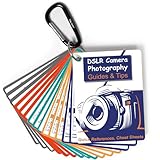
DSLR Cheat Sheet Photography Accessories Camera Accessories for Canon Nikon
- Must-Have Camera Accessories for Photography: Includes 30 pages of the most useful photography tips, these...
- Photography Tips at Your Fingertips: Covers all the information you need when shooting! Concise and easy to understand...
- Pocket-sized Photography Guides: Measures 3×4 in, this photography accessories for Canon is compact & highly portable...
Mastering your camera settings can be challenging, especially when you’re out in the field. The DSLR Cheat Sheet Photography Accessories provide a simple and effective solution for photographers who want quick, reliable guidance without fumbling through manuals or apps. These compact cheat sheets help you make precise adjustments on the fly.
Designed for Canon, Nikon, Sony, and more, these color-coded guides cover essential topics like exposure, composition, and lighting. They also include tips for tricky situations such as portraits and fireworks. The clear layout helps you understand settings fast, improving your shots instantly.
The cheat sheets are built to last, made from durable materials with a metal carabiner included for easy attachment to your camera bag or belt. This design ensures your photography reference is always within reach and protected during outdoor shoots.
While these guides focus on practical camera settings and techniques, they do not replace in-depth tutorials or hands-on tools. They are best used as a quick reference to enhance your shooting experience and confidence.
Best for: photographers of all levels who want a portable, easy-to-understand reference for improving camera skills and handling various shooting scenarios.
What We Like:
- Compact, durable design with easy attachment
- Clear, color-coded pages for quick learning
- Covers multiple brands including Canon and Nikon
- Practical tips for diverse photographic situations
Specification:
| Feature | Details |
|---|---|
| Manufacturer | DSLR Cheat Sheet |
| Dimensions | Pocket-sized, approx. 3×5 in |
| Weight | Lightweight, under 0.1 lb |
| Material | Durable laminated paper |
| Color Options | Multi-color (color-coded pages) |
Photography Cheat Sheet for DSLR Beginners
- Comprehensive Guide for Nikon, Canon, and Sony DSLRs:This 30-page photography guide is specifically designed for DSLR...
- Easy-to-Use Reference for Every Shooting Situation:Covering exposure, shooting modes, composition, and lighting, this...
- Compact and Portable Design – Ideal for On-the-Go Use:Measuring just 4×3 inches, this durable cheat sheet fits...
Master your DSLR photography with this compact, color-coded cheat sheet designed to simplify complex settings. It offers quick guidance on exposure, shooting modes, composition, and lighting, helping you overcome common challenges when learning manual controls. This practical tool boosts your confidence behind the camera, making every shot count.
Sized at just 4×3 inches and weighing 3.2 ounces, the guide is highly portable. Its durable metal carabiner lets you easily clip it onto your camera bag for instant access. The sturdy design ensures it holds up to regular use, so you don’t have to worry about wear or damage while on the move.
This 30-page, double-sided set is tailored for Canon, Nikon, and Sony DSLR users. Whether capturing portraits, landscapes, or fast-moving action, it helps you navigate settings efficiently. This makes it especially useful for moms and beginners who want to improve their skills without fumbling through complicated manuals.
While it covers essential DSLR functions clearly, advanced photographers may find it too basic. It is also limited to certain camera brands and comes only in a physical format, which might not suit those preferring digital tools.
Best for: DSLR camera owners, especially beginners and busy parents seeking a portable reference to improve photography skills.
What We Like:
- Lightweight, pocket-sized design for easy carrying
- Clear, organized layout covering key DSLR settings
- Durable build with metal carabiner attachment
- Ideal for quick reference in varied shooting scenarios
Specification:
| Feature | Details |
|---|---|
| Manufacturer | Not specified |
| Dimensions | 4 × 3 inches |
| Weight | 3.2 ounces (approx. 91 g) |
| Material | Paper sheets with metal carabiner |
| Color Options | Color-coded pages |
Godox iT30Pro O TTL Mini Camera Flash for Olympus Panasonic E-M10 III E-M1
- Precise TTL Auto-Exposure:The iT30 Pro O's TTL mode measures light through the lens in real time. Whether you're a...
- Ultra-portable Design:Weighing only 120 g and being about a quarter the size of a traditional speedlight, this flash...
- 2.8" Full-color Touchscreen:The responsive 2.8" touchscreen allows for quick and easy navigation through settings. A...
The Godox iT30Pro O TTL Mini Flash is designed to enhance your photography with Olympus or Panasonic cameras. Its compact and lightweight design solves the problem of bulky flashes, making it easy to carry during travel or long shoots. Weighing just 120 grams, it fits comfortably in your camera bag without adding extra bulk.
This flash improves your shooting experience by offering precise TTL auto-exposure and high-speed sync up to 1/8000 s. These features help you capture sharp images in challenging lighting conditions. The intuitive 2.8-inch full-color touchscreen and rotary dial simplify adjustments, so you spend less time fumbling with settings.
Maintenance is straightforward thanks to its durable build and quick-release foot, allowing fast attachment and removal. The built-in Godox 2.4GHz X wireless system supports multi-flash setups, giving you flexibility for creative lighting without complicated wiring.
While the mini size offers convenience, it may deliver less power than larger speedlights. Additionally, its compatibility is limited to Olympus and Panasonic cameras, which may restrict use if you switch brands.
Best for: Olympus and Panasonic photographers seeking a lightweight, versatile flash with advanced TTL and wireless capabilities for on-location shooting.
What We Like:
- Compact and lightweight for easy portability
- Accurate TTL auto-exposure and high-speed sync for varied lighting
- User-friendly touchscreen and rotary dial controls
- Wireless multi-flash setup via built-in Godox 2.4GHz X system
Specification:
| Feature | Details |
|---|---|
| Manufacturer | Godox |
| Dimensions | Compact size (exact size not specified) |
| Weight | 120 g (0.26 lb) |
| Compatible Cameras | Olympus, Panasonic |
| Control Interface | 2.8-inch full-color touchscreen, rotary dial |
| Wireless System | Godox 2.4GHz X |
| Sync Speed | Up to 1/8000 s high-speed sync |
Godox GM6S Pro 5.5″ Touch Screen Monitor
- Featuring Onion Skin and Anamorphic De-Squeeze functions, the Godox GM6S Pro stands out while still offering the full...
- The 5.5" Wide View Angle IPS HD Touch Screen offers 2000nit of sustained brightness, peaking at 2200nit - providing...
- With an optional proprietary cable (sold separately), the GM6S Pro monitor provides a camera control interface that lets...
The Godox GM6S Pro 5.5-inch touchscreen monitor brings precision and clarity to your video shoots. Its bright 2000-nit IPS display ensures clear visibility, even under intense sunlight, solving the common issue of screen glare during outdoor filming. The responsive touchscreen lets you adjust camera settings quickly, keeping you focused on capturing the perfect shot.
This monitor supports advanced video tools like False Color, Waveform, and Peak Focus, helping you maintain accurate exposure and sharpness. With 4K@60Hz HDMI input/output and audio monitoring via a 3.5mm jack, it streamlines your workflow, letting you monitor video and sound simultaneously. Power options are flexible, supporting DC, USB-C, or NP-F batteries, so you can stay powered throughout long shoots.
Maintenance is straightforward with firmware upgrades and LUT file support via an SD card, keeping your device updated and customizable. However, the 5.5-inch screen may feel small for some users, and full camera control requires a proprietary cable. Audio monitoring is basic, limited to a 3.5mm jack without advanced audio I/O options.
Best for: Videographers and filmmakers who need a compact, bright touchscreen monitor with essential video monitoring tools and flexible power options for diverse shooting environments.
What We Like:
- Bright 2000-nit IPS screen for excellent outdoor visibility
- Useful monitoring tools like False Color and Waveform for accurate video control
- Multiple power options including USB-C and NP-F batteries
- Easy firmware and LUT updates via SD card
Specification:
| Feature | Details |
|---|---|
| Manufacturer | Godox |
| Screen Size | 5.5 inches |
| Display Type | IPS, 2000-nit brightness |
| HDMI Support | 4K@60Hz input/output |
| Audio Monitoring | 3.5mm jack |
| Power Options | DC, USB-C, NP-F battery |
| Firmware/LUT Updates | Via SD card |
DSLR/Mirrorless Photography Cheat Sheet Credit Card
- 📷 QUICK PHOTOGRAPHY REFERENCE CARDS - Printed on PVC plastic making them waterproof and durable.
- 📷 EASY TO UNDERSTAND – Quick, easy reference for aperture, shutter speed, ISO, white balance, ND filters, and flash...
- 📷 BEGINNING, INTERMEDIATE & ADVANCED PHOTOGRAPHERS – these cheat sheets are appropriate for all levels of...
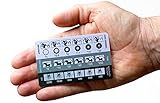
Carrying essential camera settings in your pocket has never been easier. The compact DSLR/Mirrorless Photography Cheat Sheet Credit Card provides quick, reliable guidance whenever you need it. Its credit card size fits neatly in your wallet or camera bag, ensuring you can access vital information on the fly.
This durable guide is printed on waterproof PVC, designed to withstand various shooting conditions. It helps you instantly recall important adjustments like aperture, shutter speed, ISO, white balance, ND filters, and flash settings. This clarity saves time and reduces guesswork, allowing you to concentrate on capturing the perfect shot.
Maintenance is simple—just wipe clean if it gets dirty, and it’s ready for your next photo session. The card’s design supports all camera types, including Nikon, Canon, Sony, and film models, making it a versatile tool for any photographer.
While the credit card format limits space for detailed explanations, it efficiently delivers the most critical information in a user-friendly layout. It’s a practical companion that enhances your photography skills without overwhelming you with complexity.
Best for: photographers of all skill levels who want a compact, durable, and easy-to-use reference guide for essential camera settings on the go.
What We Like:
- Compact size fits easily in wallets or camera bags for quick access
- Waterproof PVC material ensures durability in various environments
- Covers key settings including advanced ND filter calculations
- Supports multiple camera brands and types
- Easy to clean and maintain
Specification:
| Feature | Details |
|---|---|
| Manufacturer | Not specified |
| Dimensions | Credit Card Size (~3.4 x 2.1 inches) |
| Weight | Lightweight (approx. a few grams) |
| Material | Waterproof PVC |
| Color Options | Not specified |
Factors to Consider When Choosing Settings for Camera
When choosing your camera settings, you’ll want to take into account the lighting conditions and how fast your subject is moving. Picking the right camera mode and lens with the ideal focal length can make a big difference.
Also, think about the style you want to capture to guarantee your settings match your vision. It’s all about making sure everything works together to get the shot you’re imagining.
Lighting Conditions Impact
Because lighting conditions drastically affect your camera’s exposure settings, you’ll need to adjust aperture, shutter speed, and ISO to capture the best image quality. In bright daylight, faster shutter speeds prevent overexposure, while slower speeds help capture detail in low light.
Pay attention to the light’s direction and quality—soft light from overcast skies creates even tones, whereas harsh sunlight casts strong shadows, adding mood and texture. Different light sources, like incandescent or fluorescent bulbs, change color temperature, so adjust your white balance to maintain accurate colors.
You can also use reflectors or diffusers to shape natural light, reducing unwanted shadows and improving composition. Mastering these lighting impacts guarantees your photos look stunning in any environment.
Camera Mode Selection
How do you choose the right camera mode to capture the perfect shot? It depends on how much control you want over exposure settings.
Manual mode gives you full authority over aperture, shutter speed, and ISO, perfect for tricky lighting.
If you want to control depth of field but leave shutter speed to the camera, aperture priority is your go-to — great for portraits.
Shutter priority lets you pick a shutter speed, ideal when freezing fast action or creating motion blur.
Knowing when to use each mode sharpens your results: manual for challenging light, aperture priority for selective focus, and shutter priority for action shots.
Mastering these modes helps you adapt quickly and capture stunning images every time.
Lens And Focal Length
Selecting the right lens and focal length shapes how you frame your subject and control depth of field, directly impacting your photo’s composition. A wide focal length like 18mm captures expansive scenes, perfect for landscapes and architecture.
On the other hand, longer focal lengths, such as 200mm, isolate subjects in portraits and wildlife shots. Keep in mind, wider apertures often pair with shorter focal lengths to blur backgrounds beautifully.
Focal length also affects perspective: wide-angle lenses exaggerate foreground size, whereas telephoto lenses compress space, making distant objects appear closer. Understanding these effects helps you choose lenses that match your creative vision and shooting scenario.
That way, you ensure your photos have the intended focus, depth, and spatial relationships for stunning results.
Subject Movement Speed
Your choice of lens and focal length sets the stage, but capturing subjects in motion demands attention to different camera settings.
For fast movers like athletes or wildlife, use a shutter speed of 1/500s or faster to freeze motion and avoid blur. If your subject moves moderately, try 1/250s to 1/500s to capture both sharpness and a sense of movement.
In low light, balance shutter speed with aperture and ISO to maintain quality without noise.
Continuous shooting mode helps by snapping multiple shots quickly, increasing your chances of a sharp image.
To add creative flair, experiment with panning—follow the subject with a slower shutter speed to keep it sharp while blurring the background, emphasizing motion.
Desired Image Style
Why does the image style you want matter so much? Because it directly shapes your camera settings. If you’re aiming for a shallow depth of field to highlight a portrait, choose a wide aperture like f/1.8 to f/4—this blurs the background while keeping your subject sharp.
For action shots, crank up your shutter speed to 1/500s or faster to freeze movement and avoid blur. When capturing detailed landscapes or scenes with high dynamic range, a smaller aperture such as f/8 to f/16 guarantees greater depth of field and sharpness throughout.
Don’t forget ISO: use low ISO (100-400) in bright conditions for clean images, and higher ISO (800-3200) in low light, but watch for noise. Tailoring settings to your style gives you stunning results every time.
Frequently Asked Questions
How Do I Clean My Camera Sensor Safely?
You clean your camera sensor safely by using a blower to remove dust, then a sensor cleaning swab with sensor-safe solution if needed.
Never touch the sensor directly, and always follow your camera’s manual instructions carefully. It’s a simple process, but a little caution goes a long way.
What Are the Best Lenses for Astrophotography?
Imagine capturing the Milky Way’s glow perfectly—use wide-aperture lenses like the Rokinon 14mm f/2.8.
You’ll get sharp stars and minimal distortion, making your night sky photos truly breathtaking and immersive.
How Can I Prevent Lens Flare in Bright Sunlight?
You can prevent lens flare by using a lens hood, shading the lens with your hand, or adjusting your angle to block direct sunlight.
Also, keep your lens clean to avoid extra reflections that cause flare.
These little tricks really make a difference when you’re shooting in bright sunlight!
What Is the Difference Between RAW and JPEG Formats?
Think of RAW as a blank canvas, while JPEG is a finished painting. You get more editing freedom with RAW, but JPEG files are smaller and ready to share instantly without much tweaking.
RAW gives you all the details, so you can adjust colors and exposure later. JPEG, on the other hand, is already processed by the camera and looks good right away.
How Do I Update My Camera’s Firmware?
You update your camera’s firmware by visiting the manufacturer’s website and downloading the latest firmware file.
Next, connect your camera to your computer or use a memory card to transfer the update.
Then, follow their update instructions carefully. This helps avoid any interruptions during the process.
Conclusion
Mastering your camera settings is like tuning a musical instrument—each adjustment brings your photos closer to a perfect symphony. By understanding your DSLR or mirrorless gear, using the right accessories, and considering key factors like lighting and focus, you’ll capture stunning images every time.
Keep experimenting with settings like ISO, aperture, and shutter speed. Soon, you’ll create photos that truly sing in 2027 and beyond. Remember, the best camera settings depend on the scene and your creative vision.
So, don’t be afraid to try new combinations and learn what works best for you. With practice and patience, your photos will stand out with vibrant colors, sharp details, and perfect exposure. Embrace these tips to make your photography shine in 2027 and capture stunning images every time you press the shutter.