How Do Flea Eggs Look Like Salt? How to Tell the Difference
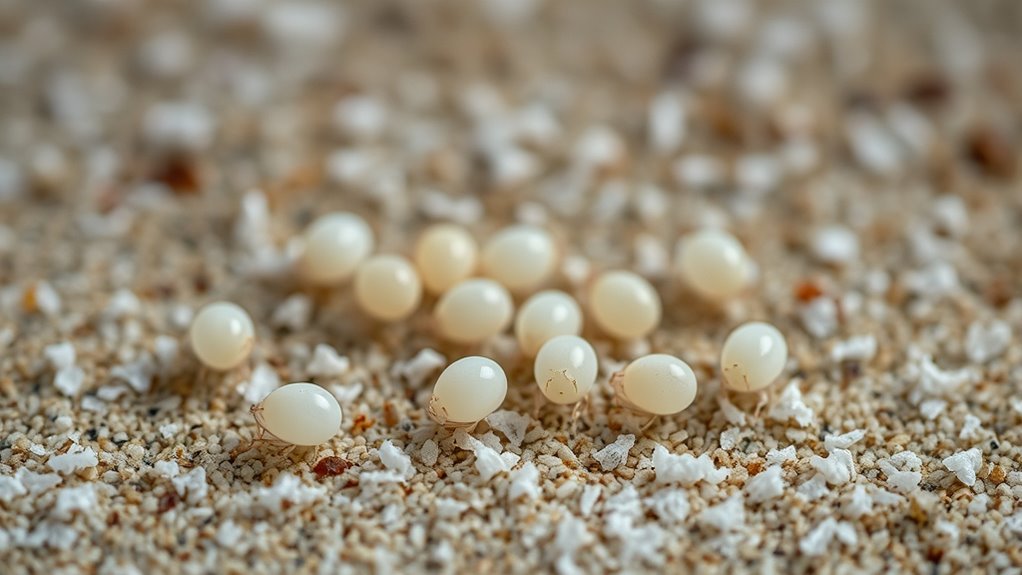
You’ll notice flea eggs look a lot like tiny grains of salt—small, smooth, white, and oval-shaped with a slight shine. Their salt-like appearance makes them easy to overlook as you might mistake them for harmless specks. These eggs are often scattered in your pet’s fur, bedding, or carpeting, blending in seamlessly with salt-like granules.
Unlike dandruff, which is flaky and irregular, flea eggs are uniform and slightly sticky. This subtle difference is key to identifying them correctly. Knowing their salt-like look helps you spot and control flea eggs early.
Keep reading to understand where flea eggs hide and how to tackle them effectively. Early detection is crucial to preventing a full-blown flea infestation.
What Are Flea Eggs?
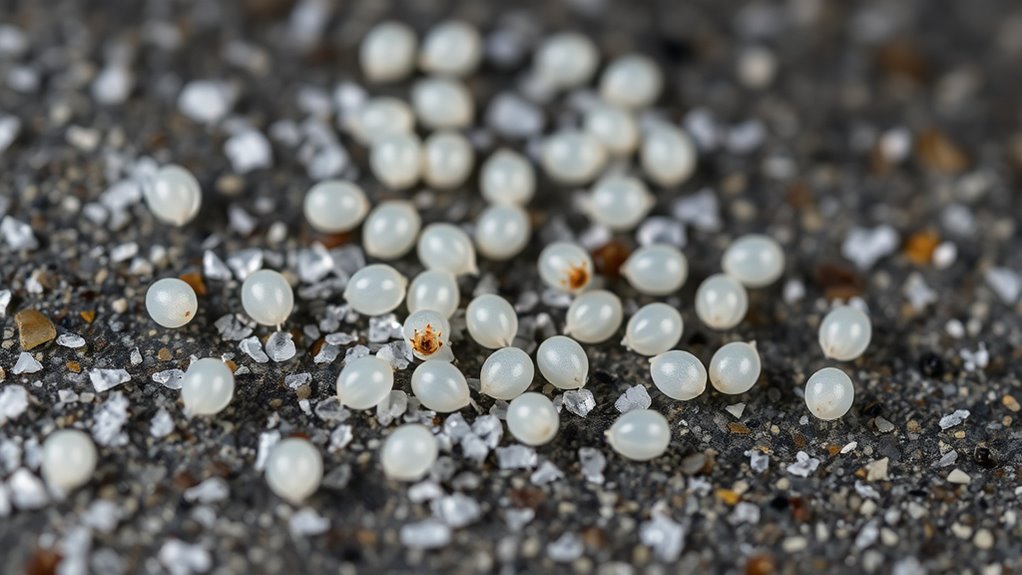
Although flea eggs are tiny and easy to overlook, you’ll notice they look like grains of salt—about 0.5 millimeters long, smooth, shiny, and white or pearl-colored. These flea eggs have a small size and oval shape, making their appearance resemble white specks scattered around.
Flea eggs are tiny, smooth, shiny, white or pearl-colored, and resemble grains of salt.
Because they’re not glued to your pet, flea eggs easily fall off into the environment, such as carpets, bedding, and upholstery. Their tacky surface helps them cling to fibers, spreading throughout your home.
Female fleas lay up to 50 eggs daily within 24-36 hours after their first blood meal, so you might find these tiny white specks in various places.
Understanding flea eggs’ appearance and how they spread in your environment is key to controlling infestations.
How to Spot Flea Eggs on Your Pet

Since flea eggs are so small and resemble grains of salt, spotting them on your pet requires careful attention and the right tools. To inspect effectively, part your pet fur in well-lit areas like the neck, tail base, and belly, where flea eggs tend to cluster.
Use a flea comb to gently comb through the fur; this helps catch small white specks that might otherwise blend in.
Flea eggs are tiny, shiny, and oval-shaped, so keep an eye out for these salt-like grains stuck in the comb or fur. If you notice any suspicious specks, examine them closely to confirm they’re flea eggs.
Regular inspections with a flea comb make it easier to detect these tiny invaders early and protect your pet from infestations.
Flea Eggs vs. Pet Dandruff
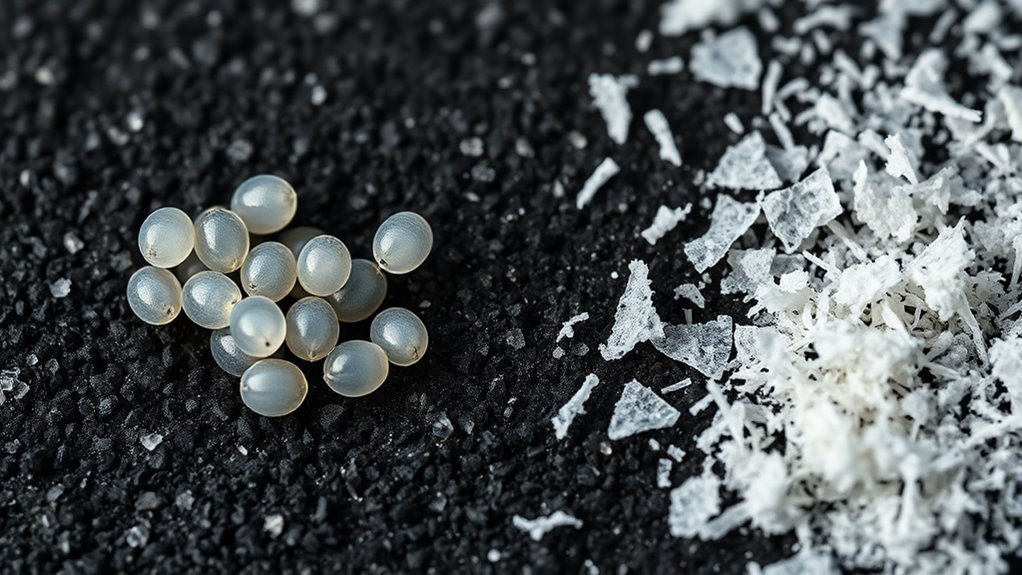
You might mistake flea eggs for pet dandruff, but there are key differences in appearance to watch for. Flea eggs are tiny, smooth, and salt-like, often clustered on fur.
Dandruff flakes are larger, flaky, and scattered.
Knowing these signs helps you spot a flea infestation early and take action fast.
Appearance Comparison
While flea eggs closely resemble grains of salt, measuring about 0.5 mm and shaped oval, you can tell them apart from pet dandruff by their smooth, shiny, and often translucent appearance. Flea eggs are tiny, smooth, and have a salt-like appearance that’s uniform and pearl-like.
In contrast, pet dandruff tends to be larger, flaky, and irregular with a white or yellowish hue. When you inspect your pet, keep an eye out for these differences to avoid confusion.
- Flea eggs are clustered, smooth, and translucent
- Dandruff flakes are larger, flaky, and irregular
- Flea eggs have a consistent salt-like size and shape
This clear appearance comparison helps you identify flea eggs quickly and accurately.
Identifying Infestation Signs
Recognizing the subtle differences between flea eggs and pet dandruff can help you catch an infestation early.
Flea eggs have a distinct salt look, appearing as tiny, smooth, oval grains about 0.5 mm in size, often clustered on your pet’s fur or bedding. Their shiny, pearl-white flea eggs appearance stands out from dandruff, which is flaky, larger, and scattered irregularly.
When spotting small white specks resembling salt on your pet, focus on identifying signs like clustering and smooth texture to distinguish flea eggs from dandruff.
Catching these signs early can prevent a full flea infestation, saving you and your pet discomfort.
Always inspect closely; the difference between flea eggs and dandruff is subtle but vital for effective treatment.
Where Flea Eggs Hide in Your Home
Because flea eggs are so tiny and resemble grains of salt, they easily blend into common household spots like carpets, pet bedding, and furniture crevices. You’ll find these eggs where pets spend most of their time, making them hard to spot without a close look.
Flea eggs hide in places that offer shelter and darkness, often sticking to fibers deep in carpets or upholstery.
To know where to focus your inspection, check these common hiding spots:
- Carpets and rugs, especially where pets rest or walk frequently
- Pet bedding, where eggs cluster around sleeping areas
- Dark spots like baseboards, furniture crevices, and under cushions
Knowing these spots helps you tackle flea eggs before they hatch and spread.
How Long Do Flea Eggs Hatch?
You might wonder how long flea eggs take to hatch once they’ve been laid. Typically, they hatch within 2 to 14 days.
However, factors like temperature and humidity play a big role in speeding up or slowing down the process.
Understanding these conditions can help you predict when new fleas might appear in your home.
Egg Hatch Timeline
While flea eggs can hatch as quickly as within 36 hours under ideal warmth and humidity, you should expect most to emerge between 2 to 14 days. The hatch timeline depends heavily on environmental factors like temperature, humidity, and light exposure.
Cooler conditions can slow down the hatching process, causing flea eggs to remain dormant for days or even weeks. These dormant eggs wait patiently until conditions improve before continuing development.
Keep in mind:
- Around 50% of flea eggs hatch within 36 hours in suitable environments.
- Dormant eggs can survive weeks or months before hatching.
- Temperature and humidity are the main drivers of the hatching process.
Understanding these factors helps you anticipate when flea eggs will hatch and take timely action to control infestations.
Environmental Impact
When environmental conditions favor warmth and humidity, flea eggs hatch much faster, often within just a few days. You’ll notice that higher temperatures and increased humidity boost the hatch rate markedly—around 50% of flea eggs can hatch in just 36 hours under ideal conditions.
On the flip side, if the temperature drops or humidity is low, flea eggs may remain dormant for weeks or even months, delaying the hatching process. These environmental conditions play a vital role in flea development and infestation cycles.
Because flea eggs can survive without a host for up to two months in humid climates, managing humidity and temperature around your home can help control how quickly these pests hatch and spread.
Why Flea Eggs Spread Easily at Home
Because flea eggs look just like tiny grains of salt, they often go unnoticed as they scatter throughout your home. Their small, smooth, oval shape helps flea eggs spread easily by slipping into carpets, pet bedding, and fur.
Since they’re not sticky, flea eggs fall off hosts and disperse freely in your home environment.
Warm, humid conditions speed up hatching and encourage indoor infestation. Plus, your pets’ movement and regular cleaning dislodge eggs, increasing dispersal.
Here’s why flea eggs spread so quickly indoors:
-
- Tiny size and salt-like appearance make them hard to spot.
- Non-sticky surface lets them drop off and scatter easily.
- Household activity and climate promote rapid dispersal and infestation.
How to Remove Flea Eggs From Pets and Home
If you want to effectively remove flea eggs from your pets and home, start by using a fine-toothed flea comb to catch eggs on your pet’s fur. Then dip the comb in soapy water to eliminate them. This method targets flea eggs directly on your pet, preventing further spreading.
Next, focus on your home by regularly vacuuming carpets, furniture, and pet bedding to pick up flea eggs hiding in fibers. Don’t forget to wash pet bedding, linens, and plush toys in hot water at least 130°F to kill any remaining eggs and larvae.
Combining combing your pet and thorough cleaning of your home ensures you’re removing flea eggs effectively and breaking the flea life cycle for good.
Natural Remedies and Essential Oils for Flea Eggs
Although tackling flea eggs can feel overwhelming, natural remedies and essential oils offer effective, chemical-free options to control and prevent infestations.
Essential oils like cedarwood and lemongrass disrupt the flea life cycle by repelling fleas and killing eggs and larvae. Using these natural remedies helps you avoid harsh chemicals while maintaining flea control around your home and pets.
Try these natural remedies for flea eggs:
- Apply diluted cedarwood oil to pet bedding to deter eggs from hatching.
- Use properly diluted lemongrass oil to kill flea eggs and larvae.
- Spray natural flea sprays with essential oils on pets and common areas.
Incorporating essential oils into your cleaning routine can reduce flea eggs and keep infestations under control naturally.
How to Prevent Flea Egg Infestations
To prevent flea egg infestations, you need to stay proactive by regularly cleaning your home and managing your pets’ environments. Vacuum carpets, furniture, and pet bedding often to remove flea eggs before they hatch. Use a flea comb on your pets to catch eggs and larvae early.
Wash pet bedding in hot water weekly. Apply Insect Growth Regulators (IGRs) to disrupt the flea life cycle and prevent infestation. Maintain your yard by mowing grass and removing debris to reduce breeding sites.
| Action | Target Area | Frequency |
|---|---|---|
| Vacuuming | Carpets, furniture | Weekly |
| Washing bedding | Pet bedding, linens | Weekly |
| Applying IGRs | Home environment | As recommended |
Frequently Asked Questions
Do Flea Eggs Look Like Salt?
Yes, flea eggs look like tiny grains of salt because they’re small, smooth, and shiny. You might mistake them for salt crystals or dandruff, especially when you spot them on your pet’s fur or around your home.
Their size and appearance make them easy to overlook, but noticing them early can help with effective flea control.
What Can Be Mistaken for Flea Eggs?
You can mistake dandruff, tiny white lint, salt crystals, or mineral deposits for flea eggs.
Flea dirt might also confuse you since it looks like ground pepper but isn’t eggs.
Check closely to tell them apart.
What Bug Eggs Look Like Salt?
You’ll often find flea eggs looking like tiny, white grains of salt. Their small, shiny, oval shape and sticky texture make them easy to mistake for salt crystals on your pet’s bedding or carpet.
This resemblance can cause confusion when trying to identify a flea problem. However, closely inspecting the area can help you distinguish between actual salt and flea eggs.
Does Salt Really Kill Flea Eggs?
You might think salt’s a tiny superhero against flea eggs, but it only weakens them a bit.
It’s not a guaranteed zap; you’ll need other tricks to fully win the battle against fleas.
Conclusion
Now that you know flea eggs often look like tiny grains of salt, you can spot and tackle them before they multiply. Remember, “a stitch in time saves nine”—catching flea eggs early saves you from a bigger infestation later.
Stay vigilant by checking your pet regularly, cleaning your home thoroughly, and using natural remedies when needed. With these steps, you’ll keep your furry friend and your home flea-free and comfortable.
Understanding how flea eggs look like salt helps you identify them quickly and take action. This knowledge is key to preventing a full-blown flea problem and ensuring a healthy environment for your pet.