5 Best Entry Level DSLR Cameras for Wildlife Photography 2027
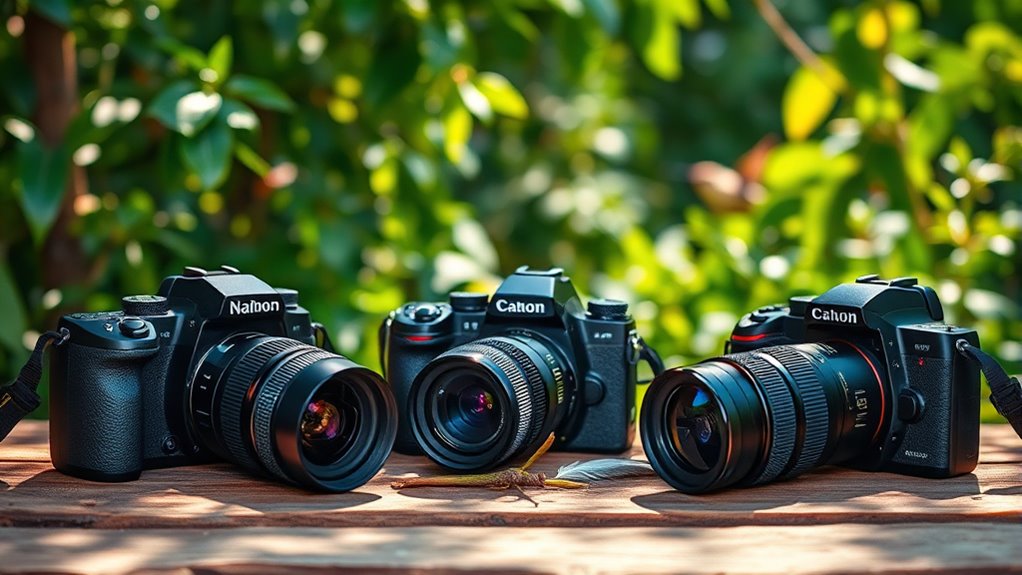
If you want an entry-level DSLR for wildlife photography in 2027, there are some great options to consider. Cameras like the Canon EOS Rebel T7 or Nikon D3300 deliver sharp 24MP images and fast autofocus, perfect for capturing animals in action.
These models balance quality and ease of use, making them ideal for beginners.
The Canon Rebel T3 stands out by offering versatile dual lenses, giving you flexibility in different shooting scenarios.
Meanwhile, the Pentax K-50 is known for its rugged weather resistance and solid overall performance.
When choosing your camera, prioritize features like strong autofocus, good continuous shooting speed, and a durable build.
Keep exploring your options to find the model that best fits your shooting style and outdoor needs.
Wildlife photography is all about being ready for the moment, so pick a camera that can keep up with you!
| Image | Name | Editor's Rating | Price |
|---|---|---|---|

|
|
||

|
|
||

|
|
||

|
|
||

|
|
Canon EOS Rebel T7 DSLR Camera EF-S 18-55mm f/3.5-5.6 is II Lens Kit
- 24.1 Megapixel CMOS (APS-C) sensor with is 100–6400 (H: 12800)
- Built-in Wi-Fi and NFC technology
- 9-Point AF system and AI Servo AF

Experience the ease of capturing stunning wildlife images with the Canon EOS Rebel T7 DSLR Camera Kit. Designed to deliver sharp, clear photos, this camera helps beginners overcome common challenges like blurry or poorly framed shots. Its 24.1 MP APS-C sensor ensures detailed images, making your wildlife subjects come to life.
The included EF-S 18-55mm f/3.5-5.6 IS II lens offers flexible zoom options. This versatility allows you to frame animals at various distances without switching lenses. The 9-point autofocus system helps maintain focus on moving subjects, while 3 frames per second shooting keeps up with moderate action.
Maintenance is straightforward thanks to its durable build and simple controls. The camera’s lightweight design reduces fatigue during long outdoor sessions. Built-in Wi-Fi and NFC make it easy to share your photos instantly or control the camera remotely, enhancing your shooting experience.
While the camera offers solid performance, its 3 fps shooting speed may miss rapid movements. Also, the lens’s maximum aperture limits low-light capabilities, and the optical viewfinder covers 95% of the frame, requiring some adjustment for precise composition.
Best for: Beginners and amateur photographers seeking a reliable and easy-to-use DSLR for wildlife and everyday photography.
What We Like:
- Sharp 24.1 MP APS-C sensor for detailed images
- Versatile 18-55mm image-stabilized lens for flexible framing
- Built-in Wi-Fi and NFC for convenient sharing and remote control
Specification:
| Feature | Details |
|---|---|
| Manufacturer | Canon |
| Camera Type | DSLR |
| Sensor Resolution | 24.1 Megapixels |
| Sensor Size | APS-C |
| Lens Included | EF-S 18-55mm f/3.5-5.6 IS II |
| Autofocus Points | 9 |
| Continuous Shooting | 3 frames per second |
| Viewfinder Coverage | 95% |
| Connectivity | Wi-Fi, NFC |
| Weight | Approx. 1.1 lb (500 g) |
Nikon D3300 24.2 MP CMOS Digital SLR (Renewed)
- This Certified Refurbished product is tested and certified to look and work like new. The refurbishing process includes...
- , and may arrive in a generic box.
The Nikon D3300 DSLR captures every moment with exceptional clarity thanks to its 24.2 MP CMOS sensor. This camera is ideal for photographers who want sharp, detailed images without complicated settings. Its compact design makes it easy to carry on outdoor shoots, especially for wildlife enthusiasts.
Equipped with an 18-55mm VR II lens, the D3300 delivers versatility in framing your shots. The image stabilization helps reduce blur, so your photos come out crisp even in challenging conditions. Shooting at 5 frames per second allows you to catch fast-moving subjects with ease.
This renewed model is built to perform like new, with straightforward maintenance to keep it running smoothly. Its ISO range up to 25600 means you can shoot in low light without sacrificing quality. The articulating 3-inch LCD screen lets you check your work from different angles, and Wi-Fi connectivity simplifies sharing your photos.
However, autofocus uses contrast detection, which can be slower in some situations. Video recording maxes out at Full HD 1080p, and USB 2.0 limits transfer speeds. These factors are worth considering depending on your specific needs.
Best for: Enthusiasts and beginner wildlife photographers who need a reliable, high-resolution DSLR with versatile shooting options and easy handling.
What We Like:
- Sharp 24.2 MP sensor for detailed images
- 18-55mm VR II lens with image stabilization
- Fast 5 fps continuous shooting for action shots
- Wide ISO range for low-light photography
- Articulating LCD and Wi-Fi for easy review and sharing
Specification:
| Feature | Details |
|---|---|
| Manufacturer | Nikon |
| Sensor Resolution | 24.2 Megapixels |
| Lens | 18-55mm VR II |
| Continuous Shooting | 5 frames per second |
| ISO Range | 100 – 25600 |
| LCD Screen Size | 3 inches, articulating |
| Video Resolution | Full HD 1080p |
| Connectivity | Wi-Fi, USB 2.0 |
| Weight | Approx. 0.41 kg (body only) |
Nikon D3100 14.2MP DSLR Camera with Lens
- The CMOS image sensor offers an effective pixel count of 14.2-million pixels (D3000: CCD image sensor with 10.2-million...
- EXPEED 2 is Nikon's new image-processing engine, developed by refining the concepts, it maximises the performance of the...
- The camera also makes the most of its standard sensitivity settings up to ISO 3200 (D3000: ISO 100-1600) and additional...
Capture stunning wildlife moments with the Nikon D3100 DSLR, designed to bring clarity and vividness to your outdoor photography. Its 14.2MP sensor works with the EXPEED 2 engine to reduce noise and highlight fine details, ensuring your images are sharp and vibrant.
The included AF-S DX 18-55mm VR lens features vibration reduction, helping to keep your shots steady, even when shooting handheld. This combination makes it easier to capture clear images of fast-moving subjects in nature.
With multiple shooting modes and 11 autofocus points, the camera adapts to different situations, giving you control over exposure and focus. The 3-inch LCD and optical viewfinder assist in composing your shots confidently.
Maintaining the camera is straightforward, and its reliable performance supports extended outdoor use. Though refurbished, it operates smoothly and is ideal for those refining their photography skills in wildlife and landscape settings.
Best for: Enthusiast photographers and beginners seeking an affordable DSLR for sharp, vivid wildlife and outdoor photos with manual control options.
What We Like:
- Detailed images with noise reduction from the 14.2MP sensor and EXPEED 2 engine
- Versatile 18-55mm VR lens provides steady zoom shots
- Full HD 1080p video recording with precise autofocus options
- Multiple shooting modes for creative flexibility
Specification:
| Feature | Details |
|---|---|
| Manufacturer | Nikon |
| Sensor Resolution | 14.2 Megapixels |
| Lens Included | AF-S DX 18-55mm VR |
| Screen Size | 3 inches |
| Autofocus Points | 11 |
| Video Resolution | 1080p Full HD |
| Weight | Approx. 0.45 kg (body) |
Canon EOS Rebel T3 DSLR with Dual Lenses
- 12MP APS-C CMOS sensor
- Up to 3 frames per second continuous shooting
- 9-point AF system
Capture stunning wildlife moments with the Canon EOS Rebel T3 DSLR, designed to meet the needs of beginner photographers. Its dual-lens kit provides a versatile zoom range from 18mm to 300mm, allowing you to easily frame both close-up and distant subjects without changing gear.
The camera’s 12.2 MP APS-C sensor produces sharp, clear images, while the 9-point autofocus helps you lock focus quickly on moving animals. This makes shooting fast wildlife action more manageable and less frustrating. The wide ISO range of 100-6400 lets you work confidently in different lighting, from bright daylight to shaded forest scenes.
The Rebel T3 combines user-friendly design with practical features like a 2.7-inch LCD screen and HDMI connectivity, which simplify reviewing and sharing your photos. Maintenance is straightforward thanks to Canon’s durable build quality, ensuring reliable performance during outdoor shoots.
While video recording is limited to 720p HD and the continuous shooting speed is 3 frames per second, these trade-offs are balanced by the camera’s ease of use and solid photo capabilities, ideal for those new to wildlife photography.
Best for: Wildlife photographers starting out who need a versatile, easy-to-use DSLR with a wide zoom range and reliable autofocus.
What We Like:
- Dual lenses cover a broad 18-300mm focal length for flexible shooting
- 9-point autofocus system offers fast, accurate focusing on moving subjects
- Wide ISO range (100-6400) supports shooting in varied light conditions
- Clear 12.2 MP sensor delivers sharp, detailed images
- Durable build suited for outdoor wildlife photography
Specification:
| Feature | Details |
|---|---|
| Manufacturer | Canon |
| Sensor Resolution | 12.2 Megapixels |
| Lens Kit | 18-55mm & 75-300mm |
| Autofocus Points | 9 |
| ISO Range | 100-6400 |
| LCD Screen Size | 2.7 inches |
| Video Resolution | 720p HD |
| Continuous Shooting | 3 fps |
| Dimensions (W x H x D) | 5.1 x 3.9 x 3.0 in (13 x 10 x 7.6 cm) |
| Weight | 1.1 lb (0.5 kg) |
Pentax K-50 DSLR Camera with 18-55mm WR and 55-300mm Lenses
- 16.3MP APS-C SENSOR - The combination of the 16.3-megapixel APS-C-sized CMOS sensor and PRIME M image processor is able...
- to ISO 51200.SAFOX IXI+ AUTOFOCUS SYSTEM - The SAFOX IXi+ AF system utilizes 11 focus points, including nine cross-type...
- FULLY WEATHER-SEALED DESIGN - The weather-sealed polycarbonate body with stainless steel chassis a
Pentax K-50 DSLR offers a rugged solution for photographers who face challenging outdoor conditions. Its weather-sealed design ensures you can shoot sharp wildlife images even in rain or dusty environments. This camera helps you focus on capturing the moment without worrying about equipment damage.
Equipped with a 16.3MP APS-C sensor and PRIME M processor, the K-50 delivers vibrant, detailed photos that bring wildlife scenes to life. The 6 fps continuous shooting rate and 11-point SAFOX IXi+ autofocus system work together to track fast-moving animals accurately, reducing missed shots.
The included 18-55mm WR and 55-300mm lenses cover a versatile focal range, allowing you to photograph subjects from wide-angle landscapes to distant wildlife. Lightweight yet durable, this DSLR is designed for adventure and ease of use in the field.
Maintenance is straightforward with weather-sealed lenses and body, helping protect internal components from moisture and dust. Wireless connectivity and Full HD video recording add creative flexibility for storytelling beyond still photos.
Best for: Outdoor and wildlife photographers seeking a rugged, weather-sealed DSLR with versatile zoom and fast autofocus for capturing action in tough environments.
What We Like:
- Durable weather-sealed body and lenses for reliable outdoor use
- Fast 6 fps shooting paired with precise 11-point autofocus
- Wide focal length range from 18 to 300mm for versatile wildlife photography
Specification:
| Feature | Details |
|---|---|
| Manufacturer | Pentax |
| Dimensions | Approx. 5.2 x 4.0 x 2.7 in |
| Weight | 5.1 lbs (2.31 kg) |
| Sensor | 16.3MP APS-C CMOS |
| Lenses Included | 18-55mm WR, 55-300mm |
| Video | Full HD 1080p, HD 720p |
Factors to Consider When Choosing an Entry Level DSLR Camera for Wildlife Photography
When choosing your first DSLR for wildlife photography, focus on key features like sensor resolution and lens focal length to capture sharp, detailed images from a distance. You’ll also want a camera with fast autofocus, flexible ISO settings for different lighting, and a good continuous shooting speed to catch action in real time.
Keeping these factors in mind will help you pick a camera that matches your wildlife shooting needs. It’s all about finding the right balance that works for you and the kind of wildlife shots you want to capture.
Sensor Resolution Importance
Although sensor resolution isn’t the only factor to take into account, it plays an essential role in capturing the fine details of wildlife subjects.
Choosing a camera with higher megapixels, like 24.1 or 24.2 MP, lets you achieve sharper, more vibrant images. It also gives you the flexibility to crop distant shots without losing quality, which is perfect for elusive animals.
However, keep in mind that higher resolution can increase noise in low-light situations. So, balancing megapixels with good ISO performance is key.
Higher resolution files are larger, meaning you’ll need ample storage, especially when shooting in RAW. If you plan to print your photos, a higher resolution guarantees excellent print quality.
Lens Focal Length
Sensor resolution helps you capture detailed images, but to truly get close to wildlife without disturbing them, you need the right lens focal length. For wildlife photography, a longer focal length between 200mm and 600mm lets you shoot animals from a distance, preserving their natural behavior.
If your camera has an APS-C sensor, remember it applies a 1.5x crop factor, effectively boosting your lens reach. Opt for lenses with wide apertures, like f/2.8 to f/4, to perform better in low light and create beautiful background blur that highlights your subject.
Image stabilization is another must-have feature to keep your shots sharp when using telephoto lenses. Alternatively, a versatile zoom lens, such as an 18-300mm, offers flexibility to capture various wildlife scenes without swapping lenses.
Autofocus Performance
Choosing an entry-level DSLR with strong autofocus performance can make or break your wildlife shots. You want a camera offering numerous autofocus points—ideally between 9 and 50—to track moving animals accurately.
Continuous autofocus (AI Servo AF) is essential because it keeps your subject sharp as it moves. Phase detection autofocus generally outperforms contrast detection, delivering faster, more precise focus, especially in changing light.
Don’t forget to check how well the autofocus performs in low light, since wildlife often appears at dawn or dusk. Also, lens compatibility matters; pairing your camera with lenses featuring fast, reliable autofocus motors will greatly enhance overall focusing speed and accuracy.
Prioritize these factors to capture crisp, dynamic wildlife images every time.
ISO Range Flexibility
When you’re photographing wildlife in ever-changing light, having a camera with a wide and flexible ISO range is essential. An ISO range from 100 to 6400—or even higher—lets you adapt quickly to varying conditions, from bright daylight to dim dawn or dusk.
Higher maximum ISO settings like 12800 or 25600 help you capture sharp details in low light by allowing faster shutter speeds and minimizing motion blur. You’ll want a camera that adjusts ISO dynamically to keep noise low, preserving image quality—especially important for high-resolution shots.
Effective noise reduction at high ISO settings guarantees your wildlife subjects remain crisp and detailed, even in challenging light. Choosing a DSLR with ISO range flexibility means you stay ready for any lighting scenario nature throws your way.
Continuous Shooting Speed
Since wildlife subjects often move unpredictably, having a camera with a fast continuous shooting speed is essential to capture those fleeting moments. Continuous shooting speed, measured in frames per second (fps), lets you take rapid sequences of shots. This is key when animals are chasing, flying, or moving quickly.
For wildlife photography, aim for a camera that offers at least 5 fps to balance action capture and image quality. Entry-level DSLRs typically provide speeds between 3 and 6 fps, but slower speeds make it tougher to capture spontaneous behavior. That means you’ll need more precise timing.
Choosing a camera with a higher fps rate increases your chances of getting that perfect shot of dynamic wildlife scenes. So, it’s definitely a vital factor in your selection process.
Video Capabilities
Video capabilities play an essential role in wildlife photography, especially if you want to capture more than just still images. When choosing an entry-level DSLR, prioritize models offering Full HD video resolution (1080p) to guarantee crisp, detailed footage of animals in their natural environment.
Look for cameras with digital image stabilization to reduce shakiness, especially when filming on the move. A wide ISO range, like 100 to 25600, helps you shoot clear videos in low-light conditions such as dawn or dusk when wildlife is most active.
Also, make certain your camera supports common video formats like MOV or MPEG-4, so editing and sharing your footage is hassle-free. These features combined will help you create stunning wildlife videos without compromising quality.
Camera Weight Considerations
Choosing the right camera weight can make a big difference in your wildlife photography experience. Lighter cameras, around 1 to 2 pounds, let you move freely and shoot longer without getting tired. They also simplify your gear—lighter setups mean you won’t need heavy tripods or bulky accessories.
On the other hand, heavier DSLRs, over 3 pounds, offer better stability and handle larger lenses well. This can improve image quality but make long treks more exhausting. So, it’s a bit of a trade-off.
Pay attention to how the camera and lens balance in your hands. A well-balanced combo reduces strain and lets you shoot comfortably for longer periods.
Ultimately, consider your physical endurance. If you prefer comfort and mobility, a lighter camera is usually the smarter choice for wildlife shoots.
Weather Resistance Features
Beyond weight and balance, you’ll want to think about how your camera holds up against the elements. Entry-level DSLRs with weather resistance features usually have sealed bodies and weather-resistant lenses to shield against moisture, dust, and temperature changes.
This protection is essential when you’re shooting wildlife in unpredictable conditions like rain or humidity. Look for cameras that use rubber gaskets around control dials and battery compartments to keep out debris.
Some models also boast rugged construction with materials like polycarbonate or magnesium alloy, offering durability without extra weight. Ensuring your camera body and lens both have weather resistance will help them last longer in the field.
That way, you can focus on capturing great shots without worrying about environmental damage.
Frequently Asked Questions
How Do Weather Conditions Affect DSLR Performance in Wildlife Photography?
Weather can slow your DSLR’s autofocus, cause condensation on lenses, and drain batteries faster. You’ll want weather-sealed gear and protective covers to keep your camera safe and perform well during wildlife shoots in rain, cold, or dust.
It’s really frustrating when the weather messes with your shots, right? Having the right gear can make all the difference in capturing those perfect moments despite the elements.
What Accessories Are Essential for Beginner Wildlife Photographers?
You’ll need a sturdy tripod, extra batteries, memory cards, a weatherproof camera bag, and a telephoto lens.
Don’t forget lens cleaning kits and a remote shutter release to capture sharp, steady shots from a distance.
These accessories really help make your wildlife photography experience smoother and more enjoyable. Plus, they keep your gear safe and your shots crisp!
Can Entry-Level DSLRS Shoot High-Quality Video for Wildlife Documentaries?
You’ll find entry-level DSLRs can indeed shoot high-quality video, capturing wildlife like a painter’s brush on canvas. While they’re not top-tier, they still deliver vivid, detailed footage.
It’s perfect for starting your documentary journey with flair and clarity. So, if you’re just getting into wildlife filmmaking, these cameras can really do the job.
How Important Is Camera Weight for Wildlife Photography in the Field?
Camera weight is essential because you’ll carry gear for hours. Lighter cameras reduce fatigue and help you stay agile.
This way, you can react quickly to wildlife moments without missing a shot or tiring out too fast. It really makes a difference when you’re out in the field all day.
What Are the Best Memory Cards for Continuous Wildlife Shooting?
Think of memory cards as your camera’s heart—choose UHS-II or UHS-III SD cards with at least 90MB/s write speed.
Brands like SanDisk Extreme Pro or Lexar Professional keep your continuous shots flowing without missing a beat.
They’re reliable and fast, which is exactly what you need when capturing wildlife in action.
Conclusion
Choosing the right entry-level DSLR for wildlife photography can feel like finding a needle in a haystack, but it doesn’t have to be overwhelming. Whether you pick the Canon EOS Rebel T7, Nikon D3300, or Pentax K-50, you’ll be equipped to capture stunning moments in the wild.
Trust your instincts and consider the key features that matter most for wildlife shots, like autofocus speed, sensor quality, and durability. Get ready to shoot like a pro—your next wildlife masterpiece is just a click away!
Remember, the best entry-level DSLR cameras for wildlife photography combine ease of use with powerful performance. So, take your time, choose a camera that fits your style, and start exploring nature through your lens. With the right gear, capturing amazing wildlife photos in 2027 has never been easier or more fun!