1 Best Smartphone Camera of 2026 for Stunning Photos and Video
You want a smartphone camera in 2026 that delivers stunning photos and video with ease.
Look for a large sensor that excels in low-light conditions, so your shots come out clear even when the lighting isn’t perfect. Versatile lenses are a must—think wide, ultra-wide, and telephoto options to cover every scene creatively.
Powerful AI enhancements will help you capture sharp, vibrant images and steady video without hassle. Manual controls are great to have too, letting you fine-tune focus and exposure exactly how you want.
And don’t forget about storage—ample space is essential to handle high-resolution photos and 4K+ video smoothly.
If you’re serious about capturing breathtaking imagery and seamless video performance, check out the Samsung Galaxy S26 FE lineup. It includes all these essential features and more, making it a top choice for 2026 smartphone photography.
| Image | Name | Editor's Rating | Price |
|---|---|---|---|

|
|
Samsung Galaxy S26 FE, Unlocked Phone, Graphite, 128GB
- LAUNCH BUNDLE: Get an Amazon Gift Card when you buy Galaxy S26 FE. Select Gift Card bundle variation for redemption...
- PERFECTLY IN FRAME: Filming your little one at the park or your favorite idol in the parking lot? With My FanCam,¹ your...
- SMOOTH VIDEOS WITHOUT A GIMBAL: Capture fast-paced action on the go using Super Steady Video with Horizontal Lock that...

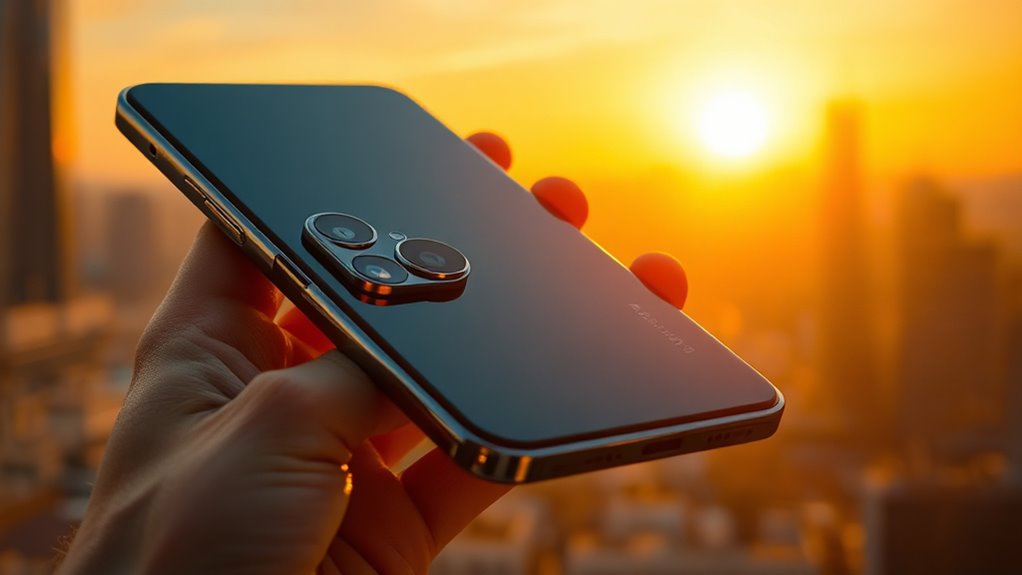
Experience the perfect blend of power and creativity with the Samsung Galaxy S26 FE. Designed to make capturing stunning photos and videos effortless, this unlocked smartphone features a triple-lens rear camera system enhanced by the ProVisual Engine. Whether you’re shooting in bright daylight or low-light settings, your images will remain vivid and sharp.
The phone’s video capabilities stand out with smooth 1080p recording at 120 fps, complemented by Super Steady Video and Horizontal Lock. These features help eliminate shaky footage, making every moment look professional. AI-powered tools like Generative Edit simplify editing tasks, enabling you to remove unwanted audio or adjust objects with ease.
Powered by the efficient Exynos 2400 chipset and 8 GB RAM, the Galaxy S26 FE handles multitasking and demanding apps smoothly. Its 4,900 mAh battery supports 45W Super Fast Charging and wireless charging, ensuring you stay connected longer without frequent recharging.
Maintenance is straightforward as the phone supports wireless charging, reducing wear on charging ports. The sleek graphite design is both stylish and practical for everyday use. Note that the device includes a single SIM slot and does not come with a charger block, so plan accordingly.
Best for: Photography enthusiasts and content creators seeking a versatile, high-performance unlocked smartphone with advanced camera and video features.
What We Like:
- Advanced triple-lens camera system with ProVisual Engine for clear photos in any lighting
- Smooth 1080p video recording at 120 fps with stabilization features
- Powerful Exynos 2400 chipset ensures fast and responsive performance
- Large battery with 45W Super Fast and wireless charging support
Specification:
| Feature | Details |
|---|---|
| Manufacturer | Samsung |
| Dimensions | Not specified |
| Weight | Not specified |
| Material | Not specified |
| Color Options | Graphite |
| Storage Capacity | 128 GB |
| RAM | 8 GB |
| Rear Camera | 50 MP + 12 MP + 8 MP |
| Front Camera | 12 MP |
Factors to Consider When Choosing Smartphone Camera 2026 Photos and Video
When choosing a smartphone camera in 2026, you’ll want to focus on sensor size and lens versatility to capture sharp and diverse shots. Don’t overlook image processing power and video stabilization, as they make your photos and videos smoother and clearer.
Also, consider how well the camera performs in low-light to guarantee great results anytime. After all, you want your pictures and videos to look amazing no matter the lighting conditions. So, keep these factors in mind to pick the perfect camera for your needs.
Sensor Size Importance
Although megapixel count often grabs the spotlight, you should focus on sensor size when choosing a smartphone camera for 2026. Larger sensors capture more light per pixel, boosting low-light performance and dynamic range compared to smaller sensors with similar megapixels.
This means less noise and sharper detail, especially in night or indoor shots where high ISO settings are common. Bigger sensors also create shallower depth of field, giving your photos and videos a cinematic look by isolating subjects with smooth background blur.
For video, they reduce rolling-shutter distortion and maintain image quality with wide-angle lenses, enhancing stabilization and motion clarity. When comparing cameras, always prioritize sensor size alongside pixel size and processing rather than just megapixel numbers to get the best real-world photo and video quality.
Lens Versatility Options
To get the most out of your smartphone camera in 2026, you’ll want to check for versatile multi-lens setups that cover a broad range of focal lengths—from wide and ultra-wide to telephoto.
Look for at least three lenses: a main wide, an ultra-wide with a field of view around 120°, and telephoto optics offering native optical zoom like 2x, 3x, or even 10x.
Prioritize true periscope zooms over digital cropping to keep details sharp.
Check aperture sizes—lower f-numbers like f/1.6–f/2.2 improve low-light shots and depth of field.
Optical image stabilization on main and telephoto lenses helps handheld shooting.
Make sure ultra-wide and macro shots come from dedicated sensors, not digital crops, and confirm their resolution and distortion control.
Bigger sensors or pixel sizes on these lenses boost overall image quality across focal lengths.
Image Processing Power
Since image processing power drives how quickly your smartphone handles advanced camera features, it plays a vital role in photo and video quality. You’ll want a device with dedicated ISP cores and powerful neural processing units (NPUs), measured in TOPS, to enable real-time AI tasks like scene segmentation and subject tracking.
This guarantees low-light photos have less noise and motion artifacts stay minimal. Plus, higher processing throughput supports smoother computational video features such as HDR and live background replacement at high resolutions and frame rates.
Don’t overlook memory bandwidth and thermal management—they let your phone capture and process multiple RAW frames in burst mode without lag or throttling. Finally, look for phones with strong software optimization and regular firmware updates, as these can significantly boost image quality even on modest hardware.
Video Stabilization Benefits
Mastering video stabilization can dramatically enhance the quality of your smartphone footage by reducing blur and jitter, especially during handheld or action shots.
Optical Image Stabilization (OIS) physically moves lens elements or the sensor to cut handheld jitter, delivering sharper video even in low light.
Electronic Image Stabilization (EIS) smooths footage by cropping and compensating motion frame-by-frame but may slightly reduce your field of view and resolution.
Hybrid systems that combine both OIS and EIS provide superior results by handling large movements and fine jitters simultaneously.
Advanced features like horizon leveling keep your shots perfectly horizontal during rapid motion, giving your videos a professional polish.
With effective stabilization, you’ll often skip bulky gimbals, making spontaneous shooting easier and your footage more watchable.
Low-Light Performance
When choosing a smartphone camera for 2026, you’ll want to focus on its low-light performance. Capturing clear photos and videos in dim conditions is still a bit of a challenge.
Look for cameras with larger pixel sizes—around 1.4 µm or more—and a bigger sensor area. This helps grab more light per pixel, which makes a big difference.
Also, prioritize lenses with wide apertures like f/1.6 or wider. That way, you let in maximum light and reduce noise for better shots.
Make sure the phone offers advanced image stabilization, such as optical or sensor-shift. Plus, multi-frame stacking is a nice feature to combine exposures and cut noise without blur.
Don’t forget to check the image processing quality. Effective noise reduction, RAW support, and multi-frame HDR really matter here.
Finally, take a look at the ISO performance. It’s important to see how the camera handles high ISO values before noise or color loss becomes noticeable.
AI Camera Enhancements
Amid rapid advancements in smartphone technology, AI camera enhancements have become essential for capturing stunning photos and videos in 2026. You should prioritize phones with on-device AI processing and dedicated neural engines to enjoy fast, privacy-preserving real-time improvements like noise reduction and HDR stacking without relying on cloud uploads.
Look for AI features that offer generative edits—such as background replacement and object removal—to save time and boost creativity directly on your device. Also, consider AI-driven video tools like automated stabilization with horizon lock, real-time subject tracking, and smooth frame interpolation to keep your videos sharp and steady.
Finally, check how adaptable the AI is, focusing on scene detection accuracy, customizable presets, and firmware updates that enhance long-term performance. These factors really make a difference in how well your camera performs over time.
Manual Controls Availability
Don’t overlook the importance of manual controls when choosing a smartphone camera in 2026. You want full control over shutter speed, from ultra-fast 1/8000s to several seconds, so you can freeze action or create long-exposure effects.
Make sure the camera app lets you adjust ISO across its native range, like ISO 50 to 51200, to handle noise in bright or low light. Manual focus with features like focus peaking or magnified previews is essential for sharp macro and portrait shots.
Check for manual white balance settings and RAW capture to preserve color accuracy and exposure data for post-processing. Also, confirm that exposure compensation and locked metering modes—spot, center-weighted, or evaluative—are available to consistently control exposure in tricky lighting conditions.
Storage Capacity Needs
Planning your smartphone’s storage is essential for handling high-resolution photos and videos in 2026. If you frequently shoot 4K at 60 fps or 8K videos, aim for at least 256 GB onboard storage to avoid frequent offloads.
4K videos use about 350–450 MB per minute, and 8K can exceed 1,000 MB. High-res RAW photos and burst shots also consume significant space, so plan extra headroom beyond your usual needs.
Expandable storage options like microSD cards can be a cost-effective way to extend capacity for long shoots or large projects. Don’t forget to reserve 10–20% of your storage for system files, apps, and temporary data to keep your phone running smoothly.
If you use cloud backup, keep local copies until uploads finish to save time and data. That way, you won’t have to wait or worry about losing anything while syncing.
Frequently Asked Questions
Does the Samsung Galaxy S26 FE Support 5G Connectivity?
Yes, the Samsung Galaxy S26 FE supports 5G connectivity, so you’ll enjoy faster download and streaming speeds.
It’s designed to keep you connected with the latest network technology wherever you go. This means smoother browsing and better overall performance.
What Is the Battery Life of the S26 FE During Video Recording?
Like a marathon runner, the S26 FE’s battery lasts about 6 hours of continuous video recording.
You’ll be able to capture your epic moments without constantly hunting for a charger, keeping your creativity flowing.
Can the Phone’s Camera Shoot in RAW Format?
Yes, you can shoot in RAW format with the S26 FE’s camera, giving you greater control over editing and preserving image quality.
Just enable RAW mode in the camera settings before you start capturing your shots. It’s pretty simple to do and totally worth it if you want that extra flexibility.
Is There Expandable Storage Available for This Model?
No, this model doesn’t offer expandable storage, so you can’t add a microSD card.
You’ll need to rely on the internal storage capacity and cloud options to save your stunning photos and videos efficiently.
What Are the Available Color Options Besides Graphite?
Besides graphite, you can choose from midnight blue, pearl white, and sunset gold.
These colors give your phone a sleek, stylish look, so you can pick the one that best matches your personality and vibe.
Conclusion
When choosing the best smartphone camera in 2026, remember, “a picture is worth a thousand words.” You want a phone like the Samsung Galaxy S26 FE that nails sensor size, lens versatility, and image processing power.
Don’t overlook low-light performance and AI enhancements—they’ll boost your shots when it counts. Plus, manual controls and ample storage make certain you’re ready for any moment.
With the right phone, your photos and videos will truly tell your story. Whether you’re capturing breathtaking landscapes or precious moments, having the best smartphone camera of 2026 means stunning photos and video every time. So, invest in a device that combines cutting-edge technology with user-friendly features, and watch your creativity shine through each shot!