3 Best Used Video Cameras for 2027 That Deliver Stunning Footage
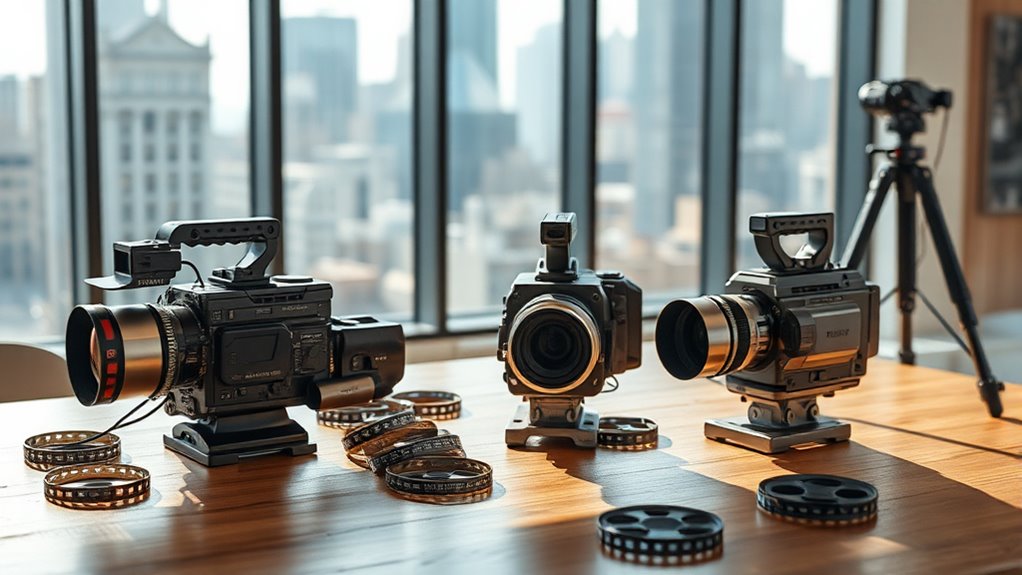
If you want stunning footage in 2027, consider the Sony PXW-X70 for its professional 12x ZEISS lens and optical stabilization. This camera is great for capturing crisp, detailed shots with smooth movement. It’s perfect if you’re aiming for high-quality video without the bulk of larger rigs.
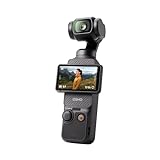
The DJI Osmo Pocket 3 offers sharp 4K video at 120fps with gimbal stabilization, making it ideal for smooth, slow-motion shots. It’s compact and easy to carry around, so you can capture amazing footage on the go. Plus, its stabilization helps keep your videos steady even when you’re moving.
For versatile vlogging, the 4K camera with a detachable microphone and flip screen covers flexible angles and audio needs. This setup is fantastic if you want to switch up your shooting style and get clear sound without extra gear. To pick the best fit, you’ll want to explore how these features match your shooting style and workflow.
| Image | Name | Editor's Rating | Price |
|---|---|---|---|

|
|
||
|
|
||

|
|
Sony PXW-X70 Professional Hand Held Camcorder,4K
- High sensitivity and high resolution, Optical 12x ZEISS Vario-Sonnar T lens with lens ring, 24x Clear Image Zoom, ND...
- Wi-Fi/NFC with Content Browser Mobile version 1.4 or later, live streaming, file transfer, etc. are planned to be...
- Dual media slots for simultaneous/relay recording and independent record control, Slow & Quick Motion, Multi Interface...
Capture every moment with remarkable clarity using the Sony PXW-X70 Professional Hand Held Camcorder. Designed to meet the needs of professionals, this camcorder elevates your video quality with its advanced 1.0-type Exmor R CMOS sensor. It excels in low-light environments, ensuring your footage stays sharp and vibrant even when lighting conditions are challenging.
The camcorder’s 12x ZEISS Vario-Sonnar T lens offers smooth zoom and optical anti-shake stabilization, helping you maintain steady shots without the need for extra equipment. Manual controls for focus, zoom, and exposure put creative power directly in your hands, perfect for precise adjustments during shoots.
Handling and maintenance are straightforward. Weighing just over 5 pounds, it balances portability and durability for on-the-go use. Dual media slots support both Memory Stick Pro and SD cards, while Wi-Fi and NFC connectivity simplify file transfers and enable live streaming options.
However, be mindful that the PXW-X70 is not water-resistant, so it requires careful use in adverse weather. Its fixed maximum aperture of f/2.8 may also limit depth-of-field flexibility for some creative scenarios.
Best for: Professional videographers and content creators requiring a compact 4K camcorder with robust manual controls and versatile connectivity.
What We Like:
- Excellent 4K video quality with enhanced low-light performance
- Smooth optical stabilization for steady footage
- Dual media slots plus Wi-Fi and NFC for easy file management
- Compact design suitable for handheld shooting
Specification:
| Feature | Details |
|---|---|
| Manufacturer | Sony |
| Dimensions | Compact handheld size |
| Weight | Just over 5 lbs (approx. 2.3 kg) |
| Sensor | 1.0-type Exmor R CMOS |
| Lens | 12x ZEISS Vario-Sonnar T |
| Connectivity | Wi-Fi, NFC |
| Media Slots | Memory Stick Pro, SD cards |
DJI Osmo Pocket 3 Vlogging Camera with 1” CMOS & 4K/120fps Video
- Capture Stunning Footage - Osmo Pocket 3 vlogging camera features a 1-inch CMOS sensor and records in 4K resolution at...
- Effortlessly Frame Your Shots - Get the ideal composition with Osmo Pocket 3's expansive 2-inch touch screen that...
- Ultra-Steady Footage - Say goodbye to shaky videos! Osmo Pocket 3's advanced 3-axis mechanical stabilization delivers...
Capture your best moments with the DJI Osmo Pocket 3 Vlogging Camera, designed for creators who demand quality and portability. This compact camera solves the problem of bulky gear, offering a sleek solution for smooth, professional-looking footage on the go.
Equipped with a 1-inch CMOS sensor and capable of shooting stunning 4K video at 120 fps, it brings vibrant colors and sharp details to your videos. Its built-in 3-axis gimbal stabilizes every shot, eliminating shakes and jitters for smooth, cinematic results.
The camera’s 2-inch rotatable touch screen makes framing easy and intuitive, while ActiveTrack 6.0 keeps your subject perfectly in focus. Lightweight and pocket-sized, it’s ideal for vloggers and content creators who need reliable performance without the hassle.
Maintenance is simple, but keep in mind the battery charger is sold separately, and the device is not water resistant, so avoid exposure to wet conditions. Quick charging and long battery life keep you filming longer without interruption.
Best for: Content creators and vloggers needing a compact, high-quality camera with advanced stabilization and slow-motion video capabilities.
What We Like:
- High-quality 1-inch CMOS sensor delivering sharp 4K/120fps slow-motion video
- Integrated 3-axis gimbal with ActiveTrack 6.0 for smooth, stable footage
- Compact and lightweight design ideal for mobile shooting
- Easy-to-use rotatable touch screen for quick framing adjustments
- Long battery life with fast charging support
Specification:
| Feature | Details |
|---|---|
| Manufacturer | DJI |
| Sensor | 1-inch CMOS |
| Video Resolution | 4K at up to 120 fps |
| Stabilization | Integrated 3-axis gimbal |
| Display | 2-inch rotatable touchscreen |
| Audio | Stereo with DJI Mic compatibility |
| Dimensions | Pocket-sized |
| Weight | Lightweight |
4K Vlogging Camera with Microphone and Accessories
- 4K & 48MP Video Camera Camcorder: This 4K video camera is capable of capturing precious moments with 4K Ultra HD video...
- 3.0 Inch Touchscreen & 270° Rotatable Design: This 4K camcorder is equipped with a 3.0-inch HD touchscreen, delivering...
- Remote Control & External Mic: The included remote control allows you to operate the camera remotely from any direction...
Capture your story with the 4K Vlogging Camera from YOTOMIGUO, designed to deliver stunning video and crisp photos effortlessly. This compact camera solves common vlogging challenges by combining ease of use with professional-quality results. Its clear 4K Ultra HD video and 48 MP images bring your content to life with vibrant detail.
The camera’s 3.0-inch touchscreen flips 270°, allowing you to frame shots from almost any angle. Whether you’re filming yourself or the world around you, the adjustable screen ensures perfect composition every time. The detachable stereo microphone enhances your audio by capturing clear sound, reducing background noise.
Travelers and vloggers will appreciate the included accessories—two batteries, a 32GB memory card, and a wireless remote—that keep you filming longer without interruptions. The 18x digital zoom and digital anti-shake features help maintain smooth, focused shots, though digital stabilization may not match optical systems in all conditions.
Maintenance is straightforward with easy battery swaps and simple memory card replacement. This camera fits seamlessly into your creative workflow, making it ideal for live streaming, travel, or everyday vlogging.
Best for: Content creators and vloggers seeking a compact camera that balances professional audio with sharp 4K video capture.
What We Like:
- High-quality 4K video and 48 MP photos that enhance visual storytelling
- Flip touchscreen for flexible shooting angles and easy framing
- Detachable stereo microphone provides clear, professional sound
- Includes extra batteries, memory card, and remote for extended use
Specification:
| Feature | Details |
|---|---|
| Manufacturer | YOTOMIGUO |
| Video Resolution | 4K Ultra HD |
| Photo Resolution | 48 Megapixels |
| Screen Size | 3.0 inches (flip 270°) |
| Zoom | 18x Digital |
| Audio | Detachable Stereo Mic |
| Accessories Included | 2 Batteries, 32GB Card, Wireless Remote |
| Weight | Compact and lightweight |
Factors to Consider When Choosing a Used Video Camera
When choosing a used video camera, you’ll want to check the sensor quality and video resolution to make certain sharp footage. Don’t forget to take into account the lens and zoom capabilities, as well as stabilization features for smooth shots.
Battery life is also vital since you don’t want your camera dying mid-recording. It’s definitely worth double-checking before you buy.
Camera Sensor Quality
Since sensor quality directly impacts your video’s look and performance, understanding its key aspects is essential when choosing a used camera. Sensor size plays a major role—larger sensors like full-frame or APS-C generally offer better low-light capability, dynamic range, and depth of field control.
Don’t just chase megapixels; bigger pixels on the sensor often mean less noise and cleaner high-ISO footage. CMOS sensors dominate modern cameras, providing faster readouts and more features compared to older CCD types.
Pay attention to dynamic range—higher stops capture more detail in shadows and highlights, which is vital for contrasty scenes. Also, consider sensor readout speed and processing power, as these affect rolling shutter distortion, color fidelity, and overall image quality.
Prioritize sensors that balance size, technology, and processing for stunning footage. It’s all about finding that sweet spot to get the best results from your camera.
Video Resolution Options
Understanding sensor quality helps set the stage for choosing the right video resolution in a used camera. When selecting resolution, 4K (3840×2160) gives you four times the detail of 1080p, ideal for cropping or future-proofing your footage.
However, 1080p remains practical for most online platforms, using less storage and easing editing on modest hardware. Keep in mind higher frame rates, like 4K/60fps or 1080p/120fps, enable smooth motion and slow-motion but demand faster cards and more processing power.
Also, don’t overlook bit depth and codecs; 10-bit color and efficient codecs such as H.265 or ProRes preserve image quality better than resolution alone. Consider your workflow, storage, and audience display to decide if the benefits of higher resolution justify the extra cost and complexity.
Lens and Zoom Capabilities
Consider how the lens and zoom capabilities impact your footage before choosing a used video camera. First, check the sensor-to-lens relationship and note the lens focal length in 35mm-equivalent terms to understand real-world framing.
Focus on optical zoom range rather than digital zoom since optical zoom maintains image quality. Pay attention to the maximum aperture across the zoom range—a constant wide aperture like f/2.8 offers better low-light performance and depth of field control.
Make sure the lens supports manual focus and manual zoom or iris control for creative precision. Look for features like a powered zoom rocker and focus peaking to ease operation.
Finally, verify if the lens or camera includes built-in stabilization for sharper handheld shots, but keep in mind stabilization details belong to the next subtopic.
Stabilization Features
Stabilization can make or break the quality of your footage, especially when shooting handheld or on the move. When choosing a used video camera, prioritize optical or in-body image stabilization (IBIS) over digital methods. They deliver steadier shots without cropping or resolution loss.
Test the camera’s performance with handheld panning and walking shots to see how well it reduces shake, especially at slow shutter speeds. Keep in mind optical/IBIS may struggle at extreme telephoto zooms. In those cases, a mechanical gimbal or faster shutter speeds help.
Also, consider how stabilization affects resolution and frame rates. Electronic stabilization on 4K often crops or downscales footage. Finally, check if the system offers power options and modes like active or pan follow, which tailor responsiveness to your shooting style.
Battery Life and Power
After making sure your footage stays steady with good stabilization, you’ll want to make sure your camera can keep up with extended shooting sessions. Start by checking the battery capacity (mAh) and how long it lasts during typical recording modes. Keep in mind, 4K drains power faster than 1080p, so factor that in.
Ask the seller about battery health—how many charge cycles it’s gone through and if it still holds a full charge. It’s also a good idea to confirm the battery type and whether replacements or compatible third-party cells are easy to find.
Prioritize cameras with removable batteries or external power options like USB-C PD or dummy batteries to extend shooting time. These features can really save your shoot when you’re out in the field.
Finally, test the battery yourself with your usual settings to see real-world performance instead of relying solely on specs. This way, you’ll know for sure your camera won’t let you down mid-shoot.
Connectivity and Accessories
When choosing a used video camera, you’ll want to make sure its connectivity options match your workflow and accessory needs. Check for ports like HDMI, USB-C, 3.5mm mic and headphone jacks, and any proprietary multi-interface shoe to guarantee compatibility with monitors, microphones, and recorders.
Also, verify wireless features such as Wi-Fi bands, Bluetooth, and supported standards if you plan remote control or live streaming. It’s good to know what your camera can handle before you commit.
Confirm the media slot types and formats, like SDXC with UHS-II or Video Speed Class support. Plus, see whether it offers dual card slots for simultaneous or relay recording.
Look for built-in audio options like XLR inputs or multi-interface shoes for powered mics. And don’t forget to check if adapters are necessary—it can make a big difference.
Finally, inspect power options—battery type, USB charging, and external grips—to suit your shooting duration and accessory setup. Having the right power setup keeps you rolling without unexpected stops.
Frequently Asked Questions
How Do Used Video Cameras Compare to New Models in Durability?
Used video cameras can be just as durable as new ones if they’ve been well cared for. You’ll want to check their condition carefully, but many models hold up well over time, matching new durability standards.
It’s kind of like buying a used car — if it’s been treated right, it can run just as smoothly as a brand-new one. So, don’t be afraid to consider used options; just do a little homework first!
What Warranties Are Typically Available for Used Video Cameras?
Coincidentally, most used video cameras come with limited warranties or none at all, but some sellers offer short-term coverage.
You’ll want to check each deal carefully and maybe grab third-party protection for peace of mind.
Can Used Video Cameras Be Upgraded With New Firmware?
Yes, you can usually upgrade used video cameras with new firmware. Manufacturers release updates to improve performance and add features.
So, just check your model’s support page, download the latest firmware, and follow the update instructions carefully.
It’s pretty straightforward once you get the hang of it!
How to Verify the Authenticity of a Used Video Camera Seller?
You can’t just trust anyone claiming to sell a used camera—check their reviews, ask for detailed photos, verify serial numbers with the manufacturer, and insist on a return policy.
Don’t get scammed; be thorough and cautious!
What Are Common Signs of Wear to Check on Used Cameras?
You should check for scratches on the lens, worn-out buttons, loose dials, and any corrosion on battery contacts.
Also, test the screen for dead pixels and guarantee the mount and ports aren’t damaged or loose.
These little things can make a big difference in how well the camera works. So, it’s worth taking the time to inspect them carefully!
Conclusion
When choosing a used video camera, remember that 4K content accounts for over 80% of online video traffic. So, investing in a model like the Sony PXW-X70 or DJI Osmo Pocket 3 guarantees your footage stays crisp and future-proof.
You want gear that not only fits your budget but also delivers stunning quality. With the right camera, you’ll capture every moment beautifully—making your videos stand out in a crowded digital world.
Choosing the best used video camera in 2027 means balancing price, performance, and features. Whether you’re a beginner or a pro, picking a reliable, high-quality camera ensures your videos look amazing. So take your time, do your research, and pick a used video camera that delivers stunning footage every time.