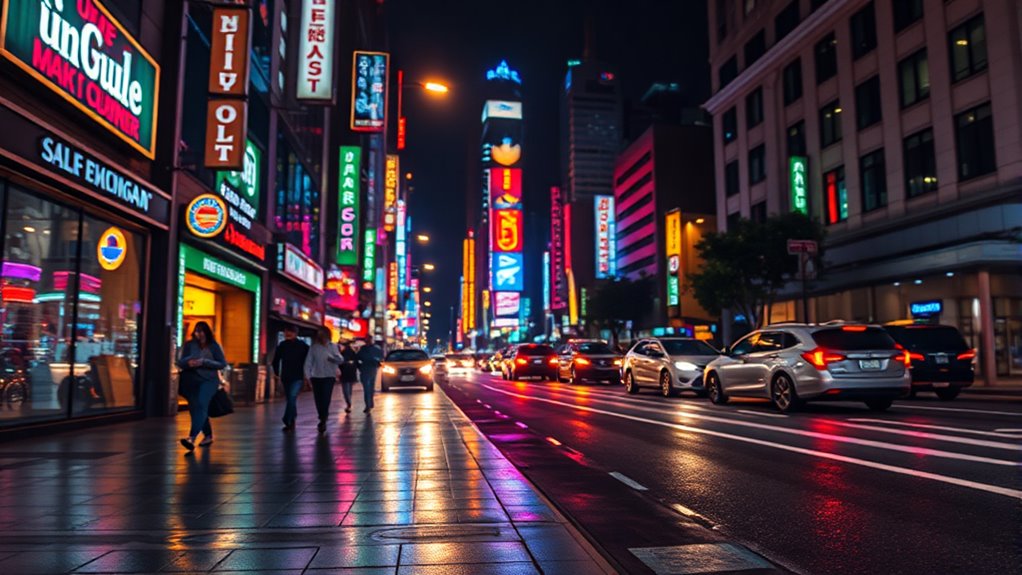
3 Best Camera Settings for Night Street Photography in 2027
For sharp, vibrant night street photos in 2027, set your ISO between 800 and 3200 to balance brightness and noise.
Using the right ISO is crucial because it helps you capture enough light without making your images grainy.
Next, go for a wide aperture like f/1.8. This lets in maximum light and helps isolate your subject from the background, making your shots pop even in low light.
Finally, choose a shutter speed around 1/60 to 1/125 seconds. This range helps reduce blur caused by camera shake or slow movement.
Mastering these settings keeps your shots clear and well-exposed.
Stick with me, and I’ll show you techniques that elevate your night photography even further!
| Image | Name | Editor's Rating | Price |
|---|---|---|---|

|
|
||
|
|
||

|
|
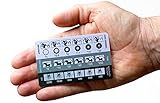
Photography Cheat Sheet for DSLR Camera Beginners
- Comprehensive Guide for Nikon, Canon, and Sony DSLRs:This 30-page photography guide is specifically designed for DSLR...
- Easy-to-Use Reference for Every Shooting Situation:Covering exposure, shooting modes, composition, and lighting, this...
- Compact and Portable Design – Ideal for On-the-Go Use:Measuring just 4×3 inches, this durable cheat sheet fits...
Unlock the full potential of your DSLR with the OCQOTAT Photography Cheat Sheet. This compact guide is designed to help beginners master manual camera settings quickly and confidently. Say goodbye to confusion over exposure, lighting, and shooting modes.
The cheat sheet breaks down complex photography concepts into easy-to-understand, color-coded tips. Its double-sided format fits neatly in your pocket or clips onto your bag with a sturdy carabiner, making it perfect for shooting on the go. Whether you’re capturing portraits, landscapes, or night scenes, this guide keeps essential info at your fingertips.
Maintaining the cheat sheet is simple—its durable material resists wear, ensuring it remains a reliable reference during your outdoor adventures. The concise layout helps you focus on improving your skills without overwhelming details.
While it’s tailored for Canon, Nikon, and Sony DSLR cameras, the practical advice can benefit many photography enthusiasts. The small size may challenge those with visual impairments, and it lacks interactive features found in digital apps.
Best for: Beginner and intermediate DSLR photographers using Canon, Nikon, or Sony cameras seeking a portable, easy-to-use manual settings reference.
What We Like:
- Compact, durable design with metal carabiner for easy carrying
- Clear, color-coded tips simplify learning key photography concepts
- Covers a wide range of shooting scenarios, from portraits to action shots
- Double-sided layout provides extensive information in a small format
Specification:
| Feature | Details |
|---|---|
| Manufacturer | OCQOTAT |
| Dimensions | 4 × 3 inches |
| Weight | Lightweight |
| Material | Durable laminated card |
| Color Options | Color-coded sections |
DSLR/Mirrorless Photography Cheat Sheet Reference Card
- 📷 QUICK PHOTOGRAPHY REFERENCE CARDS - Printed on PVC plastic making them waterproof and durable.
- 📷 EASY TO UNDERSTAND – Quick, easy reference for aperture, shutter speed, ISO, white balance, ND filters, and flash...
- 📷 BEGINNING, INTERMEDIATE & ADVANCED PHOTOGRAPHERS – these cheat sheets are appropriate for all levels of...
Capture the perfect night shot with ease using the DSLR/Mirrorless Photography Cheat Sheet Reference Card. This compact tool simplifies complex camera settings, helping you quickly adjust aperture, shutter speed, and ISO even in low light. Its clear, concise layout makes manual mode and white balance adjustments straightforward, so you never miss a moment.
Designed for photographers who want quick access to essential exposure information, this credit card-sized, waterproof PVC card fits conveniently in your wallet or camera bag. Its durable material withstands various shooting environments, ensuring long-lasting usability. The card includes ND filter calculations and flash settings, making it a versatile companion.
Maintenance is simple—just wipe clean with a damp cloth to keep it looking new. The card’s compatibility with Nikon, Canon, Sony, and film cameras means it adapts to your gear without hassle. While it provides core essentials, advanced users might find it less detailed for specialized techniques.
This cheat sheet streamlines night street photography by offering immediate, reliable guidance at your fingertips. It enhances your shooting confidence and efficiency when lighting conditions change fast.
Best for: Photographers of all levels seeking a durable, portable quick-reference guide for mastering camera settings in night street photography.
What We Like:
- Compact, wallet-sized design for easy portability
- Waterproof, durable PVC material for long-term use
- Covers essential settings: aperture, shutter speed, ISO, manual mode, and more
- Compatible with major DSLR, mirrorless, and film cameras
Specification:
| Feature | Details |
|---|---|
| Manufacturer | N/A |
| Dimensions | Credit card size (~3.4 x 2.1 inches) |
| Weight | Lightweight (under 1 oz) |
| Material | Waterproof PVC |
| Color Options | Standard (single color) |
DSLR Photography Cheat Sheet Cards by Out of Auto
- Waterproof PVC Photography Reference Cards with clip to attach to camera bag, 16 double sided durable cards
- Must have Camera Accessory for any Beginner / Intermediate Photographer, take them with you and never miss that perfect...
- Exposure Triangle, Shutter Speed, ISO, Aperture, Camera Setting Guide all included in Out of Auto
DSLR Photography Cheat Sheet Cards by Out of Auto are designed to simplify the challenge of mastering manual camera settings, especially in low-light street photography. These compact, weatherproof cards provide essential guidance right at your fingertips, helping you avoid missed shots caused by incorrect exposure or settings confusion.
Each card breaks down complex concepts like the exposure triangle, aperture, shutter speed, and ISO into easy-to-understand steps. This quick reference ensures you can adjust settings confidently without disrupting your creative flow during night shoots. The durable PVC material resists wear from outdoor use, so you can rely on them in varied weather conditions.
Their small size and metal ring make these cards easy to attach to your camera bag, keeping vital information accessible without bulk. Whether you’re troubleshooting motion blur or interpreting histograms, these cards help you capture sharper, clearer street photos after dark. Regular cleaning with a damp cloth keeps them in good condition, ensuring long-lasting use.
Best for: Beginner and intermediate night street photographers needing a compact, durable guide to manual DSLR and mirrorless camera controls.
What We Like:
- Weatherproof, rip-resistant PVC material for outdoor durability
- Clear explanations of exposure, motion blur, and histogram reading
- Compact design with metal ring and clip for easy access
- Practical for on-the-go manual photography learning
Specification:
| Feature | Details |
|---|---|
| Manufacturer | Out of Auto |
| Dimensions | Approx. pocket-sized cards |
| Material | Weatherproof PVC |
| Weight | Lightweight |
| Color Options | Standard with printed text |
Factors to Consider When Choosing Camera Settings for Night Street Photography
When shooting night street photography, you’ll need to balance ISO, aperture, and shutter speed carefully to capture clear, well-exposed images.
Adjusting white balance helps maintain accurate colors under artificial lighting, while focusing techniques are essential in low light.
Let’s look at how each setting impacts your shots and what you can do to get the best results.
ISO Selection Tips
Although choosing the right ISO can be tricky in night street photography, starting with your camera’s native ISO (usually 100–200) gives you the cleanest image possible. From there, increase ISO in stops only as needed to get a shutter speed that prevents blur—around 1/60–1/125s for still subjects, faster for motion.
Each time you double ISO, noise rises, so aim to stay 2–4 stops above base before noise becomes distracting. Use the lowest ISO that matches your exposure needs, often between 800 and 6400 depending on light and sensor quality.
If you shoot RAW, you can push ISO higher since noise reduction and shadow recovery work better in post. Also, consider exposing to the right by slightly boosting ISO to capture more detail without clipping highlights.
Aperture Settings Guidance
Balancing ISO with aperture settings helps you control exposure and image quality in night street photography. Use a wide aperture like f/1.4 to f/2.8 to gather more light, enabling faster shutter speeds and isolating subjects with a shallow depth of field.
This also helps keep ISO lower, reducing noise. When you want more of the scene sharp, stop down to around f/4 to f/5.6 for moderate depth of field without sacrificing too much light.
Avoid apertures smaller than f/8, as diffraction can soften images unless you use a tripod for long depth of field shots. Shooting wide open demands precise focus—use single-point autofocus or manual focus, targeting the subject’s eyes or a high-contrast edge for critical sharpness.
Your aperture choice should complement your ISO and shutter speed to achieve the best results. It’s all about finding the right balance to get those crisp, clear night shots.
Shutter Speed Choices
Mastering shutter speed is essential for capturing sharp, dynamic night street photos. When shooting handheld, keep shutter speed between 1/60 and 1/125 seconds to minimize camera shake and avoid motion blur on slow-moving subjects.
Use the reciprocal rule—shutter speed should be at least 1 divided by focal length times crop factor. If your camera has stabilization, you can slow down by 1–3 stops.
To freeze fast action like cyclists or cars at night, bump shutter speed to 1/250–1/1000 seconds. Then, compensate with a wider aperture and higher ISO to keep the exposure balanced.
For creative motion blur, use long exposures from half a second to several seconds on a tripod. You might want to add neutral density filters or lower ISO if the scene is too bright.
Balance shutter speed and ISO carefully to control noise while maintaining exposure. It’s all about finding the sweet spot between sharpness and creativity.
White Balance Adjustments
How do you make sure your night street photos capture colors accurately under mixed lighting? Set your white balance manually, typically between 2200–4000K, to counteract tungsten or LED streetlights and avoid unnatural orange or green casts.
When multiple light types like sodium, LED, and neon mix, use a custom white balance or a gray card reading under the same lighting to get true tonal balance.
If you shoot RAW, choose a neutral in-camera white balance—Auto or a Kelvin close to the scene—and adjust precisely in post since RAW keeps full color data.
Avoid relying on Auto White Balance at night; it often shifts between frames, causing inconsistent hues.
For creative mood, tweak white balance warmer or cooler, remembering a 1000K change noticeably affects warmth.
Focus Techniques Night
When shooting night street photos, you’ll want to focus carefully since low light can confuse your camera’s autofocus system. Use single-point AF or a small AF area and place it on a high-contrast edge like street signs, lamp posts, or eyes.
Wide-area AF often hunts in dim scenes, so avoid it. If autofocus struggles, switch to manual focus and use focus peaking or magnified live view to confirm sharpness, especially with shallow depth of field.
Try pre-focusing on a known distance, like a curbline, and use back-button focus or AF-lock to freeze focus when subjects enter that zone. For moving subjects, use continuous AF with a higher shutter speed and a slightly smaller aperture to improve your chances of keeping them sharp.
Using Manual Mode
Although night street photography challenges your camera’s metering and focus, using manual mode gives you full control over exposure settings to capture the scene as you envision it.
Start by setting your aperture between f/1.4 and f/4 to gather maximum light while keeping shutter speeds fast enough to avoid blur. Choose a shutter speed no slower than the reciprocal of your focal length—like 1/50s for a 50mm lens—unless you’re on a tripod or want motion blur.
Set ISO between 800 and 3200, balancing noise and brightness. Use spot or center-weighted metering on your subject, then lock exposure and adjust with aperture, shutter, or ISO.
Check your histogram and highlight warnings to avoid clipping highlights and maintain detail in shadows. This way, you get the best shot possible.
Frequently Asked Questions
How Do Ai-Powered Cameras Enhance Night Street Photography?
AI-powered cameras enhance your night street photography by automatically adjusting exposure, reducing noise, and stabilizing shots.
They recognize scenes and optimize settings in real-time, letting you capture clearer, vibrant images even in low-light conditions effortlessly.
What Are the Best Accessories for Night Street Photography in 2027?
You definitely don’t need a sturdy tripod, fast prime lens, or external LED light—said no night street photographer ever.
Grab those, plus a remote shutter release and comfy shoes, and you’ll conquer those dark streets with ease.
Can Smartphone Cameras Match DSLRS for Night Street Shots?
You can’t fully match DSLRs with smartphones in low light yet, but newer phones offer impressive night modes and computational photography. They’re convenient and great for casual shots, but DSLRs still dominate in quality and control.
That said, smartphones are catching up fast. For everyday night street shots, they do a pretty solid job, especially if you’re not too picky about every detail. But if you want top-notch images with more flexibility, DSLRs are still the way to go.
How to Protect Gear When Shooting in Urban Night Environments?
Stay stealthy and secure! Carry your camera in a compact, cushioned bag. Use weatherproof covers to keep your gear safe from unexpected rain or moisture.
Avoid flashy gear that might draw unwanted attention. Keep your equipment close at all times—don’t let it dangle or hang loosely.
Trust your instincts and stay aware of your surroundings. Always plan your exit routes ahead of time to protect your prized possessions.
What Post-Processing Apps Work Best for Night Street Photos?
You’ll love using Adobe Lightroom and Snapseed for night street photos—they enhance shadows, reduce noise, and boost colors.
Also, try VSCO or Darkroom for creative filters and fine-tuning details to make your shots pop.
Conclusion
As night wraps the streets in its velvet cloak, your camera becomes your magic wand. By mastering these three key settings, you’ll capture the city’s hidden stories in every shadow and glow.
Don’t just take photos—paint with light, freeze moments that whisper in darkness, and turn ordinary nights into unforgettable tales.
With your camera in hand and these tips in mind, the night is yours to explore and immortalize. Night street photography lets you reveal the unseen beauty of urban life after hours.
So, embrace the challenge and use these best camera settings to create stunning, vivid images that tell powerful stories. Your night street photography journey starts now—go capture those magical moments!