
How You Can Put Bath Salts Safely in Your Hot Tub
You can safely add bath salts to your hot tub by choosing those specifically made for spa use. Using bath salts designed for hot tubs ensures compatibility with your equipment and water chemistry. Dissolve the salts fully in warm water before adding them to prevent clogs and residue.
Run the pump while adding salts gradually and monitor your water’s pH, alkalinity, and TDS to keep the balance right. This careful approach helps maintain water quality and prolongs the life of your hot tub components. Avoid regular Epsom salts, which can harm your tub.
Follow these steps, and you’ll protect your equipment and enjoy a relaxing soak. Plus, there are helpful tips to maintain your spa after each use, ensuring a clean and safe bathing experience every time.
Can You Use Bath Salts in Your Hot Tub?
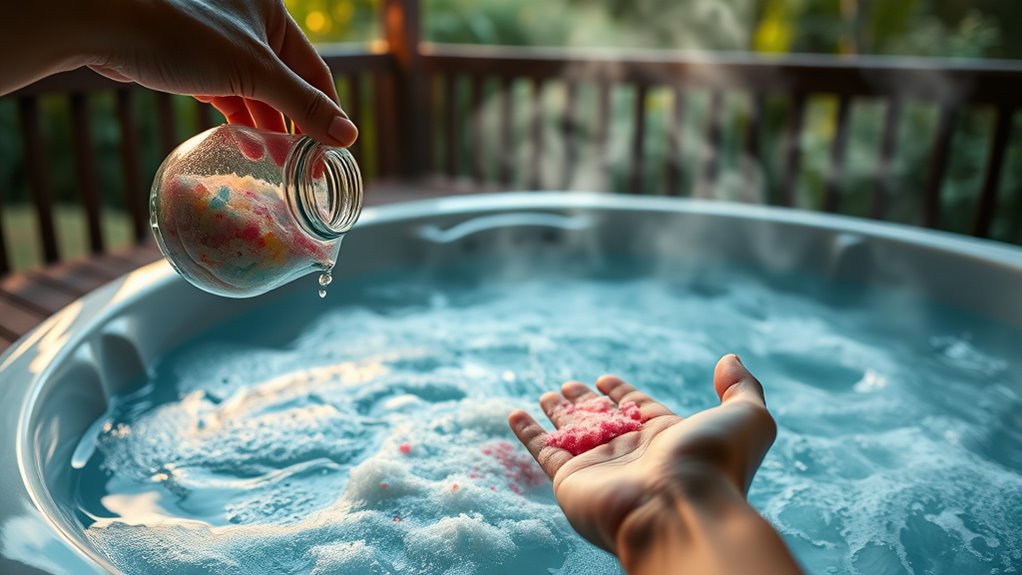
Wondering if you can use bath salts in your hot tub? Yes, you can, but you need to be careful. Adding bath salts like Epsom salts can enhance your soak, but too much raises the total dissolved solids (TDS), which disrupts your hot tub’s water chemistry and water balance.
Bath salts can enhance your hot tub experience, but use them sparingly to avoid upsetting water balance.
Always dissolve the salts completely in warm water before adding them to prevent clogs or residue buildup.
Keep in mind that some bath salts contain oils or additives that might harm your hot tub’s filtration system or cause foaming.
To protect your hot tub and maintain ideal water balance, check the manufacturer’s guidelines to ensure the bath salts you use are compatible with your hot tub’s materials and equipment.
Use bath salts in moderation for the best results.
Why Regular Epsom Salt Bath Salts Are Unsafe for Hot Tubs
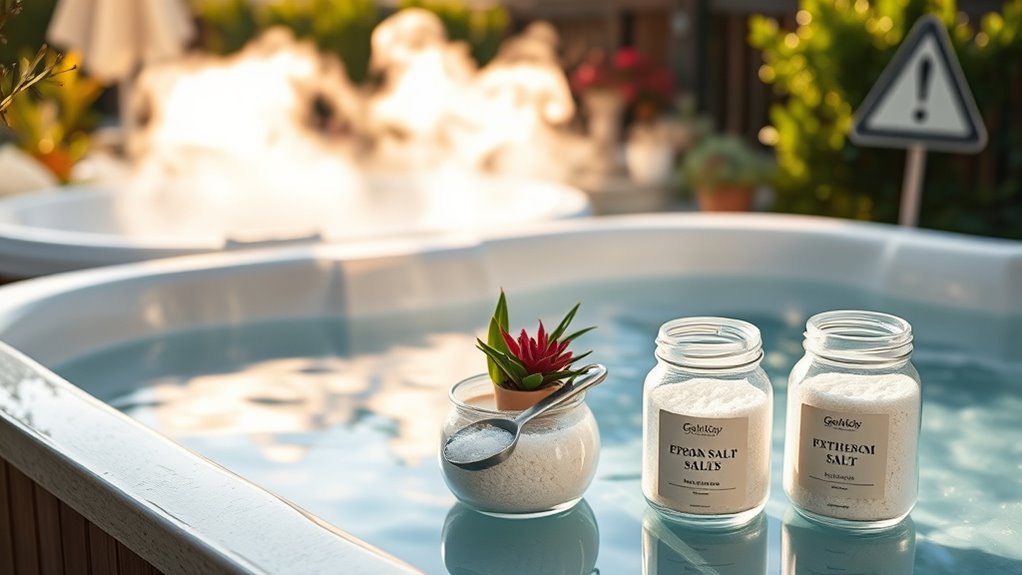
While some bath salts can enhance your hot tub experience, regular Epsom salts pose significant risks to your tub’s health. Epsom salts raise total dissolved solids (TDS) levels drastically, which can lead to hot tub damage by stressing the system.
They disrupt water chemistry by altering pH and alkalinity, reducing sanitizer effectiveness and encouraging foaming and cloudy water.
Over time, Epsom salts cause metal corrosion, harming pumps, heaters, and other components. Most importantly, manufacturer warnings explicitly advise against using Epsom salts, as doing so can void warranties and increase maintenance costs.
To protect your hot tub, avoid regular Epsom salts and follow guidelines that maintain balanced water chemistry and prevent TDS buildup, ensuring your spa stays safe and functional.
Why Spa Bath Salts Protect Your Hot Tub
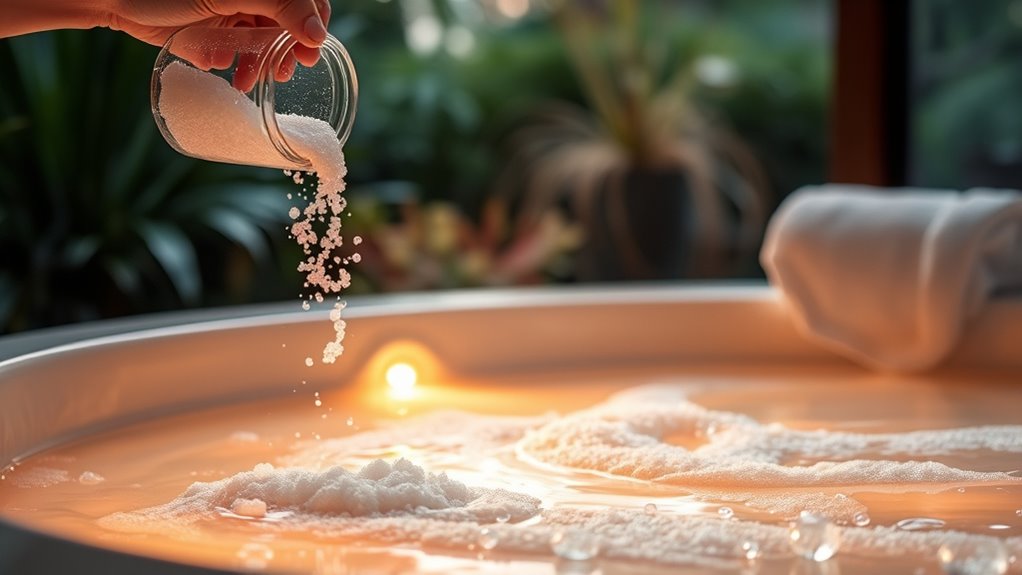
You’ll want to use spa bath salts because their mineral composition helps maintain balanced water chemistry.
These salts are designed to protect your hot tub’s equipment by preventing corrosion and scale buildup.
Mineral Composition Benefits
Because spa bath salts contain essential minerals like magnesium, potassium, and calcium, they don’t just enhance your soak—they also protect your hot tub. These minerals play a vital role in maintaining ideal water chemistry and preserving your hot tub surfaces.
Here’s how:
- Magnesium boosts skin hydration and relaxation while softening hard water, which improves overall water quality.
- Calcium supports healthy skin cell function and helps prevent scaling buildup, keeping your tub’s surfaces intact.
- Potassium balances mineral levels, ensuring the water chemistry stays stable and protects your hot tub components from damage.
Using spa bath salts with the right mineral composition lets you enjoy therapeutic benefits without risking harm to your hot tub’s structure or water quality.
This way, your soak stays relaxing and safe every time.
Equipment Safety Considerations
If you want to protect your hot tub’s equipment, choosing spa bath salts formulated specifically for hot tubs is essential. These salts dissolve quickly and help maintain balanced water, reducing the risk of scale buildup that can clog jets and damage metal parts.
Using regular salts may cause corrosion or mineral deposits, which can seriously damage your hot tub. For effective hot tub care, add salts gradually and in the right amounts to avoid foaming and residue.
Regularly cleaning filters and draining your tub after salt use further prevents buildup. Prioritizing hot tub safety means selecting the right products and following proper procedures to keep your pump, heater, and metal components running smoothly without costly repairs or premature wear.
Maintaining Water Chemistry
Protecting your hot tub equipment goes hand in hand with maintaining balanced water chemistry when using spa bath salts. You need to keep an eye on pH, alkalinity, and TDS to ensure your sanitizer works effectively and your tub stays damage-free.
Follow these steps:
- Dissolve bath salts in warm water before adding to avoid cloudiness and sediment buildup.
- Monitor salt levels closely, keeping them below 1500 ppm to prevent corrosion of metal parts, pumps, and seals.
- Use salts formulated specifically for hot tubs to maintain proper water chemistry and compatibility.
How to Add Bath Salts Safely to Your Hot Tub
When adding bath salts to your hot tub, you’ll want to use only those designed specifically for hot tubs to avoid damaging the equipment and surfaces. Avoid using standard Epsom salts, as they can disrupt water chemistry and cause corrosion.
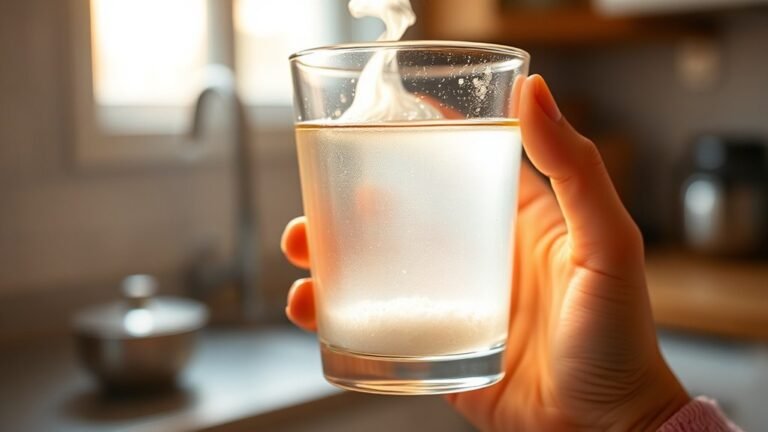
Start by dissolving the salts completely in a bucket of warm water to ensure even distribution.
Dissolve bath salts fully in warm water first to ensure they blend evenly in your hot tub.
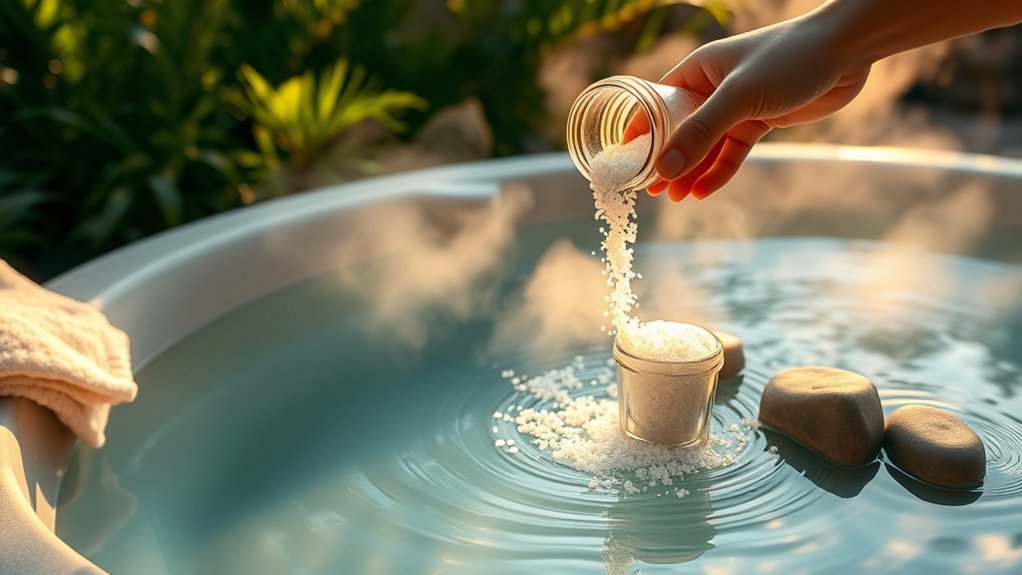
Add the dissolved salts gradually to your hot tub water, keeping an eye on TDS (total dissolved solids) levels to stay below 1500 ppm, which is safe for your hot tub.
After adding the salts, run the jets or circulation system to spread the salts evenly throughout the water.
Using aromatherapy-infused salts can enhance relaxation, but always choose hot tub-safe options to protect your equipment.
Keeping Your Water Balanced After Adding Bath Salts
After adding bath salts, you’ll want to test your water’s pH levels right away to keep everything balanced.
Keep an eye on total dissolved solids (TDS) using a test kit to avoid damage to your hot tub’s equipment. Managing these factors helps guarantee your water stays clean and safe for every soak.
Monitoring pH Levels
Because adding bath salts can cause pH levels to fluctuate, you need to test your water regularly with a reliable kit. Monitoring your water chemistry ensures you maintain a proper pH balance, which is essential for sanitizer effectiveness and avoiding water imbalance.
Follow these steps to keep your pH in check:
- Wait at least 30 minutes after adding bath salts before retesting to let the water equilibrate.
- Use your test kit to measure pH levels, aiming for a range between 7.4 and 7.6.
- If pH drifts outside this range, adjust it gradually with pH increasers or decreasers as per instructions.
Frequent monitoring protects your hot tub equipment and keeps your water safe and comfortable.
Managing Total Dissolved Solids
Although adding bath salts enhances your hot tub experience, it also raises the total dissolved solids (TDS) in the water, which can cause cloudiness and scaling if left unmanaged. To maintain ideal water quality, you need to monitor TDS levels regularly through water testing.
High salt levels above 1500 ppm reduce sanitizer effectiveness, so you should limit bath salt use and perform dilution by partially draining and refilling your tub as part of hot tub maintenance.
Additionally, balancing pH and alkalinity after adding bath salts keeps your water safe and comfortable.
How to Prevent Filter Clogging and Foam When Using Bath Salts
When you use bath salts, keeping your hot tub’s filters clear and minimizing foam starts with adding only the recommended amount. Overuse can lead to filter clogging and excessive foam.
To guarantee foam prevention and proper filter maintenance, follow these steps:
- Fully dissolve salts in warm water before pouring them slowly into the tub while the pump runs. Avoid adding salts directly into the skimmer.
- Regularly monitor water chemistry and TDS levels to keep salt concentrations balanced, preventing foam buildup and filtration strain.
- Clean or replace filters frequently after using bath salts to remove residual particles and maintain efficient filtration.

Hot Tub Maintenance Tips After Using Bath Salts
To keep your hot tub in top condition after using bath salts, you should thoroughly drain and clean the entire system to remove any salt residue that could cause corrosion or buildup. Rinse the tub with fresh water to prevent mineral deposits on surfaces and equipment.
After refilling, test water chemistry carefully, ensuring pH, alkalinity, and sanitizer levels are balanced. Don’t forget to inspect and clean filters to remove any trapped salt particles or debris.
Regular hot tub maintenance includes monitoring TDS levels closely; if they get too high, perform partial water changes to maintain water clarity and protect your equipment.
Following these hot tub cleaning steps after using bath salts will keep your spa safe, clean, and enjoyable for every soak.
Frequently Asked Questions
Can I Put Bath Salts in My Hot Tub?
You can use bath salts in your hot tub only if they’re designed for spa use. Always dissolve them fully in warm water first, and avoid excessive amounts to protect your equipment and maintain water quality.
Can You Put Dr. Teals in a Hot Tub?
Imagine inviting a storm into your calm lake—putting Dr. Teal’s in your hot tub risks corrosion and foaming.
You shouldn’t use it directly; instead, follow guidelines carefully to keep your tub peaceful and lasting.
Will Epsom Salt Damage an Acrylic Tub?
Yes, Epsom salt can damage your acrylic tub by corroding metal parts and degrading the surface. You shouldn’t add it directly, or you risk cloudiness, scaling, and cracks, which void warranties and ruin your tub.
Can I Put Epsom Salts in My Lazy Spa?
You shouldn’t put Epsom salts in your Lazy Spa because they can damage the pump, cause foaming, and void your warranty.
Instead, use spa-specific salts or aromatherapy products to keep your spa safe and clean.
Conclusion
Now that you know how to safely add bath salts to your hot tub, you can enjoy a relaxing soak without worrying about damage. Just like a knight carefully polishing his armor before battle, you’ll keep your water balanced and filters clear to prevent foaming and clogging.
With the right spa bath salts and proper maintenance, your hot tub will stay sparkling and inviting—ready for you to unwind anytime you wish. Always choose high-quality bath salts designed specifically for hot tubs to protect your equipment and enhance your spa experience.
By following these simple steps, you ensure your hot tub remains a clean, soothing oasis. Enjoy the benefits of bath salts safely added to your hot tub water, making every soak a rejuvenating retreat.