
Does Salt Water Remove Sunscreen Effectively?
Salt water can help loosen sunscreen by gently breaking down oils and lifting surface residue, making your skin feel less sticky after swimming. This effect is particularly noticeable with regular sunscreens. However, salt water cannot fully remove water-resistant sunscreens, which are specifically formulated to adhere through moisture and salt exposure.
You’ll still need to rinse with fresh water and cleanse properly to avoid irritation and buildup. Relying on salt water alone won’t get your skin completely clean. Keep reading to discover why salt water alone isn’t enough and what you should do next for your skin.
How Salt Water Helps Loosen Sunscreen Residue
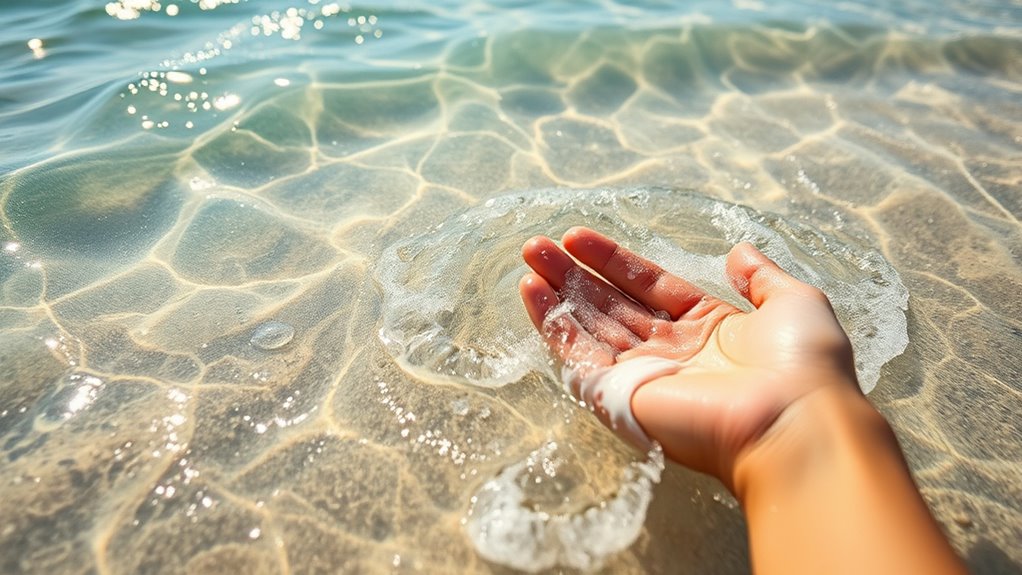
Although salt water might seem harsh, it actually helps loosen sunscreen residue effectively. When you swim or rinse with salt water, its exfoliating properties come into play, gently breaking down oil-based and water-resistant sunscreen on your skin.
Salt water gently exfoliates, breaking down tough oil-based and water-resistant sunscreen on your skin.
The natural salinity works to dissolve surface debris, including stubborn sunscreen layers, making them easier to remove.
Salt crystals provide physical loosening by mildly abrading the skin’s surface, helping dislodge sunscreen particles. Additionally, salt water’s oil removal effect temporarily tightens your skin, reducing the sunscreen film.
These salt water benefits combine to break down and lift sunscreen residues, promoting a cleaner skin surface.
Why Salt Water Can’t Fully Remove Water-Resistant Sunscreens
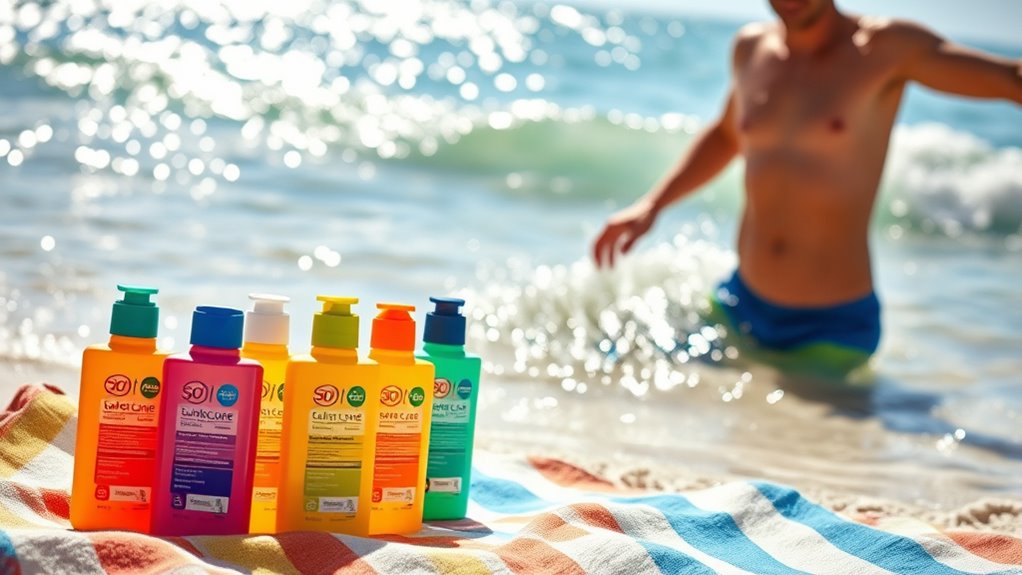
Even though salt water helps loosen some sunscreen residue, it can’t fully remove water-resistant sunscreens because their ingredients like beeswax and silicones stick firmly to your skin.
Salt water may dissolve surface oils and dirt temporarily but doesn’t break down the chemical bonds in these formulations.
Water-resistant sunscreens are designed to withstand immersion, so salt water alone can’t emulsify or dislodge them effectively.
The high salt concentration doesn’t enhance cleansing enough to remove residue completely.
To fully remove water-resistant sunscreen, you need a proper cleanser that can break down these stubborn formulations.
Without adequate cleansing, residues remain on your skin, potentially causing buildup.
Why You Need to Rinse and Cleanse After Salt Water Swimming
Salt water can loosen some sunscreen residue, but it won’t wash it all away. After salt water swimming, you need to rinse and cleanse your skin thoroughly to maintain skin health. If you skip this step, sunscreen residues and salt buildup can clog pores and cause skin irritation.
Proper cleansing removes these impurities, preventing dryness and breakouts. Here’s why rinsing and cleansing matter:
- Salt water loosens but doesn’t fully remove sunscreen residues
- Rinsing with fresh water prevents salt buildup on your skin
- Cleansing removes leftover sunscreen, salt, and impurities
Failing to rinse can lead to skin irritation and dryness. Proper cleansing enhances your skin’s health and prepares it for further care.
Always rinse and cleanse after salt water swimming to keep your skin healthy and comfortable.
Skin Risks of Using Salt Water to Remove Sunscreen
When you rely on salt water to remove sunscreen, you put your skin at risk of dehydration and irritation. Salt water strips away natural oils, disrupting your skin barrier and leaving your skin vulnerable to skin damage.
Using salt water to remove sunscreen dehydrates skin and disrupts its natural protective barrier.
This can cause dryness, tightness, and skin irritation, especially if you have sensitive skin or existing skin conditions like eczema or rosacea.
Over time, repeated exposure may lead to microtears in your skin, increasing the chance of redness, burning, or itching.
Salt water’s harsh effects can also trigger hyperpigmentation, worsening uneven skin tone.
Using salt water alone to remove sunscreen isn’t just ineffective—it poses serious skin risks that can compromise your skin’s health and resilience.
It’s important to avoid relying solely on salt water to cleanse your skin.
Best Ways to Remove Sunscreen After Swimming in Salt Water
Although salt water can help dissolve some surface sunscreen residues, it won’t fully remove waterproof or water-resistant formulas. To guarantee effective sunscreen removal after salt water exposure, you need a solid cleansing routine.
Salt residue combined with stubborn waterproof sunscreen can clog pores and irritate skin if not addressed promptly. Here’s how to thoroughly remove sunscreen and salt:
- Rinse off immediately with fresh water to wash away salt water and loosen sunscreen.
- Use a gentle, water-based cleanser to break down remaining sunscreen residues.
- Apply double cleansing: start with an oil-based cleanser, then follow with a foam or gel cleanser.
- Pat skin dry and avoid harsh scrubbing to prevent irritation.
- Incorporate this into your skincare routine post-swimming for clean, healthy skin.
Frequently Asked Questions
Does Salt Water Remove Sunscreen?
Salt water can help loosen some sunscreen but won’t remove it completely, especially waterproof types.
You’ll need a proper cleanser to fully clean your skin and avoid irritation from salt water’s drying effects.
What Is the 3-Finger Rule for Sunscreen?
The 3-finger rule means you apply sunscreen in a line about the length of three stacked fingers, roughly 1 teaspoon per finger, ensuring you cover your face, neck, and exposed areas properly for effective sun protection.
What Reduces the Effectiveness of Sunscreen?
You lose up to 50% of sunscreen’s effectiveness after just 40 minutes of swimming. Sweat, rubbing, heat, and salt water all break down its protective layer, so you’ll need to reapply frequently to stay protected.
Does the Ocean Wash off Sunscreen?
The ocean can wash off some sunscreen, but it won’t remove it completely.
You’ll still need to cleanse your skin properly afterward to avoid residue and irritation, since salt water only loosens, not fully clears, sunscreen.
Conclusion
While salt water can help loosen some sunscreen residue, it won’t fully remove water-resistant formulas. In fact, studies show that up to 80% of sunscreen can remain on your skin after swimming in the ocean.
So, you’ll want to rinse and cleanse properly afterward to avoid clogged pores and irritation. Don’t rely on salt water alone—use a gentle cleanser to keep your skin clean and healthy after your beach day.
To effectively remove sunscreen, especially water-resistant types, thorough cleansing with a suitable product is essential. This ensures your skin stays free from buildup and maintains its natural balance.