3 Key Differences Between Salt Water Pools and Chlorine Pools
You’ll notice three key differences between saltwater pools and chlorine pools. Saltwater pools generate chlorine naturally through electrolysis, providing steady sanitization without the need to manually add chemicals. This process ensures a consistent level of cleanliness that is both effective and convenient.
Saltwater pools typically cost more upfront, but they save you money over time with less frequent maintenance and fewer chemical purchases. Additionally, the softened saltwater is gentler on your skin and eyes, reducing irritation and making swimming more comfortable.
If you want to understand how these advantages come together for a better swimming experience, keep exploring the details. Each type of pool offers unique benefits that can suit different preferences and lifestyles.
Saltwater Pool vs. Chlorine Pool: How Chlorine Is Produced
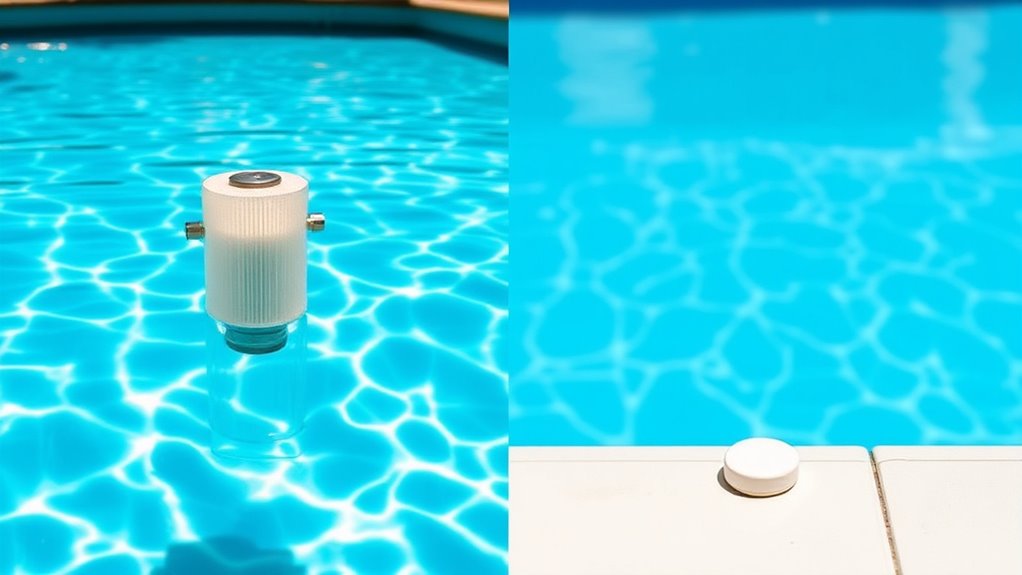
Although both saltwater and traditional chlorine pools rely on chlorine to keep the water clean, they produce it in very different ways. In a saltwater system, a salt chlorinator or generator uses electrolysis to convert dissolved salt into chlorine gas.
Saltwater pools generate chlorine through electrolysis, converting dissolved salt into chlorine gas for continuous sanitization.
The generator’s charged plates pass an electric current through the pool’s water, which typically maintains a salt concentration of 3,000 to 4,000 ppm.
This process guarantees continuous chlorine production, providing steady sanitization without the need to manually add chemicals. Unlike traditional pools, where chlorine is directly added, saltwater pools generate chlorine on-site, resulting in softer water and reducing chemical handling.
The salt chlorinator’s electrolysis method efficiently keeps your pool clean by producing chlorine gas from the dissolved salt in the water.
Saltwater vs. Chlorine Pools: Maintenance and Cost Compared
When you’re deciding between a saltwater pool and a traditional chlorine pool, maintenance and cost play a big role in your choice.
Saltwater pools have higher initial pool costs due to the saltwater systems and salt cell, typically ranging from $1,000 to $2,500. However, their ongoing maintenance is simpler, with less frequent chemical management and lower chemical expense.
You’ll mainly test salt levels and clean the salt cell occasionally.
In contrast, chlorine pools demand continuous chemical management, costing around $500–$800 annually for chemicals and frequent water chemistry adjustments.
While saltwater pools require upfront investment, their reduced chemical purchases and automated chlorine production often lead to lower long-term maintenance costs.
Why Saltwater Pools Are Easier on Your Skin and Eyes

Since saltwater pools produce chlorine more gradually and consistently, you’ll notice less skin and eye irritation compared to traditional chlorine pools. The steady chlorine levels prevent chemical spikes that often cause discomfort.
Saltwater pools offer steady chlorine levels, reducing skin and eye irritation common in traditional chlorine pools.
In addition, saltwater pools generate fewer chloramines—byproducts responsible for red, itchy eyes and skin irritation—making your swim more comfortable. The natural salt also softens the water, which is especially beneficial if you have sensitive skin, reducing dryness and stinging.
Better water chemistry means less harsh chemicals in the pool, so you experience less irritation during and after swimming.
Plus, saltwater pools require different pool maintenance, helping maintain a gentler environment.
Frequently Asked Questions
Are Saltwater Pools Better Than Chlorine?
Yes, you’ll find saltwater pools gentler on your skin and eyes, with less chemical smell.
They cost more upfront but save money long-term and require less maintenance, making them a better choice for many swimmers.
What Is the Downside of a Saltwater Pool?
Saltwater pools pose pricey problems: corrosion can creep on metal, surfaces suffer salt buildup, and system stress might shorten equipment lifespan.
You’ll need diligent, detailed maintenance and face higher initial installation costs to keep things safe and sound.
Why Would Anyone Want a Salt Water Pool?
You’d want a saltwater pool because it feels gentler on your skin and eyes, cuts down on strong chemical smells, and requires less maintenance.
Plus, it saves you money over time, making swimming more enjoyable.
Conclusion
Choosing between a saltwater pool and a traditional chlorine pool comes down to what suits your lifestyle best. With saltwater, you’ll enjoy a gentler touch on your skin and eyes, plus a smoother maintenance routine that’s kinder on your wallet over time.
Chlorine pools, on the other hand, offer a classic, straightforward approach. Either way, you’re diving into invigorating fun—just pick the kind of care that feels like a breeze, not a chore.
In conclusion, understanding the key differences between saltwater pools and chlorine pools will help you make the right choice. Whether you prefer the low-maintenance and skin-friendly benefits of a saltwater pool or the traditional and effective sanitation of a chlorine pool, both options provide refreshing enjoyment for your backyard.