

3 Key Differences Between Salt Water Pools and Chlorine Pools
You’ll notice three key differences between saltwater pools and chlorine pools. Saltwater pools generate chlorine automatically through electrolysis, unlike traditional chlorine pools where you add chlorine manually. This automatic process makes saltwater pools more convenient to manage.
They’re easier and cheaper to maintain because salt is less expensive than chlorine, and you don’t need constant chemical adjustments. This means less hassle and lower ongoing costs for pool owners.
Plus, saltwater pools offer gentler water that’s better for your skin and eyes. They also help extend your pool’s lifespan by reducing corrosion and wear. Keep exploring to discover how these benefits come together.
How Saltwater Pools Generate Chlorine Differently Than Traditional Pools
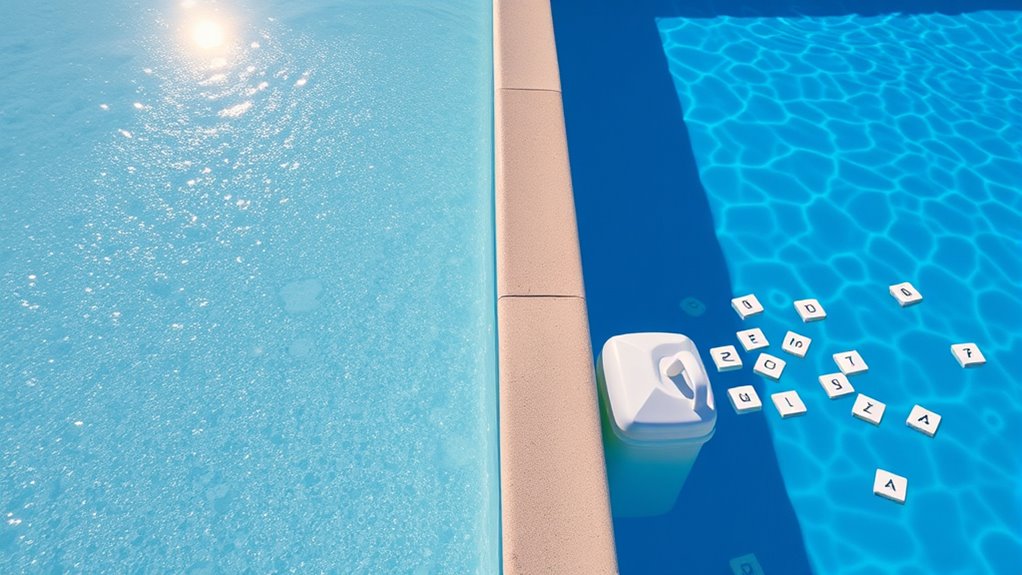
While traditional pools rely on you to add chlorine manually, saltwater pools generate chlorine automatically through a salt chlorine generator. This device uses electrolysis, where charged plates inside the generator break down salt molecules in the water, producing chlorine gas along with sodium and hydroxide.
By maintaining salt levels around 3,000 to 4,000 ppm, the saltwater system guarantees consistent chlorine production without frequent manual dosing. This automatic chlorination keeps your pool water chemistry balanced and reduces the need for regular chemical additions.
With a salt chlorine generator, you control pool maintenance more efficiently, as it continuously disinfects the water. Unlike traditional pools that depend on direct chlorine additions, saltwater pools simplify chlorine generation through this electrolysis process, making your pool’s sanitizing routine more seamless.
Why Saltwater Pools Are Easier and Cheaper to Maintain Than Chlorine Pools
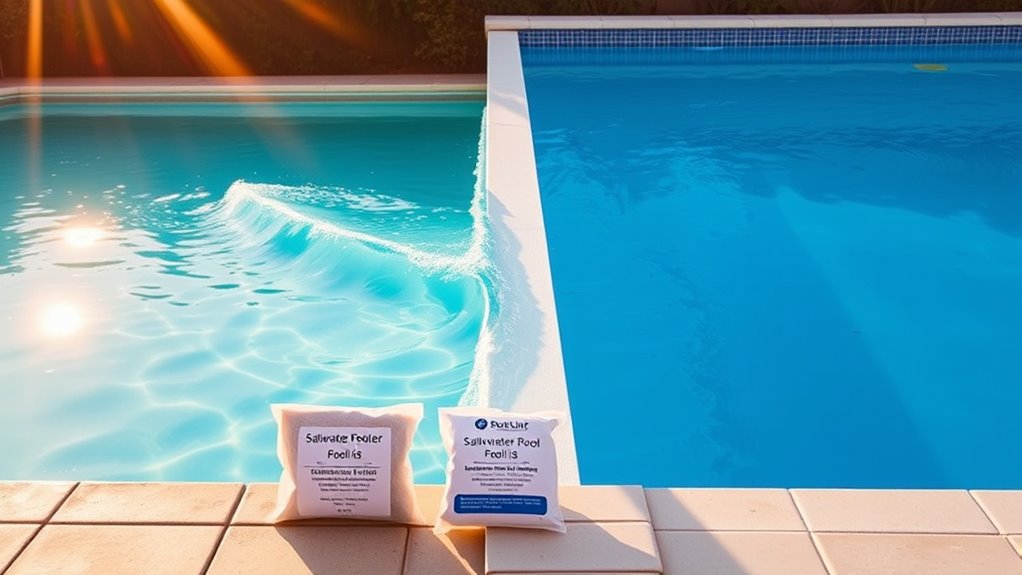
Because saltwater pools generate chlorine automatically through electrolysis, you spend less time adding chemicals and testing your water.
With a saltwater system, chlorine levels stay consistent, so you don’t have to constantly adjust them like in traditional chlorine pools.
Maintenance is easier and less frequent—you’ll only need to clean the salt cell a few times a year. This reduces your effort while keeping water quality high.
Salt is cheaper than buying chlorine regularly, which lowers your ongoing costs substantially.
How Saltwater Pools Improve Swimmer Comfort and Extend Pool Lifespan
If you want a pool that feels gentle on your skin and eyes, saltwater pools deliver a noticeable difference. Thanks to electrolysis, these pools produce chlorine naturally, creating softer water that reduces skin irritation and chemical odors.
This improved water chemistry enhances swimmer comfort by preventing chloramines buildup—common in traditional chlorine pools—that often causes eye redness and respiratory issues.
Beyond comfort, the gentler chemicals extend your pool’s lifespan by minimizing corrosive effects on surfaces and equipment. With less harsh exposure, you enjoy greater equipment longevity and fewer costly repairs.
Saltwater pools also streamline pool maintenance, letting you focus more on relaxing swims instead of constant upkeep.
Frequently Asked Questions
Are Saltwater Pools Better Than Chlorine?
Saltwater pools can be better if you want softer, less irritating water and lower ongoing costs. But you’ll need to handle more complex maintenance and monitor corrosion carefully.
It really depends on your priorities and preferences.
What Is the Downside of a Saltwater Pool?
The downside of a saltwater pool is that you’ll need to constantly monitor salt levels to prevent corrosion and damage to equipment and surfaces.
Over time, salt buildup can cause costly repairs and void warranties if not managed properly.
Why Would Anyone Want a Salt Water Pool?
You’d want a saltwater pool because it keeps water soft and gentle on your skin, reduces chemical handling, lowers maintenance time, and saves money over time despite higher startup costs.
This makes swimming more enjoyable and safer.
Conclusion
Choosing between saltwater and chlorine pools comes down to what fits your lifestyle best. Saltwater pools generate chlorine naturally, making maintenance easier and often cheaper, saving you time and money in the long run.
Plus, they’re gentler on your skin and gear, helping your pool last longer. When it comes to pool care, saltwater might just be the ace up your sleeve to keep things smooth and enjoyable all season.
In conclusion, understanding the key differences between salt water pools and chlorine pools can help you make an informed choice. Saltwater pools offer easier maintenance, cost savings, and a more comfortable swimming experience, making them a great option for many homeowners.