
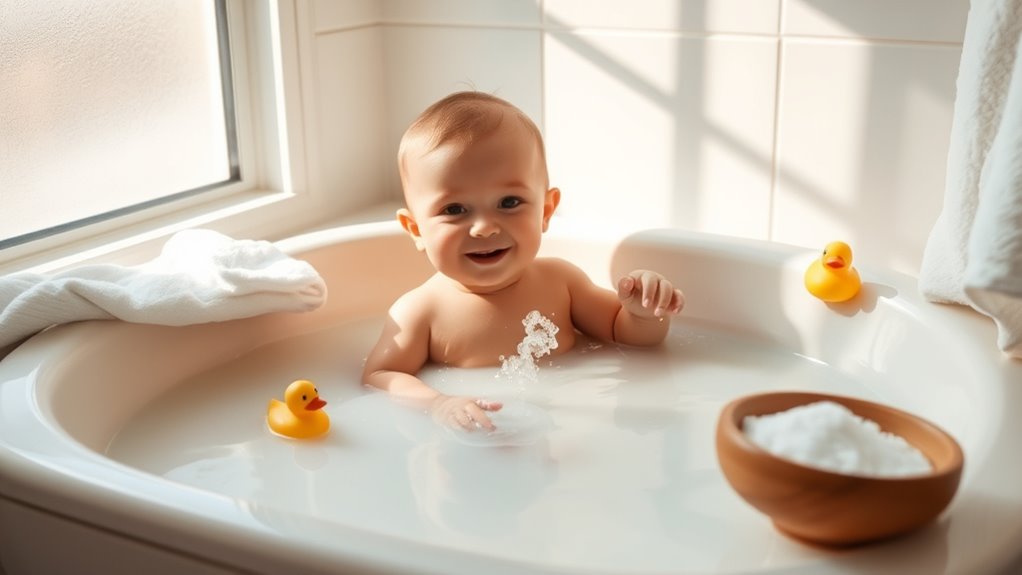
How to Use Epsom Salt Baths Safely for Babies
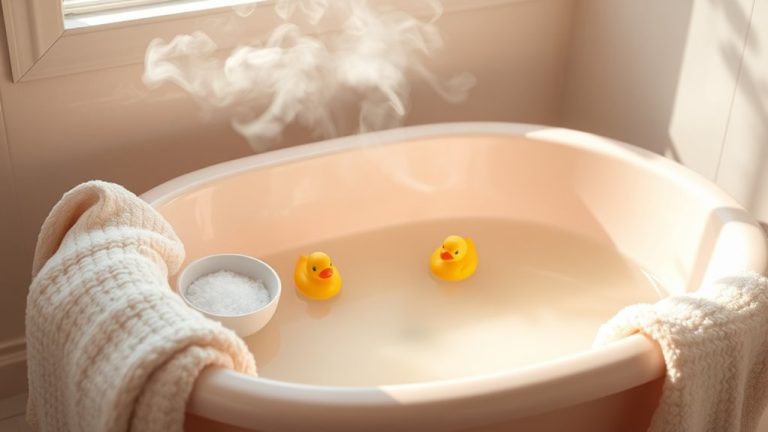
You can safely use Epsom salt baths for your baby by dissolving 1-2 cups of unscented Epsom salt in warm water (98–100°F). Always check the temperature with a thermometer or your wrist before placing your baby in the bath, and never leave them unattended.
Limit bath time to 10-20 minutes, watch for skin irritation, and gently pat your baby dry afterward. If you want to make certain of the safest and most effective use, there’s more important guidance to contemplate.
Is It Safe to Use Epsom Salt for Your Baby?
Wondering if Epsom salt is safe for your baby? When used correctly, Epsom salt can be safe for babies, but you need to take certain precautions. Always consult your pediatrician before giving your baby an Epsom salt bath to ensure it’s appropriate for their specific needs.
Epsom salt can be safe for babies with proper precautions and pediatrician approval.
Use high-quality, unscented Epsom salt to minimize the risk of skin irritation or allergic reactions. Keep the bath warm, not hot, and limit the soak to 10-20 minutes to prevent burns or dehydration.
Never leave your baby unattended during the bath, and strictly follow recommended dosages to avoid accidental ingestion or other adverse effects.
Prioritizing these safety steps helps you use Epsom salt effectively and safely for your little one.
What Is Epsom Salt and How Does It Work?
Epsom salt is made of magnesium and sulfate, which dissolve easily in warm water.
When you soak your baby in an Epsom salt bath, these minerals absorb through the skin to support muscle relaxation and skin healing.
Understanding how it works can help you use it safely and effectively.
Epsom Salt Composition
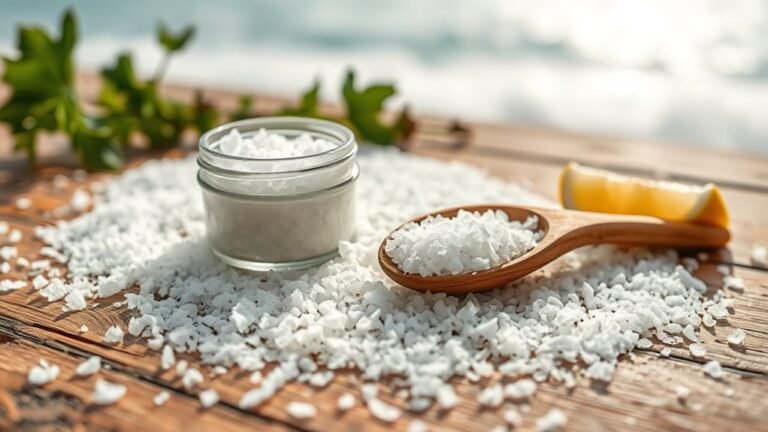
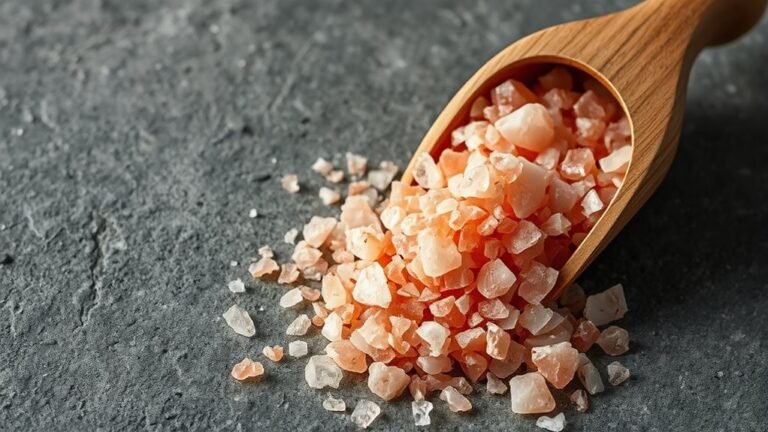
A mineral compound called magnesium sulfate forms the basis of what you know as Epsom salt. This compound combines magnesium, sulfur, and oxygen into coarse, crystal-like grains rather than typical table salt.
When you dissolve Epsom salt in water, it releases magnesium and sulfate ions, which play key roles during bath time. The magnesium supports muscle function, nerve transmission, and enzyme activity, helping your baby relax.
Meanwhile, the sulfate component contributes to detoxifying processes and soothes the skin, reducing inflammation. Understanding this composition helps you appreciate how Epsom salt baths can safely promote comfort and healing for your little one, provided you follow proper guidelines to ensure their safety and well-being.
Absorption Through Skin
Although your baby’s skin acts as a protective barrier, it still allows magnesium sulfate to pass through during an Epsom salt bath. This skin absorption occurs mainly through the stratum corneum, where magnesium ions penetrate and enter the bloodstream. Factors like water temperature, bath duration, and Epsom salt concentration influence how much magnesium your baby absorbs.
| Factor | Effect on Absorption |
|---|---|
| Water Temperature | Warmer water increases absorption |
| Bath Duration | Longer baths allow more absorption |
| Salt Concentration | Higher concentration boosts absorption |
| Skin Permeability | Varies by individual and age |
Understanding these variables helps you safely manage the amount of magnesium your baby receives during an Epsom salt bath.
Therapeutic Properties Explained
When you dissolve magnesium sulfate in warm water, it breaks down into magnesium and sulfate ions that your baby’s skin can absorb. Magnesium plays a vital role in supporting over 300 enzyme systems, promoting muscle relaxation and healthy nerve function, which can help soothe your baby during a bath.
Meanwhile, sulfates contribute to detoxification by aiding the removal of toxins from the body. This process not only supports overall wellness but also enhances skin health by reducing inflammation and promoting healing.
Together, these minerals in Epsom salt provide therapeutic benefits that go beyond just a simple soak.
How Much Epsom Salt to Use and Bath Duration for Babies
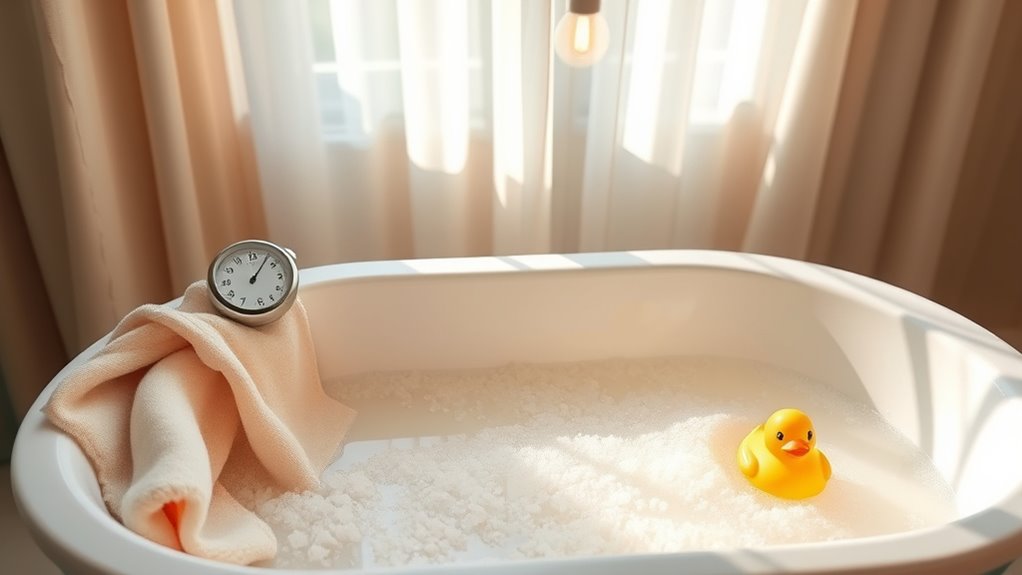
Since babies have delicate skin, you should use only ½ to 1 cup of pure Epsom salt dissolved in warm bathwater and limit bath time to 10 to 15 minutes to keep their skin safe and hydrated.
Using more than 2 cups can irritate their sensitive skin or cause over-absorption of minerals.
Before placing your baby in the bath, confirm the water temperature is comfortably warm—around 98°F to 100°F (37°C to 38°C).
Always supervise your baby during the entire bath duration to prevent accidents.
After the bath, gently pat your baby dry instead of rubbing to avoid skin dryness or irritation.
Preparing an Epsom Salt Bath for Your Baby
Before you place your baby in the bath, make sure to fully dissolve high-quality Epsom salt in warm water at a safe temperature of 98 to 100°F (37 to 38°C). Dissolving the salt completely prevents skin irritation and ingestion of crystals. Use about 2 cups of Epsom salt per basin.
Check water temperature with a thermometer or your wrist to ensure comfort.
| Step | Details |
|---|---|
| Epsom Salt Amount | 2 cups |
| Water Temperature | 98-100°F (37-38°C) |
| Dissolving Method | Stir until no crystals remain |
| Safety Check | Test water with wrist/thermometer |
Following these steps prepares a safe, soothing bath for your baby.
Step-by-Step: Giving Your Baby an Epsom Salt Bath
Start by preparing warm bath water at a safe temperature. Then fully dissolve 1/4 to 1/2 cup of Epsom salt before gently placing your baby in the basin.
Keep a close eye on your baby’s comfort and skin throughout the 10-15 minute bath.
Afterward, dry them gently and watch for any signs of irritation.
Preparing Bath Water
When preparing your baby’s Epsom salt bath, you’ll want to fill a clean infant tub with warm water that’s comfortably between 90 and 100°F (32-38°C) to protect their delicate skin from burns. Use a thermometer or your wrist to check the temperature carefully.
This step is vital in bath preparation to guarantee safety and comfort.
Make sure the tub is clean to prevent any irritation or infection. Avoid adding anything to the water at this stage; focus solely on getting the warm water right. Proper bath preparation sets the foundation for a safe and soothing experience with Epsom salt.
Once your warm water is ready and the tub is clean, you’re set to move on to adding the Epsom salt safely.
Adding Epsom Salt
Once your baby’s bathwater is at the right temperature and the tub is clean, it’s time to add the Epsom salt carefully. Use 2 cups of high-quality, pure Epsom salt and pour it into 10-15 inches of warm water in the baby bath or basin.
Stir gently to help the Epsom salt dissolve completely—this ensures even distribution and prevents any grainy spots.
Make sure the salt is fully dissolved before placing your baby in the bath. When ready, support your baby’s head and neck as you lower them in gently.
This careful process helps create a safe and soothing Epsom salt bath experience for your little one, promoting comfort and relaxation during their 10-20 minute soak.
Monitoring Baby’s Response
How should you keep an eye on your baby during an Epsom salt bath? Constant monitoring is key. Stay within arm’s reach and watch your baby’s skin closely for irritation or redness.
Check water temperature often, keeping it between 90-100°F (32-38°C). Observe your baby’s behavior for distress signs like fussiness or crying, and stop the bath if needed. Afterward, gently pat your baby dry and continue watching for any delayed skin reactions.
| What to Monitor | Why It Matters |
|---|---|
| Skin condition | Detect irritation early |
| Baby’s behavior | Spot discomfort or distress |
| Water temperature | Prevent overheating or chills |
| Bath duration | Avoid prolonged exposure |
| Post-bath skin check | Catch delayed reactions |
Safety Tips and When to Consult Your Pediatrician
Although Epsom salt baths can offer soothing benefits, you should always consult your pediatrician before trying them with your baby to guarantee safety and the correct dosage. Following safety tips helps you prevent skin irritation and other issues.
Here are key points to keep in mind:
- Use only the recommended amount of Epsom salt (usually 1-2 cups in warm water) to avoid overdose.
- Never leave your baby unattended and ensure the water is comfortably warm, not hot.
- Watch closely for any skin irritation, rash, or unusual behavior during and after the bath.
If you notice any adverse reactions or have concerns, stop the bath immediately and contact your pediatrician for guidance. Prioritizing safety ensures a positive experience for both you and your baby.
Frequently Asked Questions
Can a Baby Have an Epsom Salt Bath?
Yes, you can give your baby an Epsom salt bath, but always consult your pediatrician first. Use 1-2 cups of pure salt, limit soaking to 10-20 minutes, and watch their skin closely during the bath.
Why Did Jessica Biel Use so Much Epsom Salt?
Like a sponge soaking up water, Jessica Biel used lots of Epsom salt to boost muscle recovery and reduce inflammation.
You’ll want to balance salt amounts and water temperature for the best, safest results.
What Age Can You Use Epsom Salts?
You can start using Epsom salts for babies around 6 months old. Always use small amounts, like ¼ to ½ cup, and check with your pediatrician before trying it to guarantee safety and avoid irritation.
How Much Epsom Salt for Baby Bath?
You should use ¼ to ½ cup of Epsom salt in your baby’s bath, as 75% of parents find this amount effective.
Always dissolve it completely and consult your pediatrician before starting to guarantee safety.
Conclusion
Using Epsom salt baths for your baby can be a soothing and gentle way to ease discomfort when done correctly. Remember, “better safe than sorry” applies here—always follow recommended amounts and bath times, and watch for any signs of irritation.
If you’re ever unsure, don’t hesitate to reach out to your pediatrician. With careful preparation and attention, you can help your little one relax safely and comfortably in their Epsom salt bath.
Always prioritize safety to ensure the best experience. Proper use of Epsom salt baths for babies helps promote comfort and relaxation while minimizing risks.