Can Babies Take an Epsom Salt Bath?
You can safely give your baby an Epsom salt bath by using pure Epsom salt in small amounts and lukewarm water. Ensure the bath lasts only 10-20 minutes to avoid any potential skin dryness or irritation. Always supervise your baby closely during the bath.
Avoid using Epsom salt baths if your baby has any skin irritation or underlying health issues. Epsom salt may help soothe the skin and relax muscles, providing gentle relief. However, overuse can lead to dryness or irritation.
If you want to understand how to prepare the bath properly and recognize when to avoid it, keep exploring these important details. Proper preparation and caution are key to safely incorporating Epsom salt baths into your baby’s routine.
What Is Epsom Salt and How Does It Work in Baths?

Epsom salt, which is actually magnesium sulfate, works by dissolving in warm water and releasing magnesium and sulfate ions that your skin can absorb. When you soak in an Epsom salt bath, these minerals penetrate your skin, delivering magnesium directly where it’s needed.
Magnesium plays a key role in relaxing muscles, reducing inflammation, and promoting overall skin health.
Although it’s called salt, Epsom salt isn’t like table salt; it’s a natural mineral compound used for therapeutic purposes. The unique chemical structure of Epsom salt allows these ions to be absorbed efficiently through your skin, making the bath soothing and beneficial.
Is It Safe to Give Your Baby an Epsom Salt Bath?

While magnesium sulfate baths can offer soothing benefits for many, you might wonder if they’re safe for your baby. Epsom salt baths can be safe for babies when you use pure, high-quality salt in pediatric-recommended amounts.
Before giving your baby an Epsom salt bath, consult your pediatrician to ensure safety, especially if your baby has any health concerns.
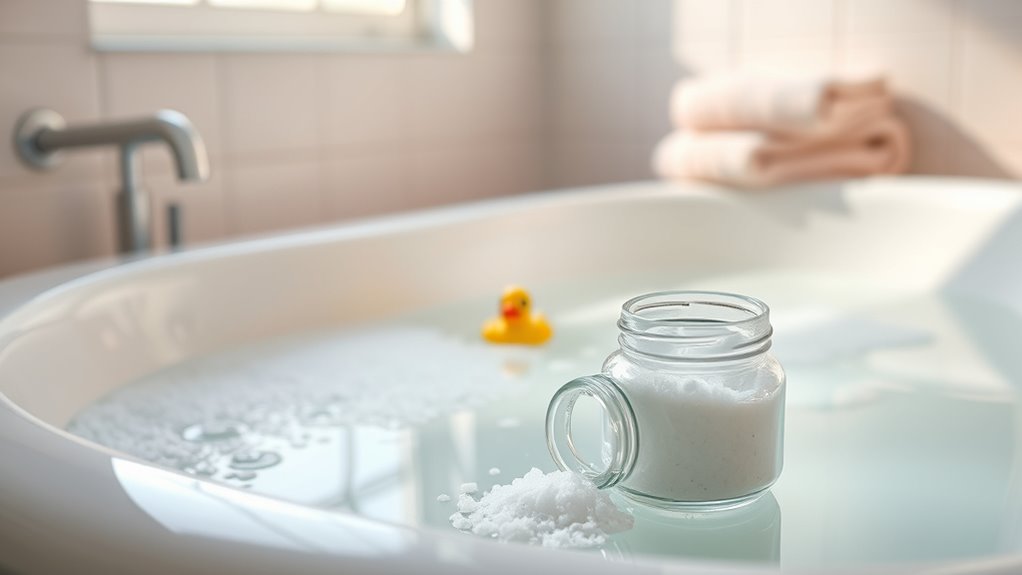
Prepare the bath by dissolving about 1-2 cups of Epsom salt in lukewarm water and avoid letting your baby ingest the water.
Watch for any skin irritation or adverse reactions, and don’t use Epsom salt if your baby has open wounds or skin issues.
Always supervise your baby during the bath to minimize risks and ensure the safest experience possible.
Benefits of Epsom Salt Baths for Babies
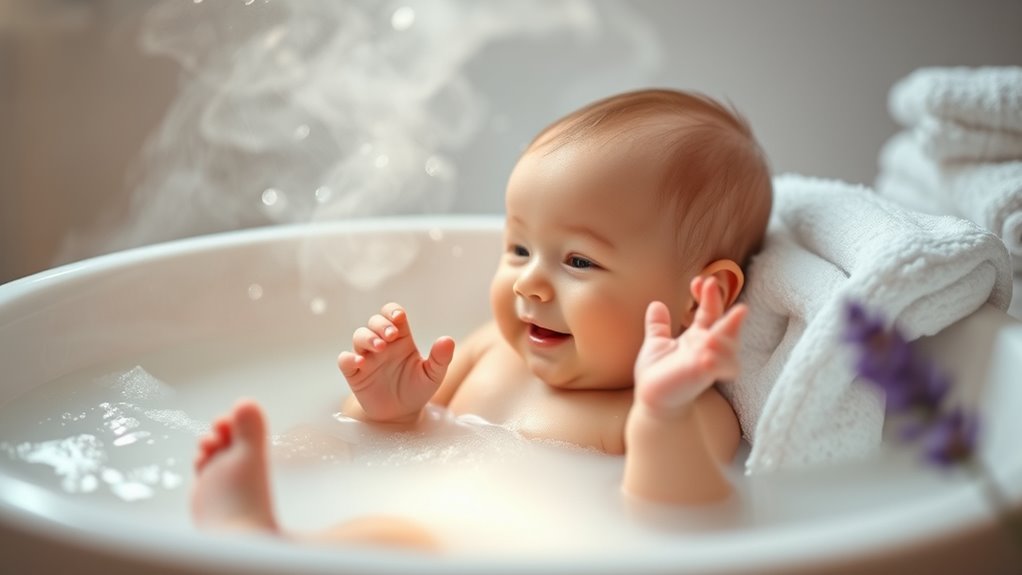
You’ll find that Epsom salt baths can soothe your baby’s skin irritations and ease diaper rash. They also help promote relaxation, making it easier for your little one to sleep peacefully.
Plus, these baths support your baby’s natural detoxification processes, enhancing their overall comfort.
Soothing Skin Irritations
If your baby’s skin feels irritated or inflamed, a gentle bath with diluted magnesium sulfate can help calm itching and reduce redness. Epsom salt baths soothe common skin irritations in babies by reducing inflammation and supporting healing.
The magnesium sulfate in Epsom salt promotes moisture retention and repairs the skin barrier, making it ideal for sensitive skin.
When you try Epsom salt baths for your baby’s skin irritations, keep these in mind:
- Eczema flare-ups soften and itch less
- Rashes show decreased swelling
- Insect bites calm and heal faster
- Persistent discomfort eases with regular baths
Always check with your pediatrician before starting Epsom salt baths to ensure it’s safe for your baby’s delicate skin.
Promoting Relaxation And Sleep
Epsom salt baths not only soothe your baby’s irritated skin but also help promote relaxation and better sleep. The magnesium in Epsom salts absorbs through your baby’s skin during the warm bath, calming their nervous system and reducing stress.
This process can regulate sleep hormones like melatonin, making it easier for your little one to fall asleep.
Soaking in the warm, salty water eases muscle tension and creates a comforting sensation that supports relaxation. By incorporating regular, gentle Epsom salt baths into your baby’s bedtime routine, you help establish a calming ritual that soothes irritability and improves sleep quality.
Just keep the baths brief and well-timed to maximize these relaxation and sleep benefits for your baby.
Supporting Detoxification Processes
Although babies naturally detoxify through their organs, soaking in an Epsom salt bath can support this process by allowing magnesium and sulfate minerals to absorb through their skin.
Magnesium helps relax muscles and reduce inflammation, enhancing detoxification.
Sulfates assist in flushing out toxins and heavy metals, aiding your baby’s natural cleansing.
When you prepare an Epsom salt bath properly, it may also promote better circulation, which supports waste removal.
Here’s how Epsom salt baths can support your baby’s detoxification process:
- Magnesium absorption relaxes muscles and soothes inflammation
- Sulfates help eliminate toxins and heavy metals
- Improved circulation enhances waste product removal
- Gentle, natural method complements your baby’s organs
Always consult a healthcare professional before using Epsom salt baths for your infant.
What Risks and Side Effects Should You Know About?
Before giving your baby an Epsom salt bath, you should be aware of potential skin irritations and allergic reactions.
You also need to be cautious about accidental ingestion, which can cause nausea or dehydration. Plus, managing the right frequency and dosage is key to keeping your little one safe.
Potential Skin Irritations
When you introduce an Epsom salt bath to your baby, you should watch for signs of skin irritation or dryness, especially if the salt quality is low or the baths are too frequent. Epsom salt can cause issues like redness, itching, or rashes if your baby is sensitive to certain minerals or scents.
Always perform a patch test on a small skin area before a full bath to check for reactions.
To minimize potential skin irritation, keep an eye out for:
- Dry, flaky patches on delicate baby skin
- Redness or inflammation after bathing
- Itchy or uncomfortable sensations your baby may show
- Any rash or unusual bumps appearing post-bath
Consult your pediatrician before starting Epsom salt baths to ensure safety and proper use.
Ingestion Dangers
While keeping an eye on your baby’s skin during Epsom salt baths is important, you should also be aware of the dangers if your baby accidentally ingests the salt. Ingestion can cause nausea, vomiting, and diarrhea, and even small amounts may lead to magnesium toxicity. This condition can trigger serious issues like irregular heartbeat or respiratory problems.
Since Epsom salt acts as a laxative, it may cause dehydration and electrolyte imbalances in infants. Always provide close supervision and store Epsom salt safely to prevent accidental swallowing. Immediate medical attention is vital if ingestion occurs.
| Symptom | Cause | Risk Level |
|---|---|---|
| Nausea | Ingestion | Moderate |
| Vomiting | Magnesium toxicity | High |
| Diarrhea | Laxative effect | Moderate |
| Abdominal pain | Irritation | Moderate |
| Irregular heartbeat | Severe magnesium toxicity | Critical |
Frequency And Dosage
Although Epsom salt baths can offer benefits, you should limit your baby’s use to 1-2 cups dissolved in a standard bath no more than twice a week to avoid skin dryness, irritation, or magnesium overload. Maintaining proper dosage and frequency is key to your baby’s safety.
Overusing Epsom salt can lead to dry, irritated skin due to excessive mineral exposure. It can also cause magnesium overdose symptoms like drowsiness and nausea. Additionally, flushed skin and slowed heart rate may occur from too much absorption.
Increased sensitivity in delicate infant skin can result from daily baths. Always consult your pediatrician before starting Epsom salt baths to ensure the right dosage and frequency. This helps protect your baby from potential side effects while maximizing safety and comfort during bath time.
When Should You Skip Epsom Salt Baths for Your Baby?
You should avoid Epsom salt baths for your baby if they’ve open wounds, rashes, or any skin irritation, as these conditions can worsen or lead to infection. Also, steer clear of using Epsom salt baths if your baby has a fever unless your pediatrician approves.
If your baby shows signs of discomfort, excessive dryness, or allergic reactions after a bath, it’s best to stop immediately.
For kids with certain medical conditions, especially kidney problems, you must consult a healthcare professional before trying Epsom salt baths.
Always check with your pediatrician if you’re unsure about your baby’s health status or specific needs to ensure their safety and well-being.
Consult your pediatrician whenever you have concerns about your baby’s health or care routines.
Skipping Epsom salt baths when necessary helps protect your baby’s sensitive skin and overall health.

How Do You Prepare a Safe Epsom Salt Bath for Your Baby?
Before giving your baby an Epsom salt bath, you’ll want to prepare the water carefully to guarantee it’s safe and comfortable. Start by choosing high-quality, pure Epsom salt labeled for baby use, avoiding additives or fragrances.
Then, dissolve 2 cups of Epsom salt into a warm (not hot) bathtub filled with water.
Keep the water temperature around 37°C (98.6°F) and check it frequently to prevent discomfort.
To assure a skin soothing experience, follow these steps:
- Fill the tub with warm water, not exceeding body temperature
- Mix in the Epsom salt thoroughly until fully dissolved
- Test the water with your wrist or elbow before placing your baby
- Limit the bath time to 10-20 minutes and gently pat your baby dry afterward
Always consult your pediatrician before starting Epsom salt baths.
How Often Can Babies Have an Epsom Salt Bath?
When incorporating Epsom salt baths into your baby’s routine, it’s important to limit them to one or two times per week to prevent skin dryness and irritation. Bath frequency plays a vital role in keeping your baby’s skin healthy and avoiding potential issues like dehydration or excessive magnesium absorption, which can lead to toxicity.
Each bath should last no longer than 10 to 20 minutes to minimize these risks.
Since babies have delicate skin, you should always follow your healthcare provider’s recommendations regarding how often to use Epsom salt baths. Monitoring your baby’s skin condition will help you adjust the bath frequency if needed.
Sticking to this cautious approach ensures your little one benefits from Epsom salt without compromising their safety or comfort.
How to Monitor Your Baby During and After an Epsom Salt Bath
Although Epsom salt baths can offer benefits, closely monitoring your baby throughout the process is essential to guarantee their safety and comfort. You should always monitor your baby’s skin and behavior for any signs of discomfort or adverse reactions.
Keep these tips in mind:
- Test water temperature first; it should be warm but not hot (around 37-38°C or 98-100°F).
- Limit the bath to 10-20 minutes to avoid skin dryness or irritation.
- Watch your baby’s skin during and after the bath for redness, rash, or unusual dryness.
- After the bath, gently pat your baby dry with a soft towel and observe for any changes in skin or behavior.
Can Epsom Salt Baths Help With Baby Skin Conditions?
You might find that Epsom salt baths help soothe your baby’s itchy or inflamed skin caused by conditions like eczema.
The magnesium and sulfates in Epsom salt can reduce irritation and promote healing.
Just be sure to check with your pediatrician before trying this treatment.
Epsom Salt Benefits
If your baby struggles with skin irritations like eczema or diaper rash, Epsom salt baths might offer soothing relief. The magnesium in Epsom salt promotes skin healing and helps improve moisture retention, supporting healthier skin.
When you give your baby a gentle soak, you may notice reduced inflammation and less itching.
Epsom salt baths provide a natural, soothing way to care for sensitive skin.
Benefits include:
- Soothing irritated, itchy skin
- Reducing inflammation from eczema or rashes
- Supporting skin healing through magnesium absorption
- Promoting gentle detoxification and improved skin condition
Always dilute Epsom salt properly and check with your pediatrician before use to ensure your baby’s safety and appropriate care.
Skin Condition Relief
When your baby experiences skin conditions like eczema or dermatitis, Epsom salt baths can offer gentle relief by reducing inflammation and irritation. The magnesium in Epsom salt helps promote skin healing and improves moisture retention, which is essential for sensitive baby skin.
Properly diluted baths may also ease diaper rash and minor skin irritation. However, you must use Epsom salt cautiously—ensure it’s pure and the bathwater is appropriately diluted for your baby’s safety.
Before trying Epsom salt baths to treat any skin condition in babies, always consult your pediatrician. They can guide you on safe usage and help determine if this method is suitable for your baby’s specific skin needs, ensuring effective and gentle care without causing further irritation.
What Are the Alternatives to Epsom Salt Baths for Baby Skin Care?
Although Epsom salt baths are popular, several gentle alternatives can soothe and protect your baby’s delicate skin. You can try these natural and soothing options to keep your little one comfortable and moisturized:
- Oatmeal baths with colloidal oatmeal provide a natural way to calm itching and skin irritation.
- Baking soda baths help balance skin pH and reduce discomfort without harsh additives.
- Applying coconut oil or other natural emollients after bathing locks in moisture and softens skin.
- Adding herbal infusions like chamomile or calendula to bathwater offers anti-inflammatory benefits for sensitive skin.
Choosing these alternatives ensures you care for your baby’s skin safely and effectively without relying solely on Epsom salts.
Frequently Asked Questions
Can You Give a Baby an Epsom Salt Bath?
You can give a baby an Epsom salt bath, but you should use only 1-2 cups dissolved in warm water. Limit the bath to 10-20 minutes, and always consult your pediatrician beforehand to guarantee safety.
Is Epsom Salt Bath Good for Baby Constipation?
Yes, an Epsom salt bath can help relieve your baby’s constipation by relaxing intestinal muscles through magnesium absorption.
But you should always consult your pediatrician first to guarantee safety and proper dosing for your little one.
How to Use Epsom Salt for Babies?
You dissolve 1-2 cups of Epsom salt in warm water (98-100°F), guarantee it’s fully dissolved, then gently bathe your baby for 10-20 minutes.
Always supervise and pat dry without rinsing afterward.
Can Babies Use Dr. Teal’s Epsom Salt?
Yes, you can use Dr. Teal’s Epsom Salt for babies, but only in recommended amounts and unscented types. Always check with your pediatrician first, keep baths short, and supervise closely to guarantee safety.
Conclusion
Just like a gentle breeze soothes a restless day, an Epsom salt bath can calm your baby’s skin and muscles when used correctly. However, you should always check with your pediatrician before trying it, keep an eye out for any reactions, and avoid overdoing it.
When done safely and sparingly, these baths can be a helpful addition to your baby’s care routine, offering comfort and relief without unnecessary risks. Remember, the key to whether babies can take an Epsom salt bath lies in careful use and professional guidance. Always prioritize your baby’s safety when considering an Epsom salt bath.