How You Can Put Epsom Salt in a Baby Bath Safely
You can safely add Epsom salt to your baby’s bath by choosing pure, unscented salt and dissolving 1 to 2 cups in warm water around 98°F. Using Epsom salt in a baby bath can provide soothing relief and promote relaxation.
Keep bath time short—10 to 15 minutes—to avoid skin dryness, and always watch your baby closely for any irritation or discomfort.
Consult your pediatrician before starting and check skin reactions carefully. Follow these simple steps, and you’ll guarantee a soothing, safe experience while discovering more helpful tips along the way.
What Is Epsom Salt And Why Use It For Your Baby’s Bath?
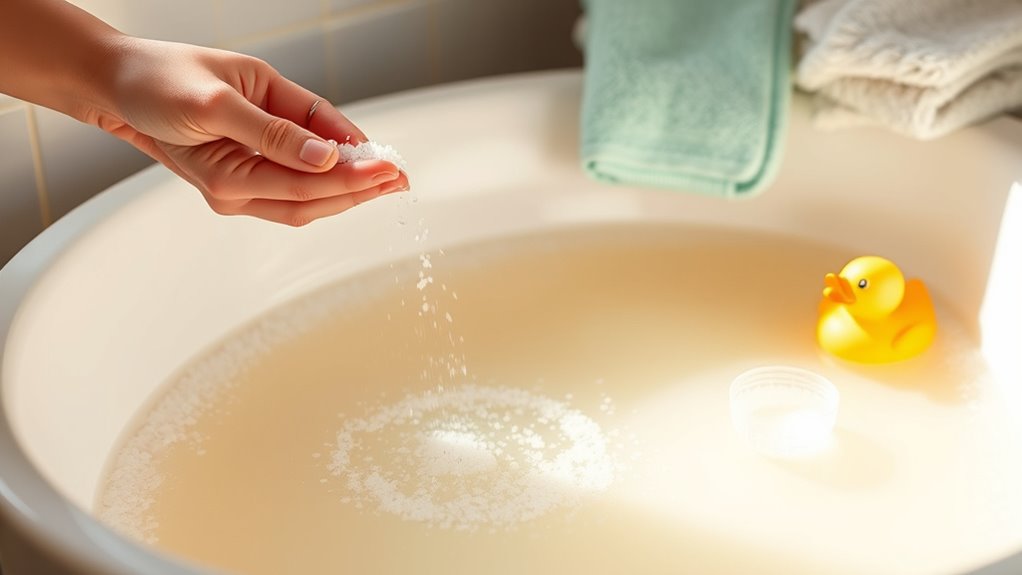
What makes Epsom salt a popular addition to your baby’s bath? Epsom Salt, or magnesium sulfate, is a natural mineral compound known for its soothing properties. When dissolved in warm water, it creates a calming bath that can help ease skin irritation and support your baby’s skin health.
You’ll want to use high-quality, unscented Epsom salt to avoid any potential skin irritation from added fragrances or chemicals. Remember to keep the water temperature comfortable—warm but not hot—to ensure your baby’s safety.
This simple addition to your baby’s bath can promote relaxation and gentle skin care, making it a favorite choice for parents who want a natural and safe way to support their little one’s well-being.
When To Consult Your Pediatrician About Epsom Salt Baths
You should always check with your pediatrician before using Epsom salt baths, especially if your baby has sensitive skin or health issues.
If you notice any irritation, allergic reactions, or unusual discomfort after a bath, contact your pediatrician right away.
They can also guide you on the right salt concentration and how often to use these baths safely.
Signs To Seek Help
Although Epsom salt baths can be soothing for your baby, certain symptoms mean you should contact your pediatrician right away. Watch closely for signs of allergic reaction, such as hives, swelling of the face or lips, or persistent skin irritation like rash or redness.
If your baby shows excessive crying, feeding refusal, or other behavioral changes after the bath, don’t hesitate to seek medical advice. Also, be alert for ingestion symptoms including diarrhea, weakness, or an irregular heartbeat, which require immediate attention.
If your baby experiences vomiting, unusual lethargy, or difficulty breathing following the bath, call your doctor promptly. Always prioritize your baby’s safety and stop Epsom salt use if any concerning signs appear.
Pediatrician Guidance Importance
Since infants have delicate and sensitive skin, consulting your pediatrician before giving your baby an Epsom salt bath is essential—especially if your child is under six months old or has any existing health conditions.
Pediatrician guidance guarantees you use the right amount of Epsom salt and set a safe bathing duration tailored to your baby’s needs.
If your baby has skin conditions, open wounds, or infections, avoid the bath until your healthcare provider approves it.
After the bath, watch for irritation, allergic reactions, or unusual discomfort. Also, seek immediate medical help if you notice overdose symptoms such as vomiting, drowsiness, or irregular heartbeat.
Prioritizing pediatrician advice helps maintain your baby’s health and guarantees safe bathing practices with Epsom salt.
Choosing Safe Epsom Salt For Your Baby’s Bath
When preparing your baby’s bath, selecting high-quality, pure Epsom salt designed specifically for therapeutic use guarantees their skin stays safe and irritation-free. You should always choose pure Epsom salt labeled for bath or therapeutic use to ensure it’s free from harmful additives.
Avoid scented or colored varieties, as fragrances and dyes can irritate your baby’s sensitive skin. Check the ingredient list to confirm it contains only magnesium sulfate without contaminants.
Using safe Epsom salt helps you enjoy the health benefits, like soothing muscle discomfort and promoting relaxation.
Remember to consult your pediatrician before starting Epsom salt baths, especially if your baby has sensitive skin or health issues. This way, you can confidently provide a safe baby bath experience with pure Epsom salt.
Preparing Bath Water: Temperature And Salt Amounts
To prepare your baby’s bath safely, start by filling the tub with warm water around 98°F to 100°F, ensuring it’s comfortable and not too hot. Check the bath temperature with your wrist or a thermometer before placing your baby in.
Next, add 1 to 2 cups of pure Epsom salt, adjusting salt amounts based on your baby’s weight and skin sensitivity. Stir gently until the salt is completely dissolved to avoid any granules that might irritate the skin.
Never exceed 2 cups of Epsom salt for infants to maintain safety and prevent overexposure.
How To Add Epsom Salt To Your Baby’s Bath
Adding Epsom salt to your baby’s bath requires careful preparation to guarantee safety and comfort. Start by filling the baby bath with warm water, ideally between 98-100°F, to keep your little one cozy. Measure 1 to 2 cups of high-quality, unscented Epsom salt and stir it thoroughly until fully dissolved.
This step is essential to prevent any granules from causing skin irritation. The magnesium in Epsom salt can soothe and relax, but undissolved crystals might harm delicate skin. Before placing your baby in, double-check the water temperature and ensure the salt is completely dissolved.
Gently lower your baby into the bath, supporting their head and neck, and stay close to monitor them throughout. This careful process helps your baby enjoy a safe, calming soak enriched with magnesium.
How Long Should Your Baby Soak In An Epsom Salt Bath?
You should keep your baby’s Epsom salt bath between 10 to 15 minutes to avoid skin dryness or irritation. Watch closely for any signs of discomfort and end the soak immediately if your baby seems upset. Starting with shorter baths and bathing a few times a week helps you find the right routine for your little one.
Recommended Soak Duration
While soaking your baby in an Epsom salt bath offers soothing benefits, you should limit the duration to 10 to 15 minutes to avoid skin dryness and irritation. The recommended soak duration helps protect your baby’s delicate skin from overexposure, which can lead to skin irritation or dehydration.
For the first few baths, start with shorter soak times of 5 to 10 minutes to observe how your baby’s skin reacts. Always supervise your baby throughout the entire Epsom salt bath and set a timer to guarantee you don’t exceed the recommended soak duration.
After soaking, gently pat your baby dry with a soft towel without immediately using soap to preserve the bath’s soothing effects on baby skin.
Signs To End Soak
Limiting your baby’s soak to 10 to 15 minutes helps prevent skin dryness, but knowing when to end the bath goes beyond just tracking time. You should watch closely for signs of discomfort like fussiness, crying, or visible skin redness.
Excessive skin irritation or any distress signals mean it’s time to stop the bath immediately. Always supervise your baby and be ready to remove them promptly if these signs appear.
| Signs of Discomfort | What to Look For | Action to Take |
|---|---|---|
| Fussiness | Increased crying | End bath immediately |
| Skin Redness | Red patches or rash | Rinse and moisturize |
| Excessive Irritation | Scratching or rash | Remove baby from bath |
Frequency Of Baths
How often should your baby enjoy an Epsom salt bath? For safety, limit bath frequency to once or twice a week to prevent skin dryness. During each baby bath, keep the soaking time between 10 to 15 minutes.
This duration helps your baby gain the benefits of Epsom salt without overexposing their sensitive skin. Avoid letting your baby soak longer than 20 minutes, as prolonged exposure can cause irritation and dehydration.
Always watch for any signs of discomfort and end the bath immediately if needed.
Since every baby is different, it’s essential to consult your pediatrician for personalized guidance on how often and how long your baby should soak in an Epsom salt bath. Following these tips ensures your baby’s skin stays healthy and comfortable.
Signs Of Epsom Salt Bath Irritation To Watch For
If you notice red, irritated, or inflamed skin on your baby after an Epsom salt bath, it could signal a reaction. Watch closely for signs like redness, swelling, hives, or rash, which might indicate an allergic response.
Your baby might also show discomfort through excessive fussiness or crying during or after the bath.
Skin dryness, peeling, or persistent scratching are additional signs of irritation to be aware of, especially if the bath was too concentrated or prolonged.
Keep an eye out for any unusual skin bumps or worsening irritation over time. Recognizing these signs early helps you respond quickly and protect your baby’s sensitive skin from further irritation or harm.

Safety Tips To Keep Your Baby’s Skin Healthy During Baths
While giving your baby an Epsom salt bath can be beneficial, you need to follow safety tips to keep their delicate skin healthy and protected. Always use high-quality, unscented Epsom salt designed for skin to prevent skin irritation.
Maintain a warm water temperature between 90-100°F (32-38°C) to avoid harming your baby’s sensitive skin.
Stick to a safe dosage by adding 1-2 cups of fully dissolved Epsom salt to the baby bath. Limit the soak to 10-15 minutes and watch your baby closely for any signs of discomfort.
After the bath, gently pat your baby dry and skip soap or harsh products immediately afterward to preserve skin health and moisture.
These steps ensure a safe, soothing experience that supports your baby’s skin health.
Frequently Asked Questions
Is It Safe to Put Epsom Salt in a Baby Bath?
Yes, you can safely put Epsom salt in a baby bath if you use 1-2 cups of pure, unscented salt.
Make sure to keep the water lukewarm and supervise your baby closely during the bath.
It is important to consult your pediatrician before trying it for your baby.
How to Use Epsom Salt for Babies?
You’ll dissolve 1-2 cups of unscented Epsom salt in warm water, then gently bathe your baby for 15-20 minutes.
Always supervise closely, avoid soap afterward, and consult your pediatrician before starting.
How Much Epsom Salt for Baby Bath?
Think of Epsom salt as a gentle snow shower—use 1 cup for babies under 6 months and up to 2 cups for older infants.
Always dissolve it fully to keep your little one safe and comfy.
What Age Can You Use Epsom Salts in a Bath?
You can use Epsom salts in a baby’s bath starting at around 2 months old. Always use small amounts, like 1 teaspoon to 1 tablespoon, and watch for any skin reactions or discomfort during the bath.
Conclusion
Now that you know how to safely add Epsom salt to your baby’s bath, why not give it a try to soothe your little one’s skin and ease fussiness? Just remember to consult your pediatrician first and keep the water temperature comfortable.
With the right amount of salt and careful monitoring, you can create a relaxing bath experience. Isn’t it wonderful to see your baby calm and happy after a gentle soak? Adding Epsom salt to a baby bath safely can truly enhance your little one’s comfort and well-being.