Keeping Dogs Safe in Salt Water Pools: What Owners Should Know
To keep your dog safe in a saltwater pool, it is essential to supervise them closely and prevent them from drinking the pool water. Saltwater pools contain higher salt levels that can lead to dehydration or salt poisoning in dogs. Always provide fresh water nearby to encourage your dog to drink safely.
Train your dog to avoid drinking from the pool to reduce health risks. After swimming, rinse your dog with fresh water to protect their skin and eyes from irritation caused by salt and chlorine.
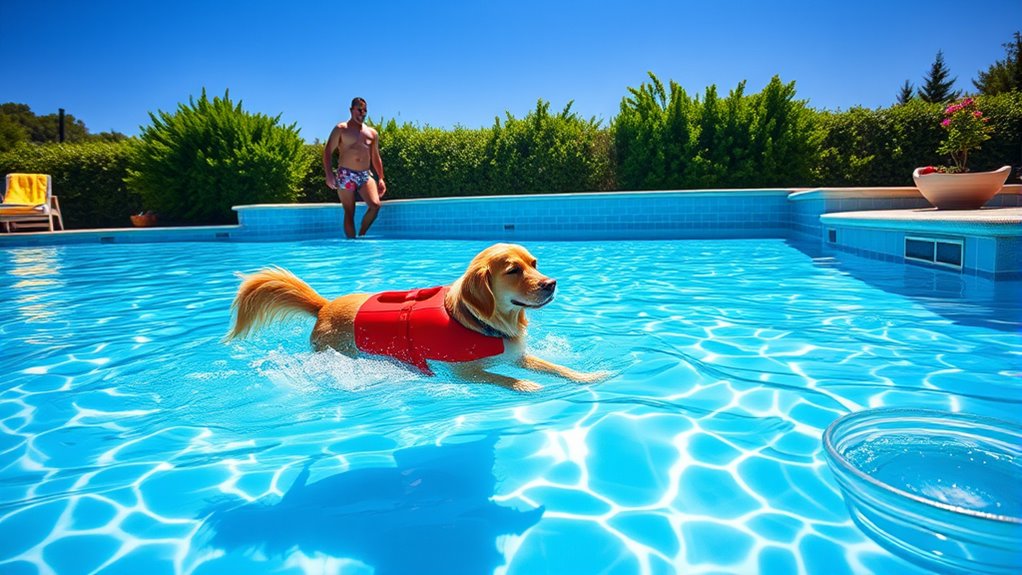
For added safety, use secure barriers around the pool and consider dog-friendly flotation devices. Keep these tips in mind as you explore more ways to protect your furry friend during swim time.
What Is a Saltwater Pool: And Is It Safe for Your Dog?
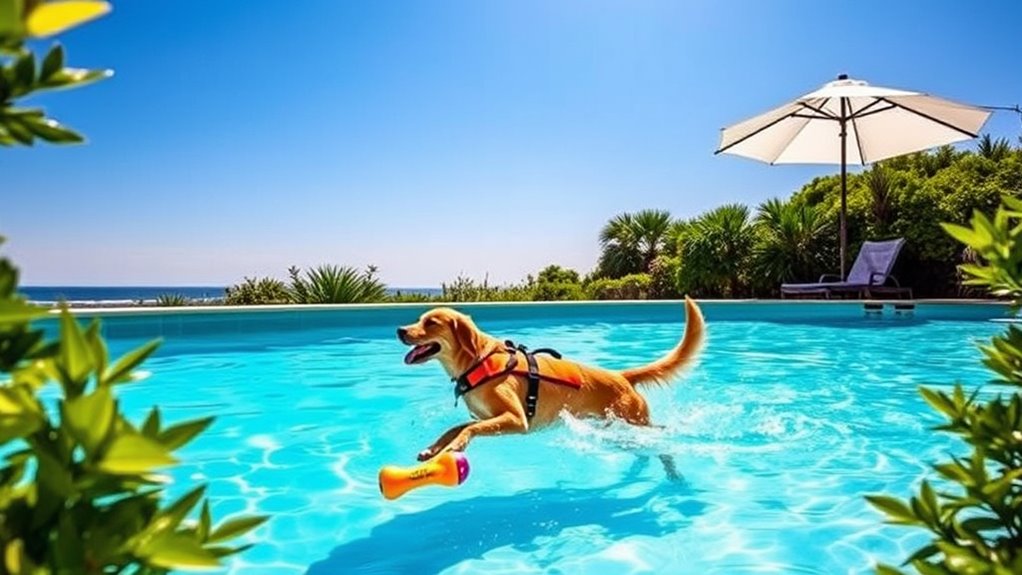
Although saltwater pools use a salt chlorine generator to keep the water sanitized, they contain much less salt than ocean water—about 10% of its salinity—making them gentler for your dog to swim in. These pools add salt directly to the water, where the generator converts it into chlorine through electrolysis, maintaining continuous sanitation.
Because saltwater pools typically have lower chlorine levels than traditional pools, they reduce the risk of irritating your dog’s skin and eyes. This means your dog can enjoy swimming without suffering from the dryness or redness that higher chlorine concentrations might cause.
While saltwater pools are generally safer and more comfortable for dogs compared to ocean water, it’s still important to monitor your dog’s exposure to ensure their skin stays healthy.
Risks of Saltwater Pools for Your Dog’s Health
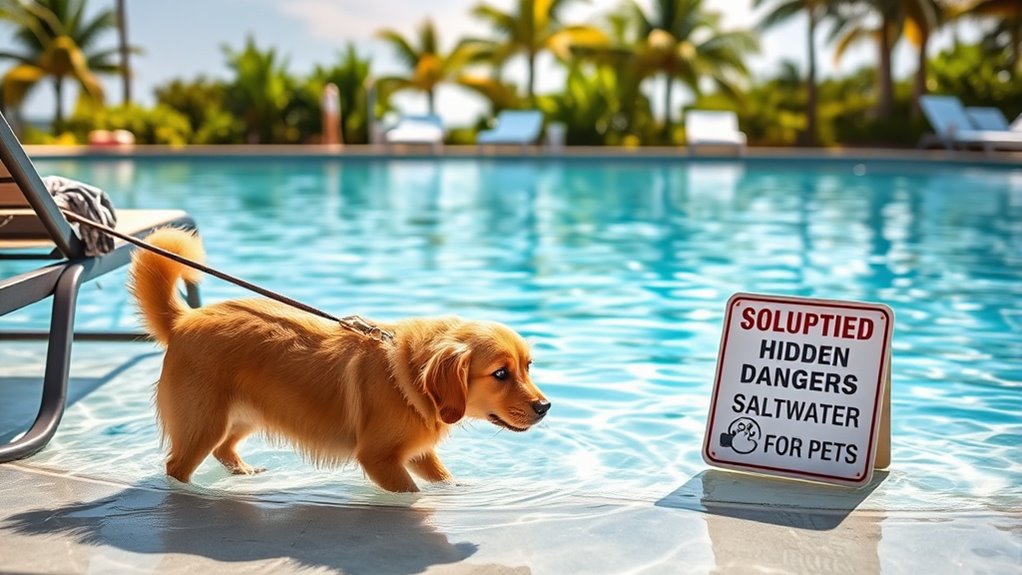
While saltwater pools have lower salt levels than the ocean, your dog can still face risks from ingesting too much pool water, leading to dehydration or salt poisoning.
Salt can also irritate your dog’s skin and eyes, especially after extended swimming sessions.
Saltwater Ingestion Dangers
Because dogs often drink from saltwater pools, they risk ingesting harmful amounts of salt that can lead to serious health problems like vomiting, dehydration, and electrolyte imbalances.
Saltwater ingestion can cause salt poisoning, disrupting your dog’s electrolyte balance and leading to symptoms such as muscle tremors, seizures, or even coma in severe cases.
The salt draws water from their cells, increasing the risk of dehydration and heat-related illnesses.
If your dog swallows too much saltwater, internal salt toxicity may develop, requiring urgent veterinary care to avoid fatal outcomes.
To protect your dog, limit their exposure to pool water and always provide fresh drinking water to reduce the dangers associated with saltwater ingestion and keep your furry friend safe and healthy.
Skin And Eye Irritation
Besides the risks of saltwater ingestion, you should also watch for skin and eye irritation in your dog after swimming in a saltwater pool. Although saltwater pools have lower salt levels than the ocean, prolonged exposure can still dry out your dog’s skin and cause irritation.
Saltwater may also irritate their eyes, leading to redness, tearing, and discomfort, especially if salt residue remains on their coat. Dogs with sensitive skin or pre-existing eye problems are more vulnerable, so keep a close eye on them.
To minimize these risks, rinse your dog thoroughly with fresh water immediately after swimming. This helps remove salt deposits and reduces the chance of skin and eye irritation, keeping your furry friend safe and comfortable.
Preventing Salt Poisoning
How can you keep your dog safe from salt poisoning when they swim in a saltwater pool? While saltwater pools have lower salt concentrations than ocean water, ingesting large amounts can still cause serious health issues like dehydration, vomiting, and electrolyte imbalances.
To prevent salt poisoning, follow these key steps:
- Provide fresh water nearby so your dog stays hydrated without drinking pool water.
- Always supervise your dog to limit excessive ingestion of saltwater during play.
- Train your dog to avoid drinking pool water by redirecting their attention.
- Monitor your dog for symptoms of salt poisoning, such as tremors or vomiting, and seek veterinary care immediately if they appear.
How to Stop Your Dog From Drinking Saltwater Pool Water

To stop your dog from drinking saltwater pool water, make sure you provide fresh drinking water nearby to keep them hydrated.
Use commands and positive reinforcement to teach them not to drink from the pool during playtime.
Keep a close eye on your dog and offer toys or treats to redirect their attention away from the water.
Discourage Pool Water Drinking
Why does your dog keep trying to drink from the salt water pool? Dogs are naturally curious and may find the water appealing, but drinking it can be harmful. To discourage this behavior, you need to actively supervise your dog and intervene when necessary.
Here’s how you can keep your dog from drinking pool water:
- Supervise your dog closely during pool time to stop them before they drink.
- Use commands like “leave it” or “no” to discourage attempts to drink from the salt water pool.
- Distract your dog with noise, such as calling their name or using a whistle, to redirect attention.
- Consistently reinforce boundaries about not drinking pool water to develop good habits.
These steps will help keep your dog safe and comfortable around the pool.
Provide Fresh Drinking Water
Although your dog might be tempted to drink from the saltwater pool, providing fresh, clean drinking water nearby encourages them to hydrate safely instead. Always keep a bowl of fresh water close to the pool area, especially during swimming sessions, so your dog has easy access to safe hydration.
Carry portable water bottles or bowls when you take your dog to the pool, making it easy to offer fresh water on demand.
Train your dog to stay away from the pool’s edge when not swimming by using commands like “leave it” or “no.”
After swimming, rinse your dog with fresh water to remove salt and irritants, reducing their urge to drink the pool water and promoting healthier hydration habits.
Top Pool Safety Tips to Keep Your Dog Healthy
When your dog enjoys a saltwater pool, you’ll want to stay close and watch them carefully to prevent them from drinking too much salty water. Salt in pool water can upset their stomach or cause dehydration if ingested in large amounts.
To keep your dog healthy:
- Always supervise your dog around the pool to limit saltwater intake.
- Provide fresh water nearby to discourage drinking pool water.
- Use a ramp or steps so your dog can safely exit the pool without panic.
- Rinse your dog with fresh water immediately after swimming to remove salt residue from their skin and coat.
Following these tips helps prevent irritation, dehydration, and accidents, ensuring your dog has a safe, fun time in the saltwater pool.
Caring for Your Dog’s Skin and Coat After Swimming
To protect your dog’s skin and coat after swimming in a saltwater pool, you should rinse them thoroughly with fresh water to wash away salt, chlorine, and other chemicals. This prevents irritation and dryness caused by saltwater exposure.
Use a gentle, moisturizing dog shampoo to cleanse and restore your dog’s skin pH, especially if they’ve sensitive skin or show signs of irritation.
After washing, dry your dog completely with a towel or a blow dryer on a low setting to avoid dampness that can lead to infections or matting.
Finally, brush your dog’s coat to remove any salt crystals or debris, promoting a healthy, shiny coat and reducing the risk of skin irritation. Regularly check your dog’s skin and consult a vet if irritation persists.
Saltwater Pools vs. Chlorinated Pools: What’s Safer for Dogs?
Since saltwater pools contain lower chlorine levels and produce chlorine through electrolysis, they tend to be gentler on your dog’s skin and eyes compared to traditional chlorinated pools.
Saltwater pools use lower chlorine, making them gentler on your dog’s skin and eyes than traditional pools.
When choosing between saltwater pools and chlorine pools for your dog’s safety, consider these points:
- Saltwater pools have about 10% of the ocean’s salt concentration, reducing irritation.
- Chlorine pools use chemical chlorine, which can cause more eye and skin irritation.
- Both pool types contain chemicals harmful if ingested in large amounts, so supervise your dog.
- Rinse your dog after swimming and limit swim time regardless of pool type to ensure safety.
Frequently Asked Questions
Is a Salt Water Pool Safe for Dogs?
Yes, a salt water pool is generally safe for your dog, but you should always supervise them, provide fresh water, and prevent excessive ingestion to avoid dehydration or health issues while they enjoy swimming and playing.
Supervision is important to ensure your dog doesn’t drink too much pool water, which can lead to salt intake that might upset their stomach or cause other problems.
Always have fresh water available for your dog to drink, so they stay hydrated without needing to rely on the pool water.
Do Dogs Need a Bath After Swimming in a Saltwater Pool?
Like wiping the sand off your favorite beach towel, you should bathe your dog after saltwater swims.
Rinsing and gentle shampooing remove salt, preventing skin irritation and keeping your furry friend comfortable and healthy.
Are Dogs Ok in Salt Water?
Yes, your dog’s usually fine in salt water, but don’t let them drink too much. Rinse them off afterward to avoid irritation, and always provide fresh water to keep them hydrated and safe.
Is Pool Salt Harmful to Pets?
You might think pool salt is harmless, but it can be harmful if your pet ingests too much. Small amounts usually won’t hurt, but watch out—excess salt can cause dehydration and serious health issues.
Always supervise your pets around pool areas to prevent them from consuming large quantities of salt. If you suspect your pet has ingested a lot of pool salt, contact your veterinarian immediately.
Conclusion
You want your dog to enjoy the pool, but ironically, that salty oasis might not be as harmless as it looks. While saltwater pools seem gentler than chlorinated ones, they still pose risks you can’t ignore. So, don’t just let your pup leap in without thinking—keep an eye on their health.
Stop them from drinking the water, and care for their skin afterward. After all, keeping your dog safe means loving them enough to be cautious. Even when it’s tempting to just let them splash away, remember that proper care is essential.
By following these tips on keeping dogs safe in salt water pools, you ensure a fun and safe swimming experience for your furry friend.